When Taylor Swift and Travis Kelce showed up at the 2024 US Open men’s final, they were technically there to watch tennis. In practice, they became a tennis-adjacent weather system. Cameras followed them. Social media followed the cameras. Then the internet did what it does best: turned a few seconds of singing, smiling, and affectionate body language into a full-scale cultural debate with enough takes to power Manhattan for a week.
The now-viral clip showed Swift and Kelce singing along to The Darkness’ “I Believe in a Thing Called Love,” swaying in their suite, looking extremely pleased to be alive, in love, and nowhere near a preseason media scrum. For some viewers, it was adorable. For others, it was proof that celebrity culture has officially set up a vacation home inside every sporting event in America. And for the algorithm? It was breakfast, lunch, and dinner.
That is what made the moment bigger than a standard celebrity sighting. It was not just about Taylor Swift at the US Open or Travis Kelce taking a weekend break from football. It was about what happens when pop music, the NFL, tennis etiquette, internet exhaustion, and public romance all collide in one very photogenic box seat.
The Viral US Open Moment That Took Over the Internet
Swift and Kelce attended the men’s singles final in New York on September 8, 2024, where Italy’s Jannik Sinner faced American Taylor Fritz. That match already had a built-in storyline because an American man had finally reached a Grand Slam final again, which gave the event real sports weight beyond the celebrity attendance. But the second Swift and Kelce walked in hand in hand, a parallel storyline began writing itself.
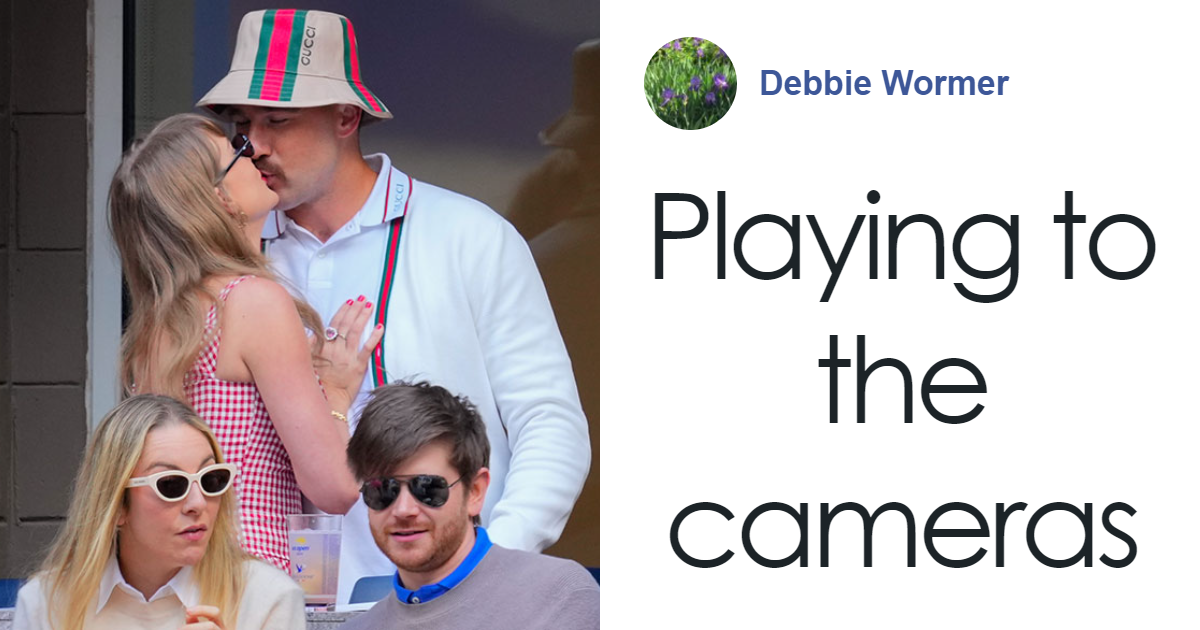
They were seated with Chiefs quarterback Patrick Mahomes and Brittany Mahomes, which added another layer of star power and ensured that sports fans, gossip readers, Swifties, NFL obsessives, and people who somehow know every Gucci bucket hat on sight were all staring at the same footage for different reasons.
What truly launched the moment into viral orbit, though, was not their entrance. It was the body language. Swift and Kelce were playful, visibly relaxed, and not particularly interested in acting like they had been sent to the event by a publicist armed with a ruler and a “please be tasteful” memo. They kissed. They leaned into each other. They sang along. Swift was later seen fussing with Kelce’s hat hair in one of those small, oddly normal moments that makes celebrity couples feel less like magazine covers and more like two people trying to survive humidity and public attention at the same time.
That combination of glamour and goofiness is what made the clip so easy to share. It looked candid enough to feel real but polished enough to look cinematic. In the age of short-form video, that is basically catnip with a Wi-Fi signal.
Why the Video Went Viral So Fast
There are viral videos, and then there are videos carrying the full weight of two giant fan economies. Taylor Swift is one of the most famous performers on the planet. Travis Kelce is one of the NFL’s biggest stars, and by that point he was no longer just a football celebrity. He had crossed into full-on mainstream pop culture status. Put them together in a high-profile venue, add a romantic song, and the internet is not going to respond with calm restraint and a respectful golf clap.
Part of the appeal was timing. The US Open appearance came just days after the Chiefs opened their season with a win over the Baltimore Ravens. It also capped off a headline-friendly New York weekend that included a date night at Lucali and a wedding appearance. So the tennis footage did not land in isolation. It landed as the latest episode in an already very visible celebrity weekend.
The song choice mattered too. “I Believe in a Thing Called Love” is not exactly background elevator music. It is theatrical, nostalgic, and impossible to half-sing. You either commit or you look like you are being haunted by karaoke. Swift and Kelce committed. That gave the clip a joyful, unguarded energy that made fans replay it and critics roll their eyes in equal measure.
There was also a built-in visual contrast that helped the footage pop. Tennis, especially at a major final, still carries a certain old-school hush. Even when the event is packed with celebrities, there is an expectation of composure. Swift and Kelce did not exactly break protocol, but they did bring a more football-suite-meets-concert vibe to a setting that usually prefers its star sightings with a side of restraint.
Why It Sparked Anger in Some Corners of the Internet
Let’s be fair here: “anger” online can mean anything from a thoughtful critique to a person typing in all caps while sitting in pajama pants. Still, the backlash was real enough to become part of the story. A slice of viewers thought the couple looked too performative, too visible, too aware of the cameras, or simply too loud in a space that some fans consider sacred in a crisp-white-shirt sort of way.
One reason for the irritation was celebrity fatigue. By late 2024, some sports fans were already tired of every major event turning into a conversation about Taylor Swift’s presence rather than the game, match, or championship itself. The NFL had already spent a full season being accused by some viewers of cutting to Swift too often during Chiefs games. So when another major sporting event suddenly became Swift-Kelce discourse, the frustration followed them like a very dramatic carry-on bag.
Another reason was tone. Tennis fans often pride themselves on a more mannered viewing culture than football crowds. No one was pretending the US Open is a monastery, but there is still a difference between cheering during changeovers and turning a luxury suite into a mini music video. Some viewers saw the couple as fun. Others saw them as importing stadium energy into a tournament built on a different kind of rhythm.
Then there was the politics-by-proximity problem. Because Swift and Brittany Mahomes were seen together, and because online conversations around public figures were already highly charged that week, the footage got pulled into broader culture-war commentary. That is what happens when celebrity coverage stops being just celebrity coverage. A hug becomes a statement. A shared seat becomes a theory. A tennis outing becomes a think piece with absolutely no chill.
The Internet’s Favorite Hobby: Projecting Motives Onto Famous People
One of the strangest parts of the Swift-Kelce phenomenon is how often people insist on assigning motives to moments that may simply be moments. If they smile too much, it is staged. If they look serious, trouble in paradise. If they attend an event, they are courting publicity. If they skip one, they are hiding something. It is a no-win game, except for the content machine, which wins every round.
The US Open clip triggered that exact pattern. Fans who liked the couple saw chemistry, spontaneity, and the kind of affectionate ease that is hard to fake. Detractors saw branding, overexposure, and one more celebrity spectacle intruding on a sporting event. Neither side lacked confidence. The internet almost never does.
But the truth is usually less cinematic than the discourse. Two very famous people went to a major public event, enjoyed themselves, and got filmed. That is the whole soup. The rest is seasoning added by viewers who either love them, resent them, or secretly wish their own relationship came with this much soundtrack support.
What Travis Kelce Said Later
The most useful reality check came after the event, when Kelce spoke about the experience himself. He later explained that it was his first US Open and joked that tennis was so quiet it made him want to say something just to fill the silence. He said he wanted to heckle a little in support of Taylor Fritz but kept it respectful, adding that the music breaks were the only moments when he really let his personality show.
That detail matters because it makes the viral footage feel less like a performance and more like a release valve. Kelce was not acting out some grand media strategy in the moment; he was being exactly the kind of person who struggles to sit still during silence and comes alive the second a recognizable song hits the speakers.
Later still, he addressed the broader perception of that day by acknowledging that the outing may have looked like partying from the outside. His larger point was that appearances can flatten context. From the crowd’s perspective, the couple looked like they were turning the US Open into date-night theater. From his perspective, they were simply enjoying a major event together. Same clip, two very different readings. That is modern fame in one sentence.
The Bigger Story: Pop Culture Now Sits Courtside at Everything
The Swift-Kelce US Open moment was not really about whether a couple should sing in a luxury box. It was about how impossible it has become to separate sports, entertainment, branding, fandom, and identity. The old boundaries are basically decorative now. Pop stars date athletes. Athletes host podcasts. Sports broadcasts generate meme culture. Gossip coverage borrows the language of sports coverage, while sports coverage increasingly borrows the drama of entertainment reporting.
That is why this particular moment hit so many different audiences at once. Tennis fans saw a disruption. Football fans saw a sequel. Swifties saw romance canon. Culture critics saw a case study in parasocial overload. And casual viewers saw two famous people singing a very catchy song while everyone else lost their minds.
In other words, the viral video did not create the culture clash. It exposed one that was already humming beneath the surface. The US Open just happened to provide excellent lighting.
Did the Backlash Actually Matter?
In the short term, yes, because backlash is part of the modern fame economy. It drives headlines, engagement, reposts, and endless reaction loops. In the long term, probably not much. If anything, the criticism only reinforced how magnetic the couple had become as a public narrative. The more people argued about them, the more central they became to the conversation.
There is also an irony here that is hard to ignore: the same people complaining that Swift and Kelce were distracting from tennis helped make them an even bigger distraction by talking about them nonstop. The internet has many talents. Self-awareness is not always one of them.
And to be honest, the clip endured for a simple reason that has nothing to do with outrage. It was fun. That can be irritating when you are in the mood to be annoyed, but it is still true. Viral moments often survive because they trigger delight and secondhand embarrassment at the same time. This one did exactly that, which is why it kept ricocheting around the feed.
Conclusion
Taylor Swift and Travis Kelce being filmed at the US Open was never going to stay a small celebrity anecdote. The footage was too polished, the setting was too visible, and the couple were already too culturally enormous. Once the video spread, the reactions split exactly as you would expect in 2024: some people swooned, some people groaned, and everyone else pretended they were above it while still watching the clip three times.
What remains most interesting is not the PDA itself but what it revealed about the audience. The anger said as much about celebrity saturation, sports tribalism, and internet projection as it did about Swift and Kelce. They were just the faces in the frame. The rest of the drama came from the people holding the phones.
Extra : The Experience of Living Through a Viral Celebrity-Sports Moment
If you want to understand why the Taylor Swift and Travis Kelce US Open video hit such a nerve, think about the experience of watching modern events in real time. You are rarely just watching the thing anymore. You are watching the thing, the reaction to the thing, the backlash to the reaction, and then the backlash to the backlash. By the time you form your own opinion, the internet has already handed you six starter opinions and a bonus conspiracy theory.
For Swift fans, the experience was probably straightforward: here was a happy, affectionate clip of a couple enjoying themselves in public. It felt light, easy, and charming. It also fed into a much larger relationship timeline that fans had been following for months, from Chiefs games to concert appearances to big-city date nights. In that context, the US Open footage felt like another sweet chapter, not some outrageous breach of sports etiquette.
For hardcore football fans, though, the experience was different. Some had already spent a season feeling as if Swift content had drifted into NFL coverage whether they wanted it there or not. So even at a tennis event, they were primed to react. The sight of Kelce and Swift singing along in a suite may have felt less like harmless fun and more like another reminder that celebrity narratives can swallow sports coverage whole. Once people feel that fatigue, even a kiss on the head can start looking like a hostile takeover.
Tennis fans had their own version of the experience. The US Open is more relaxed than some of the sport’s older institutions, but it still carries a sense of occasion. There is a rhythm to watching tennis: silence, anticipation, release, applause. When a viral celebrity clip breaks loose from inside that environment, some viewers feel like the event has been translated into a language they did not ask for. Suddenly the conversation is not about serve placement or nerves under pressure. It is about whether Travis Kelce’s bucket hat was a crime against fashion. That can feel ridiculous if you came for the tennis.
Then there is the experience of the casual observer, which may be the funniest one of all. These are the people who were not deeply invested in Taylor, Travis, the Chiefs, or even the US Open, but still got dragged in because the clip was everywhere. For them, the whole saga probably looked like peak modern absurdity: two famous people singing an early-2000s rock song in a luxury box while half the internet declared it adorable and the other half acted like civilization had fallen.
That is why moments like this linger. They are not just celebrity stories. They are shared online experiences that let everyone reveal what kind of viewer they are. Romantic? Cynical? Protective of sports traditions? Tired of fame? Secretly delighted by chaos? The Taylor Swift and Travis Kelce US Open video gave millions of people a tiny mirror, and many of them did not enjoy what it reflected nearly as much as they enjoyed arguing about it.