Some objects are so modest they almost disappear. A spoon rests quietly. A saucer behaves itself. A napkin ring does its little circular job and asks for no applause. Then there is the KPM Berlin Urania Egg Cup, a tiny piece of porcelain that somehow manages to be practical, sculptural, historical, and just a little smug about all of it. It holds one egg, sure, but it also holds nearly a century of modern design thinking.
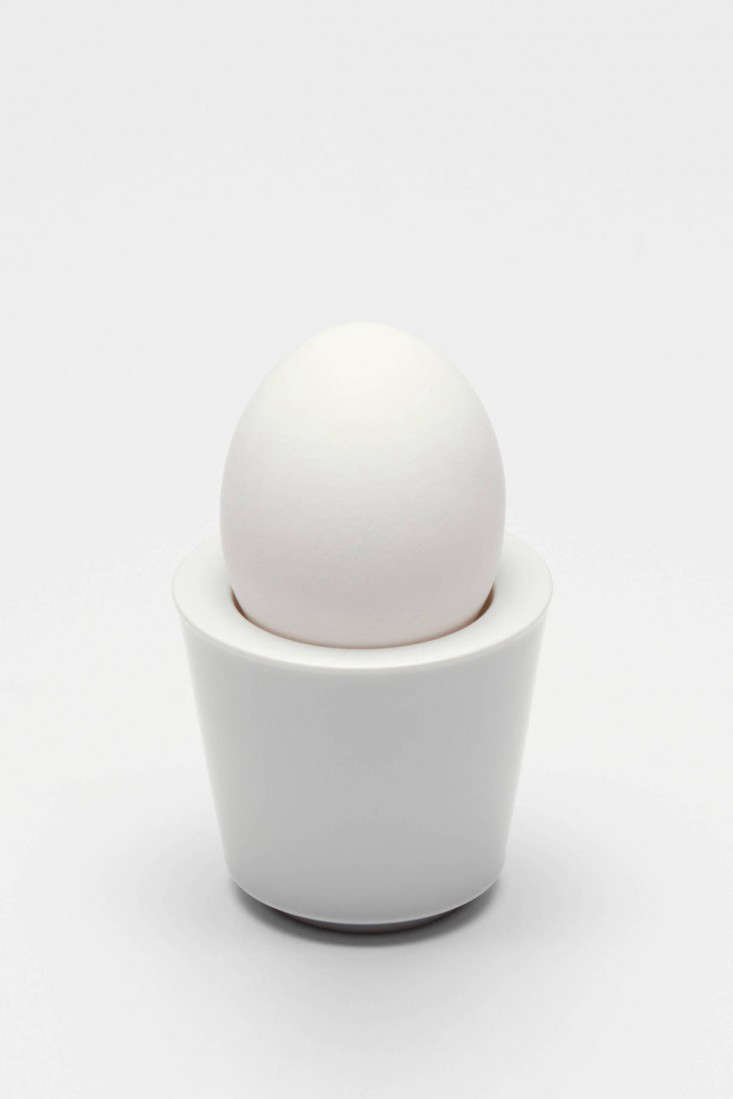
If that sounds dramatic for breakfastware, good. Drama is deserved. The Urania Egg Cup is part of the Urania service by KPM Berlin, a line associated with designer Trude Petri and first introduced in 1938. Its silhouette is startlingly simple: a clean, elevated form with a restrained geometry that feels closer to miniature architecture than kitchen clutter. It does not flirt. It does not frill. It simply stands there in white porcelain like it already knows your table could use better manners.
In a world full of novelty kitchen gadgets shaped like chickens, clouds, and questionable internet humor, the KPM Berlin Urania Egg Cup feels like a corrective. It reminds us that even the smallest item on a breakfast table can be beautifully designed, expertly made, and deeply satisfying to use. That is the magic of great everyday design: it makes ordinary routines look intentional.
What Is the KPM Berlin Urania Egg Cup?
The KPM Berlin Urania Egg Cup is a porcelain egg cup produced by KPM Berlin, the Royal Porcelain Manufactory founded in 1763. The piece belongs to the Urania collection, a modernist dinner service designed in the late 1930s. In its current official form, the white version is compact and refined, with a height of roughly 53 mm and a diameter of about 60 mm. Those numbers sound clinical, but the effect is not. In person, the object reads as crisp, balanced, and quietly luxurious.
What separates this egg cup from dozens of others on the market is not gimmick or size. It is proportion. The shape has a small pedestal-like base and a clean upper bowl, giving the object a composed, almost ceremonial quality. Put a soft-boiled egg in it and breakfast suddenly feels as if it has a dress code.
It also helps that KPM Berlin still carries enormous cultural weight in design circles. For generations, the manufactory has balanced craft tradition with evolving taste, producing porcelain that ranges from historical grandeur to stripped-down modern elegance. The Urania Egg Cup belongs firmly to the second camp. It is not trying to be ornate. It is trying to be right.
The Design Lineage Behind the Urania Series
To understand why this tiny cup matters, you have to understand the woman behind the broader line. Trude Petri was one of the most important porcelain designers of her era, and her work helped define a more modern direction for KPM Berlin. She was active during a period when European design was moving away from heavy ornament and toward cleaner, more functional forms. Less embroidery, more intelligence. Less curlicue, more clarity.
The Urania collection, introduced in 1938, reflects that shift beautifully. KPM describes the line in terms of absolute aesthetics and links it to the ideals associated with New Objectivity, the German Werkbund, and the broader modern movement of the early 20th century. That sounds lofty, but the idea is wonderfully practical: form should make sense, beauty should not depend on excess, and utility can still be elegant.
Why the Urania look still feels contemporary
The reason the Urania Egg Cup still looks fresh is that it avoids almost every trap that dates design. It is not trend-chasing. It is not overloaded with decorative detail. It does not rely on a seasonal color story or a wink-wink motif. Instead, it uses geometry, balance, and high-quality material to create visual interest. In design, that is usually the difference between something that survives a decade and something that survives generations.
Petri’s reputation is also reinforced by major museum recognition in the United States. Her earlier Urbino dinnerware is represented in collections at MoMA and The Metropolitan Museum of Art, which tells you something important: this was not casual tableware design. This was serious work produced at a serious level. The Urania Egg Cup benefits from that same design DNA. It may be small, but it comes from a very grown-up family tree.
Why Design Lovers Keep Coming Back to It
There are plenty of reasons people fall for the KPM Berlin Urania Egg Cup, and not all of them involve eggs. Some are drawn in by the history. Some love KPM Berlin as a brand. Others simply appreciate an object that looks almost impossibly tidy on a table. Whatever the entry point, the appeal usually comes down to four things: craftsmanship, restraint, versatility, and presence.
1. Craftsmanship you can actually see
Porcelain is one of those materials that reveals quality fast. Cheap porcelain looks chalky or lifeless. Great porcelain has brightness, density, and a surface that catches light in a clean, controlled way. The Urania Egg Cup has that polished, confident feel that collectors expect from KPM Berlin. Even when the form is minimal, the finish does the talking.
2. Restraint is the whole point
Many tabletop accessories try too hard. The Urania Egg Cup does the opposite. Its simplicity is not emptiness; it is discipline. That discipline is why it works in a traditional home, a modern apartment, a monochrome kitchen, or a maximalist dining room that needs one quiet note to keep the orchestra from getting weird.
3. It is more versatile than it sounds
Yes, it is an egg cup. But well-designed small vessels often live second lives. Styled shelves, elegant vanities, and thoughtfully set dining tables all benefit from little objects that carry visual weight without taking up much space. People use pieces like this for flaky salt, spices, tiny flowers, or even rings by the sink. Suddenly the humble egg cup is moonlighting as a design accessory. Busy little overachiever.
4. It creates a “small luxury” moment
One of the smartest home trends in recent years has been the embrace of small luxuries: objects that elevate daily life without requiring a full kitchen renovation or a trust fund. A beautifully made egg cup fits that mindset perfectly. It turns breakfast into a ritual rather than a rush. Even if your menu is just toast and coffee, the presence of this object suggests you have your life together. Or at least that you own one excellent porcelain item, which is a respectable start.
How the KPM Berlin Urania Egg Cup Works in Real Interiors
The best design objects are not only beautiful in isolation. They also play nicely with other things. The Urania Egg Cup is especially effective because it is visually calm. It complements rather than competes.
On a minimalist breakfast table
Pair it with white linen, a silver spoon, dark bread, and strong coffee, and you have a breakfast scene that looks effortlessly composed. KPM itself recommends pairing the egg cup with a mocha saucer, which makes sense visually: the saucer broadens the base and creates a more complete little setting. It is the tabletop equivalent of a good frame around a piece of art.
At Easter or spring brunch
Egg cups naturally shine during spring entertaining, when tablescapes often feature eggs, florals, and collected ceramics. But the Urania version avoids looking kitschy. It contributes seasonal relevance without turning the table into a bunny costume convention. That is a rare skill.
On open shelving
Because the shape is sculptural, the cup also works as a shelf object. It looks especially striking grouped with other white or neutral ceramics, where subtle changes in form become the main event. If your style leans toward quiet luxury, modern European, or gallery-like restraint, this piece fits in beautifully.
Collectibility and Market Appeal
The Urania name has continued to circulate in the secondary market, and vintage KPM Urania pieces appear through respected resale and antiques platforms. That matters because it shows the line has staying power beyond current retail shelves. People are not only buying it new; they are looking for it later, preserving it, and selling it as something worth mentioning by name.
Collectors tend to appreciate several aspects of KPM pieces: the heritage of the manufactory, the recognizable quality of the porcelain, the strength of specific designers like Trude Petri, and the link between modernist form and daily use. The Urania Egg Cup condenses all of that into a single object. It is collectible without being intimidating, useful without being boring, and refined without feeling fragile in spirit.
That balance is important. Some collectible housewares are so precious they become impractical. They live behind glass and silently judge you. The Urania Egg Cup has more generous energy. It wants to be used. Carefully, yes. Reverently, maybe. But used.
How to Care for a Piece Like This
If you are buying a KPM Berlin Urania Egg Cup for actual breakfast duty, care matters. The official product details indicate that the current piece is dishwasher safe and microwave safe, though many design lovers still prefer gentle hand washing for high-end porcelain, especially when preserving surface brilliance over time. That cautious approach is not paranoia; it is common sense.
A few practical tips help:
- Wash with a soft sponge rather than abrasive scrubbers.
- Store it where it will not knock against heavier stoneware.
- If using it decoratively for salt or spices, empty and wipe it regularly.
- When displaying, give it breathing room so the silhouette can do its job.
The point is not to baby the object into a joyless museum piece. The point is to let it age gracefully. Good porcelain deserves a long, useful life.
Is the KPM Berlin Urania Egg Cup Worth It?
If you only want a cheap device to stop an egg from rolling away, there are easier options. A basic kitchen store can solve that problem for the price of a sandwich. But if you care about design history, craftsmanship, and the emotional effect of well-made everyday objects, the Urania Egg Cup offers something entirely different.
It is worth it for the person who notices proportion. It is worth it for the host who believes breakfast can be beautiful. It is worth it for the collector building a small but meaningful library of modern design objects. And it is worth it for anyone who understands that the line between functional object and art object is often thinner than an eggshell.
Most importantly, it proves a refreshing point: luxury does not have to shout. Sometimes it appears in the form of a tiny white porcelain pedestal that makes one boiled egg look like it has arrived at its own opening night.
Experience: Living With a KPM Berlin Urania Egg Cup
There is a particular pleasure in using an object that takes an everyday act and makes it feel considered. That is the real experience of the KPM Berlin Urania Egg Cup. It is not flashy in the way a large serving platter or a dramatic vase might be. Its charm shows up in smaller, more personal moments. You notice it early in the morning, when the kitchen is still quiet and the coffee has not fully done its job yet. You set the egg in the cup, and suddenly breakfast has structure. Not emotional structure. Actual visual structure. The table looks composed before you have even found the butter.
The first thing people often respond to is the scale. The Urania Egg Cup is compact, but it does not feel flimsy or cute in a throwaway way. It has presence. Because the form is so clean, the egg itself becomes part of the design. A soft white egg in a bright white porcelain cup creates a tone-on-tone moment that feels almost architectural. A brown egg adds contrast and warmth. Either way, the object stages the food beautifully without turning breakfast into a performance piece. It just makes the whole scene look better, which is honestly more than can be said for most kitchen accessories lurking in our drawers.
There is also a tactile satisfaction to using fine porcelain that is hard to fake. The cup feels smooth, cool, and balanced in the hand. It sits neatly on the table without visual fuss. If you pair it with a small saucer, as KPM suggests, the setting becomes even more elegant. The saucer catches shell fragments, holds a tiny spoon, and frames the cup like a deliberate composition instead of a random breakfast pit stop. That small addition turns a quick meal into a ritual.
Then there is the social experience. Put a Urania Egg Cup on the table during brunch and people notice. Not in a loud, “Where did you get that?” way every single time, but in the softer way that good objects earn attention. Guests handle it carefully. They smile a little. Someone usually says it feels European, which is fair, although what they really mean is that it feels intentional. The cup suggests a host who cares about details without becoming unbearable about them. That is a narrow target, and this piece hits it.
Living with it over time also changes how you think about utility. You start by using it for eggs, then eventually realize it is useful elsewhere too. A pinch of finishing salt beside the stove. A ring holder near the sink. A tiny vessel for spices on a cheese board. A solitary bud on a tray. The piece adapts without losing dignity, which is a very stylish trait for such a small object. Some things become less interesting when removed from their original purpose. The Urania Egg Cup somehow becomes more interesting.
Perhaps the most memorable part of the experience is emotional rather than practical. The cup creates a pause. It slows down a meal that would otherwise disappear into emails, errands, or the general chaos of modern life. It reminds you that design is not only about rooms, architecture, or major investments. Sometimes design is about one tiny porcelain form making an ordinary morning feel a little smarter, calmer, and more beautiful. That is not a small achievement. For an egg cup, it is practically heroic.
Final Thoughts
The KPM Berlin Urania Egg Cup is proof that design excellence does not require a grand scale. This small porcelain object carries the weight of KPM Berlin’s heritage, the intelligence of Trude Petri’s modernism, and the everyday usefulness that keeps great design alive. It is part breakfast accessory, part collectible, part sculptural detail, and entirely more compelling than an egg cup has any right to be.
If your taste runs toward thoughtful objects, quiet luxury, and pieces that make daily life feel slightly more civilized, this one deserves attention. It turns an ordinary egg into a still life, a simple meal into a ritual, and a practical object into a conversation about what good design can do. Not bad for something smaller than your espresso cup.