If you have a 1921 silver dollar, congratulations: you are holding a chunky little piece of American history that also happens to contain real silver. But before you start planning a beach vacation funded by one coin from Grandpa’s drawer, there is one very important question: which 1921 silver dollar do you have?
The phrase “1921 silver dollar” can refer to two different U.S. coins: the 1921 Morgan silver dollar and the 1921 Peace silver dollar. They share the same face value, silver content, weight, and diameter, but their collector values can be wildly different. A common circulated 1921 Morgan dollar may be worth roughly the price of its silver plus a modest numismatic premium. A 1921 High Relief Peace dollar, on the other hand, can be worth hundreds or even thousands of dollars depending on condition.
In other words, 1921 is not just a date. It is a coin-collecting plot twist.
Quick Answer: What Is a 1921 Silver Dollar Worth?
Most circulated 1921 Morgan silver dollars are commonly valued in the approximate range of $55 to $100, depending on mint mark, condition, eye appeal, silver price, and local market demand. Lower-grade examples often trade close to melt value plus a premium, while attractive About Uncirculated and Mint State examples can sell for more.
A 1921 Peace silver dollar is usually more valuable. Circulated examples often land around $125 to $525, while certified Mint State coins may range from several hundred dollars to several thousand dollars. Gem-quality examples with strong strikes and clean surfaces can climb much higher.
These are practical retail-style ranges, not guaranteed offers. Coin values move like a cat near a laser pointer: silver spot price, grading standards, auction timing, dealer margins, and collector demand all matter.
1921 Morgan Dollar vs. 1921 Peace Dollar: Know the Difference
The easiest way to understand 1921 silver dollar value is to separate the two designs.
1921 Morgan Silver Dollar
The Morgan dollar was designed by George T. Morgan and first issued in 1878. After a long production run that ended in 1904, the series returned for one final year in 1921. These coins show Liberty facing left on the obverse and an eagle with outstretched wings on the reverse.
The 1921 Morgan dollar was struck at three mints: Philadelphia, Denver, and San Francisco. Philadelphia coins have no mint mark, Denver coins have a “D,” and San Francisco coins have an “S.” The mint mark appears on the reverse, above the “DO” in “DOLLAR” and below the wreath.
1921 Peace Silver Dollar
The Peace dollar was designed by Anthony de Francisci and introduced in 1921 to symbolize peace after World War I. The obverse features Liberty with a radiant crown, while the reverse shows a perched eagle and the word “PEACE.” The 1921 Peace dollar was struck only at the Philadelphia Mint, so it has no mint mark.
The 1921 Peace dollar is especially desirable because it was the first year of the series and was struck in high relief. That raised design looked dramatic, but it was difficult to strike fully. As a result, many examples show weakness in Liberty’s hair and in the eagle’s feathers. Collectors still love it, partly because coin collectors are very good at saying, “It has character,” when a coin has production quirks.
1921 Silver Dollar Specifications
| Feature | 1921 Morgan Dollar | 1921 Peace Dollar |
|---|---|---|
| Composition | 90% silver, 10% copper | 90% silver, 10% copper |
| Weight | 26.73 grams | 26.73 grams |
| Diameter | 38.1 mm | 38.1 mm |
| Actual Silver Weight | 0.77344 troy ounce | 0.77344 troy ounce |
| Designer | George T. Morgan | Anthony de Francisci |
| Main Value Driver | Condition, mint mark, silver price | High relief, first-year issue, grade |
1921 Morgan Silver Dollar Value by Mint Mark
The 1921 Morgan dollar is not rare in circulated condition, but that does not make it boring. It was the last year of the original Morgan dollar series, and the Denver issue is historically important because 1921 was the only year the Denver Mint struck Morgan dollars.
1921 No Mint Mark Morgan Dollar Value
The 1921 Philadelphia Morgan dollar had a huge mintage of 44,690,000 coins. Because so many were produced, circulated examples are widely available. A typical circulated coin may sell in the $55 to $85 range, depending on silver price and wear. Nice About Uncirculated examples can bring more, while Mint State coins often move into the $90 to $200 range or higher.
Exceptional certified coins, especially those graded MS65 or better, can command stronger premiums. The difference between a common-looking coin and a sharply struck, lustrous, certified example can be dramatic. In coin collecting, “shiny” is not enough. The surfaces, strike, luster, and marks all have to behave themselves.
1921-D Morgan Dollar Value
The 1921-D Morgan dollar was struck in Denver, with a mintage of 20,345,000. It is popular because it is the only Denver Mint Morgan dollar from the classic series. Circulated examples often trade in a similar range to other 1921 Morgans, roughly $55 to $95 in many retail settings.
Mint State 1921-D dollars can bring higher premiums, especially when certified by PCGS, NGC, ANACS, or another respected grading service. Coins with strong luster and fewer bag marks are more desirable. Because these large silver dollars were often stored in bags, contact marks are common. Imagine a sack full of heavy silver coins bumping into each other for years. That is not storage; that is a tiny metal wrestling league.
1921-S Morgan Dollar Value
The 1921-S Morgan dollar was struck at the San Francisco Mint, with a mintage of 21,695,000. Circulated examples can be worth around $60 to $100, while better Mint State pieces may reach several hundred dollars. USA Coin Book estimates place average circulated examples around the lower three-figure area, with uncirculated examples potentially reaching much more depending on grade.
San Francisco Morgans are often collected for their mint mark, and the 1921-S is a popular affordable entry point. However, value still depends heavily on condition. A heavily worn coin with dull surfaces will not perform like a bright, sharply detailed, certified Mint State example.
1921 Peace Dollar Value
The 1921 Peace dollar is where the value conversation gets more exciting. It had a mintage of only 1,006,473 coins, all struck at Philadelphia near the end of December 1921. Compared with the tens of millions of Morgan dollars struck that year, the 1921 Peace dollar is much scarcer.
It is also a one-year high relief type coin. The raised design is part of its charm, but it created striking challenges. Many 1921 Peace dollars show weak details at the center, especially in Liberty’s hair. Because of that, collectors pay strong premiums for coins with a better-than-average strike.
Circulated 1921 Peace Dollar Value
A circulated 1921 Peace dollar can often be worth about $125 to $525, depending on grade and eye appeal. A coin in Fine or Very Fine condition will generally sit toward the lower end, while Extremely Fine and About Uncirculated pieces can move much higher.
Do not clean a circulated 1921 Peace dollar to “help” it. Cleaning usually lowers value. A coin with honest wear is better than a coin that looks like it lost a fight with a kitchen sponge.
Uncirculated 1921 Peace Dollar Value
Uncirculated 1921 Peace dollars can be significantly more valuable. Mint State examples often begin in the several-hundred-dollar range and can climb into the low thousands. Recent marketplace data shows certified MS63 pieces commonly trading around the high hundreds to about $1,000, while MS65 examples can reach several thousand dollars.
High-end certified examples are a different universe. The finest known or near-finest known 1921 Peace dollars can sell for five figures or more at major auctions. That is why accurate grading matters. One small number on a grading label can change the conversation from “nice coin” to “please sit down before we discuss the price.”
What Makes a 1921 Silver Dollar Valuable?
1. Coin Type
The first factor is whether the coin is a Morgan dollar or a Peace dollar. In most cases, a 1921 Peace dollar is worth more than a 1921 Morgan dollar in comparable circulated condition.
2. Mint Mark
For Morgan dollars, the mint mark matters. No mint mark means Philadelphia, “D” means Denver, and “S” means San Francisco. The 1921-D is historically interesting because it is the only Denver Mint Morgan dollar from the classic 1878–1921 run.
3. Grade and Condition
Grade is one of the biggest value drivers. A coin in Good condition may show heavy wear and flattened details. A Mint State coin should have no circulation wear, although it may still have bag marks. Certified grades such as MS63, MS64, and MS65 can create large price differences.
4. Silver Melt Value
Both the Morgan and Peace silver dollars contain 0.77344 troy ounce of pure silver. That gives them an intrinsic bullion value. To estimate melt value, multiply the current silver spot price by 0.77344. For example, if silver is $75 per troy ounce, the silver content alone is worth about $58.01. If silver is $35 per ounce, melt value is about $27.07.
Melt value is not the same as collector value, but it provides a floor. Most collectible 1921 silver dollars sell above melt, especially when they are problem-free and easily identifiable.
5. Eye Appeal
Eye appeal is the “would you pick this coin first from a tray?” factor. Attractive toning, bright luster, clean fields, and sharp details can all increase demand. Ugly scratches, dull cleaning, rim dents, and suspicious colors can reduce value.
6. Certification
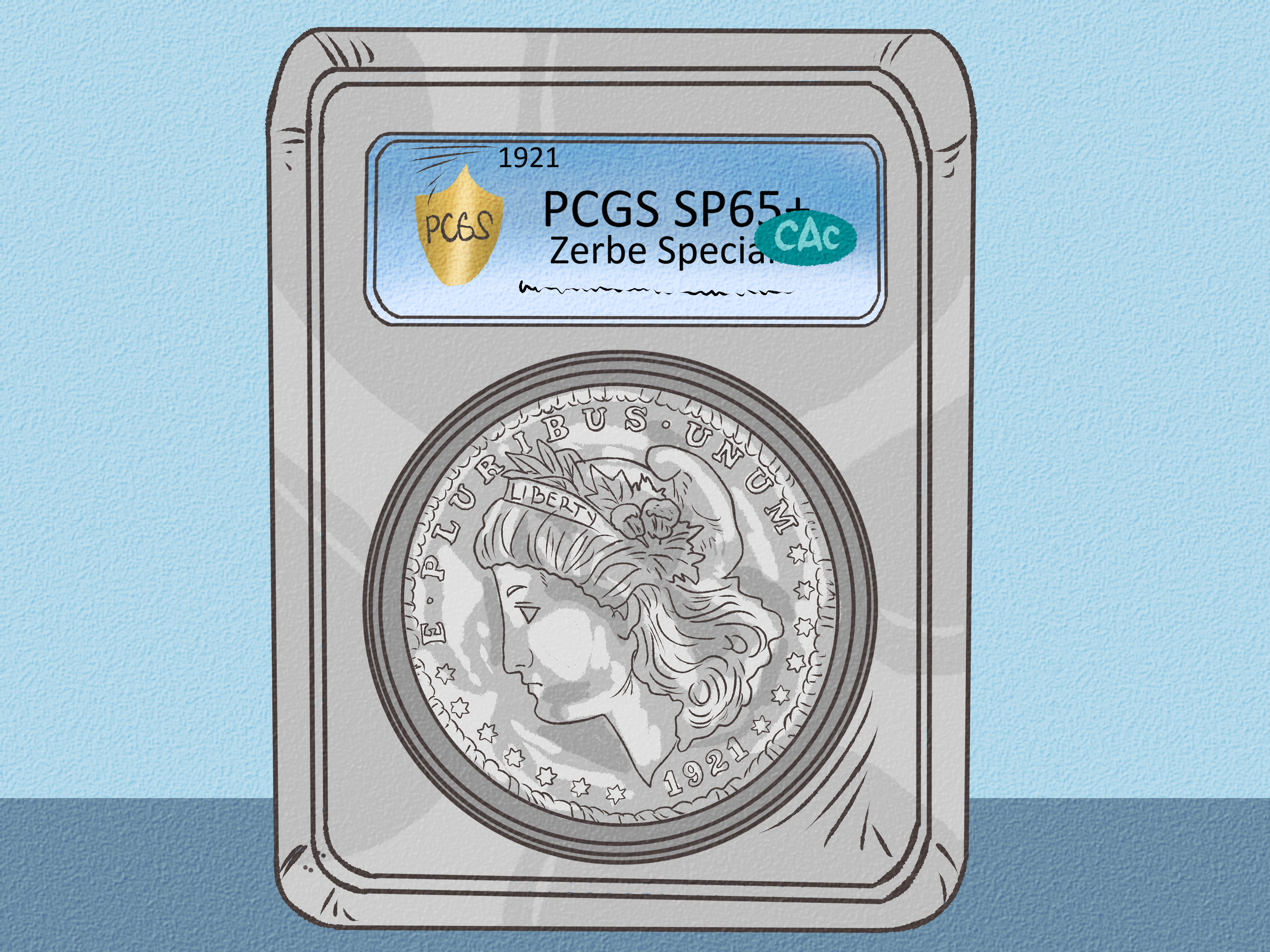
Certified coins from major grading services are usually easier to value and sell. Certification can be especially helpful for 1921 Peace dollars and higher-grade Morgan dollars. A slabbed coin is not automatically valuable, but it gives buyers more confidence in authenticity and grade.
How to Identify Your 1921 Silver Dollar
Start with the design. If Liberty has a soft cap and the reverse eagle has outstretched wings, you have a Morgan dollar. If Liberty has a radiant crown and the reverse eagle is perched calmly like it has just finished a very patriotic meditation session, you have a Peace dollar.
Next, check for a mint mark. On a 1921 Morgan dollar, look on the reverse below the wreath and above the “DO” in “DOLLAR.” No letter means Philadelphia, “D” means Denver, and “S” means San Francisco. On a 1921 Peace dollar, there is no mint mark because all were struck at Philadelphia.
Then assess condition. Look for wear on Liberty’s hair, cheek, cap, eagle feathers, and high points. Heavy wear lowers grade. Original luster, sharp details, and clean surfaces raise value. Use a magnifying glass, good lighting, and patience. Do not use harsh chemicals, polish, baking soda, toothpaste, or any other “miracle” cleaning trick from the internet. The coin has survived over 100 years. Do not let a five-minute experiment become the villain origin story.
Common Problems That Lower Value
Many 1921 silver dollars lose value because of damage rather than wear. Cleaning is one of the biggest issues. A cleaned coin may look bright to beginners, but experienced collectors often notice unnatural shine, hairline scratches, or dull gray surfaces.
Other problems include rim dents, deep scratches, corrosion, holes, graffiti, and artificial toning. A coin can still have silver value even with damage, but the collector premium may drop sharply. This is especially true for common-date Morgan dollars, where buyers have plenty of better examples to choose from.
Should You Get a 1921 Silver Dollar Graded?
Grading makes sense when the possible value justifies the cost. For a common circulated 1921 Morgan dollar worth modestly above melt, professional grading may cost more than the extra value it adds. For a 1921 Peace dollar, a high-grade Morgan, or any coin that appears unusually sharp, lustrous, or valuable, certification may be worth considering.
A practical rule: if your coin might be worth several hundred dollars or more, professional grading becomes more attractive. If it is heavily worn, cleaned, or damaged, grading may not be necessary unless you need authentication.
Where Can You Sell a 1921 Silver Dollar?
You can sell a 1921 silver dollar through a local coin shop, coin show, online marketplace, bullion dealer, or auction platform. Each option has trade-offs. Local coin shops offer convenience and quick payment, but the offer may be below full retail because the dealer needs room for resale. Auctions can bring strong prices for better coins, but fees and timing matter.
For common circulated Morgan dollars, compare multiple offers and check recent sold prices, not just asking prices. Anyone can ask $500 for a common coin online. That does not mean a buyer is lining up with confetti and a cashier’s check.
Collector Experience: Lessons From Handling 1921 Silver Dollars
One of the best parts of collecting 1921 silver dollars is that they teach several coin-collecting lessons in one neat, heavy package. The first lesson is that a date alone does not determine value. Many beginners see “1921” and assume age equals rarity. That makes sense at first glance; anything over a century old feels special. But the 1921 Morgan dollar was produced in enormous numbers, so many examples remain available today. The 1921 Peace dollar, meanwhile, is far scarcer and has the extra appeal of being a first-year high relief issue.
The second lesson is that condition matters more than most new collectors expect. Two coins with the same date can have completely different values. A worn 1921 Morgan dollar might be a pleasant silver keepsake, while a bright certified Mint State example with strong luster can attract serious collector attention. A 1921 Peace dollar with weak details may still be desirable, but one with a sharper strike and clean surfaces is much more exciting. This is why experienced collectors do not just ask, “What year is it?” They ask, “What is the grade, is it original, and does it have eye appeal?”
The third lesson is emotional: old silver dollars feel different. They are large, heavy, and satisfying to hold. A modern coin can feel ordinary, but a Morgan or Peace dollar feels like it belongs in a leather pouch, a bank vault, or a movie scene where someone says, “This belonged to my grandfather.” That physical presence is one reason these coins remain popular with collectors, stackers, and history lovers.
When evaluating a 1921 silver dollar, take your time. Place it under a soft light. Tilt it slowly. Look at Liberty’s cheek, hair, and the open fields. Check the eagle’s feathers. Notice whether the surfaces look natural or oddly polished. A coin with original skin may not be mirror-bright, but it can have a calm, honest look that collectors appreciate. Cleaned coins often look too shiny in the wrong way, like someone gave them a makeover they never requested.
Another useful experience is comparing several examples side by side. A single 1921 Morgan dollar might look impressive until you compare it with a sharper, more lustrous one. Then you begin to see the difference between ordinary, attractive, and exceptional. This “eye training” is one of the most valuable skills in coin collecting. Price guides are helpful, but your eyes are the first tool you use.
Finally, remember that value is not always just financial. A 1921 silver dollar inherited from family may be worth more to you than its market price. If you plan to sell, learn the coin’s type, mint mark, condition, and approximate retail value first. If you plan to keep it, store it properly in a non-PVC holder, avoid cleaning it, and label it clearly. Future youor a future family memberwill appreciate the effort.
Conclusion
So, how much is a 1921 silver dollar worth? If it is a common circulated Morgan dollar, it may be worth around $55 to $100 in many current retail situations, with higher prices for better Mint State examples. If it is a 1921 High Relief Peace dollar, the value can jump to hundreds of dollars in circulated grades and thousands for attractive certified Mint State coins.
The smartest approach is to identify the design first, check the mint mark if it is a Morgan dollar, estimate condition carefully, and compare recent sold prices for coins in similar grade. A 1921 silver dollar is always worth at least attentionand often more than face value by a very comfortable margin. Not bad for a coin that still says “ONE DOLLAR.”