Writing a book name in an essay sounds simple until you are staring at your sentence wondering, “Do I italicize this? Put it in quotation marks? Capitalize every word? Whisper an apology to my English teacher?” Good news: once you understand the basic rules, book titles become much less mysterious. They are not tiny grammar traps hiding in your paragraph. They are simply names of longer works, and most academic styles treat them in predictable ways.
This guide explains 4 ways to write a book name in an essay, with clear examples for MLA, APA, Chicago, and general classroom writing. Whether you are writing about To Kill a Mockingbird, The Great Gatsby, Harry Potter and the Sorcerer’s Stone, or a textbook that weighs more than your backpack, these rules will help you format book titles correctly and confidently.
Why Book Title Formatting Matters
Correctly formatting a book name in an essay does more than make your paper look polished. It helps readers instantly understand what kind of work you are discussing. A book title is usually treated as a major, standalone work, while a chapter, article, poem, or short story is treated as a smaller part of a larger work.
For example, The Lord of the Rings is a book title, so it is italicized. “The Shadow of the Past,” a chapter inside that book, appears in quotation marks. The formatting acts like a road sign: italics usually say, “This is a whole thing,” while quotation marks say, “This is a piece of a larger thing.” Handy, right?
1. Italicize Book Titles in Most Essays
The most common and accepted way to write a book name in an essay is to italicize the title. This rule applies in most modern academic and professional writing styles, including MLA and Chicago. If the work is a full-length, standalone publication, such as a novel, biography, memoir, textbook, or anthology, italics are usually the correct choice.
Examples of Italicized Book Titles
Here are a few correct examples:
- Harper Lee’s To Kill a Mockingbird explores justice, prejudice, and childhood innocence.
- In Pride and Prejudice, Jane Austen uses humor to criticize social expectations.
- Students often read 1984 as a warning about surveillance and authoritarian power.
- The Catcher in the Rye remains one of the most debated novels in American classrooms.
Notice that the book title is part of the sentence, but the punctuation around it follows normal grammar rules. The italics only apply to the title itself, not the entire sentence. In other words, do not let italics run wild like a caffeinated squirrel.
When Italics Are Especially Important
Italicizing book titles is especially important in formal essays, literary analysis papers, research papers, college applications, and published blog content. It makes your writing look intentional and professional. If you are writing online and your publishing platform supports italics, use them.
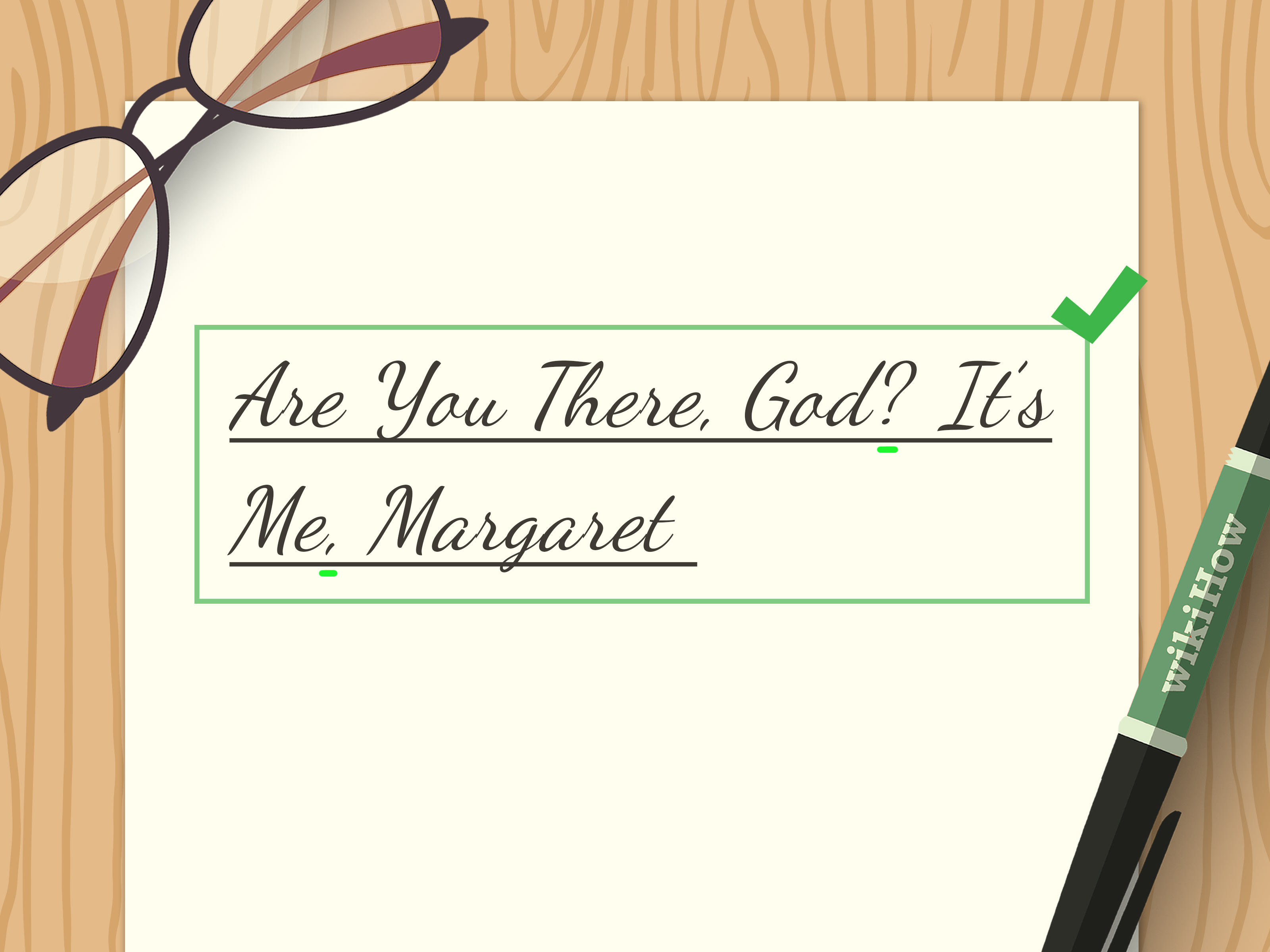
If you cannot use italics because you are writing by hand or using a plain-text system, underlining may be acceptable in some classroom contexts. For example, handwritten essays traditionally underline book titles because italics are hard to show clearly with a pen. However, in typed essays, italics are the standard choice.
2. Use Quotation Marks Only for Parts of Books
One common mistake is putting book titles in quotation marks. In most academic writing, quotation marks are not used for full book titles. Instead, they are used for smaller works or sections inside larger works, such as chapters, short stories, essays, articles, and poems.
Book Title vs. Chapter Title
Compare these examples:
- Correct: Mary Shelley’s Frankenstein raises questions about science and responsibility.
- Correct: The chapter “The Sound of the Shell” introduces key conflicts in Lord of the Flies.
- Incorrect: Mary Shelley’s “Frankenstein” raises questions about science and responsibility.
The book title Frankenstein is italicized because it is a complete work. The chapter title “The Sound of the Shell” is placed in quotation marks because it is one part of a book. This distinction may feel small, but teachers, editors, and style-conscious readers notice it quickly.
Short Works Usually Take Quotation Marks
Use quotation marks for:
- Chapter titles
- Short story titles
- Poem titles
- Essay titles
- Article titles
- Individual episode titles
For example, you would write The Things They Carried for Tim O’Brien’s book, but “The Things They Carried” for the short story of the same name. Yes, the same words can be formatted differently depending on whether they refer to the whole book or a smaller piece. English enjoys keeping us humble.
3. Capitalize Book Titles Correctly
Knowing whether to italicize a book title is only half the battle. You also need to capitalize it correctly. In most essay writing, especially MLA and Chicago-style writing, book titles use title case. That means you capitalize the main words in the title.
How Title Case Works
In title case, capitalize:
- The first and last word of the title
- Nouns, pronouns, verbs, adjectives, and adverbs
- Subordinating conjunctions such as “Because,” “Although,” and “While”
- Important words after a colon or dash
Usually, you do not capitalize short articles, coordinating conjunctions, or prepositions unless they appear as the first or last word. These include words such as “a,” “an,” “the,” “and,” “but,” “for,” “of,” “in,” and “to.”
Examples of Correct Capitalization
- The Old Man and the Sea
- Where the Red Fern Grows
- A Wrinkle in Time
- The Lion, the Witch and the Wardrobe
- Harry Potter and the Prisoner of Azkaban
Notice that small words like “and,” “the,” “in,” and “of” may remain lowercase when they are not the first word. However, the first word of a title is always capitalized, even if it is a small word. That is why A Wrinkle in Time starts with a capital “A.” Grammar may be picky, but at least it is consistent sometimes.
APA Has a Special Rule for References
APA style often uses sentence case for book titles in reference lists. Sentence case means you capitalize only the first word of the title, the first word after a colon or dash, and proper nouns. However, when you mention a book title in the body of an essay, many writers still present it in a readable title-style form. If your instructor requires APA style, always follow the specific assignment directions.
For example, in an APA reference list, a title might appear as Thinking, fast and slow. In an essay sentence, a student might write, “Daniel Kahneman’s Thinking, Fast and Slow explains how human judgment can be shaped by two systems of thought.” The key is to understand the difference between essay text and a formal reference entry.
4. Introduce Book Names Smoothly in Your Sentences
The final way to write a book name well is not just about formatting. It is about making the title fit naturally into your sentence. A book title should not feel dropped into your paragraph like a brick through a window. It should connect clearly to the author, topic, argument, or evidence you are discussing.
Mention the Author with the Book Title
When introducing a book for the first time, include the author’s full name if it helps your reader. After that, you can usually use the author’s last name.
Example:
In The Great Gatsby, F. Scott Fitzgerald presents wealth as glamorous on the surface but morally empty underneath.
This sentence works because it identifies the book, the author, and the main idea in one clean move. It does not just say, “The Great Gatsby is good.” That sentence may be emotionally true after you survive the green light symbolism, but it is not very analytical.
Use Book Titles to Support an Argument
A strong essay does not mention a book title randomly. It uses the title as part of a larger claim. For example:
Instead of writing, “I read Animal Farm in school,” write, “George Orwell’s Animal Farm uses a simple farm setting to expose how political power can become corrupt.”
The second sentence gives readers a reason to care. It moves from identification to analysis, which is exactly what strong essay writing should do.
Avoid Overloading Sentences with Titles
If your essay discusses several books, do not cram every title into one sentence. Readers should not need hiking boots to climb through your introduction. Break complex ideas into separate sentences.
Weak example:
Fahrenheit 451, 1984, Brave New World, and The Handmaid’s Tale all show bad futures and are about society and control.
Better example:
Several dystopian novels explore how power can limit personal freedom. Ray Bradbury’s Fahrenheit 451 focuses on censorship, while George Orwell’s 1984 examines surveillance and political manipulation.
The improved version is clearer, smoother, and more specific. It gives each book room to breathe.
Common Mistakes When Writing Book Names in Essays
Mistake 1: Using Quotation Marks for a Full Book
Incorrect: “The Hobbit” is a fantasy novel by J.R.R. Tolkien.
Correct: The Hobbit is a fantasy novel by J.R.R. Tolkien.
Mistake 2: Forgetting to Italicize the Title
Incorrect: In The Color Purple, Alice Walker explores trauma, identity, and resilience.
Correct: In The Color Purple, Alice Walker explores trauma, identity, and resilience.
Mistake 3: Capitalizing Every Tiny Word
Incorrect: The Old Man And The Sea
Correct: The Old Man and the Sea
Mistake 4: Italicizing the Author’s Name
Incorrect: Toni Morrison wrote Beloved.
Correct: Toni Morrison wrote Beloved.
Only the book title is italicized. The author’s name stays in regular type unless it appears as part of a title, which is uncommon.
Quick Style Guide: MLA, APA, and Chicago
MLA Style
MLA style is common in literature, language, and humanities courses. In MLA essays, book titles are generally italicized, and shorter works such as poems, articles, essays, and short stories are placed in quotation marks. MLA also typically uses title case for book titles in the body of the essay.
APA Style
APA style is common in psychology, education, social sciences, and health-related writing. APA italicizes book titles in reference entries and uses sentence case in the reference list. In essay text, writers should still make sure book titles are clearly identified and formatted consistently according to instructor expectations.
Chicago Style
Chicago style is widely used in history, publishing, and some humanities fields. Like MLA, Chicago generally italicizes titles of major standalone works, including books, journals, films, and plays. Shorter works, such as chapters and articles, usually appear in quotation marks.
Practical Examples for Different Essay Sentences
Literary Analysis Example
In Jane Eyre, Charlotte Brontë presents independence as both a personal desire and a moral challenge.
Research Essay Example
Michelle Alexander’s The New Jim Crow has shaped modern discussions about mass incarceration and racial inequality in the United States.
Personal Essay Example
Reading Charlotte’s Web as a child taught me that friendship can be gentle, brave, and surprisingly emotional for a story involving a spider.
Comparison Essay Example
Both Little Women and Pride and Prejudice examine marriage, family, and women’s choices, but they do so through very different cultural settings.
of Experience: What Students Learn When Writing Book Names in Essays
From experience, one of the biggest challenges students face is not understanding the rule once it is explained. The real challenge is remembering to apply it while writing under pressure. During an essay exam, a student may know perfectly well that book titles should be italicized, but when the clock is ticking and the introduction still sounds like a sleepy robot wrote it, formatting can slip away. That is normal. The solution is to build a quick editing habit.
After finishing a draft, scan the essay only for titles. Do not check grammar, commas, thesis statements, or whether your conclusion sounds dramatic enough to win an award. Just look for book names. Ask three questions: Is this a full book? Is it italicized? Is it capitalized correctly? This simple title-only review catches many errors in less than two minutes.
Another useful experience is learning to separate book titles from chapter titles. Many students write about textbooks, novels, anthologies, or collections and accidentally format everything the same way. For instance, a student might italicize both The Norton Anthology of American Literature and a short story inside it. The anthology title should be italicized because it is the larger book. The short story title should be in quotation marks because it is a smaller work inside that book. Once students picture books as containers, the rule becomes easier. Big container: italics. Smaller item inside: quotation marks.
Students also often worry about punctuation. Should the comma after a book title be italicized? Usually, punctuation that is not part of the title should not be italicized. For example, in the sentence “In Beloved, Morrison explores memory and trauma,” the comma after the title is regular punctuation. Most readers will not faint if the comma accidentally leans with the title, but clean formatting shows care.
Another practical lesson: consistency matters. If you italicize The Great Gatsby in your introduction but write The Great Gatsby without italics later, the essay feels less polished. Even when the analysis is strong, inconsistent formatting can distract the reader. Think of title formatting like wearing matching shoes. The outfit may still function without them, but people will notice.
Finally, writing book names correctly gives students confidence. It is a small skill, but it signals control. When your essay correctly presents Of Mice and Men, The Bluest Eye, and The House on Mango Street, readers can focus on your ideas instead of your formatting. That is the real goal. Good formatting does not make the argument for you, but it clears the path so your argument can walk in without tripping over quotation marks.
Conclusion
Learning how to write a book name in an essay is easier than it first appears. In most academic writing, full book titles are italicized, shorter works are placed in quotation marks, major words are capitalized in title case, and titles should be introduced smoothly within your sentences. MLA, APA, and Chicago may differ in some details, especially in reference lists, but the main principle stays steady: books are standalone works, and standalone works usually deserve italics.
Before submitting your essay, take one final look at every book title. Make sure it is italicized, capitalized correctly, and connected naturally to your point. Your teacher may not throw a parade, but your paper will look cleaner, smarter, and more professional. In essay writing, that is a pretty solid victory.