Timberland boots have reached that rare level of footwear fame where people recognize them from across the street. The wheat-colored 6-inch boot is rugged, stylish, and somehow equally at home on a hiking trail, a construction site, a college campus, and a music video set. Naturally, that popularity attracts copycats. Where there is an iconic boot, there is usually someone on the internet selling a suspiciously cheap version with the confidence of a magician and the grammar of a broken printer.
Learning how to spot fake Timberlands is not just about protecting your outfit. It is about protecting your money, comfort, safety, and personal information. Counterfeit boots may look convincing in a few blurry photos, but once you inspect the materials, logo, stitching, packaging, seller, and price, many fakes start waving red flags like they are auditioning for a parade.
This guide breaks down 11 telltale signs of fake Timberlands, with practical examples and buyer-friendly advice. Whether you are shopping online, checking a secondhand pair, or wondering why your new boots feel like cardboard wrapped around regret, these tips will help you separate real Timberlands from wannabe “Timb-ish” boots.
Why Fake Timberlands Are So Common
Timberland boots are counterfeited because they are popular, recognizable, and valuable. A genuine pair of premium 6-inch waterproof boots is built with quality leather, seam-sealed construction, supportive components, insulation, a padded collar, and a durable rubber lug outsole. Those details cost real money to design and manufacture. Counterfeiters, on the other hand, often chase the look without paying for the performance.
That is the heart of the fake Timberlands problem: from a distance, a counterfeit pair may appear close enough. Up close, the shortcuts usually show. The color may look off, the logo may be poorly stamped, the stitching may wander like it forgot where it was going, and the sole may feel flimsy. A fake boot can also wear out quickly, lose traction, or feel uncomfortable after only a short time.
The good news is that you do not need to be a footwear scientist with a microscope and a suspicious squint. You just need a method. Use the 11 signs below as a checklist before buying Timberland boots from a reseller, marketplace, discount website, or social media seller.
How to Spot Fake Timberlands: 11 Telltale Signs
1. The Price Is Too Good to Be True
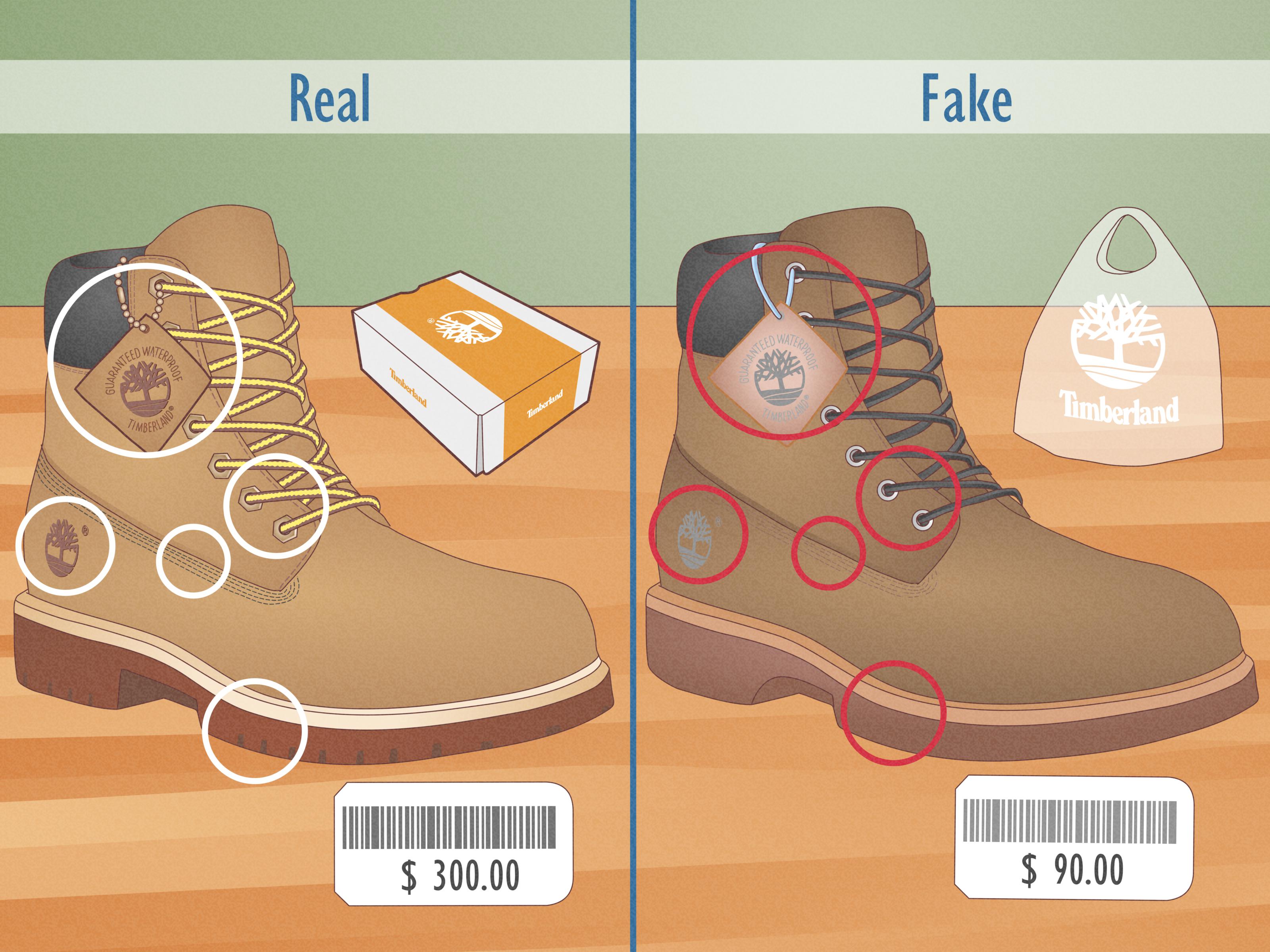
Start with the obvious clue: price. Genuine Timberland boots are not normally sold for pocket-change prices. While seasonal sales and outlet discounts do happen, a brand-new pair of premium Timberlands listed at an unbelievably low price should make your eyebrows climb.
For example, if a current premium model usually sells around the high hundreds and you find a “new with box” pair for $39.99 from an unknown website, do not celebrate yet. Counterfeit sellers use dramatic discounts to create urgency. They know shoppers love a deal, and they also know excitement can temporarily disable common sense. It happens. We are human. Sale banners are basically digital confetti.
Compare the price with Timberland’s official site and trusted retailers. If the discount is massive, the seller is unknown, and the page uses countdown timers or phrases like “factory clearance final today only,” slow down. A real bargain should still come with a real seller, a real return policy, and real proof of authenticity.
2. The Seller or Website Looks Suspicious
Fake Timberlands are often sold through copycat websites, social media ads, marketplace listings, and unfamiliar online stores. A scam website may use Timberland-like colors, stolen product photos, and a domain name that looks almost official. Watch for small spelling changes, extra words, odd domain endings, or URLs that mash the brand name together with “sale,” “vip,” “outlet,” or “clearance.”
A trustworthy seller should provide clear contact information, secure checkout, transparent shipping terms, a return policy, and consistent branding. If the website has broken English, missing company details, no physical address, copied reviews, or only one payment method, treat it like a muddy puddle in new boots: step carefully or avoid it entirely.
When in doubt, buy from Timberland directly, an authorized retailer, or a reputable marketplace with authentication support. If you already found a questionable site, contact Timberland’s counterfeit reporting channel and ask whether that website is authorized to sell genuine Timberland products.
3. The Box Looks Cheap, Damaged, or Incorrect
The box is your first physical clue. Authentic Timberland boots usually arrive in sturdy packaging with clean printing, proper labeling, and product information that matches the boots inside. Counterfeit boxes may feel thin, faded, or poorly assembled. The label may be crooked, blurry, incomplete, or missing key details such as size, color, style number, barcode, and model information.
Pay attention to consistency. If the box says one color and the boots are clearly another, that is a problem. If the label lists a women’s size but the boots are men’s, that is another problem. If the barcode looks printed by a sleepy inkjet from 2003, congratulations, you have found yet another problem.
Secondhand boots may not always come with the original box, so missing packaging does not automatically mean fake. However, for new boots, the box should support the story, not create a mystery novel.
4. The Logo Looks Wrong
The Timberland tree logo is one of the easiest details to inspect. On genuine boots, the logo should look clean, balanced, and sharply embossed or stamped. The lines should be clear, the tree should be recognizable, and the placement should match the model.
Fake Timberlands may have a logo that is too dark, too shallow, too deep, too large, too small, uneven, blurry, or placed awkwardly. Some counterfeit logos look like the tree had a rough weekend. Others may be printed instead of properly embossed, or the heel and sole logos may not match each other.
Compare the logo with product photos from Timberland’s official website. Do not rely on memory alone. The human brain is wonderful, but it also once convinced many of us that low-rise jeans were a long-term plan. Use a reference image.
5. The Stitching Is Messy or Uneven
Quality stitching is a major sign of authentic Timberland craftsmanship. On genuine boots, stitch lines should be neat, consistent, and strong. The thread should not be loose, frayed, or randomly changing direction. The spacing should look intentional, not like someone stitched the boot while riding a roller coaster.
Counterfeit Timberlands often reveal themselves through sloppy stitching. Look for uneven lines, skipped stitches, extra thread, loose ends, or mismatched colors. Pay close attention around the collar, side panels, heel, tongue, and sole connection. These are areas where poor construction becomes easier to spot.
A single tiny imperfection does not automatically prove a boot is fake, because even real products can have small manufacturing variations. But multiple sloppy areas across the boot are a strong warning sign.
6. The Leather or Nubuck Feels Wrong
Genuine Timberland boots are known for durable leather and nubuck materials. The classic wheat boot has a recognizable texture: soft but sturdy, matte rather than shiny, and structured without feeling plasticky. Fake boots often use lower-grade synthetic materials or thin leather substitutes that look too smooth, too glossy, too stiff, or strangely fuzzy.
Run your hand over the upper. Authentic nubuck should feel substantial and slightly velvety. If the material feels like cheap vinyl, smells strongly of chemicals, creases oddly, or has an unnatural plastic shine, be suspicious.
Also inspect the color. Real Timberland wheat nubuck has a warm, consistent tone, though shade can vary slightly by production and lighting. Fakes may look orange, greenish, dull gray, or patchy. If the boot color looks like it was chosen by a printer running out of ink, keep investigating.
7. The Sole and Tread Look Poorly Made
The outsole is where many fake Timberlands fall apartsometimes literally. Genuine Timberland boots are designed for traction and durability, with a sturdy lug sole that feels dense and well-formed. The tread pattern should be clean, the edges should be sharp, and the sole should be securely attached.
Counterfeit soles may use cheap rubber that feels light, slippery, overly soft, or poorly molded. Look for visible seam lines, rough edges, glue marks, uneven color, or logos that do not align with the rest of the boot. If the sole looks like it was melted into place during a lunch break, that is not a good sign.
Flex the boot gently. A real boot should feel supportive, not flimsy. If the sole bends too easily or makes strange cracking sounds, it may not offer the durability or traction people expect from Timberlands.
8. The Eyelets and Laces Feel Cheap
Do not ignore the small hardware. Authentic Timberland boots use sturdy eyelets and durable laces that match the boot’s design. The eyelets should be properly set, evenly spaced, and firmly attached. The laces should feel strong, not thin, slippery, or fragile.
Fake boots may have eyelets that look too shiny, too dull, poorly colored, loose, or unevenly placed. The laces may be the wrong shape, wrong color, or made from weak material. On some counterfeit pairs, the hardware looks almost right at first glance, but a closer look reveals rough edges, bad spacing, or inconsistent finishing.
A useful trick is to compare both boots side by side. On genuine pairs, the left and right boots should match closely. On fakes, one side may look slightly different from the other, as if the boots met for the first time inside the box.
9. The Tongue Label, Size Tag, or Style Number Does Not Match
The inside label matters. Authentic Timberlands should include accurate sizing, style, and manufacturing details. The information should be cleanly printed and consistent with the box and the model. If the label is blurry, misspelled, crooked, or missing, take it seriously.
Check the style number against Timberland’s official product listing when possible. For example, an official product page may show a style code for a specific model and color. If your boot’s tag claims to be that model but the color, shape, materials, or size range do not match, something is off.
Misspellings are especially suspicious. A label that says “Timbreland,” “Timberlond,” or “Waterprof” is not a charming quirk. It is a red flag wearing boots.
10. The Fit, Weight, or Comfort Feels Off
Authentic Timberland boots feel substantial. They are not featherlight fashion props. Depending on the model, genuine boots may include insulation, leather lining, anti-fatigue footbeds, steel shanks, padded collars, and supportive soles. That construction gives them a certain weight and structure.
Fake Timberlands may feel strangely light, hollow, stiff, or uncomfortable right away. The insole may be thin, the collar may lack padding, or the boot may rub in odd places. While real Timberlands often require a break-in period, they should not feel like a punishment invented by footwear villains.
Fit can vary by model, and Timberland even notes that some premium boots run large. Still, if the size feels wildly inaccurate, the shape looks distorted, or the two boots fit differently, that is worth questioning.
11. The Seller Avoids Questions or Proof
A legitimate seller should be able to provide clear photos, proof of purchase, product details, and a straightforward return policy. A counterfeit seller often avoids specifics. They may refuse additional photos, dodge questions about receipts, pressure you to pay quickly, or insist that the boots are “100% authentic” without evidence.
Ask for photos of the box label, tongue tag, outsole, logo, stitching, heel, and receipt if available. For online listings, request natural-light images rather than only polished product shots. If the seller gets defensive or says, “Trust me bro,” remember that “bro” is not an authentication service.
For higher-priced pairs, consider using platforms that offer authentication or buyer protection. It may cost more than a random social media deal, but peace of mind has valueespecially when the alternative is paying real money for fake boots and a life lesson.
Real Timberlands vs Fake Timberlands: A Quick Comparison
| Feature | Authentic Timberlands | Fake Timberlands |
|---|---|---|
| Price | Consistent with official or authorized retailer pricing | Unrealistically cheap or heavily discounted |
| Logo | Clean, sharp, properly placed tree logo | Blurry, uneven, too dark, or oddly positioned logo |
| Stitching | Neat, even, strong, and consistent | Loose threads, uneven spacing, messy lines |
| Material | Quality leather or nubuck with sturdy texture | Plastic-like, overly shiny, thin, or chemical-smelling material |
| Sole | Durable rubber lug outsole with clean molding | Cheap rubber, glue marks, rough seams, poor traction |
| Labels | Accurate size, style, barcode, and model information | Misspellings, blurry print, mismatched codes |
| Seller | Authorized retailer, clear policy, proof available | Unknown site, vague answers, pressure tactics |
What to Do If You Think Your Timberlands Are Fake
If you suspect your Timberlands are fake, do not panic. First, gather evidence. Take clear photos of the box, labels, logo, outsole, stitching, receipt, and seller page. Compare the details with Timberland’s official product images. If you purchased from a marketplace, open a dispute through the platform before the buyer-protection window closes.
Next, contact the seller and request a refund. Keep communication polite but firm. If the product was advertised as authentic and appears counterfeit, explain the specific issues: mismatched style number, poor logo, incorrect packaging, suspicious materials, or missing proof of purchase.
You can also report suspicious websites or sellers to Timberland’s counterfeit reporting contact. For payment issues, contact your card provider or payment service. Avoid sending the boots back without tracking, and never accept strange refund conditions such as paying additional “verification fees.” That is how one bad purchase becomes a sequel nobody asked for.
Smart Buying Tips to Avoid Fake Timberlands
Buy From Trusted Sources
The safest option is Timberland’s official website, official stores, factory outlets, or authorized retailers. If you shop resale, use sellers with strong reputations, detailed photos, clear policies, and authentication support when available.
Compare Before You Pay
Open the official product page and compare the boot’s color, construction, outsole, collar, logo placement, and style number. A fake pair may pass one detail, but it usually struggles to pass all of them.
Use Secure Payment Methods
Credit cards and trusted payment platforms typically offer better dispute options than wire transfers, cryptocurrency, gift cards, or direct bank payments. If a seller insists on a risky payment method, walk away. Your wallet deserves boundaries.
Be Careful With Social Media Ads
Scam stores often advertise through polished social media posts. A professional-looking ad does not prove authenticity. Check the domain, reviews, contact details, return policy, and brand authorization before entering payment information.
Experience-Based Advice: What Real-World Buyers Notice After Wearing Timberlands
Here is where experience becomes useful. Fake Timberlands often look most convincing in still photos. The problems become clearer once you hold them, lace them, walk in them, and wear them for a few days. Real boots tend to have a grounded feel. They feel structured, supportive, and solid. The collar padding hugs the ankle instead of collapsing. The laces pull evenly. The outsole grips instead of sliding around like it has other plans.
One common buyer experience is the “first touch test.” With authentic Timberlands, the leather or nubuck usually feels substantial. It has texture and body. With fakes, the upper may feel thin, plasticky, or oddly stiff. Some buyers describe counterfeit pairs as looking acceptable on a shelf but feeling wrong in hand. That instinct matters. If the boot feels like a costume version of a work boot, keep checking.
Another practical experience comes from the break-in period. Genuine Timberlands can feel firm at first, especially the classic 6-inch boot, but they should gradually shape to your foot. Fake pairs may not break in properly because the materials are poor. Instead of becoming more comfortable, they may crease badly, rub the heel, pinch the toes, or lose shape. In other words, authentic boots may need patience; fake boots demand forgiveness they have not earned.
Weather performance also tells a story. Timberland’s premium waterproof boots are designed with weather-ready features, but counterfeit boots may fail quickly in rain, puddles, or slushy conditions. If water seeps in almost immediately, the sole separates, or the upper stains in strange patches after light wear, the boots may not be genuineor they may be badly damaged. Either way, it is not the performance shoppers expect from the brand.
Long-term wear is another clue. Authentic Timberlands are not indestructible, despite what loyal fans may suggest after three coffees. They still need cleaning, care, and proper storage. But genuine pairs usually age in a more predictable way: leather softens, soles wear gradually, and stitching remains intact under normal use. Fake boots often age dramatically. The sole may peel, the collar may crack, the color may fade unevenly, or the stitching may unravel after only a handful of wears.
Resale buyers often learn to trust detailed photos. A seller who posts only one blurry side angle is not giving you enough information. Ask for close-ups of the tree logo, tongue label, box sticker, outsole tread, heel, stitching, and inside lining. Real sellers may not be professional photographers, but honest sellers usually understand why you are asking. Fake sellers often avoid close-ups because close-ups are where counterfeits go to confess.
Finally, experienced buyers know that authenticity is about the full picture. One weird detail may be explainable. Different lighting can affect color. Older models can have small variations. Used boots may have replaced laces or missing boxes. But when the price is suspicious, the seller is vague, the logo is sloppy, the stitching is uneven, the label is wrong, and the website looks like it was built during a lunch break, the answer is probably not “rare edition.” It is probably fake.
Conclusion
Knowing how to spot fake Timberlands comes down to slowing down and checking the details. Look at the price, seller, box, logo, stitching, leather, sole, hardware, labels, fit, and proof of purchase. Authentic Timberlands are built with quality materials and careful construction, while counterfeit pairs often reveal shortcuts through poor finishing, mismatched information, weak materials, or suspicious sales tactics.
The easiest way to avoid fake Timberlands is to buy from Timberland directly, authorized retailers, or trusted resale platforms with buyer protection. If you are shopping secondhand, ask questions, request photos, compare style numbers, and do not let a “limited-time deal” rush you into a bad purchase. Real Timberlands are made to last. Fake ones are made to fool you. Happily, with a sharp eye and a little patience, you can make sure your boots are the real dealand not just expensive disappointment with laces.