Note: This article is based on publicly available information about James Fridman, viral Photoshop humor, online photo-editing culture, and digital image ethics from sources including Bored Panda, My Modern Met, DeMilked, SELF, Know Your Meme, Adobe, Pew Research Center, and related media coverage.
There are two kinds of people on the internet: those who ask for a simple Photoshop fix, and those who accidentally hand a comedy genius a loaded banana peel. Somewhere in the middle stands James Fridman, the internet’s favorite Photoshop troll, calmly reading photo-editing requests like a mischievous genie who majored in graphic design and minored in “you should have been more specific.”
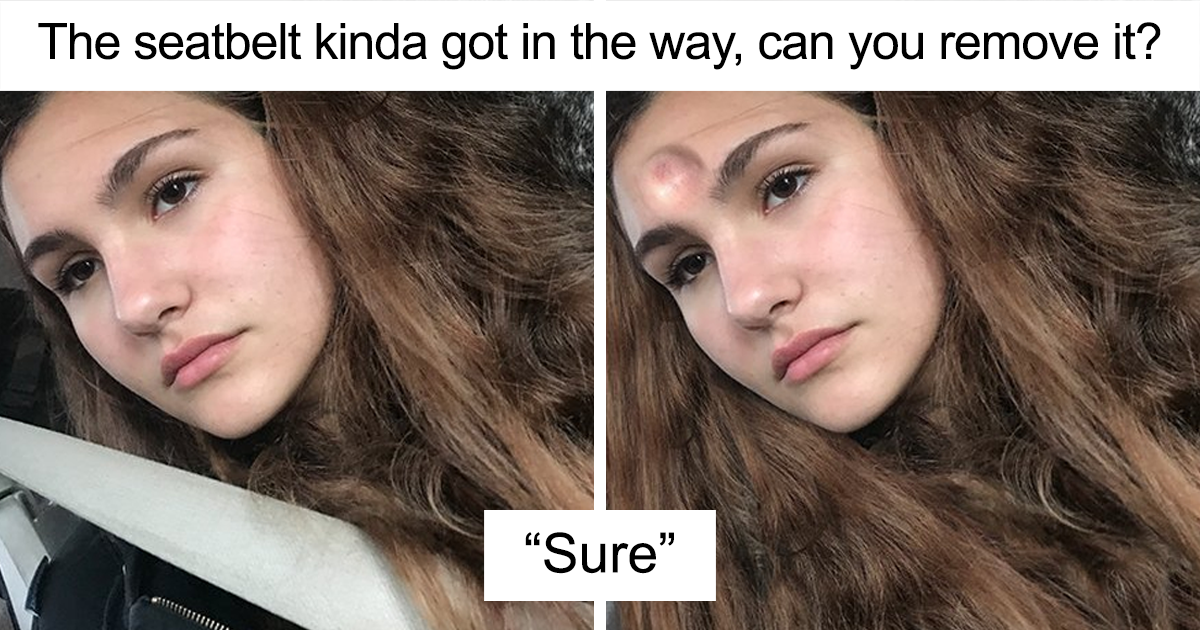
His formula sounds simple: people send him pictures and ask for changes. Remove this person. Make me look cooler. Put me closer to my friend. Fix the background. Make my boyfriend look less awkward. In the hands of an ordinary editor, these requests might produce polished, flattering images. In Fridman’s hands, they become tiny masterpieces of literal-minded chaos.
The latest batch of hilarious Photoshop requests proves once again why his work keeps circulating across social media. He does not simply edit photos; he edits expectations. He takes the request, obeys it with suspicious precision, and turns the result into a punchline that arrives half a second after your brain realizes what happened.
Who Is James Fridman, the Photoshop Troll?
James Fridman is a British graphic designer best known for his witty, skillful, and often brutally literal photo manipulations. His official site describes him as a designer whose work blends creativity and humor while encouraging people to embrace their uniqueness.
What makes him different from a standard meme account is that the joke usually begins with a real request. Someone wants a tiny adjustment. Fridman gives them exactly what they asked for, but rarely what they meant. A person asks to look “cooler,” and suddenly the joke may involve a refrigerator. Someone asks to be “closer” to another person, and the edit turns emotional distance into a visual disaster. It is grammar comedy wearing a Photoshop hoodie.
His rise has been covered repeatedly by humor and culture sites such as Bored Panda, My Modern Met, DeMilked, SELF, and Know Your Meme, where he is widely recognized for taking photo requests and twisting them into unexpected visual jokes.
Why These Literal Photoshop Edits Are So Funny
The comedy works because every edit has a tiny logic bomb hidden inside it. The request sounds normal. The result is technically correct. And that is exactly the problem.
For example, if someone asks to remove a distracting object, Fridman may remove it in the most absurdly complete way possible. If someone asks to look taller, he may stretch the body until the person resembles a human Wi-Fi antenna. If someone asks to make a background less awkward, the edit may make the foreground ten times worse. The humor comes from the gap between intention and wording.
This is why his best edits feel like visual dad jokes with professional lighting. They are not random. They are carefully built around language. The punchline depends on the exact phrasing of the request, which makes each image feel like a courtroom ruling delivered by a clown judge.
The Secret Ingredient: He Takes People Seriously in the Wrong Direction
Many internet trolls are mean for sport. Fridman’s style is different. His jokes are sharp, but they often avoid cruelty. He frequently uses photo editing to poke fun at vanity, vague instructions, and unrealistic beauty standards rather than simply mocking the person in the picture.
SELF noted early in his viral rise that Fridman’s work often highlights how unnecessary many appearance-based edits can be. Instead of simply “fixing” people, he sometimes leaves them unchanged or turns the request into a comment on self-acceptance.
That gives the comedy a second layer. Yes, the edits are hilarious. But they also make people ask: Why did this person want that changed in the first place? Was the original photo actually bad, or did the internet convince us that every chin, arm, shadow, wrinkle, and background stranger must be corrected before a picture deserves to exist?
17 New Pics, One Old Lesson: Be Careful What You Ask For
The phrase “be careful what you ask for” has never needed Photoshop more badly. In these new examples, the funniest moments come from requests that leave just enough room for disaster. A vague sentence becomes a trapdoor. A harmless suggestion becomes a portal to absurdity.
That is the genius of Fridman’s work. He does not need to invent a complicated joke. The requester writes the setup. He simply reads it like a suspiciously obedient robot and lets the misunderstanding do the heavy lifting.
1. The “Make Me Look Cooler” Problem
This is one of the classic categories of Photoshop troll humor. “Cooler” can mean stylish, confident, attractive, relaxed, or socially impressive. It can also mean physically cold. Guess which door the troll opens?
The best part is that the edit usually still fulfills the request. Nobody can accuse the man of ignoring the brief. The person is, in some sense, cooler. Unfortunately, that sense may involve ice, snow, or refrigeration.
2. The “Remove That Person” Trap
Many people ask editors to remove strangers from the background. It is a normal request. Weddings, vacations, prom photos, and beach shots are full of accidental extras. But in Fridman’s universe, “remove him” can go in several directions, most of them ridiculous.
Sometimes the edit removes more than expected. Sometimes it changes the whole context. Sometimes the “removed” person becomes the joke by being replaced with something even more distracting. It is like asking someone to swat a fly and watching them remodel the kitchen.
3. The “Can You Make Us Closer?” Disaster
In normal human language, “make us closer” usually means adjust the composition so two people appear nearer. In troll logic, it can mean emotional bonding, physical merging, or a visual nightmare that looks like a teleportation experiment went through a blender.
This category works because the request is sweet. The result is horrifyingly obedient. It takes a sentimental idea and turns it into a reminder that precision matters.
4. The “Fix My Outfit” Surprise
Outfit requests are especially dangerous. Ask to make a shirt look less wrinkled, and you might lose the shirt. Ask for a better hat, and you may get an object that technically counts as a hat only if your standards were raised by raccoons. Ask to look fashionable, and the edit may drag you straight onto a runway no airline would approve.
The joke lands because fashion already has a flexible relationship with reality. Fridman simply pushes that relationship into witness protection.
5. The “Make the Background Better” Curse
Background edits are common in everyday photo retouching. People want cleaner skies, fewer distractions, better scenery, or a less chaotic environment. Fridman often responds by making the background “better” in the most literal or least useful way possible.
The result reminds us that a photo is not just a subject. It is a story. Change the background too aggressively, and suddenly the entire image becomes a tiny movie poster for a film nobody greenlit.
Why People Keep Sending Him Photos Anyway
At this point, nobody can claim they were not warned. Fridman’s social profiles and shared posts frequently remind users not to submit personal photos they do not want made public. His Instagram profile, for instance, displays that warning clearly.
So why do people still send requests? Because being trolled by James Fridman has become its own kind of internet honor. It is not just photo editing; it is a lottery ticket for viral embarrassment. People know the risk. In fact, the risk is the point.
There is also a strange safety in his style. The edits are absurd, but they are usually not nasty. Many fans understand that the joke is on the wording, not the person. It is a comedy collaboration where one side provides the image and the other side provides the trapdoor.
The Role of Photoshop Humor in Internet Culture
Photoshop has always had a double life. On one side, it is a professional tool used for design, photography, publishing, advertising, and art. On the other side, it is the engine behind endless memes, visual pranks, fake movie posters, impossible animals, and celebrity edits that look like they were assembled during a power outage.
Fridman’s work sits in the sweet spot between technical skill and meme logic. The edits are funny because they are well executed. A bad edit can be funny by accident, but his are funny by design. The image must be convincing enough for the joke to work, but ridiculous enough that nobody mistakes it for reality.
That balance matters more than ever. As image-editing tools and AI-powered visual software become easier to use, audiences are becoming more aware of how quickly a picture can be changed. Adobe has highlighted digital trust and transparency through efforts like the Content Authenticity Initiative, which was created to help people understand where digital content comes from and how it may have been altered.
Fridman’s edits are clearly comedic, but they also train the viewer to look twice. That is a useful habit in a world where altered images are no longer just jokes; they can influence news, politics, advertising, and personal identity.
Why Literal Humor Works So Well Online
Literal humor travels fast because it does not require a long explanation. You see the request. You see the result. Your brain connects the two. Then your soul leaves your body for three seconds.
This format is perfect for social media. It is visual, quick, and easy to share. It works across languages because the core joke is structural. Even if someone does not catch every word, the before-and-after format makes the punchline obvious.
There is also a universal pleasure in watching vague instructions get punished. Anyone who has ever worked with clients, bosses, teachers, customers, or family group chats understands the pain of unclear communication. Fridman turns that pain into comedy. He is basically the patron saint of “as per your request.”
The Bigger Message Behind the Laughs
Under the jokes, there is a surprisingly thoughtful message: not every photo needs fixing. Some pictures are awkward because life is awkward. Some backgrounds are messy because the day was real. Some faces have shadows, lines, expressions, and asymmetry because humans are not product renders.
In an age when social media encourages people to polish every post until it squeaks, Fridman’s edits feel like a playful rebellion. They expose the absurdity of perfection. They say, “Sure, we can edit reality, but have you considered leaving reality alone before it files a complaint?”
Pew Research Center has reported that social media remains deeply embedded in American life, with major platforms attracting large shares of U.S. adults. That matters because the more people live through images, the more pressure there is to control how those images look.
Fridman’s humor works because it interrupts that pressure. It reminds people that the internet can be a stage, but it can also be a funhouse mirror. Sometimes the healthiest response to a “flawed” photo is not a smoother jawline or a cleaner background. Sometimes it is a joke so ridiculous that the original picture suddenly looks perfectly fine.
What Brands and Content Creators Can Learn From the Photoshop Troll
Marketers, bloggers, meme pages, and social media creators can learn a lot from this style of content. The first lesson is that a strong format matters. Fridman’s posts are instantly recognizable: request, edit, punchline. The audience knows the rhythm, but the surprise keeps it fresh.
The second lesson is that personality beats polish. Plenty of designers can retouch a photo beautifully. Far fewer can build a recognizable comedic voice around the act of retouching. Fridman’s brand is not just “good at Photoshop.” It is “dangerously good at reading exactly what you typed.”
The third lesson is that humor can carry a message without becoming a lecture. His work touches on self-image, vanity, communication, and digital manipulation, but it rarely feels heavy-handed. The joke opens the door. The reflection walks in later wearing fake mustache glasses.
Experience Section: What These Photoshop Troll Pics Teach Us About Real Life
Anyone who has ever asked for a “small change” knows how quickly things can spiral. Maybe you asked a friend to take a better photo and ended up doing a full sidewalk photoshoot while strangers walked around you like you were a traffic cone. Maybe you asked someone to crop out a messy room and discovered that half your head had been sacrificed to the composition gods. Or maybe you tried to edit your own picture and accidentally made your skin so smooth you looked like a decorative candle.
That is why James Fridman’s work feels so relatable. The photos are funny, but the situations behind them are familiar. We all know the tiny panic of looking at a good picture with one annoying flaw. A stranger in the background. A weird hand position. A shirt wrinkle. A sign sticking out of someone’s head. A facial expression that says, “I have just remembered an unpaid bill.” The first instinct is to fix it. The second instinct is to overfix it. The third instinct, if you are wise, is to laugh and move on.
These literal Photoshop edits also teach a practical lesson about communication. Clear instructions matter. In professional design, vague feedback can be a nightmare. “Make it pop” is not a direction; it is a cry for help wearing business casual. “Can you make it more modern?” could mean cleaner typography, brighter color, fewer elements, or adding a chrome robot holding a latte. When people ask Fridman for edits, the vague wording becomes part of the entertainment. In real projects, vague wording becomes a deadline-shaped meteor.
There is also something refreshing about seeing photo editing used to make images less perfect on purpose. Most editing apps promise confidence through correction: brighter eyes, smoother skin, smaller waist, sharper jaw, better sky, cleaner room, dreamier vacation. Fridman flips that promise upside down. His edits do not say, “You will look better.” They say, “You will look ridiculous, but at least the request was honored.” Oddly enough, that can be more comforting than another beauty filter.
The best personal takeaway is this: photos are allowed to be imperfect because life is not a magazine spread. A slightly awkward picture from a great day is still a great picture. A photobomb might become the funniest part of the memory. A messy background might prove that something real was happening. When every image is polished into sameness, personality gets sanded off too.
That does not mean editing is bad. Good editing can rescue lighting, improve composition, and help a photo communicate what the moment felt like. But there is a difference between improving a picture and trying to erase every sign that a human lived inside it. Fridman’s comedy lives right on that line. He shows us what happens when the desire for control becomes absurd.
So the next time you are tempted to ask the internet to fix your photo, pause for a second. Read your request out loud. Imagine a mischievous designer interpreting every word with the seriousness of a tax auditor. Then decide whether that stranger in the background is really ruining the photoor whether they are simply standing there, innocent, unaware that they almost became the next victim of a Photoshop troll.
Conclusion
“Photoshop Troll Who Takes Photo Requests Too Literally Strikes Again, And The Result Is Hilarious (17 New Pics)” is more than another funny internet roundup. It is a reminder that humor often hides in the gap between what people say and what they mean. James Fridman has turned that gap into an art form, using Photoshop not just to alter images but to expose the comedy of vague requests, online vanity, and our endless desire to look just a little more perfect.
His edits are clever because they are technically skilled, visually immediate, and emotionally light. They make people laugh without needing a long setup. They also quietly suggest that maybe the original photo did not need as much fixing as the requester thought. In a web culture full of filters, face tuning, and impossible standards, that message lands beautifullyusually while someone in the picture has been turned into a refrigerator, a background prop, or a human misunderstanding.
If there is one rule to remember, it is this: never send a Photoshop request to James Fridman unless you are prepared to receive exactly what you asked for. Not what you intended. Not what you hoped. Exactly what you typed. And honestly, that is why the internet keeps coming back for more.