Note: In roulette, “win” should mean playing smarter, stretching your bankroll, choosing better odds, and leaving the table before the wheel eats your snack money. No roulette system can guarantee profit because every spin is random and the casino keeps a mathematical edge.
Roulette looks simple enough: a wheel spins, a little ball clacks around like it has somewhere important to be, and everyone at the table silently negotiates with fate. You pick a number, color, section, or group of numbers. If the ball lands where you predicted, you win. If not, the dealer collects your chips with the calm efficiency of someone who has seen every “foolproof strategy” since 1796.
So, can you really learn how to win at roulette? Not in the magical, “quit your job and buy a yacht” sense. Roulette is a game of chance, and no betting pattern can change the odds of the next spin. However, you can make better decisions. You can choose the right version of roulette, avoid expensive traps, manage your bankroll, and use bets that fit your goal. That is the practical version of winning: losing less when luck is cold, enjoying the game longer, and being ready to walk away when luck gets friendly.
This guide breaks down four realistic ways to improve your roulette results. Think of it as roulette strategy without the smoke machine, fake promises, or suspicious guy in sunglasses whispering about “the secret pattern.”
Understanding Roulette Before You Try to Beat It
Before we get into the four ways to win at roulette, you need to understand the basic battlefield. Roulette wheels usually come in three main versions: European roulette, American roulette, and French roulette. European roulette has 37 pockets: numbers 1 through 36 plus a single green 0. American roulette has 38 pockets because it adds a green 00. Some casinos also offer triple-zero roulette, which adds 000 and gives the house an even larger edge.
That extra zero matters. A lot. On a European wheel, the house edge is about 2.70%. On a standard American double-zero wheel, the house edge is about 5.26%. Triple-zero roulette can push the edge even higher. In plain English, the more green pockets you see, the less friendly the wheel is to your wallet.
Roulette bets fall into two major families: inside bets and outside bets. Inside bets are placed on specific numbers or small groups of numbers. These include straight-up bets, splits, streets, corners, and lines. They pay more when they hit, but they hit less often. Outside bets cover larger groups, such as red or black, odd or even, high or low, dozens, and columns. They pay less, but they win more frequently.
The trick is not to find a “guaranteed roulette strategy.” The trick is to understand what each bet actually does to your bankroll.
1. Choose the Best Roulette Wheel Available
The first way to win at roulette happens before you place a single chip. Choose the best wheel. This sounds boring, but boring is often where the money hides.
If you have a choice, pick European roulette over American roulette. Better yet, choose French roulette if it offers player-friendly rules like la partage or en prison on even-money bets. These rules can reduce the house edge on certain bets because when the ball lands on zero, you may lose only half your wager or have part of the bet held for another spin.
Why the Wheel Matters More Than Your Lucky Socks
Let’s say you love betting on red. On an American wheel, there are 18 red numbers, 18 black numbers, and two green pockets: 0 and 00. Your red bet does not have a true 50/50 chance because the green pockets are neither red nor black. That is where the house edge lives, rent-free and smiling.
On a European wheel, there is only one green pocket, so the odds are better. You still do not have an advantage over the casino, but you have reduced the casino’s advantage. That is a real improvement.
Here is a simple example. Imagine two restaurants sell the same burger, but one charges $10 and the other charges $18. You would not call the $18 burger “more exciting.” You would call it a worse deal. The same logic applies to roulette wheels. American roulette may look nearly identical to European roulette, but the extra 00 makes it more expensive over time.
Avoid Triple-Zero Roulette When Possible
Triple-zero roulette may appear in some casinos because it gives the house an even bigger edge. It can be marketed with flashy lights, lower table minimums, or bonus-style features, but the math is not your friend. If your goal is to play roulette smarter, triple-zero tables are usually the first tables to skip.
Winning move number one: hunt for single-zero roulette. It is not glamorous, but neither is overpaying for bad odds.
2. Use Outside Bets for More Frequent Wins
The second way to win at roulette is to use outside bets when your goal is steady play. Outside bets include red or black, odd or even, 1–18 or 19–36, dozens, and columns. These bets cover more numbers, so they hit more often than single-number bets.
Even-money outside bets, such as red or black, pay 1 to 1. Dozens and columns pay 2 to 1. You will not get the fireworks of a 35-to-1 straight-up hit, but you will experience fewer long dry spells. For many players, that makes the game more enjoyable and easier to manage.
Example: Outside Bet Session Plan
Suppose you bring $100 to a roulette table and decide each betting unit is $5. Instead of throwing $25 on one number and praying like the ball owes you money, you place $5 on red for a few spins. If you win, you gain $5. If you lose, you lose $5. Your bankroll moves more slowly, giving you more spins and more chances to leave with a small profit.
You can also rotate among outside bets, but do not fool yourself into thinking rotation changes the odds. Betting black after red has appeared five times does not make black “due.” The wheel has no memory. It is not embarrassed. It does not care that you noticed a streak.
Why Outside Bets Are Better for Beginners
Outside bets are easier to understand and less volatile. A beginner who spreads chips across random inside numbers can lose quickly without realizing how much risk they are taking. Outside bets make the relationship between risk and reward clearer.
That said, outside bets do not eliminate the house edge. They simply reduce the drama. If straight-up bets are roller coasters, outside bets are escalators. You can still go down, but you usually have more time to notice.
3. Manage Your Bankroll Like It Belongs to Someone You Respect
The third way to win at roulette is bankroll management. This is the least glamorous part of roulette strategy, which is exactly why many players ignore it. They would rather talk about hot numbers, lucky dealers, and mysterious wheel energy. Meanwhile, the disciplined player is quietly still in the game.
Before you play, decide three things: your total bankroll, your bet size, and your exit points. Your bankroll is the amount you can afford to lose without affecting bills, savings, food, rent, or your ability to look yourself in the mirror. Your bet size should be small enough to survive normal losing streaks. Your exit points include a stop-loss and a win goal.
A Simple Bankroll Formula
One practical approach is to divide your roulette bankroll into 20 betting units. If you bring $100, your unit is $5. If you bring $200, your unit is $10. This gives you enough room to play without risking your entire session on a few unlucky spins.
Next, set a stop-loss. For example, if your $100 session drops to $60, you leave. No speeches. No revenge spin. No “just one more.” The wheel is not a villain in a movie, and you are not required to defeat it before the credits roll.
Also set a win goal. If your $100 becomes $140 or $150, consider walking away. Many players get ahead and then donate the profit back because they confuse winning with staying. In roulette, leaving is often the most underrated strategy.
Be Careful With the Martingale System
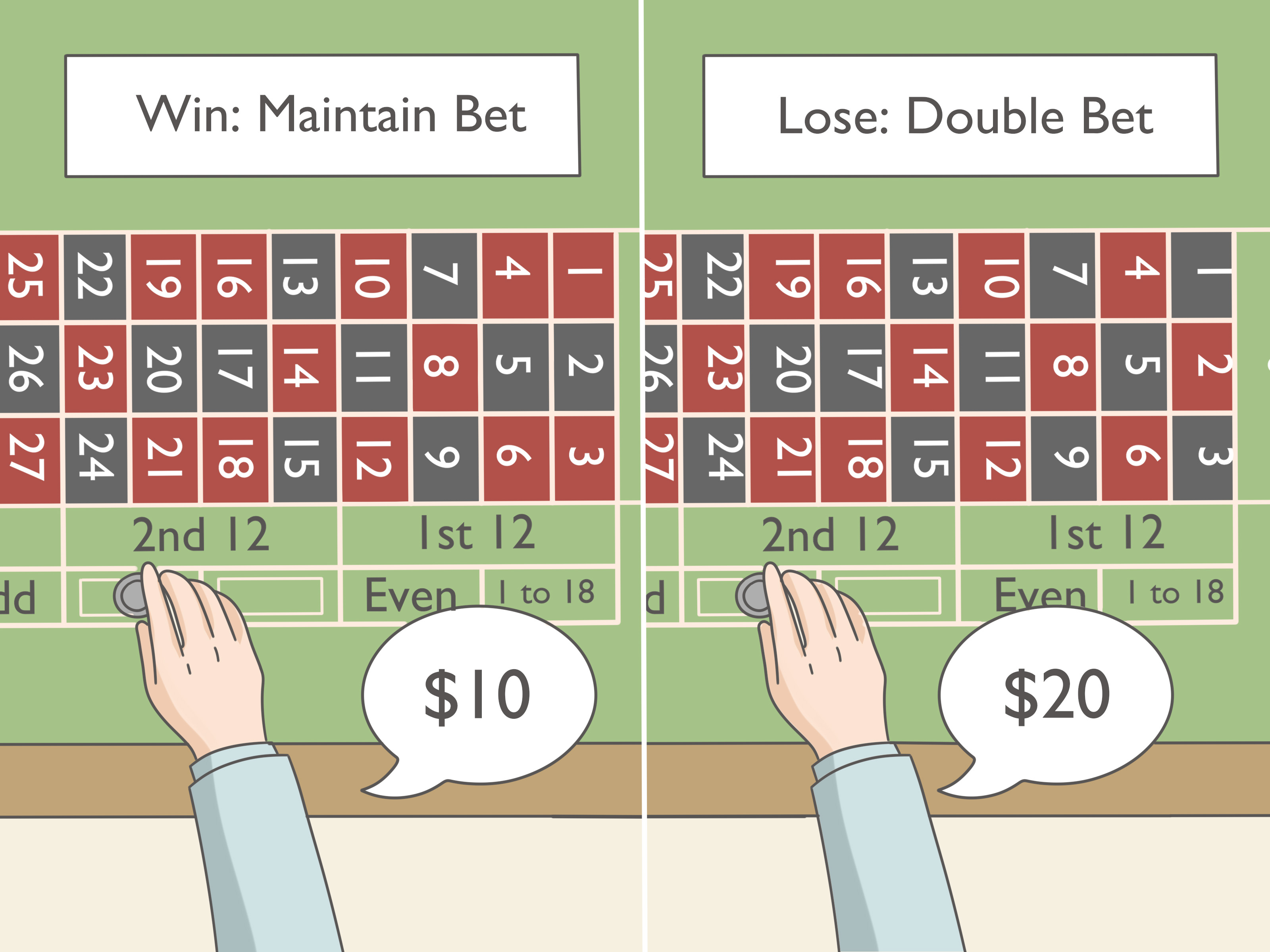
The Martingale is one of the most famous roulette betting systems. The idea is simple: bet on an even-money outcome, such as red, and double your bet after every loss. When you finally win, you recover previous losses and gain one unit.
It sounds clever until reality arrives wearing steel-toed boots. Losing streaks happen. Table limits exist. Bankrolls run out. If you start with a $5 bet and lose six times in a row, your next bet would need to be $320. Lose again, and the next required bet is $640. That is a lot of pressure just to win $5.
The Martingale can create many small wins, but one ugly streak can wipe out the session. A smarter approach is flat betting, where you keep your wager consistent, or using very mild progressions that do not force you into oversized bets.
4. Avoid Bad Bets, Side Bets, and Emotional Decisions
The fourth way to win at roulette is to avoid giving the casino extra help. Roulette already has a house edge. You do not need to sprinkle more advantage on top like parmesan cheese.
In American roulette, the five-number bet covering 0, 00, 1, 2, and 3 is especially unattractive because it carries a higher house edge than standard bets. It may look tempting because it covers five spaces at once, but the payout does not compensate fairly for the risk.
Some roulette tables also include side bets or bonus features. These can be fun, but they often come with higher house edges or more volatility. If you are playing for entertainment, fine. If you are trying to make smart roulette decisions, read the rules and payouts carefully before joining the carnival.
Do Not Chase Losses
Chasing losses is when you increase bets emotionally because you want to recover money quickly. It is one of the fastest ways to turn a manageable loss into a financial faceplant.
For example, imagine you lose $30 after a few bad spins. You suddenly place $50 on black because “black has to come.” It does not. The ball can land on red, green, or black with the same independence as before. If you lose that $50, now your session has gone from mildly annoying to deeply spicy.
Smart roulette play requires emotional brakes. If you feel irritated, rushed, or desperate, pause. Take a walk. Drink water. Remind yourself that roulette is entertainment, not a debt-recovery program.
Use Practice Play Before Real Money
If you are new to roulette, practice with free games or low-stakes tables first. Learn the layout. Understand chip placement. Watch how payouts work. A surprising number of beginners lose money simply because they do not fully understand what they are betting on.
Practice will not teach you how to predict the wheel, but it will help you avoid beginner mistakes. That alone can save money.
Inside Bets vs. Outside Bets: Which Is Better?
Neither inside nor outside bets are automatically “better.” They serve different goals.
Inside bets are for players who enjoy bigger payouts and accept lower hit rates. A straight-up bet on one number pays 35 to 1, which feels fantastic when it lands. But it will miss far more often than it hits. This is high-volatility roulette.
Outside bets are for players who prefer more frequent wins and smoother bankroll movement. They do not create huge payouts, but they help you stay in the game longer. If your goal is disciplined play, outside bets usually make more sense.
A balanced approach is possible. For example, you might place most of your wager on an outside bet and a small “fun chip” on a favorite number. That way, you keep the session stable while still giving yourself a tiny shot at a bigger payout.
Common Roulette Myths That Cost Players Money
Myth 1: A Number Is Due
If 17 has not appeared in 100 spins, it is not due. Every spin is independent. The wheel does not keep a fairness calendar.
Myth 2: Dealers Can Control the Ball
Roulette dealers are skilled professionals, but modern wheels are designed to create unpredictable outcomes. Believing a dealer is secretly aiming for your favorite number is usually wishful thinking wearing a tuxedo.
Myth 3: Betting Systems Beat the House Edge
Betting systems can change the size and timing of wins and losses, but they do not change the underlying probability of the wheel. A system may help with discipline, but it cannot turn roulette into a positive-expectation game.
Myth 4: Online Roulette Is Always the Same
Online roulette can vary by provider, wheel type, rules, and regulation. Play only through legal, licensed platforms where available, and check whether the game is single-zero, double-zero, or triple-zero before betting.
Experience Notes: What Roulette Teaches After a Few Spins
The first real lesson roulette teaches is patience. At a busy table, the game can feel fast because chips are moving, people are reacting, and the ball makes that dramatic clattering sound that seems designed by a casino psychologist. But the best roulette players are rarely the loudest people at the table. They are usually the ones who already know their plan before the dealer says, “Place your bets.”
One common experience is the temptation to change strategy after every spin. You bet red, black appears. You switch to black, red appears. You bet odd, even appears. Suddenly, the wheel feels personal, as if it read your diary and chose violence. This is where discipline matters. Randomness often looks like a pattern when you are emotionally involved. A calm player understands that short-term streaks are normal and does not rewrite the entire plan after three spins.
Another useful experience is learning how table energy affects decisions. At some roulette tables, everyone cheers when a number hits. At others, the mood feels tense, especially when players are chasing losses. It is easy to absorb that energy and bet more aggressively than intended. A smart move is to treat your bankroll like a separate character in the story. Your bankroll is the sensible friend who says, “We agreed on $5 units, remember?” Listen to that friend.
Many players also discover that winning small can be harder than losing big. That sounds strange, but it is true. When you are down, you know you are losing. When you are ahead, the brain starts negotiating. “What if I double this?” “What if I hit one straight-up number?” “What if this is my hot streak?” This is how a winning session turns into a shrug and an empty chip rack. The experience-based solution is simple: set a win goal before play begins. If you reach it, cash out at least part of the profit.
Roulette also rewards humility. You may have a favorite number. You may love black because it worked last time. You may believe the third dozen has “good vibes.” Enjoy those traditions if they make the game fun, but do not confuse them with strategy. The wheel does not recognize birthdays, anniversaries, lucky jerseys, or dramatic inner monologues.
The best personal roulette habit is tracking sessions. Write down your starting bankroll, bet size, game type, stop-loss, win goal, and final result. Over time, this removes fantasy from the game. You may notice that single-zero tables preserve your bankroll better, that large inside bets create stressful sessions, or that you tend to chase losses after long losing streaks. That information is valuable because it turns roulette from a blur of emotions into a game you can manage responsibly.
Finally, the most underrated experience is learning to leave. Walking away after a profit can feel almost unnatural because casinos are designed to keep you comfortable. But the cash-out window is where roulette discipline becomes real. If you can leave while smiling, even with a modest win, you have achieved something many players never master.
Conclusion: The Smartest Way to Win at Roulette
The best ways to win at roulette are not mysterious. Choose single-zero roulette whenever possible. Favor outside bets if you want more frequent wins. Manage your bankroll with strict limits. Avoid bad bets, side bets, and emotional decisions. Most importantly, remember that roulette is entertainment with a built-in house edge, not a reliable income strategy.
You cannot control where the ball lands. You can control which table you choose, how much you bet, when you stop, and whether you play with a clear head. That may not sound as thrilling as a secret casino formula, but it is much more useful.
Roulette is at its best when it is fun, social, and controlled. Play the version with the best odds, keep your bets sensible, ignore superstition when it starts bossing you around, and never risk money you cannot afford to lose. That is how you give yourself the best chance to walk away a winneror at least walk away with your dignity, which pays better than most systems.