Note: This article treats the headline as a satirical media headline, not as a literal accusation. It discusses publicly reported events in careful, non-graphic language suitable for a general web audience.
Comedy clubs have always been strange little laboratories. You enter a dim room, sit too close to strangers, order something overpriced, and agreesilentlythat one person with a microphone gets to test the boundaries of taste, timing, and social patience. But when the performer is Louis C.K., the room is no longer just a room. It becomes a debate chamber, a cultural courtroom, and, depending on whom you ask, either a comeback stage or a reminder that applause can be a very complicated sound.
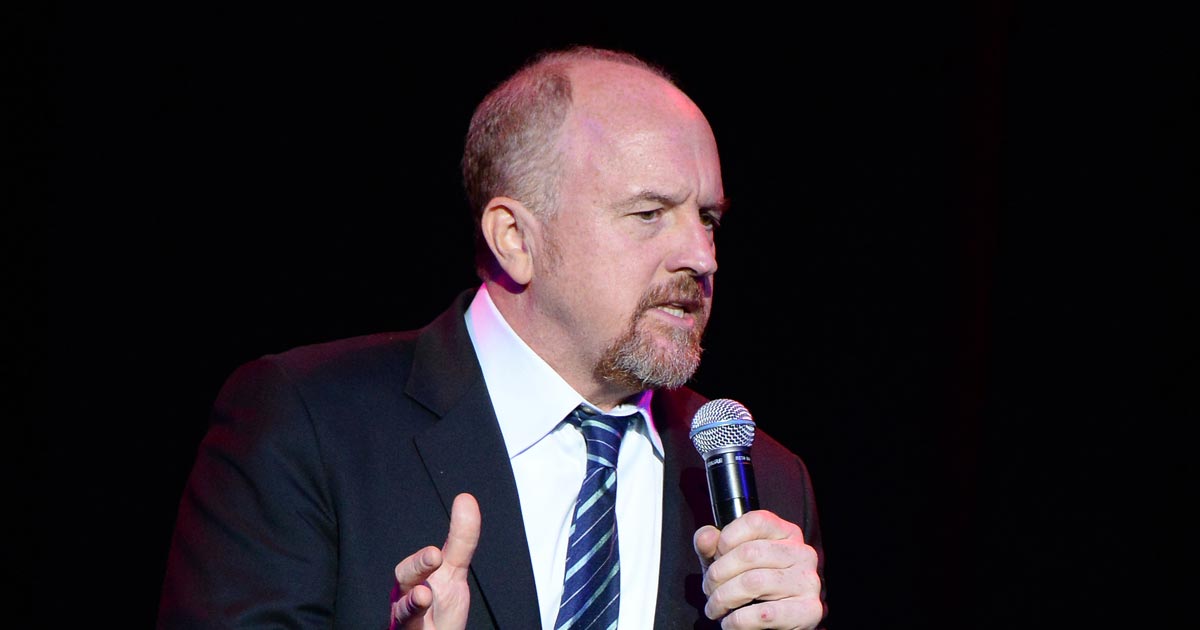
The headline “Louis CK Lures Strangers Into Dark Room, Insists On Secrecy” works because it turns a standard comedy-show setup into a sharp joke about context. On one level, it describes a phone-free stand-up performance: audience members enter a dark venue and are told not to record, repeat, or share the material. On another level, it pokes at the uncomfortable irony surrounding C.K.’s public history, his admitted misconduct, and his later efforts to control how audiences experienced and discussed his work.
That tension is the real story. Not simply “comedian bans phones,” because plenty of comedians do that. Not simply “comedian returns after scandal,” because American entertainment has a long, messy tradition of comebacks. The more interesting question is this: What happens when a performer known for confession, awkwardness, and moral discomfort asks audiences to enter a protected space after the public has already decided that privacy, power, and consent are exactly the issues at stake?
Why This Headline Hit a Nerve
The phrase sounds exaggerated, and that is the point. A stand-up show is, technically, a group of strangers in a dark room. Secrecy is also common in comedy, especially when performers are working out new material. Jokes are fragile before they are polished. A half-built joke on the internet can look like a raccoon in a tuxedo: technically dressed up, but not ready for society.
For Louis C.K., however, normal comedy-room customs came with unusual baggage. In 2017, several women accused him of sexual misconduct, and he later issued a public statement saying the stories were true. He also acknowledged that he had held power in the comedy world and used it irresponsibly. That admission changed how many people interpreted everything around him: club bookings, surprise appearances, audience reactions, career consequences, and even ordinary industry practices like no-phone rules.
So when reports surfaced that his shows would require phones and smartwatches to be locked in pouches and that audience members could not share material without permission, the policy did not land as a neutral copyright notice. It landed as irony wearing tap shoes. Critics saw a performer with a history involving boundaries asking the public to respect his boundaries. Supporters argued that comedians have the right to protect unfinished material. Both points can exist in the same room, which is why the room felt so crowded.
The Comeback Problem: Who Decides When Enough Time Has Passed?
One of the biggest debates around Louis C.K.’s return to stand-up was timing. After his 2017 statement, he said he would step back and listen. Less than a year later, he made a surprise appearance at New York’s Comedy Cellar. To some fans, that was a sign that he still had an audience and a right to work. To critics, it felt like the cultural equivalent of leaving a timeout before the referee even found the whistle.
Comedy is not a normal workplace, but it is still a workplace. Clubs have owners, bookers, staff, comics, openers, audiences, reputations, and unwritten rules. A famous comedian returning to a small stage is not the same as an unknown comic trying five minutes on a Tuesday night. Fame changes the room. It changes who gets booked, who gets protected, who gets ignored, and whose discomfort is treated as the cost of doing business.
That is why C.K.’s comeback has never been only about whether he can tell jokes. In a free society, he can perform for audiences willing to buy tickets. The tougher question is whether the comedy industry learned anything from the scandal. Did clubs rethink safety and accountability? Did audiences consider the women who spoke out? Did fellow comedians ask whether “moving on” is easier for the powerful than for those affected by their behavior?
Phone-Free Comedy: Smart Protection or Convenient Shield?
Phone-free shows are not unusual. Major comedians often use locked pouches to stop leaks, protect new material, and keep audiences present. From a craft perspective, the logic is easy to understand. Stand-up depends on rhythm, tone, facial expression, and the shared energy of a live room. A joke clipped into ten seconds and posted online can be judged without setup, context, or even the comedian’s full intention.
There is also a business reason. A comic may spend months shaping an hour of material before filming a special. If jokes leak early, the surprise disappears. The internet is not famous for nuance. It is famous for turning everything into a courtroom where the jury is caffeinated and the judge is an algorithm.
Still, in C.K.’s case, the no-phone rule carried extra meaning. After leaked audio from one of his comeback sets drew backlash for jokes about sensitive subjects, tighter control over phones appeared to some observers as an attempt to prevent criticism rather than merely protect craft. That does not mean every phone ban is suspicious. It means context matters. The same rule can feel reasonable in one situation and defensive in another.
Audience Trust Is the Real Ticket Price
When people buy tickets to comedy, they are not just paying for jokes. They are paying for trust. They trust the venue to create a safe environment. They trust the performer to push boundaries without abusing the room. They trust other audience members not to ruin the show. And, increasingly, they trust themselves to decide whether separating art from artist is something they canor want todo.
Louis C.K.’s career makes that trust complicated. Before the scandal, he was celebrated for brutally honest comedy about shame, parenting, failure, ego, and everyday moral ugliness. His work often made audiences laugh at thoughts they were not proud of having. After his admission, that same style looked different to many viewers. What once seemed like fearless self-examination could also be read as a warning label nobody had taken seriously enough.
This is one reason the backlash did not disappear when he returned. For some fans, his admission and professional losses were enough to allow a second act. For others, the speed and style of the comeback seemed to center his career more than the people harmed. The audience was no longer arguing only about jokes. It was arguing about repair.
Why Comedy Struggles With Accountability
Stand-up comedy loves the myth of the outlaw. The comic says what others cannot say. The comic breaks rules. The comic offends polite society, dances on the edge, and returns with punchlines instead of apologies. That myth can produce brilliant art. It can also become a very convenient hiding place.
When a comedy community treats every criticism as censorship, it risks confusing accountability with heckling. They are not the same. A heckler interrupts a performance. Accountability asks what happened before, during, and after the performanceand who paid the price. A comic can be free to speak and still be criticized. A club can be free to book someone and still face questions. An audience can be free to attend and still be asked what their applause supports.
The Louis C.K. debate sits directly in that uncomfortable middle. It is not as simple as “never work again” versus “nothing matters.” Most people live somewhere between those poles. They believe in consequences, but also in growth. They believe in second chances, but not automatic ones. They believe art can matter, but so can the conditions under which it is made.
The Business of a Controversial Comeback
Despite losing major partnerships after 2017, Louis C.K. continued building a direct-to-fan model. He sold specials through his website, toured, and eventually won another major comedy award. That trajectory revealed something important about modern entertainment: institutional rejection is not the same as career disappearance.
In the old media system, losing a network, distributor, or studio could end a career for years. In the digital era, a performer with a loyal fan base can sell directly. The gatekeepers are weaker. The audience is stronger. That can be creatively liberating, but it also means public accountability becomes more fragmented. One group can say, “He is canceled,” while another group is buying tickets, streaming specials, and filling theaters.
That split explains why C.K.’s return remains such a durable topic. It is not only about him. It is about how fame survives scandal, how audiences choose sides, and how platforms profit from controversy. In a media economy built on attention, even outrage can become part of the marketing plan. Nothing sells quite like a forbidden ticketexcept maybe popcorn, which has maintained a flawless public-relations strategy for generations.
How the Headline Works as Media Criticism
The headline “Louis CK Lures Strangers Into Dark Room, Insists On Secrecy” is funny because it technically describes a comedy show while deliberately making it sound ominous. That is satire’s favorite trick: say something literally true in a way that exposes a deeper discomfort. It forces readers to ask why the normal description suddenly feels abnormal.
In this case, the discomfort comes from the collision of three things: C.K.’s admitted misconduct, his return to live comedy, and his control over audience recording and sharing. The headline compresses all of that into one uneasy joke. It does not need to explain the entire history because the audience brings that history with them.
Good media criticism often works this way. It does not merely report that a comedian used phone pouches. It asks why the detail matters. It notices the gap between industry routine and public perception. It understands that words like “secrecy,” “consent,” “privacy,” and “control” do not float in neutral air. They carry memory.
What Readers Should Take Away
The Louis C.K. story is not just a celebrity scandal, not just a comeback story, and not just a debate about whether jokes should be recorded. It is a case study in how culture processes wrongdoing when talent, money, nostalgia, and discomfort all sit at the same table.
Some readers will feel that C.K. has faced consequences and should be allowed to work. Others will feel that his comeback exposed how quickly powerful men can return while those who speak out continue facing backlash. Both reactions are part of the broader conversation about comedy after #MeToo, and neither can be reduced to a slogan without losing something important.
The best way to understand the controversy is to look beyond the punchline. Who controls the room? Who gets protected? Who is asked to be quiet? Who gets to return? Who is told to move on? Those questions matter far beyond one comedian or one dark club.
Audience Experience: What a Phone-Free Comedy Room Feels Like
Walking into a phone-free comedy show is surprisingly revealing. At first, the locked pouch feels like a tiny inconvenience. Then it becomes a personality test. Some people look relieved, as if they have been granted legal permission to stop checking email. Others act like their phone has been sent to a distant monastery to study silence. Everyone suddenly remembers they have hands and no idea what to do with them.
Once the show begins, the difference is real. Heads are up. Faces are visible. Laughs arrive together instead of through the glow of screens. The comic can see the audience, and the audience can feel the room breathing as one organism. In the best version of this experience, secrecy is not sinister. It is communal. You were there. You heard the messy joke before it became polished. You became part of the strange, temporary contract of live performance.
But the experience changes when the performer carries controversy into the room. Then the phone pouch can feel less like a tool for presence and more like a curtain. You may wonder what is being protected: the art, the audience, the business, or the performer’s reputation. You may laugh at a joke and then immediately analyze your own laugh. Was it funny? Was it nervous? Was the room laughing because the joke worked, or because people were excited to witness something they were not supposed to repeat?
That is the unusual pressure surrounding a Louis C.K. show after the scandal. The audience is not just watching comedy; it is participating in a public argument by being there. Even silence says something. Even buying the ticket says something. Even deciding not to attend says something. The dark room becomes a mirror, which is deeply unfair because most people came for jokes, not a surprise ethics seminar with a two-drink minimum.
For comedy fans, this creates a complicated experience. Many people can remember loving C.K.’s older work: the precise writing, the awkward honesty, the way he could turn ordinary irritation into a miniature opera of human weakness. Revisiting that admiration after his admission can feel like finding a stain on a favorite shirt. You can still see why you liked it, but you cannot unsee what changed.
For younger audiences discovering the story later, the lesson may be less about one performer and more about media literacy. A headline can be funny and loaded. A comeback can be legal and still controversial. A no-phone policy can be reasonable and still symbolically awkward. Public figures are not homework assignments with one correct answer at the back of the book. They are messy case studies in power, consequence, branding, loyalty, and selective memory.
The most useful audience experience, then, is not automatic outrage or automatic forgiveness. It is attention. Pay attention to who is speaking, who is missing, who benefits, and what the room asks you to ignore. Comedy works best when it tells the truth sideways. Sometimes the biggest truth in the room is not the joke onstage, but the silence around it.
Conclusion
“Louis CK Lures Strangers Into Dark Room, Insists On Secrecy” remains an effective headline because it captures the uneasy absurdity of a comedian returning to controlled live spaces after a scandal centered on power and boundaries. The dark room is just a comedy club. The secrecy is just a phone policy. Yet the context turns ordinary details into cultural symbols.
Louis C.K.’s post-scandal career shows how complicated modern accountability can be. He lost major opportunities, returned through live performance and direct distribution, faced continued criticism, and retained a paying audience. Whether that represents redemption, avoidance, free expression, industry failure, or some uncomfortable mixture depends on the reader’s values.
What is clear is that comedy does not happen in a vacuum. It happens in rooms shaped by memory, reputation, trust, and power. The audience may enter for laughter, but sometimes it leaves with harder questions. That may not be the cleanest punchline, but it is the one this story keeps telling.