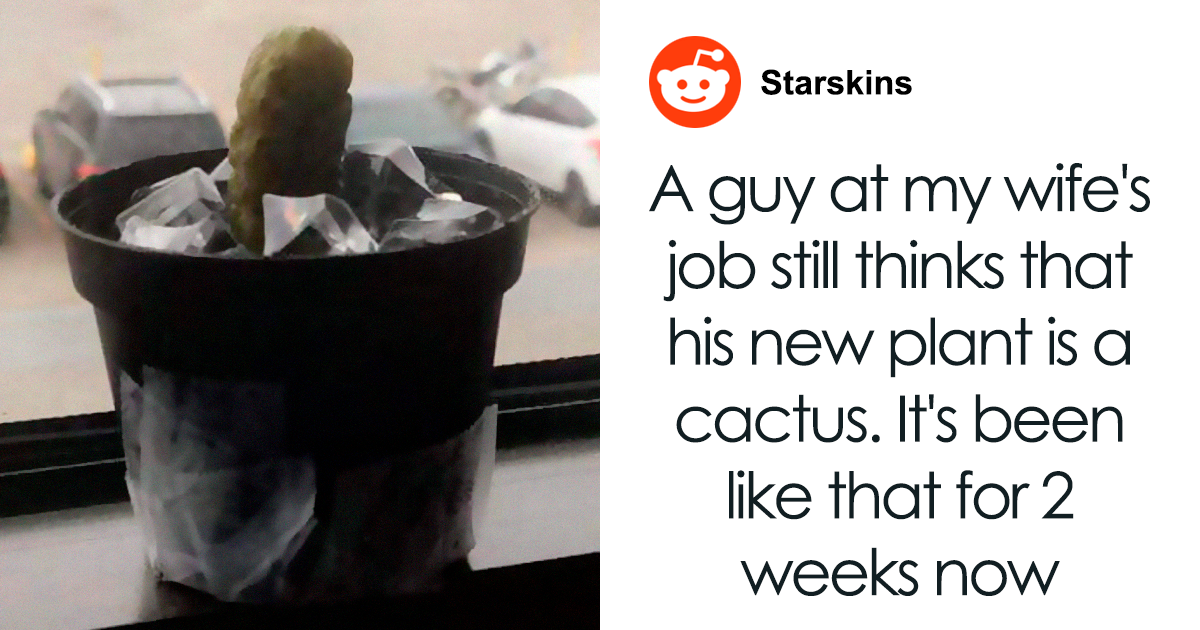
Every office has its legends. Some are heroic, like the coworker who fixes the printer without whispering threats at it. Some are mysterious, like the person who keeps microwaving fish at 11:04 a.m. sharp. And then there is Dave, the man who became internet-famous because his colleagues gave him a “cactus” that was, in fact, a pickle.
The prank sounds like something invented during a lunch break by people who had just enough free time, just enough imagination, and just enough access to preserved cucumbers. A coworker gifted Dave what appeared to be a small cactus in a pot. Dave loved it. He placed it near his desk by the window, cared about it, and apparently accepted it as a charming little office plant. The catch? The “cactus” was not a cactus at all. It was a pickle, standing proudly in soil like a salty green impostor.
To keep the illusion alive, his colleagues replaced the pickle every couple of days. They would enter his office under the noble excuse of “watering” the cactus, remove the aging pickle, and install a fresh one. This went on long enough for the prank to transform from a simple joke into an office-wide operation. It was less a prank and more a vegetable-based maintenance schedule.
What makes the fake cactus pickle prank so funny is not only the absurdity of mistaking a pickle for a plant. It is the commitment. A prank that lasts two minutes is a joke. A prank that requires a replacement pickle every 48 hours is project management.
The Viral Pickle Cactus Prank: What Actually Happened?
The story reportedly began in an office in Quebec City, Canada, where a woman decided to give her colleague Dave a “cactus” as a gift. Dave seemed genuinely pleased. He put the suspiciously glossy, suspiciously briny, suspiciously non-spiky object near his window and accepted it as part of his desk decor.
At first, the prank belonged to one person. Then, as often happens in offices, the story traveled. One person heard. Then another. Suddenly, more coworkers became accomplices. The fake cactus became a shared secret, and the office developed a routine: every couple of days, someone would “water” the cactus, which actually meant swapping the old pickle for a fresh one.
The joke reached peak perfection after one warm weekend. The pickle dried out, as pickles do when they are forced to live the lie of being a desert plant. Dave noticed the sad state of his beloved “cactus” and felt disappointed. Then a coworker performed the usual replacement ritual. A fresh pickle appeared, and Dave reportedly reacted with relief, saying something along the lines of: see, he knew the cactus needed water.
That moment is why the internet adored the story. It had everything: innocence, teamwork, a desk plant, suspense, and a pickle fighting for its life in a role it never auditioned for.
Why This Office Prank Became So Popular Online
Many viral stories depend on shock, drama, or someone behaving like a raccoon in a board meeting. This one became popular because it was refreshingly harmless. Nobody was humiliated in a cruel way. Nobody got injured. Nobody lost their job, unless the pickle had a contract we do not know about.
The pickle cactus prank works because it is built on gentle absurdity. The target is not being attacked; he is being invited into a strange little universe where a pickle can become a houseplant if enough coworkers agree not to blink first. That is the kind of comedy people can share without needing a warning label.
Online readers also loved debating whether Dave truly believed the pickle was a cactus. Some argued that he had to know. After all, pickles have a smell, a shine, and a strong “I belong next to a sandwich” energy. Others believed Dave was simply too polite to question the gift. A third group proposed the most delicious theory: Dave knew everything and was reverse-pranking the office by forcing his coworkers to keep buying fresh pickles.
That possibility gives the story another layer. Maybe Dave was the victim. Maybe Dave was the mastermind. Maybe Dave was sitting there every Monday morning thinking, “These people have spent weeks maintaining a pickle because they think I think it is a cactus.” If so, crown him king of passive comedy.
Why the Fake Cactus Looked Almost Believable
To be fair to Dave, not every cactus looks like the classic cartoon desert cactus with two arms and the posture of a confused cowboy. Cacti and succulents come in many unusual shapes, colors, and textures. Some are smooth. Some are squat. Some look like green pebbles. Some look like alien thumbs. A small green object in a pot near a window can pass the first-glance test if nobody studies it too closely.
However, a pickle has certain disadvantages as a cactus impersonator. It is wet. It smells like vinegar or brine. It does not have roots. It does not produce spines from areoles. It does not prefer bright indirect light, because it prefers being inside a jar. It also ages poorly when treated as a decorative botanical object.
That is what makes the prank so beautiful. It sits right on the border between believable and ridiculous. A fake cactus made of plastic would be too easy. A cucumber would look too fresh and garden-like. But a pickle? A pickle has texture. It has personality. It looks like it has survived things. Put it upright in a pot, and it becomes just botanical enough to confuse a busy person who has spreadsheets, emails, and probably three unread messages titled “quick question.”
The Secret Ingredient: Commitment
Most office pranks fail because they are either too obvious, too mean, or too much work. This one succeeded because the work became part of the joke. Replacing a pickle every two days is not casual behavior. That is a schedule. That is a shared calendar event waiting to happen: “10:15 a.m. refresh Dave’s cactus.”
The commitment made the prank funnier every time it continued. Anyone can tape a funny note to a chair. It takes a special kind of workplace dedication to maintain a living lie with rotating produce. The coworkers did not simply prank Dave; they supported the ecosystem of the prank. They monitored freshness. They handled weekend shrinkage. They stayed in character. Somewhere, a pickle became a team-building exercise.
This is why the story spread. People love a harmless prank, but they really love a harmless prank with logistics. The idea that several adults in a professional environment were quietly coordinating pickle replacements gives the story sitcom energy. It is not just “we fooled Dave.” It is “we created a small agricultural deception department.”
What the Pickle Cactus Says About Workplace Humor
Good workplace humor does something valuable: it gives people a shared moment that is not about deadlines, budgets, broken software, or whoever forgot to refill the coffee machine. Laughter can reduce tension, strengthen bonds, and make the workday feel less mechanical. In the best cases, it reminds everyone that coworkers are human beings, not just email addresses with shoes.
The pickle cactus prank is a perfect example of humor that builds connection because it is low-stakes. The joke was not about Dave’s identity, background, job performance, or personal life. It was about a pickle wearing the social costume of a cactus. That distinction matters. The safest office jokes usually punch up at shared situations, office absurdities, or inanimate objects. They do not punch down at people.
There is also a social glue effect. Once several coworkers knew the truth, the prank became a tiny office tradition. People had something to talk about, laugh about, and anticipate. In a world where many employees feel disconnected, small moments of shared humor can make a workplace feel warmer. A pickle in a pot cannot solve burnout, but it can briefly defeat the 3 p.m. slump.
When Office Pranks Are Funnyand When They Are Not
Of course, not every prank deserves applause. Some workplace jokes cross the line fast. A prank is not funny if it damages property, causes fear, creates embarrassment, targets a protected characteristic, disrupts someone’s ability to work, or leaves the target feeling isolated. “It was just a joke” is not a magic spell that makes bad behavior disappear.
The pickle cactus prank stayed on the safer side because it was silly, reversible, and non-threatening. Nobody’s workspace was destroyed. No one was physically startled. No sensitive topic was involved. The prank required maintenance, not humiliation. The worst-case outcome was that Dave discovered the truth and had to reconsider the entire plant kingdom for a few minutes.
A useful rule for office humor is simple: the target should be able to laugh when the truth comes out. If the joke depends on someone feeling stupid, scared, excluded, or exposed, it is probably not a joke worth doing. If the joke can end with everyone laughing and the target becoming the hero of the story, it has a much better chance of aging well.
Why People Were So Invested in Dave’s Reaction
The funniest part of the story may be that the internet immediately turned into a detective agency. Readers analyzed the pickle’s appearance, smell, texture, and replacement schedule. They debated whether Dave was innocent, oblivious, polite, or secretly operating on a higher comedic plane.
This reaction shows how much people enjoy stories with uncertainty. If Dave simply believed the pickle was a cactus and then learned the truth, that is funny. But if Dave knew the whole time and let everyone continue replacing it, that is funnier. It turns the prank inside out. Suddenly, the pranksters become the pranked. The pickle becomes bait. Dave becomes a silent genius with a window seat.
That is why the story has lasting charm. It invites the reader to choose a theory. Was Dave fooled? Was he kind? Was he too busy to inspect the plant? Was he enjoying free desk pickles? The answer almost does not matter. The mystery is part of the fun.
The Pickle as an Accidental Office Mascot
Every workplace has unofficial mascots. Sometimes it is a rubber duck on a monitor. Sometimes it is a plant everyone overprotects. Sometimes it is a coffee mug that says “World’s Okayest Employee.” In Dave’s office, the mascot became a pickle pretending to photosynthesize.
Objects like this can become surprisingly powerful in group culture. They create inside jokes, and inside jokes create belonging. The pickle cactus gave coworkers a shared storyline. It had episodes: the gift, the watering, the dried-out weekend, the replacement, the suspicion, the reveal. That is more character development than some streaming shows manage in eight episodes.
It also gave people a reason to interact. Someone had to check the pickle. Someone had to perform the swap. Someone had to keep a straight face around Dave. In an office, tiny rituals like this can soften the day. They give people something to smile about between tasks.
Could This Prank Work Today?
The pickle cactus prank could still work today, but it would need the right environment. A friendly team with established trust? Maybe. A tense workplace with strict policies, anxious employees, and security cameras everywhere? Probably not. Context is everything.
Modern workplaces are more aware of boundaries, and that is a good thing. Humor should never be used as a disguise for bullying. But that does not mean offices must become comedy-free zones where every desk plant is interrogated under fluorescent lighting. It simply means people should choose jokes that are kind, reversible, and respectful.
A modern version might involve a fake tiny trophy, a googly-eyed stapler, or a “plant” that slowly accumulates ridiculous name tags. The key is to keep the joke aimed at the absurd object, not the person. If everyone can join the laugh without anyone becoming the office punching bag, the joke has a chance.
Lessons From the Pickle Cactus Prank
1. The best pranks are harmless
A great prank should leave behind laughter, not damage. The pickle cactus did not threaten anyone’s safety or reputation. It was weird, memorable, and easy to undo. That is the holy trinity of safe office humor.
2. Commitment makes comedy stronger
The replacement schedule transformed the prank from a one-time gag into an ongoing saga. Comedy often gets better when people commit to the bit. In this case, the bit required a steady supply of pickles and emotional discipline around Dave.
3. Shared jokes can strengthen workplace culture
When coworkers laugh together in a respectful way, it can make the workday feel more connected. The prank gave the team a shared secret, a shared mission, and a shared story they could retell. That is valuable, as long as the humor stays inclusive.
4. Do not underestimate quiet people
If Dave knew the truth, he may have been the most powerful person in the office. Sometimes the person who appears pranked is actually conducting a long-term social experiment with free produce.
Experience-Based Reflections: What This Prank Feels Like in Real Office Life
Anyone who has worked in an office long enough knows that small jokes can become strangely important. The work itself may be serious, repetitive, technical, stressful, or all of the above. But then someone puts googly eyes on the copier, and suddenly the copier has a personality. Someone names the conference room spider “Greg,” and now Greg is part of the team. Someone brings in a fake cactus that is actually a pickle, and for two weeks, the office has a plot.
The experience behind a prank like this is not really about fooling one person. It is about giving the workplace a story. People come in on Monday and ask, “How’s the cactus?” Someone checks the pickle like it is a patient in intensive care. Someone else worries the weekend heat will ruin the illusion. A third person develops strong opinions about the ideal pickle size. This is how ordinary offices become temporarily magical and mildly ridiculous.
The best version of this kind of prank is built on affection. You do it because the coworker is liked, not because the coworker is disliked. That difference can be felt immediately. A friendly prank says, “You are part of the group, and we want to include you in this silly story.” A mean prank says, “We want to laugh at you.” The pickle cactus worked because it felt closer to the first category. Even when Dave was the target, he was also the star.
There is also something deeply relatable about Dave’s possible reaction. Many people have accepted strange office gifts without asking too many questions. Someone gives you a plant, a mug, a stress ball, or a tiny plastic dinosaur, and you simply say thank you. You do not launch a forensic investigation. You put it on your desk and return to your inbox. That is how a pickle gains residency.
In real office life, this kind of prank would also test everyone’s ability to stay calm. Imagine walking past Dave’s desk while he proudly discusses how well his cactus is doing. Imagine nodding seriously while looking at a pickle in dirt. Imagine saying, “Yes, it seems very healthy,” without collapsing into laughter. That takes professional skill. Forget Excel certifications; this is the true workplace competency.
At the same time, the prank teaches a practical lesson about limits. A joke should have an exit plan. The longer a prank continues, the more important it becomes to reveal it kindly. The reveal should feel like a celebration, not a courtroom confession. Ideally, the target receives the story, laughs, and maybe gets the real cactus they were promised by the universe. Or at least a fresh jar of pickles.
What makes the pickle cactus memorable is that it captures the strange tenderness of workplace humor. People spend huge parts of their lives at work. They share deadlines, frustrations, snacks, awkward elevator rides, and printer betrayals. A harmless joke can become a tiny pressure valve. It says, “Yes, we are adults with responsibilities, but also, behold this pickle pretending to be a succulent.”
That is why stories like this keep circulating years later. They remind readers that work does not have to be humorless to be professional. A good team can take the job seriously without taking every moment seriously. Sometimes morale is not built by a formal retreat, a motivational poster, or a mandatory fun day with name tags. Sometimes it is built by a pickle in a pot and a group of coworkers who commit to watering it with lies.
Conclusion: The Pickle That Became an Office Legend
The fake cactus pickle prank is internet gold because it is simple, harmless, and wonderfully absurd. A man receives a desk plant. The plant is a pickle. His coworkers replace it every two days. The pickle dries out. The “watering” works. The internet debates whether Dave is clueless or secretly brilliant. That is comedy with layers, crunch, and a hint of dill.
Beyond the laughs, the story offers a useful reminder about workplace culture. Good humor can connect people, reduce tension, and create shared memories. But the best office pranks are gentle. They do not embarrass, threaten, exclude, or target someone’s identity. They create a story everyone can enjoy once the truth comes out.
In the end, Dave’s pickle cactus became more than a prank. It became a tiny symbol of the kind of silliness people secretly need during long workweeks. It was not a real cactus, and it was barely a real plant. But as office legends go, it had roots.
Note: This article is written in original American English for web publication and is based on publicly available information about the viral pickle cactus prank, workplace humor, safe office prank practices, cactus care, and pickling basics.