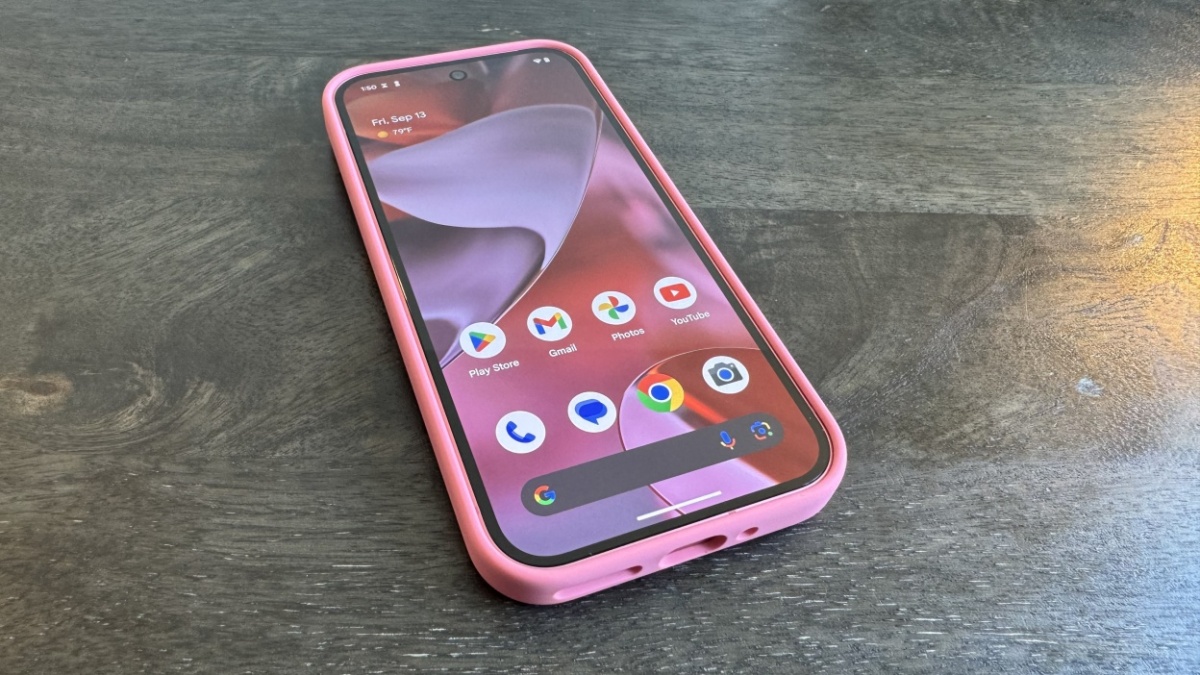
The word Pro has become smartphone shorthand for “please hand over another few hundred dollars.” Sometimes the upgrade is justified. Other times, you are paying extra for specifications you will admire twice, use once, and then forget while scrolling through dog videos.
The Google Pixel 9 belongs to the second categoryin the best possible way. It gives you the core experience that makes Google’s flagship phones appealing: a bright 120Hz display, excellent cameras, useful call features, clever photo tools, dependable biometric security, and seven years of software support. The Pixel 9 Pro adds meaningful hardware, particularly a telephoto camera, but the standard model is the smarter purchase for most people.
At its original $799 starting price, the Pixel 9 was not cheap. It was, however, one of the first standard Pixels that felt polished enough to compete directly with mainstream flagships from Apple and Samsung rather than merely undercut them. The result is an Android phone that feels complete without needing a “Pro” label as emotional support.
The Pixel 9 launched at $799 with a 6.3-inch display, 12GB of RAM, Tensor G4 and seven years of updates.
Google Pixel 9 Review: The Quick Verdict
The Pixel 9 is an easy recommendation for shoppers who prioritize camera quality, clean Android software, a manageable size, and practical artificial intelligence features. It is fast enough for normal use, lasts comfortably through a typical day, and takes consistently attractive photos without demanding that you become a part-time camera technician.
| Category | Pixel 9 Experience |
|---|---|
| Design | Premium, sturdy, compact, and slightly slippery |
| Display | Bright 6.3-inch OLED with up to 120Hz refresh rate |
| Cameras | Excellent main and ultrawide cameras; no optical telephoto |
| Performance | Smooth for everyday tasks, but not built for elite gaming |
| Battery | Reliable all-day endurance with relatively slow charging |
| Software | Clean Android experience with seven years of support |
| Best for | Most Android users who do not need serious zoom photography |
Overall verdict: Buy the Pixel 9 for its cameras, software, display, and long support period. Choose the Pixel 9 Pro only when optical zoom, heavier gaming, or advanced video features are genuinely important to you.
A Premium Design Without Excessive Pro Drama
Google redesigned the Pixel 9 with flat aluminum sides, rounded corners, and a distinct oval camera module. Yes, it shares some visual DNA with recent iPhones. No, the smartphone design police have not arrived. More importantly, the flatter frame feels secure and substantial in the hand.
The phone uses Gorilla Glass Victus 2 on the front and back, a satin-finished metal frame, and an IP68 rating for dust and water resistance. At 6.3 inches, it strikes a useful balance between screen space and portability. It is not tiny, but it can be used without the finger gymnastics demanded by oversized Ultra and Pro Max devices.
The glossy rear panel is the weak point. It attracts fingerprints and can become slippery on smooth surfaces. A slim case is sensible unless you enjoy watching an expensive phone slowly migrate toward the edge of a table like a determined glass turtle.
Google lists Gorilla Glass Victus 2, an aluminum frame and IP68 resistance; reviewers also noted the improved in-hand design and slippery finish.
The Actua Display Is Bright, Smooth, and More Than Good Enough
The Pixel 9 has a 6.3-inch OLED Actua display with a 2424-by-1080 resolution and an adaptive refresh rate between 60Hz and 120Hz. You must enable Smooth Display to receive the full 120Hz experience, but once activated, scrolling, animations, and app transitions look fluid.
Google rates the panel for up to 2,700 nits of peak brightness. Independent testing from Tom’s Guide measured impressive real-world brightness, putting the Pixel 9 ahead of several contemporary competitors in its test conditions. Outdoor visibility is excellent, even when the sun appears personally offended that you are trying to read a message.
The Pixel 9 Pro has an LTPO panel that can reduce its refresh rate more aggressively and reach a slightly higher peak brightness. Those are advantages on a specification sheet. During normal browsing, streaming, messaging, and navigation, however, the standard Pixel 9 display already looks like flagship hardware.
Display specifications and independent brightness testing are documented by Google, Tom’s Guide, WIRED and Android Central.
The New Fingerprint Sensor Fixes an Old Pixel Complaint
Previous Pixels used optical fingerprint readers that could feel slow or temperamental. The Pixel 9 moves to an ultrasonic sensor, producing a faster and more dependable unlocking experience. Face Unlock is also available and can be used for supported secure authentication tasks.
This may not sound as exciting as generative AI, but reliable biometric security improves every interaction with the phone. You unlock a smartphone dozens of times per day. A fingerprint reader that works immediately is more valuable than an AI-generated picture of a corgi operating a forkliftalthough the corgi has undeniable management potential.
Pixel 9 Cameras: Pro-Level Results Without the Pro Camera Count
A Familiar 50MP Main Camera That Still Delivers
The Pixel 9 uses a 50-megapixel main camera with optical image stabilization and the same primary camera hardware found in the Pro models. Google’s image processing remains the star. Photos usually have strong dynamic range, convincing contrast, accurate white balance, and carefully rendered skin tones.
The camera is particularly good at difficult point-and-shoot situations: a moving pet indoors, a portrait under mixed lighting, a bright sunset behind a person, or a child who has decided standing still is an attack on personal freedom. Pixels are designed to produce a usable result quickly, and the Pixel 9 continues that tradition.
The 48MP Ultrawide Is a Major Strength
Google equips the standard phone with a 48-megapixel ultrawide camera featuring autofocus and Macro Focus. This is not a low-resolution secondary sensor included merely to make the camera bump look busy. It captures wide landscapes, architecture, groups, and close-up subjects with respectable detail.
Macro Focus is especially entertaining. Flowers, food, watches, insects, and tiny product details become easy subjects, although photographing an insect at close range does require negotiating with an insect.
The Missing Telephoto Lens Is the Main Compromise
The Pixel 9 offers optical-quality framing at 2x by cropping into its main sensor, plus Super Res Zoom up to 8x. Results at 2x are generally useful. Quality becomes less predictable as magnification increases because software cannot completely replace a physical telephoto camera, no matter how confidently the marketing department clears its throat.
The Pixel 9 Pro includes a dedicated 5x optical telephoto lens. That matters for concerts, wildlife, sports, school performances, distant architecture, and portraits with stronger background compression. People who frequently zoom should buy the Pro. Everyone else may discover that the standard main and ultrawide cameras cover nearly everything they actually photograph.
Google confirms the 50MP wide, 48MP ultrawide, Macro Focus and 8x Super Res Zoom system. Reviewers broadly praised image quality while identifying the missing telephoto lens as the main camera compromise.
Tensor G4 Performance: Smart, Smooth, but Not a Gaming Champion
The Tensor G4 processor is paired with 12GB of RAM in the Pixel 9. Everyday performance is smooth across messaging, web browsing, navigation, photo editing, video calls, social media, and normal multitasking. Apps open quickly, animations remain responsive, and Google’s software feels well matched to the hardware.
Raw benchmark performance is not Tensor G4’s greatest talent. Contemporary Snapdragon-powered flagship phones can deliver higher scores and stronger sustained gaming performance. The standard Pixel 9 also lacks the vapor-chamber cooling system used in the Pro models, so demanding games can produce heat and reduced frame-rate stability during long sessions.
That distinction sounds alarming until you define “demanding.” Wordle will survive. Gmail will remain emotionally unchanged. Google Maps will not begin smoking. The limitations matter mainly to serious mobile gamers, emulator enthusiasts, and people who regularly export heavy media projects from a phone.
Reviews consistently found Tensor G4 sufficient for daily use but behind rival flagship chips in raw or sustained gaming performance.
Google AI Features Range From Useful to “Look What My Phone Can Do”
The Pixel 9 includes Gemini integration, Circle to Search, Live Translate, Call Assist, Pixel Screenshots, Magic Editor, Reimagine, Best Take, Photo Unblur, and Add Me. That is enough artificial intelligence to make the phone sound capable of filing its own taxes.
Pixel Screenshots
Pixel Screenshots can organize and search information saved in screenshots. It becomes useful when you capture tickets, addresses, recipes, shopping ideas, appointment details, or products and later need to find one specific item buried among 900 accidental screenshots of your lock screen.
Add Me
Add Me helps place the photographer into a group photo by combining two guided images. It requires cooperation from the group and is not instantaneous, but it addresses a real problem: the person taking the photograph frequently disappears from the memory being recorded.
Magic Editor and Reimagine
Magic Editor can reposition subjects, change framing, remove distractions, and generate new visual elements. The technology is impressive, but it also raises questions about whether an edited image still documents a moment or merely illustrates what someone wishes had happened. Used responsibly, it is a creative editing tool. Used irresponsibly, it is a tiny misinformation studio with excellent haptics.
Gemini
Gemini is useful for brainstorming, summarizing, explaining visual information, drafting text, and handling conversational questions. Its quality varies by task, and it should not be treated as an infallible authority. The important point is that the standard Pixel 9 receives many of the same headline AI capabilities as the Pro models. Paying more does not suddenly make the robot wiser.
Google lists Gemini, Pixel Screenshots, Add Me and its AI editing tools for the Pixel 9. Reviews found several features useful but described the overall AI experience as inconsistent or unfinished.
Battery Life Is Finally a Pixel Strength
The Pixel 9 contains a 4,700mAh battery. Its endurance is one of the generation’s most important improvements. Tom’s Guide recorded 13 hours and 18 minutes in its battery test, compared with 9 hours and 43 minutes for the Pixel 8 under the publication’s test procedure. Other reviewers also reported reliable all-day use.
Real battery life depends on cellular signal, brightness, camera use, navigation, gaming, and whether your social media applications are quietly consuming electricity like unsupervised teenagers consuming refrigerator contents. Under ordinary mixed use, the Pixel 9 should reach bedtime without requiring an emergency afternoon charge.
Charging is less impressive. Wired charging tops out at 27W, and the phone supports standard Qi wireless charging rather than the newer magnetic Qi2 system. Tom’s Guide measured a 54% charge after 30 minutes. That is acceptable, but competing Android phones can charge much faster.
Battery capacity comes from Google. Tom’s Guide measured 13:18 in its test and 54% after 30 minutes, while Engadget confirmed 27W wired and standard Qi wireless charging.
Seven Years of Updates Make the Pixel 9 Easier to Keep
Google promises seven years of operating-system updates, security updates, and Pixel Drops from the device’s original U.S. availability. That long support window improves the Pixel 9’s value because buyers are not forced to replace functioning hardware merely to remain secure.
Google also controls both Android and the Pixel software experience, allowing the phone to receive new Android versions and Pixel-specific features directly. The interface is clean, coherent, and relatively free from duplicated applications. Features such as Call Screen, Now Playing, Recorder transcription, spam protection, and excellent voice typing can matter more in daily life than another processor benchmark trophy.
Google’s official policy gives Pixel 8 and later devices, including Pixel 9, seven years of OS and security updates and possible Pixel Drop features.
Pixel 9 vs. Pixel 9 Pro: What Does the Extra Money Buy?
The Pixel 9 Pro is not a scam wrapped in polished aluminum. It offers legitimate upgrades:
- A dedicated 5x optical telephoto camera
- A sharper and slightly brighter LTPO display
- 16GB of RAM instead of 12GB
- A higher-resolution front camera
- Additional storage configurations
- Vapor-chamber cooling for sustained performance
- Selected advanced photo and video features
Those improvements are valuable for photographers, frequent travelers, mobile gamers, creators, and buyers who want maximum hardware regardless of cost. They are less important for someone whose daily routine consists of messaging, browsing, navigation, casual photography, streaming, banking, and periodically checking whether the weather app has changed its mind.
The standard Pixel 9 uses the same Tensor G4 platform, the same main camera, the same upgraded ultrawide camera, the same physical size, and many of the same software and AI features. Its screen is excellent, its battery is dependable, and its 12GB of RAM is generous. The experience does not feel like a budget imitation of the Pro. It feels like the sensible version.
WIRED’s comparison identifies telephoto capability, selfie quality and vapor-chamber cooling as the most consequential Pro upgrades, while noting that everyday differences are otherwise modest.
Who Should Buy the Google Pixel 9?
Buy the Pixel 9 if you:
- Want a clean, easy-to-use Android phone
- Care about point-and-shoot camera quality
- Prefer a phone that is manageable with one hand
- Plan to keep your device for several years
- Want Google’s call, translation, photo, and AI features
- Rarely take photographs beyond 2x zoom
Consider the Pixel 9 Pro if you:
- Frequently photograph distant subjects
- Play demanding 3D games for long sessions
- Need advanced video tools
- Want more than 256GB of internal storage
- Simply want every available feature and accept the higher price
Consider another phone if you:
- Need extremely fast wired charging
- Prioritize maximum benchmark performance
- Require desktop-style productivity features
- Already own a recent Pixel that still performs well
Extended Real-World Experience: What Living With the Pixel 9 Feels Like
A realistic day with the Pixel 9 explains its appeal better than a page of benchmark charts. In the morning, the alarm fades into a clean Android interface without a jungle of duplicate applications. The ultrasonic fingerprint reader unlocks quickly, notifications are easy to scan, and the bright display remains readable while checking directions outside.
During a commute, the phone handles music, navigation, messaging, and background synchronization without drama. Tensor G4 does not feel like a weak processor during ordinary use. Switching between Maps, a browser, a banking app, the camera, and a messaging service is smooth. The phone may become warm during navigation, extended camera use, or other intensive activity, but routine tasks do not expose the benchmark gap between Tensor and the fastest Snapdragon chips.
The camera becomes the most persuasive part of the experience. You can pull the phone from a pocket, double-press the power button, take a photograph, and expect a good result. The Pixel’s processing favors controlled highlights, visible shadow detail, and generally natural skin tones. This consistency reduces the need to take six nearly identical images “just in case,” although human tradition requires taking at least three.
The 2x option is useful for food, portraits, pets, and casual street photography. The absence of a telephoto lens becomes obvious when photographing a stage, a bird, a distant building detail, or a child playing sports from the opposite side of a field. In those situations, digital zoom produces an image, but the Pro’s optical lens would produce a better one. This is the clearest daily-life reason to upgrade.
Battery anxiety is far lower than it was with some earlier Pixels. A day containing several hours of screen use, photography, audio streaming, calls, and navigation should still leave a reasonable reserve by evening. Heavy gaming or continuous cellular navigation can drain it much faster, but the phone no longer feels as though it needs to be protected from normal use.
Some AI features gradually earn a place in the routine. Circle to Search is helpful when an unfamiliar product, location, outfit, or phrase appears on-screen. Call-screening tools reduce interruptions. Recorder transcription can turn an interview or meeting into searchable text. Pixel Screenshots can recover a forgotten confirmation number when the original application has hidden it behind seven menus and a login screen.
Other AI tools feel more occasional. Add Me is clever at gatherings but requires explaining the process to everyone involved. Reimagine is entertaining and technically remarkable, though many users will experiment with it more often during the first week than during the following six months. That is fine. A smartphone does not need every feature to become a daily habit.
The most important long-term quality is that the Pixel 9 does not repeatedly remind you that you bought the non-Pro model. The display does not feel cheap. The main camera is not deliberately weakened. The memory is not stingy. The body is not constructed from materials last seen covering a microwave dinner. Most compromises stay invisible until a specific needlong zoom, sustained gaming, advanced video, or larger storagebrings them into focus.
That is why the Pixel 9 works so well. It behaves like a mature flagship rather than an upselling mechanism. You receive the experience most people associate with a premium Pixel, while the Pro remains available for specialists who can clearly explain why they need it.
Long-term and launch reviews describe the Pixel 9 as smooth and capable in normal use, with good cameras and sufficient performance, while repeating concerns about sustained gaming, heat and the missing telephoto lens.
Final Verdict: The Standard Pixel Has Become the Smart Pixel
The Google Pixel 9 succeeds because it gets the fundamentals right. It is comfortable to hold, easy to unlock, pleasant to view, dependable throughout the day, and capable of producing excellent photographs with minimal effort. Its software is clean, its exclusive features are genuinely useful, and its seven-year update commitment gives it a long functional life.
The Pixel 9 Pro remains the better camera phone for zoom photography and the safer choice for intensive gaming. But those are targeted advantages, not universal necessities. For most buyers, the standard Pixel 9 delivers nearly everything that makes the Pro desirable while avoiding the higher price.
In other words, Google finally made a base-model flagship that does not feel like the appetizer. The Pixel 9 is the meal. The Pro is dessertdelicious, expensive, and optional.