Most people think of anodized aluminum as something that comes in one confident color: black flashlight, blue bike part, red camera cage, gold gadget knob, and so on. It is usually crisp, durable, tidy, and very much the kind of finish that looks as if it has a clipboard and a quality-control department. Then along comes an anodiser that does gradients, and suddenly aluminum stops behaving like industrial hardware and starts acting like it has been taking painting lessons.
Gradient anodizing is the art-meets-engineering idea of creating smooth color transitions on anodized aluminum rather than a flat, uniform shade. Instead of treating color as an on/off decision, a gradient anodizing system controls how long different parts of a metal surface are exposed to dye or related coloring stages. The result can be a soft fade from pink to purple, blue to gold, black to smoke, or a layered double-gradient effect that makes the object look less like a factory component and more like a futuristic sunset with mounting holes.
The phrase “An Anodiser That Does Gradients” points to a genuinely fascinating shift in metal finishing: taking a process known for repeatable industrial uniformity and giving it programmable personality. It is not just decorative fluff. For product designers, makers, architects, lighting studios, bicycle builders, consumer electronics brands, and artists, gradient anodizing opens a new lane between durable surface engineering and emotional design. In plain English: the part still protects itself, but now it also gets to be gorgeous.
What Is Anodizing, Really?
Anodizing is an electrochemical finishing process that thickens the natural oxide layer on aluminum and certain other metals. In aluminum anodizing, the surface is converted into aluminum oxide, which is integrated with the base metal rather than sitting on top like paint. That distinction matters. Paint can chip. Plating can separate. A well-made anodized finish becomes part of the surface structure, giving the metal improved corrosion resistance, wear resistance, and a clean decorative appearance.
In conventional aluminum anodizing, the part is prepared, treated in an electrolyte bath under controlled electrical conditions, colored if needed, and then sealed. The anodized layer is porous before sealing, and those tiny pores are what make color possible. Dye or other coloring agents can enter the pore structure, after which sealing helps lock the finish in place. Think of it as a microscopic sponge that becomes tougher and less thirsty after the final step.
That porous structure is also the secret behind gradient anodizing. If the color intensity depends partly on dye exposure time, then a machine that varies exposure time along a part can create a fade. The longer one section spends in the dye, the deeper the color. The shorter the exposure, the lighter the tone. Simple idea, beautiful result, and yes, it is basically the difference between dunking a cookie and carefully choreographing a ballet for aluminum.
How a Gradient Anodiser Changes the Game
A traditional anodizing line is designed for consistency. Every part is expected to emerge looking like every other part in the batch. That is exactly what you want for architectural panels, aerospace components, brackets, enclosures, and manufacturing runs where “surprise me” is not a valid engineering specification.
A gradient anodiser flips the creative intention. Instead of making the entire surface spend the same amount of time in a color bath, the system moves the part in a controlled way. A computer-controlled dipping rig can lower or raise an object at different speeds, pause at specific points, or repeat the movement from another direction. This turns time into a design tool. More dwell time means more color pickup. Less dwell time means a lighter shade. A curved timing profile can create a smooth transition rather than a visible stripe.
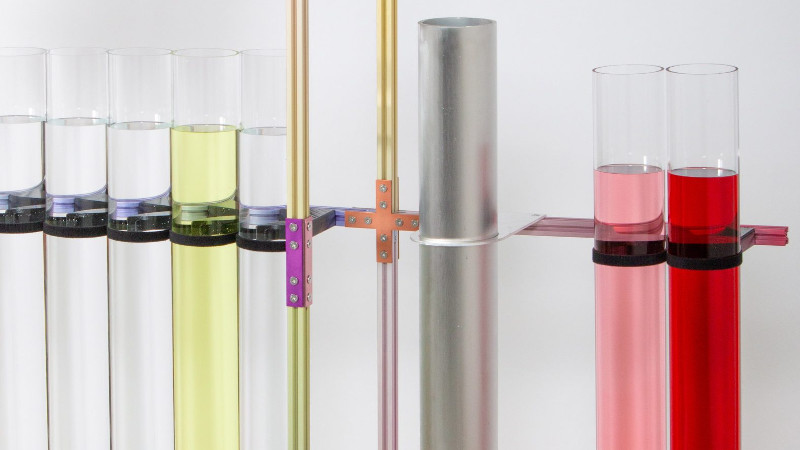
Studio-style gradient machines show how this can work on small-scale creative production. A programmable setup can control the motion and timing of each dip, allowing designers to “draw” with exposure time. A part may enter a dye bath slowly at first, then move faster, creating an exposure curve along the surface. Flip the part and repeat in another bath, and suddenly you have a double gradient. The process sounds like engineering because it is. The result looks like art because it also is.
Why Gradients Work So Well on Aluminum
Aluminum is the star of decorative anodizing because it forms a useful oxide layer and accepts a wide range of finishes. Type II anodizing is especially common for colorful decorative work because it provides a practical balance of corrosion resistance, appearance, and dye receptivity. Type III hard anodizing, often used for more demanding wear applications, tends to create a thicker and darker coating. That makes it excellent for performance but less flexible for bright, playful color effects.
For gradient anodizing, surface preparation is everything. A gradient will reveal flaws the way morning sunlight reveals dust on a black car. Machining marks, uneven brushing, inconsistent alloy composition, poor cleaning, rack marks, and fingerprints can all affect the final appearance. A smooth gradient does not forgive chaos; it politely amplifies it.
The Color Comes From Controlled Absorption
With dyed aluminum anodizing, the freshly anodized surface can absorb color before sealing. Shade depth is influenced by several variables, including the anodic film, dye concentration, immersion time, temperature, alloy, and surface finish. A gradient anodiser uses immersion time as the star variable. Instead of giving every part of the object the same time in the dye, it gives each section a different exposure history.
This is why a gradient anodiser is not simply “a tank with a string.” The charm lies in controlled repeatability. A hand-dipped gradient may be beautiful once. A programmable machine can make the same fade again, adjust it, document it, and scale the technique from a test coupon to a lamp body, stool frame, panel, handle, or limited-edition product.
Aluminum Gradients vs. Titanium Color Anodizing
It is easy to confuse aluminum gradient anodizing with titanium anodizing because titanium can produce vivid colors through oxide thickness and optical interference. In titanium color anodizing, voltage has a strong relationship with perceived color. Different oxide thicknesses create different interference colors, which is why titanium can shift through bronze, purple, blue, green, and other tones without dye in the same way aluminum usually requires dye for bright color.
Aluminum behaves differently. Anodized aluminum oxide is naturally clear or relatively colorless, so decorative color normally comes from dye absorption or other coloring methods. That makes aluminum gradients especially interesting because the gradient is often built from controlled dye exposure. Titanium gradients, by contrast, can be imagined through controlled voltage and oxide growth. Both are mesmerizing; they just speak different electrochemical dialects.
Design Possibilities for Gradient Anodizing
Gradient anodizing is more than a pretty finish for people who own too many flashlights, although flashlight collectors would absolutely understand the appeal. The technique fits many product categories where metal already plays a visual role.
Consumer Electronics
Imagine laptop shells, phone stands, headphone parts, camera rigs, keyboard cases, or gaming accessories with a subtle fade instead of a flat color. A gradient can make an object feel premium without adding bulky coating thickness. Because anodizing changes the surface rather than covering it like paint, the metallic character of aluminum can still show through.
Lighting and Interior Objects
Gradient anodizing is especially compelling in lighting. A pendant lamp with a pink-to-purple or bronze-to-smoke transition can look different depending on the room, daylight, and viewing angle. The finish becomes part of the emotional temperature of the object. A simple aluminum cylinder suddenly has atmosphere.
Bicycles, Outdoor Gear, and Small Hardware
Bike components, climbing accessories, knife scales, tool handles, and outdoor hardware already use anodizing for durability and identity. Gradients add a collectible quality. A stem cap, bottle cage, or handlebar part with a smooth color fade has the visual punch of custom work while still relying on a serious surface treatment.
Branding and Limited Editions
For brands, gradient anodizing can become a signature. Instead of choosing one corporate color, a company can create a recognizable transition. That is useful for special editions, anniversary products, art objects, and design collaborations. Color becomes not just decoration but storytelling.
The Hard Part: Repeatability
A gradient finish looks effortless when it works. Behind the scenes, it is a wrestling match with variables. The same alloy should be used across matching components. Surface texture should be consistent. Parts should be cleaned and handled carefully. The anodized film must be suitable for color uptake. Dye conditions must remain stable. Motion control must be smooth. Sealing must preserve the appearance rather than dulling it.
In normal production, a color range is often accepted because anodizing can vary naturally from batch to batch. Gradient work raises the bar. Now the manufacturer is not only matching a color but matching a color transition. That means the design file may need to describe where the fade begins, where it ends, how strong the contrast should be, and whether the transition should be linear, soft, dramatic, or layered.
In other words, “make it purple-ish at the top and vibes at the bottom” is a delightful creative brief, but it is not a production specification. A serious gradient anodizing workflow needs reference samples, process notes, acceptable variation limits, and testing on the actual alloy and finish.
Why Sealing Matters
Sealing is the final step that helps close the pores in the anodized layer. It improves corrosion resistance and helps preserve the color. Without proper sealing, a dyed finish may be more vulnerable to staining, fading, or color loss. With gradient anodizing, sealing is especially important because the entire visual effect depends on the smoothness and stability of the color transition.
Sealing also introduces sustainability and energy questions. Traditional hot-water sealing can require significant energy because of the temperatures involved. Modern finishing research continues to explore ways to reduce energy demand and environmental impact while maintaining corrosion resistance and color quality. For gradient anodizing to move beyond boutique design objects, sustainability will matter just as much as visual drama.
Safety and Professional Handling
Anodizing is not a casual kitchen-table craft. Professional anodizing involves controlled electrical systems, chemical baths, ventilation, wastewater considerations, personal protective equipment, and trained handling procedures. The creative idea may be easy to understand, but the safe execution belongs in a properly equipped shop or supervised industrial environment.
That does not make the topic less exciting. It makes it more interesting. The best gradient anodizing work comes from respecting both halves of the process: the artistic control of color and the technical discipline of metal finishing. Skip either side, and the result will either look boring or fail badly. Sometimes both, which is the finishing equivalent of stepping on a rake.
What Makes a Gradient Anodiser Worth Watching?
A good gradient anodiser is not just a novelty machine. It suggests a new way to think about manufacturing. Instead of treating industrial processes as fixed recipes, designers can treat them as programmable media. Motion curves, dwell time, masking, orientation, multiple dye baths, and repeat passes become creative parameters.
This matters because manufacturing is often where design ambition goes to become more practical and less fun. Gradient anodizing pushes back. It says a part can be durable, repeatable, and expressive. It says industrial finishing can have nuance. It says the color department deserves a motion-control engineer and possibly better snacks.
Common Challenges in Gradient Anodizing
Color Matching
Even standard anodizing can show shade variation. Gradients multiply that challenge because there are many shades across one surface. Designers should expect sampling, adjustment, and realistic tolerance ranges.
Part Geometry
Simple shapes are easier to gradient than complex shapes. Tubes, panels, cylinders, and smooth forms tend to show fades beautifully. Deep recesses, sharp transitions, and hidden corners may color differently because exposure and fluid behavior can vary.
Rack Marks and Contact Points
Anodized parts need electrical contact during processing, and those contact points can leave marks. For visible products, rack locations must be planned early, not discovered later with the sad trumpet sound of regret.
Durability Expectations
Anodizing can be durable, but color performance depends on the process, dye, sealing, environment, and use case. A decorative gradient on an indoor lamp has different demands from a heavily handled outdoor tool.
Experience Notes: Living With the Idea of a Gradient Anodiser
The most exciting thing about an anodiser that does gradients is not just the color. It is the shift in mindset. Anyone who has handled anodized parts knows the familiar pleasure of the finish: cool to the touch, slightly silky, clean at the edges, and more refined than bare aluminum. A gradient version adds a second reaction. You pick it up, turn it, and immediately look for where the color changes. The object invites inspection.
In practical design conversations, that matters. A gradient finish can make a simple part feel intentional. A straight tube becomes a lamp body. A flat panel becomes a visual accent. A handle becomes something the user remembers. That emotional detail is valuable because many aluminum products compete in categories where the mechanical design is already good. The finish becomes the difference between “nice part” and “where did you get that?”
One lesson from gradient anodizing is that restraint usually wins. The temptation is to make every fade loud enough to be seen from across a parking lot. Sometimes that works, especially for limited-edition products. But the most elegant gradients often move slowly: smoke to graphite, champagne to rose, pale blue to deep navy, soft violet to warm bronze. These finishes do not scream. They lean over and say, “Yes, I am aluminum, but I also have range.”
Another experience-based insight is that gradients reward simple geometry. A clean cylinder, rectangular extrusion, or curved shell gives the eye room to enjoy the transition. If the part is covered in grooves, screws, logos, and tiny features, the gradient can become visual confetti. The best results come when the object’s shape and the color movement agree with each other. A vertical fade works beautifully on hanging lights. A lengthwise fade makes sense on handles, tubes, and rails. A radial or two-direction gradient can suit furniture, art panels, and display pieces.
There is also a production lesson hiding inside the beauty: samples are not optional. A digital rendering cannot fully predict anodized color. The alloy, surface preparation, brushing direction, bead blasting, bath behavior, dye uptake, and sealing can all shift the final look. A designer should treat the first samples as a conversation with the material. The metal will answer honestly, sometimes rudely, but usually usefully.
For web readers, makers, and product teams, the big takeaway is this: gradient anodizing is not a gimmick when it is designed with purpose. It can express motion, heat, depth, direction, or brand identity. It can make recycled aluminum feel celebratory rather than merely responsible. It can turn a protective finish into a visual signature. And because it grows from a real industrial process, it carries more credibility than a surface trick that only looks good until the first scratch.
The future of gradient anodizing will likely belong to studios and manufacturers that combine software control with finishing expertise. The dream is not random rainbow metal. The dream is repeatable nuance: a finish that can be specified, refined, scaled, and still feel special. That is a rare thing in manufacturing. Usually, repeatability makes objects less magical. Here, repeatability may be exactly what lets the magic survive production.
Conclusion
An anodiser that does gradients is a perfect example of what happens when an industrial process gets a creative upgrade. Aluminum anodizing already offers durability, corrosion resistance, and a polished modern look. Add controlled motion, carefully managed dye exposure, and thoughtful design, and the same process begins producing soft fades, double gradients, and color transitions that feel almost impossible for metal.
For designers, gradient anodizing is a reminder that manufacturing does not have to be visually flat. For engineers, it is a challenge in repeatability, process control, material selection, and finish specification. For everyone else, it is simply fun to see aluminum stop wearing one-color uniforms and start dressing like it has weekend plans.
Note: This article is intended for educational and editorial publishing. Anodizing should be performed only in properly equipped professional environments with trained operators and appropriate safety controls.