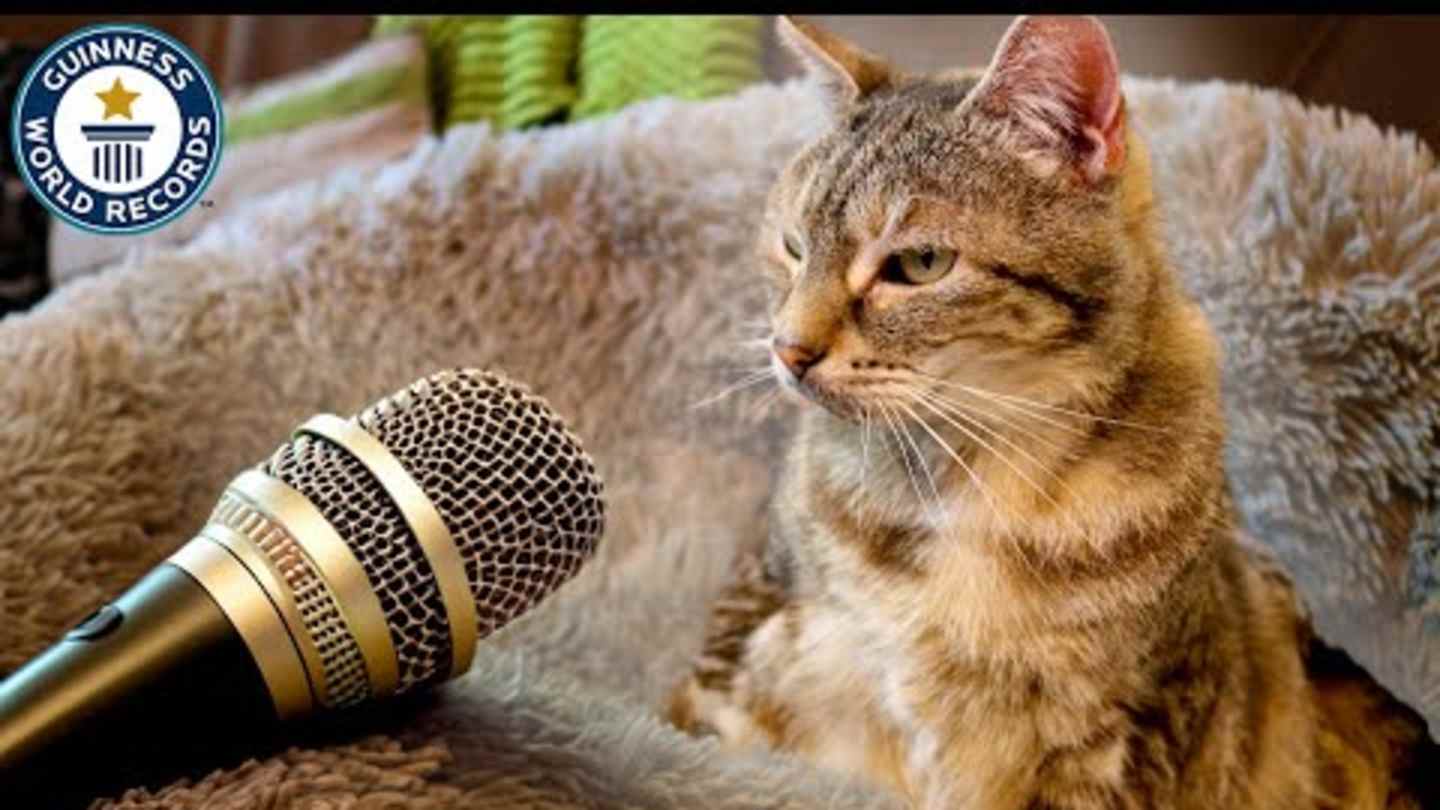
Some cats enter a room with elegance. Others enter by knocking over a glass, staring at you like you did it, and then demanding dinner. Bella, a British house cat from Huntingdon, Cambridgeshire, has chosen a third route: she purrs so loudly that she earned a Guinness World Records title.
Bella’s record-breaking purr measured 54.59 decibels, officially making her the loudest purring living domestic cat. For a small house cat, that is not a gentle background rumble. That is a furry little engine with whiskers. It is in the neighborhood of a boiling kettle or a lively household appliance, which means Bella does not simply purr; she makes an announcement.
The story is charming because it combines everything people love about cats: mystery, comedy, personality, and the ancient feline belief that the home belongs to them and humans are merely rent-paying staff. But Bella’s loud purr also opens the door to a bigger question: why do cats purr, how loud can a cat purr get, and what does a super-loud purr actually mean?
Meet Bella, the British Cat With a Motorboat Purr
Bella is not a giant wildcat, a lion cub, or a cartoon villain’s pet. She is a domestic moggie, living an ordinary house-cat life in the United Kingdom. Her owner, Nicole Spink, noticed what many cat owners eventually notice: some cats have a quiet purr, and some cats sound like someone left a tiny washing machine under the sofa.
At 14 years old, Bella proved that senior cats can still make headlines. Her purr was measured during an official attempt and reached 54.59 dB(A). That “A-weighted” measurement matters because it reflects sound in a way that roughly matches how the human ear experiences loudness. In other words, this was not just a casual “my cat is loud” brag at the family dinner table. It was measured, verified, and recorded.
The title Bella holds is specifically for the loudest purr by a living domestic cat. That detail is important because the all-time record is still higher. Two other British cats, Smokey and Merlin, share the record for the loudest purr by a domestic cat ever at 67.8 decibels. Bella, however, currently sits on the throne among living cats, presumably with the calm confidence of a queen who knows the humans will bring snacks.
How Loud Is 54.59 Decibels, Really?
Decibels can be tricky because the scale is not as simple as inches or pounds. A few extra decibels can mean a meaningful increase in sound energy. Bella’s purr, at 54.59 dB(A), is not dangerous to human hearing, but it is surprisingly noticeable for a sound coming from an animal small enough to fit on a lap and judge your outfit.
For comparison, a whisper is usually around 30 decibels, a refrigerator hum may sit near 40 to 50 decibels, and normal conversation is often around 60 decibels. That means Bella’s purr can compete with everyday household noise. Imagine trying to watch television while your cat is happily vibrating beside you like a tiny, emotionally complicated generator.
That is what makes the record so fun. A purr is usually associated with coziness: a cat curled on a blanket, the soft rhythm of breathing, the peaceful soundtrack of a quiet room. Bella turned that image into something closer to a live performance. She did not break the sound barrier, but she certainly broke the stereotype that purring is always subtle.
Why Do Cats Purr?
Most people think cats purr only when they are happy. That is partly true, but cats are not known for making life simple. A cat may purr when relaxed, hungry, nervous, injured, or seeking attention. Purring can be comfort, communication, self-soothing, and negotiation all at once. In cat language, one sound can carry several meanings, which is very on-brand for an animal that also thinks a cardboard box is luxury real estate.
Scientists have studied feline purring for decades, and while there is still debate over the exact mechanism, research points to vibrations involving the larynx and breathing system. Cats can purr during both inhalation and exhalation, which helps create the continuous, low, rolling sound that cat owners know so well.
Some studies suggest purr frequencies often fall within ranges that may support comfort and possibly healing-related effects in cats, though owners should not treat purring as a medical diagnosis. A cat that purrs while hiding, limping, refusing food, or acting unusually should be checked by a veterinarian. The purr may be cute, but it is not a substitute for professional care.
What Bella’s Record Says About Cat Personality
Bella’s record is not just about volume. It is also about personality. Cats are famous for being individuals. One cat will greet every guest like a tiny mayor. Another will vanish under the bed and reappear only when the visitors leave. Some cats chirp at birds. Some squeak. Some meow like opera singers. Bella purrs like she has a small engine installed behind her ribs.
That individuality is part of why cat stories travel so well online. People recognize their own pets in them. A loud-purring cat is funny because it feels both unusual and completely believable. Anyone who has lived with cats knows they specialize in oddly specific talents: opening cabinets, sitting on keyboards, detecting tuna from three rooms away, or choosing the one person with allergies as their favorite human.
Bella’s fame also reminds us that record-breaking animals do not always need dramatic athletic ability. She did not leap through hoops, solve a puzzle, or balance on a skateboard. She relaxed, purred, and let the world discover that her everyday habit was extraordinary.
The Difference Between Loud and Unhealthy Purring
A loud purr is usually not a problem by itself. Many cats naturally purr more loudly than others. Body size, anatomy, age, mood, and individual vocal style may all influence the sound. Some cats produce a soft, fluttering purr; others produce a deep rumble that can be felt through a couch cushion.
However, cat owners should pay attention to changes. If a cat suddenly starts making new breathing noises, wheezing, coughing, or purring in a way that seems strained, it is worth calling a vet. The key is context. A loud purr during cuddles, grooming, or mealtime may simply mean the cat is content or excited. A loud sound paired with distress signals is different.
Healthy cat behavior is usually a pattern. If your cat eats normally, moves comfortably, uses the litter box, plays, rests, and interacts in familiar ways, a big purr may just be part of their charm. If the purr comes with hiding, weight loss, aggression, weakness, or labored breathing, do not shrug it off as “just cat drama.” Cats can be dramatic, yes, but sometimes the drama has a reason.
Why Loud Cat Purrs Fascinate the Internet
Animal record stories are internet gold because they are wholesome, surprising, and easy to understand. A cat with the world’s loudest purr needs no complicated backstory. You hear the concept once and immediately want details. How loud? What cat? Does she know she is famous? Has she demanded better treats?
Bella’s story also works because it feels joyful rather than competitive in a harsh way. Nobody needs to train a cat to purr loudly. In fact, trying to force a cat to do anything is usually how humans learn humility. Bella simply does what she naturally does, and the world celebrates it.
There is also something comforting about a senior cat becoming famous for a gentle behavior. Many animal stories focus on kittens, rare breeds, or dramatic rescues. Bella’s record shows that an older house cat can still surprise everyone. She is proof that fame may arrive late in life, possibly while you are sitting near your food bowl making kettle noises.
How Cat Owners Can Encourage Happy Purring
You cannot turn every cat into Bella, and you should not try. A cat’s purr volume is part of its individual makeup. But you can create an environment where your cat feels safe enough to purr more often. Start with predictable routines. Cats enjoy knowing when meals happen, where their resting places are, and which parts of the house are safe retreats.
Comfort matters. Soft bedding, clean litter boxes, fresh water, and access to quiet spaces can help cats relax. Play is also important. A bored cat may become stressed or destructive, while a cat with regular playtime can release energy in healthy ways. Wand toys, puzzle feeders, and gentle chase games can make indoor life more enriching.
Respect is the secret ingredient. Many cats dislike being grabbed, chased, or held longer than they prefer. Letting a cat choose when to approach often leads to better bonding. When a cat trusts you, the purr may follow. Or, in true feline fashion, the cat may ignore you for three hours and then sit on your chest at midnight. Love comes in mysterious packaging.
What Makes Bella’s Record Special?
Bella’s record matters because it turns an everyday pet behavior into a small celebration of animal uniqueness. Purring is familiar, but Bella’s purr is exceptional. It is loud enough to be measured as a record, yet ordinary enough to feel close to home. That combination is irresistible.
The story also gives cat lovers a reason to listen more closely. Every purr has a personality. Some are soft and sleepy. Some are chirpy and uneven. Some vibrate through your hand when you scratch the perfect spot under the chin. A cat’s purr is not just background noise; it is communication wrapped in vibration.
In a world full of serious headlines, a British house cat setting a purring record is a reminder that delight still exists in small places. Sometimes it is not a grand achievement that captures attention. Sometimes it is a cat on a sofa, rumbling away like a kettle with opinions.
Experiences and Everyday Lessons From a Record-Breaking Purr
Anyone who has lived with a loud-purring cat knows the experience is both adorable and slightly ridiculous. You settle down with a book, the cat climbs onto your lap, and suddenly the room has a soundtrack. At first it is peaceful. Then it becomes impossible to ignore. The cat is not meowing, not scratching, not causing chaos. It is simply purring with the confidence of a small machine that has recently discovered jazz.
Bella’s story feels familiar because many cat owners have their own “my cat is secretly a household appliance” moments. One person may have a cat whose purr vibrates through the bed at night. Another may have a cat that starts rumbling the second a can opens. Some cats purr before they are even touched, as if they are warming up the engine in advance. These moments become part of the relationship. They are funny, personal, and oddly comforting.
A loud purr can also change the atmosphere of a home. It makes a room feel occupied in the nicest way. A purring cat on the couch can turn a stressful evening into something softer. The sound says, “For now, we are safe.” That may be one reason people find purring so emotionally powerful. It is not just noise; it is a sign of trust, routine, and companionship.
There is a lesson here for pet owners: pay attention to the small things. The habits that seem ordinary may be the things that make a pet unforgettable. A cat’s favorite windowsill, a dramatic dinner announcement, a strange sleeping pose, or a record-level purr can become a family story. Bella’s owners noticed her unusual sound, and that ordinary observation became an international headline.
Living with cats also teaches patience. A dog may perform on command, but a cat tends to perform when the universe has aligned, the lighting is acceptable, and the human has shown proper respect. That makes a record like Bella’s even more charming. Her achievement depends on comfort. A cat purrs best when it feels secure, not when it feels pressured. The record celebrates not only volume, but also the cozy environment that allowed Bella to be Bella.
For families, Bella’s story can be a fun reminder to celebrate pets as individuals rather than comparing them. Not every cat will have the world’s loudest purr. Some will have the world’s most judgmental stare. Some will specialize in stealing warm laundry. Others will bring socks, sing at closed doors, or sit in boxes that are clearly too small. The joy is in noticing what makes each animal unique.
So the next time your cat curls beside you and begins to purr, listen closely. Maybe it is soft as a whisper. Maybe it is bold enough to compete with the dishwasher. Either way, it is part of a language humans are still learning to understand. Bella may hold the record, but every purring cat has a little world-record energy in its own living room.
Conclusion
Bella, the British house cat with the world-record purr, proves that extraordinary stories can come from ordinary homes. Her 54.59-decibel rumble is funny, impressive, and deeply cat-like: calm, confident, and impossible to ignore. More than a quirky headline, her record highlights the fascinating science of purring, the individuality of domestic cats, and the special bond between pets and the people lucky enough to serve them snacks.