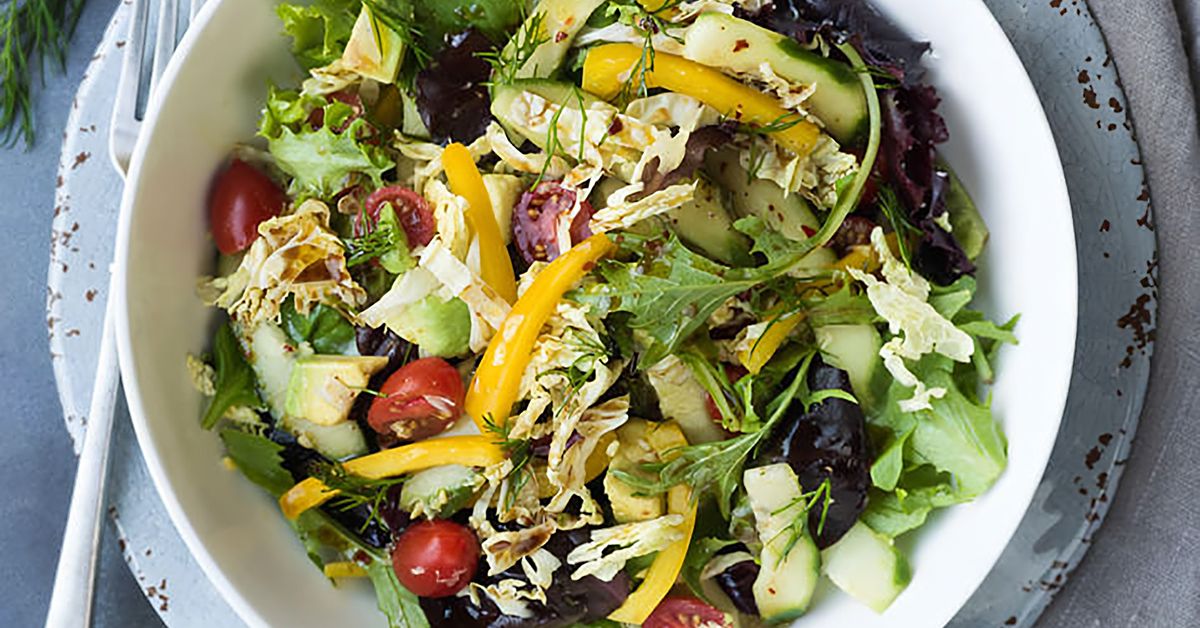
If your usual lunch has been giving “sad desk napkin” energy, this chopped rainbow salad with multi-greens is here to stage an intervention. It is bright, crunchy, flexible, and honestly a little smug in the best way. It looks gorgeous in a bowl, tastes fresh instead of flat, and manages to feel both virtuous and satisfying without acting like a punishment. That is a rare trick in the salad world.
At its core, this is a colorful chopped salad built on a mix of leafy greens, then loaded with crisp vegetables, creamy avocado, herbs, and a punchy homemade vinaigrette. The chopped format matters more than people admit. When every ingredient is cut into bite-size pieces, you get a little bit of everything in each forkful: crunch, tang, sweetness, peppery greens, and that “I am absolutely winning at lunch” feeling. It is the kind of salad that makes people suspicious you suddenly got your life together.
Better yet, the idea behind a rainbow salad is not just visual flair. A wider range of vegetables and colors usually means a wider mix of nutrients, textures, and plant compounds. Combine that with dark leafy greens like romaine, spinach, arugula, or baby kale, and you have a bowl that is fresh, practical, and easy to adapt for a quick lunch, a light dinner, or a make-ahead side for a crowd.
Why this salad works so well
A great chopped rainbow salad does not rely on one star ingredient. It works because every component has a job. The greens bring structure. The crunchy vegetables create texture. The colorful add-ins keep the flavor lively. The dressing ties the whole thing together so it tastes like a meal rather than a rabbit’s to-do list.
Using multi-greens makes the salad more interesting than a single lettuce base. Romaine gives crisp bite. Spinach adds softness and mild earthiness. Arugula brings a peppery edge. Baby kale adds chew and sturdiness, especially if you are meal prepping. Spring mix can add tenderness, but it is best balanced with sturdier greens so the bowl does not collapse into a watery sigh by tomorrow afternoon.
Chopping everything small also changes the eating experience in a big way. You do not wrestle giant lettuce leaves. You do not chase cherry tomatoes around the plate like they owe you money. You scoop, stab, and eat. Cleanly. Efficiently. Like a person who has stopped losing arguments to salad.
The best greens for a multi-greens base
Romaine
Romaine is the backbone. It is crunchy, refreshing, and sturdy enough to hold dressing without turning limp immediately. If you want a salad that still feels alive after twenty minutes on the table, romaine is your friend.
Spinach
Spinach is softer and milder, which helps round out bolder ingredients like red onion, radish, or a sharp vinaigrette. It also plays nicely with fruit, nuts, beans, and cheese, so it is one of the easiest greens to build around.
Arugula
Arugula brings peppery personality. Use a handful or two rather than making it the whole base unless you truly enjoy a salad that talks back.
Baby kale
Baby kale gives structure and staying power. It is excellent in make-ahead salads because it does not wilt as quickly as more delicate greens. A little acid in the dressing softens it nicely.
Spring mix or mixed baby greens
These add variety, but they are best treated like supporting actors. They bring complexity, though they can lose texture faster than romaine or kale if overdressed.
How to build a real rainbow in the bowl
Think in color groups instead of random produce purchases. Green might come from cucumber, edamame, avocado, or snap peas. Red can come from tomatoes, radishes, or red bell pepper. Orange from carrots or orange peppers. Purple from cabbage or red onion. Yellow from corn or yellow peppers. That mix makes the salad prettier, but it also keeps the flavor from becoming one-note.
Dark leafy greens are especially useful because they bring vitamin K, plus a mix of fiber and other nutrients. Many colorful vegetables also contribute vitamin C, which is plentiful in peppers, tomatoes, broccoli, and leafy greens. A practical bonus: the more textures you include, the more satisfying the salad feels. Crisp cucumber, juicy tomato, crunchy cabbage, creamy avocado, tender chickpeas, and leafy greens all create contrast, and contrast is what keeps a salad from getting boring after three bites.
Recipe: Chopped rainbow salad with multi-greens
Ingredients
- 4 cups chopped romaine
- 2 cups baby spinach
- 2 cups baby kale or arugula
- 1 cup shredded red cabbage
- 1 cup chopped cucumber
- 1 cup chopped cherry tomatoes
- 1 cup chopped bell peppers, mixed colors
- 1 cup grated or finely chopped carrots
- 1/2 cup thinly sliced radishes
- 1/3 cup finely chopped red onion
- 1 avocado, diced
- 3/4 cup chickpeas or shelled edamame
- 1/4 cup chopped parsley, basil, or mint
- 2 tablespoons sunflower seeds, pumpkin seeds, or sliced almonds
For the lemon-Dijon vinaigrette
- 1/4 cup extra-virgin olive oil
- 2 tablespoons fresh lemon juice
- 1 tablespoon red wine vinegar or apple cider vinegar
- 1 teaspoon Dijon mustard
- 1 teaspoon honey or maple syrup
- 1 small garlic clove, finely grated
- 1/2 teaspoon kosher salt, or to taste
- Freshly ground black pepper, to taste
Directions
- If your greens are not labeled ready-to-eat or triple-washed, rinse them under running water and dry them very well. Dry greens are not optional. Wet greens turn dressing into a sad puddle.
- Chop the romaine, spinach, and kale or arugula into bite-size pieces and place them in a large bowl.
- Add the cabbage, cucumber, tomatoes, bell peppers, carrots, radishes, red onion, avocado, chickpeas, herbs, and seeds.
- In a jar or small bowl, whisk together the olive oil, lemon juice, vinegar, Dijon, honey, garlic, salt, and pepper until emulsified.
- Dress the salad lightly, toss, taste, and add more dressing only as needed. You want the vegetables coated, not swimming.
- Serve immediately, or chill the components separately and assemble just before eating.
Smart add-ins that make it a meal
This salad can stay light and crisp, or it can bulk up into a full lunch or dinner. Add grilled chicken, salmon, tofu, shrimp, or a chopped hard-boiled egg if you want more protein. Chickpeas, beans, or edamame keep it vegetarian while adding staying power. A little feta, goat cheese, or shredded Parmesan can work too, but use cheese like a finishing touch, not a snowstorm.
If you want extra chew, add cooked quinoa, farro, or brown rice. Just keep the quantity modest so the greens still feel like the main event. Nuts and seeds are another excellent move because they bring crunch and healthy fats without demanding much effort.
Salad dressing tips that save the whole situation
A bright vinaigrette is usually the best match for a chopped rainbow salad with multi-greens because it lifts the vegetables instead of flattening them. Lemon juice, vinegar, olive oil, Dijon, and garlic are enough to build flavor fast. You can swap in lime juice for a more summery feel, or use a sesame-forward dressing for an Asian-inspired version.
The key is restraint. Too much dressing will make tender greens wilt and mute the fresh crunch. Dress just before serving whenever possible. If you are packing lunch, store the dressing separately and toss it in when you are ready to eat. That tiny act of self-control pays off in a big way.
Meal prep, storage, and food safety
This is where the grown-up magic happens. If you prep smart, the salad can carry you through busy weekdays without becoming a swampy container of regret.
- Keep greens cold and dry. Refrigeration matters, especially for fresh-cut leafy greens.
- If packaged greens are labeled “ready-to-eat,” “washed,” or “triple-washed,” do not rewash them.
- If produce is not prewashed, rinse it under running water. Skip soap and commercial produce wash.
- Cut away bruised or damaged areas and toss anything that looks slimy or rotten.
- Store dressing separately until serving time.
- Leave prepared salad out for no more than 2 hours, or 1 hour if it is very hot outside.
For meal prep, keep the tender greens in one container, the chopped crunchy vegetables in another, and the dressing in a small jar. Add avocado just before serving if you can. If you are using sturdier ingredients like cabbage, carrots, chickpeas, and kale, those can be assembled ahead with fewer texture problems.
One more practical note: if you take warfarin or another medication affected by vitamin K, you do not necessarily need to avoid greens, but you do need consistency. A giant kale mountain one day and no greens the next is not the move. Keep your intake steady and follow your clinician’s guidance.
Easy variations for different moods
Mediterranean version
Add chickpeas, cucumber, tomatoes, parsley, olives, and feta. Use red wine vinegar and oregano in the dressing.
Southwest version
Add black beans, corn, avocado, cilantro, and pepitas. Use lime juice, cumin, and a little jalapeño in the dressing.
Crunchy Asian-inspired version
Use cabbage, carrots, cucumber, edamame, herbs, and sesame seeds. Dress with rice vinegar, ginger, and a splash of soy sauce.
Protein-packed lunch version
Add grilled chicken, salmon, tofu, or tuna and a scoop of quinoa. Suddenly your “side salad” has opinions and boundaries.
Why this salad earns a repeat spot in the rotation
Some recipes are impressive once and then disappear into the abyss of bookmarks and broken promises. This is not one of those recipes. A chopped rainbow salad with multi-greens is practical enough for a Tuesday, pretty enough for guests, and customizable enough that it never really gets old. It lets you use what is in season, what is in the fridge, and what your mood can tolerate.
It is also one of the easiest ways to eat more vegetables without making the process feel joyless. Two cups of raw leafy greens count as one vegetable serving, so a generous bowl gets you surprisingly far. When you mix in multiple colors and textures, the salad stops feeling like a duty and starts feeling like actual food that people voluntarily crave.
Experiences with chopped rainbow salad with multi-greens
There is something oddly cheerful about making this salad on a hectic day. You start with a cutting board that looks a little too ambitious, then ten minutes later the whole thing turns into a bowl full of color that makes the kitchen seem more organized than it really is. It is the kind of recipe that gives the illusion of domestic excellence even if there are three unread emails, a sink full of dishes, and a grocery receipt somewhere on the floor.
At lunch, this salad has a different personality depending on where you eat it. At home, it feels breezy and virtuous, like maybe you are the sort of person who also remembers to water herbs and stretch between meetings. At the office, it looks impressive in a clear container, especially when the colors are layered. People notice. Someone always asks, “Did you buy that somewhere?” and you get to say no in the calm, humble tone of a person who definitely did not almost spill dressing in the elevator five minutes earlier.
It is also a useful salad for people who get bored easily. A bowl of plain lettuce can feel like a lecture. This one feels more like a conversation. Every bite changes slightly depending on what lands on the fork. One bite is crunchy and peppery. The next is juicy and sweet from tomatoes and peppers. Then the avocado shows up and suddenly everything tastes richer and more complete. That constant variation keeps it from becoming background food.
When served at gatherings, chopped rainbow salad with multi-greens tends to disappear faster than many people expect. It looks healthy, yes, but it also looks festive, which matters. A giant beige casserole may be comforting, but a bright chopped salad announces itself from across the room. It says, “Hello, I contain actual freshness.” Even people who are not usually first in line for salad often take some because the chopped format is easy to serve and easy to eat.
There is also a small but real pleasure in how adaptable the recipe feels over time. In summer, it leans juicy and crisp with cucumbers, tomatoes, and herbs. In cooler months, it becomes earthier with cabbage, kale, shredded carrots, roasted squash, or apples. If you are trying to eat better without getting trapped in a cycle of repetitive “wellness meals,” this salad helps. It gives you structure without boredom.
For meal preppers, the experience is a mix of practicality and strategy. You learn quickly that dry greens matter, that dressing belongs on the side, and that avocado is a last-minute celebrity guest rather than a reliable early arrival. Once you get the routine down, though, the payoff is huge. Lunch becomes easier. Grocery odds and ends get used up. And the week feels a little less chaotic because at least one decision has already been made.
Most of all, this salad is satisfying because it does not ask you to choose between health and pleasure. It gives you crunch, color, freshness, and flexibility in one bowl. It can be light, hearty, casual, or dinner-party worthy. It can be your sensible lunch and your “look at me being wildly competent” potluck contribution. Not bad for a pile of chopped vegetables and greens.
Conclusion
Chopped rainbow salad with multi-greens proves that salad does not have to be boring, bland, or built like a punishment. With a sturdy mix of greens, a full range of colorful vegetables, and a bright homemade vinaigrette, it becomes the kind of recipe you can rely on again and again. It is simple enough for everyday use, flexible enough for endless variations, and attractive enough to make healthy eating feel a little more joyful and a lot less like homework.