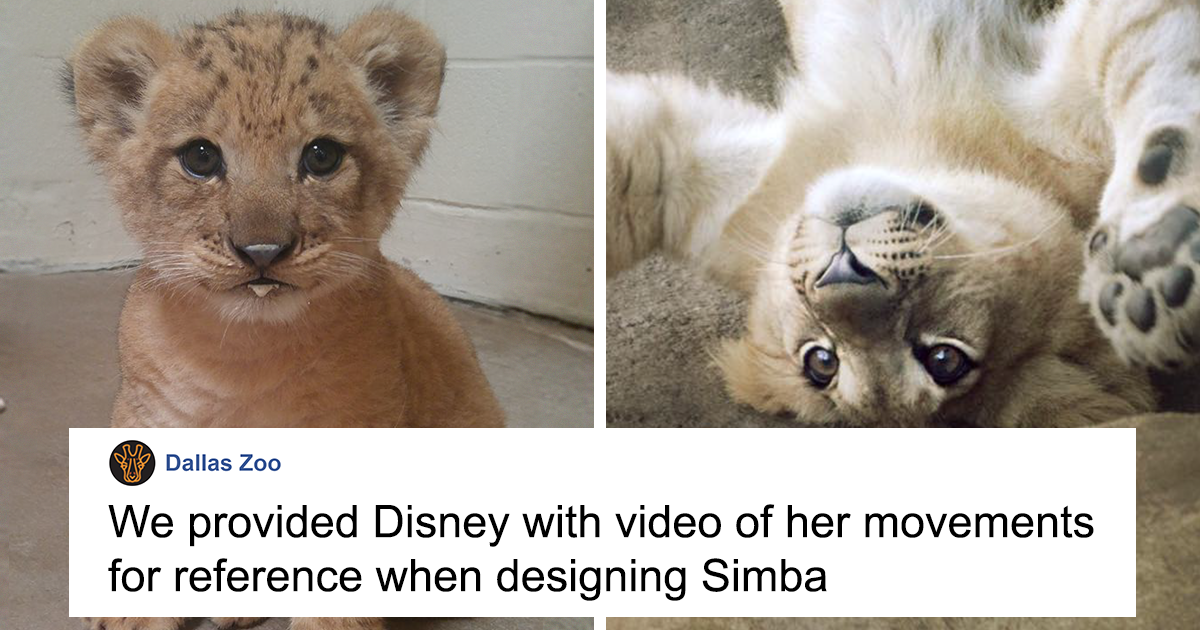
Every great movie star has an origin story. Some are discovered in tiny theaters. Some are found in viral videos. And some, apparently, begin their journey by wobbling around the Dallas Zoo with milk on their whiskers. That is the charming story of Bahati, the real lion cub whose movements helped inspire baby Simba in Disney’s 2019 remake of The Lion King.
Bahati was not an actor in the usual Hollywood sense. She did not sit in a makeup chair, demand a bigger trailer, or ask whether her snack bowl could be stocked with organic antelope. Instead, she became something more unusual: a living reference model. Disney’s animation team used video of Bahati as a young cub to study the little details that make a baby lion feel real: uncertain steps, soft blinking, playful curiosity, tiny facial movements, and the delightfully messy business of being very small and very lion-shaped.
The result was one of the sweetest behind-the-scenes stories connected to The Lion King remake. While the film used advanced computer-generated imagery, virtual production, and photorealistic animation, one of its most memorable baby-animal inspirations came from a real cub with a lucky name and an even luckier face.
Who Is Bahati?
Bahati, often referred to as Bahati Moja, is a female African lion born at the Dallas Zoo in 2017. Her name is commonly translated from Swahili as “lucky one,” which feels almost too perfect for a cub who would later become connected to one of Disney’s most famous characters. Born on St. Patrick’s Day, Bahati was special from the beginning. She was reported as the first lion cub born at the Dallas Zoo in more than four decades, making her arrival a major moment for the zoo’s animal care team and local visitors.
Her parents, Lina and Kamau, were part of the Dallas Zoo’s lion pride. Bahati’s birth was especially meaningful because her mother had previously experienced complications. Zoo staff monitored Lina closely, and Bahati’s arrival became a story of careful veterinary work, patience, and a healthy dose of good fortune. In other words, she did not just get a cute name; she earned it.
Like many lion cubs, Bahati had the irresistible baby-animal toolkit: oversized paws, rounded ears, faint cub markings, a soft golden coat, and the expression of a creature who has just discovered that gravity is a personal enemy. She was curious, alert, playful, and clumsy in exactly the way baby lions are supposed to be. For Disney animators, those little imperfections were gold.
How Bahati Became The Model For Baby Simba
When Disney set out to remake The Lion King, the creative challenge was enormous. The original 1994 animated film was beloved for its expressive characters, bold colors, musical numbers, and emotional storytelling. The 2019 version, directed by Jon Favreau, took a different route: a photorealistic world where lions, meerkats, warthogs, hyenas, hornbills, and other animals looked as if they had stepped out of a nature documentary.
To make baby Simba convincing, the animation team needed more than imagination. They needed reference. Real animals do not move like cartoon animals. A cub does not simply “walk”; it tests the ground, shifts weight unevenly, stumbles, recovers, and then acts like the stumble was totally intentional. A cub does not just “drink milk”; it licks, sniffs, blinks, pauses, and somehow manages to wear part of breakfast on its face.
That is where Bahati entered the picture. When she was about a month old, the Dallas Zoo provided Disney with video of her movements and behavior. The footage reportedly included everyday cub moments such as walking on wobbly legs, nursing, licking milk droplets, playing, and interacting with her mother. These tiny actions gave animators valuable clues about how a real lion cub behaves before it grows into the confident kingly posture audiences associate with Simba.
Was Bahati Actually In The Movie?
Not exactly. This is an important distinction for anyone wondering whether Bahati “played” Simba. The 2019 Lion King was not filmed with real animals performing scenes. Baby Simba was a computer-generated character created by artists and animators. Bahati served as a motion and behavior reference, meaning her real-life body language helped guide the digital performance.
Think of Bahati as the world’s cutest acting coach. She did not roar lines, hit marks, or sing “I Just Can’t Wait to Be King,” but she helped the artists understand what a very young lion looks like when it is exploring the world for the first time. That natural reference made Simba feel less like a generic CGI cub and more like an animal with weight, softness, and believable instincts.
Why Real Animal Reference Matters In Photorealistic Animation
Animation can be exaggerated, stylized, or symbolic. In the 1994 Lion King, Simba could raise his eyebrows, smile in a distinctly human way, and leap through musical numbers with classic Disney flair. The 2019 remake had a different goal. It aimed to create animals that looked and moved as realistically as possible while still carrying a dramatic story.
That is a tricky balance. If the animals look too realistic but move too cartoonishly, audiences notice. If they move realistically but show too little emotion, viewers may feel distant from the story. Bahati’s footage helped bridge that gap. Her natural cub behavior offered animators a library of small, believable gestures that could support emotion without breaking the documentary-style illusion.
For example, a baby lion’s face is not built like a human face. It cannot smile like a child in a school photo. But it can communicate curiosity through head tilts, ear movement, blinking, body posture, and timing. A hesitant paw step can suggest uncertainty. A nuzzle can suggest comfort. A quick glance can suggest surprise. These details matter because photorealism depends on the audience accepting the creature on screen as physically real.
The Technology Behind The Lion King Remake
The 2019 Lion King was often described as “live-action,” but that label caused plenty of debate. Unlike a traditional live-action animal movie, the film’s animals and environments were largely computer generated. The production used advanced visual effects, virtual reality tools, game-engine technology, and keyframe animation to build a world that looked like a real African savanna.
Moving Picture Company, commonly known as MPC, played a major role in creating the film’s visual effects and animation. The production involved hundreds of artists and a large number of visual effects shots. Filmmakers also used virtual production methods that allowed the director and cinematography team to explore digital environments as if they were physical sets. In simple terms, they could “walk” through a virtual Pride Rock and plan shots much like they would on a real location.
This mix of high-tech filmmaking and real animal observation is what makes Bahati’s contribution so delightful. On one side, you have complex rendering, digital fur, simulated lighting, virtual cameras, and artists solving problems that would make most laptops quietly leave the room. On the other side, you have a tiny lion cub licking milk off her face. Cinema is magical, but sometimes magic wears whiskers.
Why Bahati Captured The Internet’s Heart
Once the story of Bahati’s connection to Simba spread online, animal lovers and Disney fans reacted exactly as expected: with collective squealing. The appeal was obvious. People already loved Simba, and now they had a real cub to associate with him. Bahati gave fans a tangible connection to a digital character.
Part of the charm came from the contrast. The Lion King is grand, dramatic, and mythic. It has royal succession, betrayal, destiny, grief, redemption, and a soundtrack that can make adults emotionally unstable in a grocery store. Bahati’s footage, by comparison, was wonderfully ordinary. She was simply being a cub: walking, slipping, eating, playing, learning. That ordinary realness made the story even sweeter.
Audiences love behind-the-scenes details because they make large productions feel human. Or in this case, feline. Learning that baby Simba’s movements were inspired by an actual zoo cub gives the film an added layer of warmth. It reminds viewers that even in a heavily digital movie, artists are still studying life, nature, and behavior to make something feel authentic.
Bahati And The Real Behavior Of Lion Cubs
Lion cubs are born small, vulnerable, and dependent on their mothers. They typically have faint spots or markings that fade as they grow. Those markings help them blend into grass and shade when they are young. They spend much of their early life nursing, sleeping, exploring, and learning through play. If you have ever watched kittens wrestle, you already understand the basic concept, except lion cubs eventually become much larger and less appropriate for your living room.
Play is not just cuteness for cuteness’ sake. For young lions, pouncing, pawing, chasing, and wrestling help build the skills they will later use for hunting and social interaction. Cubs learn by watching adults and by testing their own bodies. They discover balance, coordination, strength, and boundaries. Sometimes the boundary is “do not bite Dad’s tail too hard,” a lesson that probably arrives with immediate feedback.
This is why Bahati’s reference footage mattered. Baby Simba needed to look like a young lion who was still learning the world. He could not move with the smooth confidence of an adult male. His body had to feel soft, uncertain, energetic, and new. Bahati’s real cub behavior offered a template for that stage of life.
From Lucky Cub To Lioness
Bahati did not remain tiny forever, although the internet might have preferred to preserve her permanently in adorable cub form. She grew into a healthy adult lioness at the Dallas Zoo. Later reports noted that Bahati became a mother herself, adding another chapter to her already remarkable story. That progression from carefully watched newborn to famous cub reference to grown lioness made her more than a viral animal moment. It made her part of a larger story about animal care, conservation, and public education.
Zoos often use stories like Bahati’s to help visitors connect with species they may never see in the wild. A lion cub can inspire curiosity, but that curiosity can lead to more serious questions: Where do lions live? What threats do they face? Why are conservation programs necessary? How do humans affect large predator populations? Cute is often the doorway; education is the room behind it.
The Conservation Lesson Behind The Cuteness
It is easy to stop at “adorable cub inspired Simba” and call it a day. Honestly, that is a pretty good day. But Bahati’s story also opens the door to discussing real lions and the challenges they face. African lions are considered vulnerable, with populations affected by habitat loss, shrinking prey availability, human-wildlife conflict, and other pressures. The species has disappeared from much of its historical range.
Modern lion conservation is complicated because lions need space, prey, and coexistence with nearby human communities. Protecting lions often means protecting habitats, supporting local people, reducing conflict with livestock owners, and maintaining healthy ecosystems. Lions are not just symbols of courage in movies; they are apex predators with important ecological roles.
That is where a story like Bahati’s becomes useful. A child who falls in love with baby Simba may become interested in real lions. A parent who clicks on a cute cub video may learn that wild lions are under pressure. A movie fan who discovers Bahati may end up supporting accredited zoos, conservation organizations, or wildlife education efforts. Never underestimate the persuasive power of a cub with big eyes. Those eyes are basically tiny conservation ambassadors.
Why Simba Still Matters To Disney Fans
Simba remains one of Disney’s most recognizable characters because his story is emotionally simple but powerful. He begins as a playful cub, experiences loss, runs away from responsibility, grows up, and eventually returns home. That arc works because audiences first meet him as a childlike figure: curious, energetic, mischievous, and deeply loved.
In the remake, baby Simba needed to carry that same emotional weight without the expressive exaggeration of traditional animation. Bahati’s reference helped ground him in real cub behavior. The more believable his early movements felt, the easier it was for viewers to accept him as a living creature inside a photorealistic world.
That does not mean every viewer loved every creative choice in the remake. Some fans missed the bold expressiveness of the original animation. Others admired the technical achievement and documentary-like beauty. But even among mixed opinions, Bahati’s role remained a universally charming piece of production trivia. It is difficult to argue with a lion cub. You can try, but she will win by blinking.
What Bahati Teaches Us About Movie Magic
Bahati’s story is a reminder that movie magic is rarely made from one ingredient. The 2019 Lion King combined voice acting, music, visual effects, digital environments, animation, animal research, and years of artistic labor. Behind a few seconds of baby Simba walking might be technology, biology, observation, and a real cub who happened to be exceptionally good at being herself.
That is the hidden beauty of reference work. Audiences may never notice every detail consciously, but they feel the difference when movement has been carefully studied. A paw lands with weight. A head turns at the right speed. A cub pauses before stepping forward. These details make the illusion stronger.
Bahati did not need to understand Hollywood to contribute to it. She simply lived her cub life while cameras captured her natural behavior. Artists then translated that behavior into animation. Somewhere between a zoo habitat in Dallas and a digital Pride Rock, a real lion cub helped shape a fictional prince.
Experiences Inspired By Bahati, Simba, And The Joy Of Seeing Real Animals Behind Famous Characters
There is something uniquely memorable about discovering the real-world inspiration behind a beloved movie character. Watching The Lion King is one experience; learning that a real cub like Bahati helped inspire baby Simba adds a second layer of wonder. It changes how viewers look at the film. Suddenly, a tiny stumble or curious glance is not just animation. It is a careful echo of real animal behavior.
For families, Bahati’s story can turn a movie night into a learning moment. After watching Simba tumble, pounce, and explore, children can look up how lion cubs grow, how prides function, and why young animals play. Parents do not need to deliver a full wildlife lecture with charts and a laser pointer. A simple conversation works: “Did you know animators studied a real lion cub to make Simba move that way?” That one question can spark curiosity faster than a meerkat spotting lunch.
For zoo visitors, the story also changes the way people observe animals. Instead of rushing from one exhibit to another, visitors may pause to notice behavior: how an animal shifts its ears, how it walks, how it interacts with others, how it rests. Real animals are not movie props. They are individuals with habits, preferences, and personalities. Bahati’s connection to Simba encourages people to look more closely and respectfully.
For artists and writers, Bahati is a perfect example of why observation matters. Great creative work often starts with paying attention. An animator studying a cub’s clumsy steps, a writer listening to natural dialogue, a painter watching how light falls across fur, or a filmmaker studying movement all rely on the same principle: reality is full of details imagination can build upon. Bahati’s ordinary cub moments became extraordinary because someone knew they were worth studying.
For Disney fans, the experience is more emotional. Many people grew up with the original Lion King, returned to the remake as adults, and brought their own children into the story. Bahati becomes a bridge between nostalgia and nature. She connects the fantasy of Pride Rock with the real world of lions, zoos, conservation, and animal care. That connection makes the character of Simba feel a little less distant and a little more alive.
There is also a gentle lesson in humility here. The most advanced filmmaking technology in the world still needed help from a baby animal doing baby animal things. That is funny, sweet, and oddly profound. Humans can build virtual worlds, simulate fur, render sunlight, and design digital camera systems, but sometimes the missing ingredient is a month-old cub licking milk off her face.
Bahati’s story invites us to enjoy cuteness, but not stop there. It asks us to appreciate the animal behind the inspiration, the caretakers behind the cub, the artists behind the character, and the conservation issues behind the species. That is a lot of meaning packed into one small lion. Then again, lions have always been good at taking up space.
So the next time baby Simba appears on screen, it is worth remembering Bahati. Behind the digital cub was a real lioness who started life as a tiny, lucky arrival at the Dallas Zoo. She wobbled, played, grew, and unknowingly helped bring a famous character to life for a new generation. Not bad for someone whose early résumé probably listed “napping,” “milk,” and “pouncing on things” as core skills.
Conclusion
Bahati the cub became a small but unforgettable part of The Lion King remake story. As a young lion at the Dallas Zoo, her natural movements and behavior gave Disney animators valuable reference for creating baby Simba in a photorealistic style. Her story blends animal care, movie technology, fan nostalgia, and conservation awareness into one irresistibly charming package.
More than just a viral cub, Bahati reminds us that believable movie creatures often begin with patient observation of real life. She also reminds us that lions are not only symbols on screen; they are living animals whose future depends on thoughtful conservation and public interest. And if that public interest begins with everyone collectively saying “aww,” well, that is not the worst place to start.
Note: This article is based on verified public information from reputable entertainment, zoo, wildlife, and film-production sources. No source links are included in the article body to keep the HTML clean for publication.