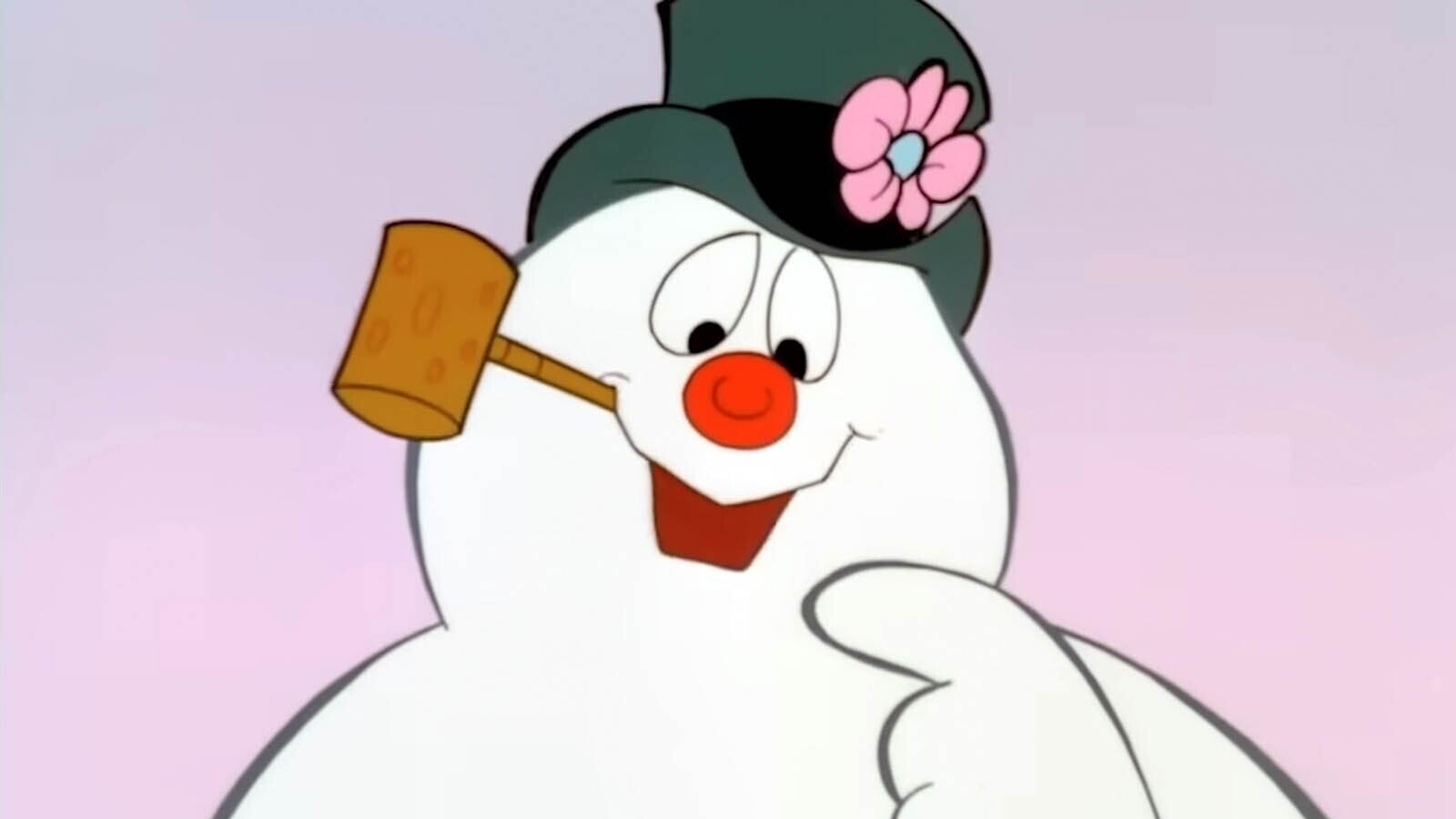
There are few holiday voices more instantly recognizable than Frosty the Snowman’s cheerful, slightly rumpled “Happy birthday!” It is the sound of cocoa, television glow, and the annual family debate over whether anyone still owns mittens that match. Which is exactly why the real-life story behind that voice lands with such a strange thud. The comedian behind Frosty, Jackie Vernon, was not a living Christmas card. He was a deadpan nightclub comic with a weary face, a low-simmering sadness, and, according to later accounts from his son, a personal life that was far messier than the jolly snowman he helped turn into an American holiday institution.
That contrast is what makes this story so fascinating for readers and so powerful for SEO audiences looking for the truth behind classic pop culture. On one side, you have Frosty: pure nostalgia, harmless chaos, a top hat, and the sort of optimism that can survive being made of frozen precipitation. On the other side, you have Vernon, a stand-up comedian whose career was built on being the lovable loser in the room and whose life, according to family recollections made public years later, included hidden marriages, children he never discussed, addiction struggles, and a long emotional shadow. It is the kind of entertainment-history twist that feels almost too dramatic for real life, except real life has always been much better at plot twists than television.
Who Was Jackie Vernon, Really?
Before he was associated with Frosty, Jackie Vernon was known in comedy circles as a master of deadpan. Born Ralph Verrone in New York City, he built a reputation on slow, self-deprecating jokes delivered like a man who had just discovered the universe had misplaced his luggage. He was not a flashy comic. He was not a loud comic. He was the opposite of a human confetti cannon. That was the whole point. His humor came from sounding almost disappointed that the punchline had arrived at all.
That persona worked. After years of grinding through small clubs and rough rooms, Vernon caught a break when Steve Allen saw him and helped launch him into broader national attention. Once television noticed him, audiences did too. He became a familiar face on variety shows and roasts, showing up with the kind of oddball melancholy that made him memorable in a business crowded with people trying much harder to look memorable. He had the rare gift of making failure sound like a personal brand. In another era, he might have been called relatable. In the 1960s, he was simply Jackie Vernon: the king of looking like life had just handed him a parking ticket.
That made him a curious but oddly perfect fit for animation. His voice had warmth, but not too much. His delivery was funny, but never frantic. Frosty did not sound like a polished actor trying to sell joy at retail prices. He sounded like a regular guy who had just woken up in a snowbank and decided to make the best of it.
How Jackie Vernon Became the Voice of Frosty the Snowman
The 1969 Frosty the Snowman special became a seasonal staple, but Vernon reportedly did not treat the role like destiny knocking at the door with bells on. According to his son David Vernon, the comedian took the job casually and did not expect the special to become a permanent part of holiday culture. In fact, family recollections suggest he viewed it as a small gig, not a crown jewel. The now-famous family anecdote is that he joked he got the part because all the other fat guys were out of town. It is a line so perfectly Jackie Vernon that you can practically hear it wearing a wrinkled suit.
And yet the special endured. Rankin/Bass turned Frosty into a classic with bright visuals, a gentle sense of danger, and a voice performance that made the snowman feel both magical and unpretentious. The special first aired in 1969, and for decades it returned every holiday season, eventually becoming one of those television traditions that seemed less like programming and more like weather. In 2024, after more than five decades on CBS, the special moved to NBC, which only proves how durable the property has remained. Frosty has survived changing networks, changing viewing habits, and the collapse of the monoculture. That is not bad for a guy whose life expectancy depends on indoor heating.
Part of the special’s charm is that it never feels overworked. There is no sense of creative panic in it. Even its sweetness has a dry edge. Vernon’s performance helped with that. His Frosty is friendly, funny, and lightly bewildered, which somehow makes him feel more real than many live-action holiday characters. He is cheerful without becoming syrupy. He is warm while literally being the opposite of warm. It is a tiny comic miracle.
The Secret Families Revelation That Reframed the Story
The most startling new chapter in Vernon’s public story came from his son David, whose recollections were reported in late 2025. According to David, the family discovered that Jackie Vernon had at least three prior marriages before building a life with wife Hazel, and that he had children from those relationships as well. The revelation did not come through a formal confession or some convenient Hollywood memoir. It arrived the old-fashioned way: with a woman at the door, a tense conversation, and a child realizing the grown-up world had more trapdoors than advertised.
David said he later learned that his father had sons from earlier marriages and that they were all named Ralph, after Vernon’s birth name, Ralph Verrone. It is the kind of detail that feels almost too symbolic to be believed. Repetition of a name can look like affection, ego, superstition, or guilt depending on how the story is told. Here, it reads like a haunting. One Ralph after another, each carrying the same name, while the father attached to it kept moving on. That does not make for cozy Christmas-special energy. That makes for the kind of biography that leaves a room very quiet.
It is important to state the story carefully: these revelations were shared by David Vernon and then amplified by entertainment outlets, not documented by Jackie Vernon himself in any public record designed to explain his actions. But even with that caution, the account has reshaped how many fans view the comic. The image of the lonely, deadpan entertainer already carried a little darkness. The suggestion that he left behind multiple families turns that darkness from mood into moral complication.
David Vernon’s Earlier Memories Make the Story Even More Human
This was not the first time David Vernon had written or spoken publicly about the strange experience of growing up as Frosty’s son. Back in 2000, he published a personal essay recalling the original 1969 broadcast and the odd discomfort of having a father whose voice belonged to an animated holiday hero. It was not all magical. Children, as it turns out, are not always impressed by pop-culture immortality. Sometimes they are just confused. Sometimes they are embarrassed. Sometimes they are worried their dad is literally melting on network television.
That memory matters because it adds texture to the later revelation. David’s writing did not come from a tabloid impulse. It came from years of living with the split-screen reality of having a famous father who was beloved by strangers yet emotionally difficult and frequently absent in private life. That is part of what gives the story its weight. This is not simply “holiday icon exposed.” It is a family story about children trying to understand a parent who was both publicly recognizable and privately elusive.
There is something especially poignant about the idea that Vernon barely seemed to announce the Frosty job to his own family. The role that would define him for generations apparently entered the household with less fanfare than a decent pizza delivery. That disconnect says a lot. Sometimes the work the public treasures most is not the work the artist believes matters. Sometimes the thing that becomes your legacy arrives looking like a side gig.
A Career Built on Being the Saddest Funny Guy in the Room
One reason the secret-families story feels so gripping is that it fits, in an unsettling way, with Vernon’s established comic identity. He specialized in looking put upon, defeated, and faintly annoyed by his own existence. Audiences loved him for it. His jokes often turned self-pity into absurdity, making him seem like the patron saint of people who expect the vending machine to eat their dollar. He was a regular on major television programs, played clubs in Las Vegas, recorded comedy albums, and even appeared in films. He was successful, but never in the shiny, movie-star way. He was more like the guy standing beside the spotlight, muttering something hilarious after the spotlight missed him.
That style aged well because it felt honest, or at least honestly bruised. A performer can fake confidence more easily than he can fake resignation. Vernon’s whole act suggested a man who had seen the joke before everyone else and was not thrilled to report back. When later reports added depression and tranquilizer addiction to the picture, the emotional logic of his public persona became more complicated. Was the sadness part of the act, or was the act a carefully managed version of the sadness? With comics, the answer is often both.
The Darkness Behind the Cheer
According to David Vernon, Jackie also struggled with depression and addiction to tranquilizers including Quaaludes and Valium. That detail matters because it keeps the story from slipping into tidy moral storytelling. This was not just a man with a hidden past. It was also a man apparently battling his own mind, his own habits, and the long aftershocks of choices he may never have fully faced. None of that excuses the pain other people may have experienced. It does, however, make the portrait more human and less cartoonish. Which is ironic, considering the cartoon is the reason many people know his name.
Entertainment history is full of performers who could generate laughter, warmth, or comfort while privately living in knots. The stage version of a person is often much cleaner than the home version. Audiences rarely want complexity from beloved holiday voices. They want snow, songs, and a reliable seasonal serotonin boost. But performers do not freeze in place between December broadcasts. They age, struggle, disappoint, and sometimes leave behind confusing emotional paperwork for their families to sort through years later.
Why the Frosty Story Hits So Hard
There is a reason this revelation spread so quickly. It is not just celebrity gossip with a Santa hat on. It hits because Frosty the Snowman belongs to childhood for a lot of people. Childhood icons are supposed to feel sealed off from adult chaos. They are meant to live in a protected vault alongside cereal mascots, school snow days, and the irrational certainty that two cookies somehow count as dinner in December. When a story like this emerges, it punctures that illusion. Not the art itself, necessarily, but the fantasy that the adults behind it were living inside the same innocent universe.
Jackie Vernon’s story also resonates because it is about dual identity. One man could be both the voice of a comforting holiday tradition and a deeply complicated father. One voice could make millions of viewers smile while leaving unresolved pain in its own household. That contradiction is not unique to Vernon, but it is unusually stark in his case because the character at the center of the story is so pure, so harmless, and so tied to family ritual.
How Vernon Eventually Saw Frosty as a Gift
For all the heaviness in the biography, there is one genuinely moving note in the later reporting: David said his father eventually came to embrace Frosty. In his later years, Jackie Vernon reportedly watched the special with pride and took comfort in the happiness it gave people. That matters. It suggests that even if he did not see the role as important at first, he later understood what it meant. A comic who had spent years building a career around being the loser in the joke found that one of his most enduring achievements was bringing joy to children and families every winter.
That does not erase the troubling parts of the story, and it should not. But it does make the legacy feel more complete. Vernon was not merely swallowed by scandal after death. He was also, in the end, a man who recognized that a small performance he once shrugged off had become a permanent piece of American holiday memory. There is something unexpectedly tender in that. Frosty may have started as a job. Eventually, it became a home for his name.
Related Experiences: Why Stories Like This Stay With People
One of the most interesting experiences connected to this story is the experience of rewatching a childhood favorite after learning something uncomfortable about the adult behind it. Almost everyone has had some version of that moment. You hear a familiar line, laugh where you always laughed, and then realize the context has changed. The performance did not change. You changed. Or rather, your understanding of the world changed. Suddenly a cartoon snowman is not just a cartoon snowman. He is also evidence that art can outgrow the people who made it and become emotionally useful in ways they never planned.
There is also the family experience, which may be the saddest thread in this entire story. David Vernon’s memories suggest what it can feel like to grow up near fame without actually living inside its glow. A famous parent is still a parent, which means the household experience is shaped less by applause and more by absences, moods, secrecy, and the weird practicalities of real life. Kids do not experience a father as an icon first. They experience him as the person who is there, or not there; honest, or not honest; warm, or not warm. That is why the Frosty revelation feels larger than entertainment trivia. It is really about what happens when public affection and private reality have almost nothing in common.
Then there is the audience experience. Holiday specials are often watched in groups, which means they attach themselves to family rituals. People remember the couch, the tree, the smell of dinner, the arguments over channels, the exact way the room looked when the opening theme started. Because of that, any new information about a classic special can feel weirdly personal. You are not just learning a fact about Jackie Vernon. You are revisiting your own memory file. You are realizing that a voice connected to comfort came from a man whose life may have been full of discomfort. That emotional collision is part of why stories like this travel so far and linger so long.
And finally, there is the strangely universal experience of discovering that humor and sadness are not opposite categories. Great comics often turn pain into rhythm. They use timing the way other people use armor. Jackie Vernon’s deadpan style, viewed in hindsight, feels like a master class in saying more by pretending to say less. For modern readers, that may be the most haunting part of all. The man who voiced one of television’s happiest snowmen may have understood better than most people how fragile cheerfulness can be. Maybe that is why Frosty worked. Maybe that is why the performance still feels human. It was not perfection speaking. It was a complicated person making something simple enough for the rest of us to love.
Conclusion
The story of Jackie Vernon is not a neat morality play wrapped in tinsel. It is a collision between nostalgia and biography, between a beloved holiday character and a comedian whose life appears to have been far more troubled than his most famous role suggested. What makes the story worth reading is not just the shock of the “secret families” revelation. It is the larger truth it reveals: that pop culture is often built by complicated people, and that the work can remain meaningful even when the life behind it turns out to be deeply unsettled.
Jackie Vernon helped give America one of its most durable Christmas voices. He also left behind a story that sounds nothing like a children’s special. Both things are now part of his legacy. Frosty still arrives every holiday season with a corncob pipe, a button nose, and the same cheerful line delivery. But now, for many readers, that voice carries an extra echo: the sound of a man who made millions smile while apparently keeping enormous parts of himself hidden from the people closest to him.