There are ordinary lunches, and then there are lunches that look like they might wink at you before you take a bite. In the hands of a creative designer, a sliced strawberry becomes a butterfly wing, a rice ball grows tiny seaweed eyes, and a cucumber stops being a cucumber long enough to audition for the role of “happy little dinosaur.” That is the irresistible charm of adorable food art: it takes something practical, familiar, and edible and turns it into a tiny moment of delight.
And no, this is not just internet fluff served with a side of cuteness. Food art has roots in culinary tradition, design thinking, food styling, and even behavioral science. People really do eat with their eyes first. When food looks playful, balanced, colorful, and inviting, it can feel more memorable, more appetizing, and sometimes even a little more magical. The modern food designer understands that a plate is not just a plate. It is a canvas, a mood board, a visual story, and occasionally a very dramatic stage for one heroic blueberry.
What makes the trend so fascinating is that it sits at the crossroads of art, cooking, photography, and emotion. A designer who turns food into adorable art is not simply decorating snacks for fun. They are using shape, color, texture, scale, and contrast to create an immediate reaction. You smile first. Then you reach for your phone. Then, finally, you eat the thing and feel mildly guilty for destroying a tiny edible masterpiece. That, in a nutshell, is the power of cute food design.
Why Adorable Food Art Works So Well
The success of food art begins with one simple truth: visual appeal changes perception. We respond to color, symmetry, variety, and novelty before we ever taste a bite. That is why chefs plate carefully, food stylists fuss over garnish placement, and designers obsess over the shape of a strawberry fan or the angle of a carrot ribbon. A well-designed dish sends a message before the fork arrives.
Adorable food art adds another layer to that message. It does not just say, “This looks delicious.” It says, “This is thoughtful, playful, and made with intention.” That emotional signal matters. Cute presentation can make a lunchbox feel personal, a dessert feel celebratory, and a fruit plate feel far less like a nutritional lecture in disguise. When a plate looks fun instead of forced, people are more likely to lean in.
This is especially powerful with children, but adults are hardly innocent bystanders. Give a grown person a beautifully arranged toast portrait or a bento box with smiling rice bears, and suddenly they are acting like they just discovered joy for the first time. Food art taps into the same instinct that makes us love miniatures, cartoons, and tiny well-organized drawers. It shrinks the emotional distance between us and the food.
Food as Art Is Not a New Idea
The idea of treating food like art is older than social media and older than the phrase “Instagram-worthy,” which, frankly, may be the most overworked garnish in modern language. Long before cute lunch reels took over screens, cooks and artists were already treating food presentation as a serious creative act. Across cultures, meals have long carried ceremonial, aesthetic, and symbolic value. Food has been sculpted, carved, molded, painted, and arranged to express status, celebration, beauty, and identity.
In the modern era, food-as-art gained special cultural attention when artists and designers began to think about eating as a form of creative experience, not just survival. That opened the door for chefs, food stylists, bakers, and visual artists to play with edible materials the way painters play with pigment. Suddenly, sugar could behave like glass, toast could behave like a canvas, and fruit could behave like sculpture.
Today’s adorable food art also borrows from long-standing traditions such as fruit and vegetable carving and the Japanese culture of carefully packed bento. In many bento traditions, the food is arranged with balance, care, and visual harmony. Modern kawaii-style lunch design pushes that idea one step further, turning rice, nori, vegetables, and fruit into hearts, flowers, bears, cats, and little character scenes that feel almost too charming to disturb.
The Designer’s Secret: Cute Is Built, Not Accidental
What looks effortless on screen is usually the result of very intentional design. A creator who turns food into adorable art is making dozens of visual decisions at once. Which colors should sit together? What shape creates the strongest focal point? How much detail is enough before the plate becomes cluttered? Where should the eye land first? In that sense, cute food is less about randomness and more about composition.
Color does a lot of heavy lifting
Bright produce makes adorable food art easier because it already comes with a built-in palette. Strawberries, kiwi, mango, blueberries, cucumbers, carrots, purple cabbage, and cherry tomatoes give designers natural contrast without relying on artificial decoration. A cheerful plate often works because the colors feel energetic and clean. Even a simple rainbow arrangement can look polished when the hues are grouped with intention.
Shape creates personality
Round shapes read as friendly. Tiny eyes instantly suggest character. Repeated forms create order. That is why rice balls become animals so easily, and why sliced vegetables cut into flowers or stars feel more charming than random chunks ever could. Designers use cutters, molds, stamps, squeeze bottles, and careful knife work to create recognizable forms with minimal ingredients.
Texture keeps cute food from looking flat
Great food art is not just colorful; it is tactile. Smooth avocado, fluffy rice, glossy berries, crisp cucumber, frilly lettuce, toasted bread, and shiny chocolate all add contrast. A designer can make a plate look more alive simply by pairing soft and crisp, matte and glossy, flat and layered. In food art, texture is the difference between “nice snack” and “tiny edible theater.”
Real-World Examples That Show the Range of the Trend
One reason this topic keeps attracting attention is that it is not limited to one style. Some artists go whimsical. Others go elegant. Some make food look like cartoons, while others turn it into surreal sculpture.
Consider toast art, which became wildly recognizable through creators who treated breakfast like a museum wall. A slice of toast topped with fruit, spreads, seeds, and cut produce can become a portrait, a famous painting, or a playful scene. The appeal is obvious: the materials are humble, but the result feels surprisingly sophisticated.
Then there are foodscape artists who build entire landscapes out of ingredients. Suddenly smoked salmon becomes a sea, bread becomes boulders, herbs become forests, and vegetables become skyline elements. That approach feels less “adorable lunchbox” and more “edible world-building,” but the creative principle is the same. Food is being asked to play a role beyond flavor.
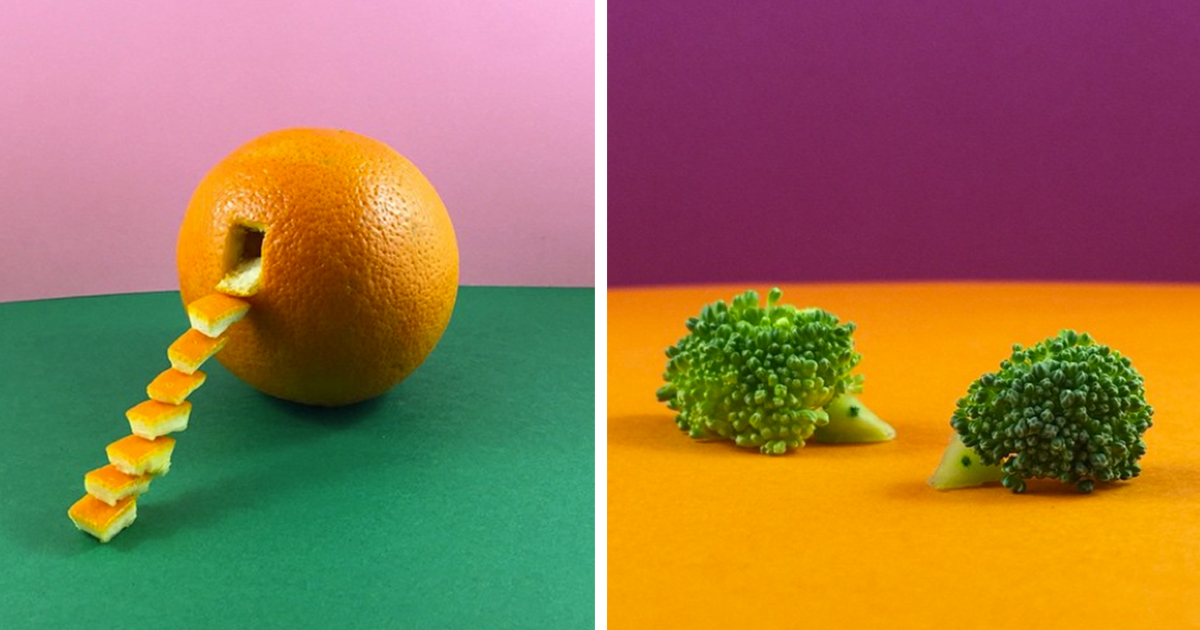
Fruit and vegetable carving takes things even further. Skilled artists can turn lemons, carrots, broccoli, apples, and squash into birds, dragons, flowers, and geometric illusions. The best work almost looks digitally edited, but it is real knife work, real produce, and real patience. It reminds us that food can be sculpture without losing its identity as food.
At the more everyday end of the spectrum, pancake art and character lunches prove that adorable food design is not reserved for galleries or elite kitchens. A squeeze bottle and batter can produce cartoon faces. A lunch plate can become a scene from a children’s story. A few smart cuts of nori can turn a plain rice ball into a cat with suspiciously strong opinions. That is part of the trend’s appeal: it scales beautifully from professional media set to weekday breakfast table.
Why Social Media Made the Trend Explode
Adorable food art existed before social platforms, but social media gave it a turbo boost and a spotlight. Food that is cute, graphic, colorful, and immediately legible performs extremely well in visual feeds. You do not need a long explanation to understand a panda-shaped sandwich or a flower made from strawberries. The appeal is instant, and instant is social media’s favorite flavor.
This has changed the way many creators think about plating and food styling. In a media landscape where a dish may be judged first as an image, food designers increasingly think about camera angles, contrast, props, lighting, and the emotional punch of a single frame. Cute food works because it reads quickly, photographs beautifully, and carries a built-in sense of shareability. It is a snack and a thumbnail.
That does not mean the trend is fake or superficial. In many cases, social media simply made visible the labor that food stylists, culinary producers, and creative cooks were already doing. The camera did not invent food art. It just gave the broccoli dragon a larger audience.
When Cute Food Becomes Smart Food
There is also a practical side to all this whimsy. Adorable food art can encourage people to engage with ingredients they might otherwise ignore. Fruit arranged into flowers feels less intimidating. Vegetables cut into stars or tiny shapes can feel friendlier, especially for selective eaters. This does not mean every carrot needs a face. It means presentation can reduce resistance and increase curiosity.
That is one of the smartest things a designer can do with food: use visual play to make wholesome ingredients more approachable. In a culture full of ultra-processed distractions, turning fresh produce into something joyful is not trivial. It is strategy wearing a cute outfit.
The Best Food Art Still Respects the Food
Of course, there is a line between delightful and ridiculous. The best adorable food art still tastes good, travels well, and makes sense to eat. A brilliant design that leaves the fruit soggy, the bread stale, or the lunch impossible to pack is not really a success. It is a performance with bad aftercare.
That is why experienced food stylists and thoughtful home creators work with the natural strengths of ingredients. They choose produce that holds shape, elements that can be cut cleanly, and components that stay safe at proper temperatures. Fresh-cut fruit and vegetables still need good handling, clean tools, and proper refrigeration. Cute should never outrank safe. A smiling melon is wonderful. A neglected smiling melon sitting out too long is less charming.
There is also a growing awareness of waste. The smartest creators plan designs that use trim pieces in salads, soups, smoothies, or snacks instead of tossing them. Adorable food art should feel imaginative, not careless. If a designer can make a lunch more beautiful and reduce waste at the same time, that is a genuine creative win.
How to Create Adorable Food Art at Home
If you want to try the trend yourself, the good news is that you do not need a culinary degree, a blowtorch, or the emotional resilience of a cake engineer. Start small. Use foods that already have strong color and shape. Think berries, cucumbers, carrots, grapes, cheese slices, eggs, toast, rice, and sandwich components.
Choose one visual idea per plate. Maybe it is a flower theme. Maybe it is an animal face. Maybe it is a cheerful little landscape made from fruit. The mistake beginners make is trying to put the entire animated universe onto one lunch tray. Restraint is your friend.
Use contrast wisely. Dark nori or olive slices make great eyes and outlines. Bright fruit creates focal points. Round foods look softer and friendlier than jagged ones. If you are making lunchbox food, keep moisture in mind so the design survives longer than five dramatic minutes.
Most importantly, remember that adorable food art does not have to be perfect to be effective. In fact, a slightly lopsided rice bear has more personality than a flawless one. Perfection can be impressive, but charm is what people remember.
Conclusion
A designer who turns food into adorable art is doing more than making meals look cute. They are reshaping the relationship between seeing and eating. They take everyday ingredients and give them character, warmth, and a tiny bit of theater. They borrow from culinary tradition, visual design, food styling, and modern media habits to make food feel not just edible, but emotionally engaging.
That is why the trend endures. It is playful without being pointless, attractive without needing luxury, and creative without requiring expensive materials. It can live in a professional studio, a family kitchen, a lunchbox, a bakery case, or a plate of toast on a Tuesday morning. In all those places, it asks the same charming question: what if your food could make you smile before it even made you full?
What the Experience Feels Like in Real Life
The experience of making adorable food art is oddly different from regular cooking. When you cook dinner, you are usually solving a practical problem: people are hungry, and you would like them to stay pleasant. When you make food art, you are solving an emotional one. You are trying to create surprise, delight, or a tiny burst of affection. It feels less like “What can I make quickly?” and more like “How can I make this banana look like it has a personality?”
At first, it can feel silly. You stand there with a knife, a few berries, and a slice of bread, wondering whether adulthood has taken a very unexpected turn. Then something clicks. You place two blueberry eyes on a pancake, add a strawberry smile, and suddenly breakfast has a mood. That tiny transformation is weirdly satisfying. It turns food prep from a chore into a small design challenge.
There is also a strong sense of play that comes with it. You stop seeing ingredients only for what they are and start seeing what else they could become. A cucumber slice becomes a wheel. A kiwi becomes a monster face. A halved egg becomes a cloud. A sheet of nori becomes eyebrows with serious comic potential. The kitchen starts to feel a little less like a production line and a little more like an art table that happens to smell like toasted bread.
And then there is the reaction from other people, which is half the fun. Children usually light up immediately, but adults are often just as entertaining. They laugh, point, take photos, and hesitate before eating because they do not want to ruin the design. That pause is part of the experience. It means the food has already done something before being tasted. It created a moment.
Of course, there are also mildly chaotic moments. Maybe the bear ears slide off. Maybe the pancake portrait ends up looking less like a cheerful cat and more like a Victorian ghost. Maybe the strawberry flower becomes an abstract statement about fragility. That is normal. In fact, those near-misses are often what make the experience memorable. Adorable food art is not fun because it is flawless. It is fun because it invites improvisation.
Over time, you begin to notice something else: the process makes you more attentive. You look harder at color, freshness, balance, and texture. You waste less because you are thinking more carefully about each piece. You slow down just enough to appreciate the materials. In a strange way, making cute food can make you more respectful of food. It stops being background. It becomes the event.
That may be the best part of all. In a fast, distracted world, adorable food art gives ordinary ingredients a few extra seconds of wonder. It lets lunch be funny, fruit be expressive, and a humble plate be memorable. And honestly, if a rice ball with tiny seaweed eyebrows can improve the mood of your day, that sounds like excellent design to me.