If the phrase Flying Planes With Squirrel Cages made you picture a confused rodent in aviator goggles, let’s clear the runway right away. In aviation and workshop slang, a “squirrel cage” usually means a blower-style impeller: the cylindrical fan you might find in a heater, HVAC unit, or other machines that move air with all the subtlety of a leaf blower on espresso. And yes, someone really did build an airplane around one.
That is what makes this topic so weird, so delightful, and so strangely useful for understanding aviation. A squirrel-cage-powered plane sits at the intersection of backyard engineering, model aircraft culture, and real aerodynamic questions. It looks like a joke until it leaves the ground. Then it becomes a serious lesson in thrust, drag, stability, and the eternal truth that flight will forgive many bad ideas for a few glorious seconds, but not forever.
The most famous example comes from the remote-control world, where builders have a long tradition of staring at household junk and thinking, “That might be an airplane.” In this case, a hobbyist reused the impeller from an old wall-heater blower, built a foam-board aircraft around it, and proved that a squirrel cage could produce enough thrust to fly. Not elegantly. Not quietly. But undeniably. And that matters, because aviation history is full of machines that began life as “that can’t possibly work” and ended with everyone staring upward.
What a Squirrel Cage Plane Actually Is
A squirrel cage fan is not a conventional aircraft propeller. A normal propeller is basically a rotating wing. Its blades are shaped like airfoils, and as they spin, they create a pressure difference that accelerates air backward and pushes the aircraft forward. That is the everyday language version of propulsion, and it works because airplanes are basically professional air negotiators: they trade energy for useful motion.
A squirrel cage blower does move air, but it was not born with aviation on its résumé. It is usually designed for pushing air through ducts, heaters, and housings where pressure behavior matters as much as open-air efficiency. In other words, it is a practical machine from the world of buildings and appliances, not a glamorous one from the world of runways and formation flyovers.
So why bolt one onto a plane? Because model aviation is a magical little kingdom where curiosity often outranks common sense. In the RC world, motors are cheap, foam board is forgiving, and failure is usually embarrassing rather than life-altering. If a strange propulsion idea can make enough thrust to overcome weight and drag, somebody will try it. That spirit is half science fair, half barnstorming, and fully responsible for some of the most entertaining flight experiments online.
How the Weird RC Experiment Worked
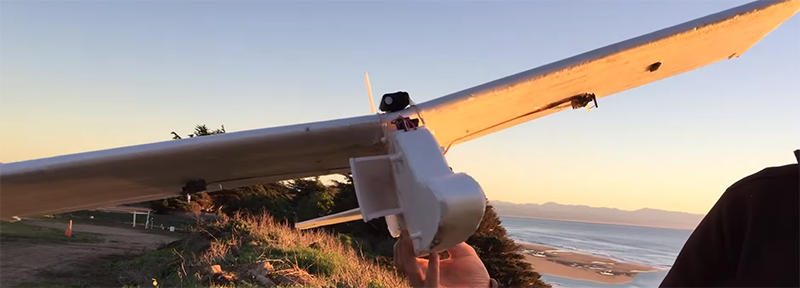
The best-known squirrel cage plane used a blower impeller salvaged from an electric wall heater and mounted it into a custom-built RC airframe. The builder paired it with a brushless motor and a lightweight foam-and-plywood structure, then aimed the airflow backward under the airplane’s wing and tail area. It was not especially efficient, and it was not especially powerful compared with typical RC setups. But it did what all propulsion systems are supposed to do: move enough air in the right direction to produce useful thrust.
That is the first big lesson here. Airplanes do not care whether your idea is fashionable. They care whether the net forces make sense. If the propulsion system creates enough thrust, the wing creates enough lift, and the pilot keeps the machine inside a survivable envelope, the airplane may fly even if it looks like a hardware-store dare.
The second lesson is more humbling. Just because something can fly does not mean it flies well. In the RC example, the squirrel cage setup worked, but it was loud, underpowered by model-aircraft standards, and clearly more of an experimental proof-of-concept than a practical new category of propulsion. It was the aerial equivalent of showing up to a road race on roller skates and still somehow finishing. Respectable? Absolutely. Optimal? Not even close.
Why Normal Airplanes Still Prefer Propellers
Real airplanes are merciless accountants. They count weight, drag, noise, efficiency, heat, vibration, controllability, cost, and safety. A propulsion system has to earn its place on all fronts, not just by making the aircraft move.
That is why propellers and turbofans dominate the skies. They have been refined for decades because they do a brutally hard job very well: they accelerate air efficiently enough to produce thrust without wasting too much power. NASA’s basic propulsion guidance explains thrust in terms of mass flow and change in velocity, which is a tidy way of saying this: good propulsion systems move the right amount of air in the right way. Aircraft designers are always balancing how much air they move, how fast they move it, and how much penalty they pay in drag, noise, and complexity.
A squirrel cage blower can certainly move air, but it does not start with the same aerodynamic advantages as a purpose-built propeller. Its shape, surrounding ducting, and flow pattern are not optimized for open-air cruise the way airplane propellers are. Put bluntly, the squirrel cage is a hardworking shop fan trying to fake its way into a family of highly trained athletes.
Why Squirrel Cage Airplanes Stay Mostly in the “That’s Wild” Category
1. Efficiency Gets Ugly Fast
In aviation, extra drag is the enemy who never sleeps. NASA’s historic ducted-fan research found that ducts can offer certain benefits, including compact packaging and useful aerodynamic effects, but they can also add their own drag and reduce overall propulsive efficiency when compared with a free propeller. That tradeoff is acceptable in some specialized designs. It is much less appealing in a homemade concept built around a heater blower that was never meant to cruise through open sky.
This is where the squirrel cage plane starts sweating. If the system has to carry extra structure, accept flow losses, and fight drag penalties, it has to make up for those weaknesses with power. In full-scale aviation, that is a brutal demand. In the RC world, where electric motors and lithium batteries let modelers get away with delightful nonsense, it is merely inconvenient.
2. Stability Is Not Optional
Plenty of odd aircraft can get airborne. Staying pleasant to fly is harder. NASA’s ducted-fan studies repeatedly note issues such as sideslip sensitivity, transition behavior, duct stall, and trim changes. Translation: once you start wrapping fans in ducts or integrating them into unusual airframes, the airplane may become aerodynamically moody.
That matters because flying is not just about producing thrust. It is about producing thrust without turning the aircraft into an argument between yaw, pitch, roll, and panic. A conventional propeller airplane has a long history of engineering behind its handling qualities. A squirrel cage plane is still in the phase where the pilot or modeler is discovering new personality traits in real time.
3. Noise, Weight, and Packaging Matter
The RC squirrel cage plane reportedly flew with a soundtrack best described as “appliance uprising.” That tracks with what we know about fan design. A propulsion system that is not optimized for quiet, efficient, high-speed flight will often sound like it is deeply offended by the entire concept of aerodynamics.
Weight and packaging are equally unforgiving. Full-scale aircraft are designed around fuel, structure, cooling, controls, and maintenance. A propulsion layout that looks clever on the bench may become a nightmare once it has to pass safety standards, survive vibration, and fit into an airplane that people trust with their bones.
But Aviation Has Absolutely Flirted With Related Ideas
Here is the fun twist: while squirrel cage blowers themselves are not taking over aviation, the broader idea of shrouded fans, ducted fans, and lift fans is not crazy at all. In fact, aviation has spent decades poking this category with great interest and a very large engineering budget.
NASA researched lift-fan and ducted-fan aircraft extensively, especially for vertical or short takeoff and landing concepts. These designs promised compact propulsion, high static thrust, and intriguing control possibilities. Some historic concepts delivered genuine advantages, but they also revealed serious design headaches involving duct stall, control coupling, transition handling, and integration complexity. In classic aerospace fashion, the answer was not “impossible,” but rather “possible if you enjoy difficult problems.”
History is full of wonderfully odd fan-adjacent aircraft too. AOPA has highlighted the Stipa-Caproni, nicknamed the “Flying Barrel,” whose fuselage functioned like a ducted fan. Smithsonian records preserve machines like the Hiller Flying Platform, which used counter-rotating propellers inside a ducted arrangement. Later generations pushed the concept much further. The X-35B testing program famously incorporated lift-fan technology as part of its short takeoff and vertical landing design path. So, aviation has not ignored the fan-in-a-duct idea. It has simply demanded that the idea show up with better manners than a repurposed wall-heater blower.
Why the RC World Is the Perfect Playground for This
The RC community is where impossible-seeming propulsion ideas go to find out whether they are truly impossible or just socially awkward. That is why “Flying Planes With Squirrel Cages” became such a compelling topic. Small model aircraft are cheap enough to experiment with, light enough to survive strange ideas, and modern enough to benefit from brushless motors, affordable electronics, and stabilization systems that were once reserved for much more expensive machines.
AOPA has even covered scale RC models of advanced aircraft using ducted fan propulsion, which shows how naturally this technology fits into the model world. The RC space rewards cleverness, iteration, and rapid testing. If your first version flies badly, you tweak the airframe, move the battery, change the motor, or rework the exhaust path. Nobody has to rewrite certification documents. Nobody has to explain the idea to airline passengers. It is glorious.
That said, the FAA still treats model aircraft as real aircraft in the legal sense, not toys with commitment issues. Recreational flyers must operate under safety rules, and the modern hobby environment expects much more discipline than the old “just don’t hit anything” era. So even the goofy stuff has to be flown responsibly.
Could Squirrel Cage Planes Ever Become Practical?
For mainstream aviation, probably not in the literal heater-blower sense. The reason is simple: aircraft propulsion is a field where “kind of works” is not good enough. Designers need repeatable efficiency, predictable handling, manageable noise, acceptable drag, maintainability, and a safety case that survives more than one exciting YouTube comment section.
But if we widen the lens, the answer becomes more interesting. The spirit behind the squirrel cage plane is very much alive. Modern aviation keeps revisiting shrouded fans, distributed electric propulsion, lift-augmenting airflow, and compact high-thrust arrangements. AOPA has reported on CubCrafters testing electric ducted fans on slats to boost lift and improve low-speed handling, and on new companies such as Whisper Aero trying to make shrouded propulsors quieter and easier to integrate into future aircraft. That is not a joke. That is serious aerospace work.
So the squirrel cage plane is not the future in a direct, copy-and-paste sense. It is more like a flying reminder that experimentation matters. Strange hacks often reveal real aerodynamic questions. And sometimes those questions lead engineers toward useful answers, even if the original machine sounds like a dishwasher trying to qualify for carrier ops.
Conclusion
Flying Planes With Squirrel Cages sounds like a punchline, but it is actually a great case study in how aviation innovation works. A builder took an appliance-style blower, wrapped an RC airframe around it, and proved that unconventional propulsion can leave the ground when physics gives it just enough mercy. The result was not a revolution. It was better than that. It was a vivid demonstration of why airplanes fly, why many oddball ideas do not scale, and why model aviation remains one of the best laboratories for creative engineering.
In the end, squirrel cage planes occupy a wonderful little corner of flight culture. They are impractical, noisy, underqualified for mainstream aviation, and undeniably educational. They remind us that aviation does not advance only through polished corporate programs and billion-dollar prototypes. Sometimes it also advances because somebody looked at a junked heater fan and thought, “You know what? That deserves wings.”
Extra Experience Section: What Flying a Squirrel Cage Plane Feels Like
Watching a squirrel cage plane take off is one of those experiences that rewires your expectations in real time. Before the launch, it looks like an experiment assembled by someone who lost a bet at a hardware store. The proportions seem slightly wrong. The propulsion system looks more suited to warming a basement than cutting through the sky. And then the motor spools up, the fan starts howling, and suddenly the airplane stops being a joke and starts becoming a machine with intent.
The first impression is sound. A conventional RC propeller has a familiar bite to it, and an electric ducted fan has that sleek, science-fiction whistle people love. A squirrel cage setup feels different. It has a harsher, more mechanical voice, as if the airplane is powered by a very angry home appliance. It does not whisper confidence. It shouts commitment. That soundtrack changes the whole experience, because your brain keeps trying to decide whether you are about to witness a triumph of ingenuity or a beautifully documented mistake.
Once the plane moves, the experience gets even stranger. There is a distinct moment when curiosity gives way to respect. The aircraft may not leap forward like an overpowered aerobatic model, but when it gathers speed and lifts off, the emotional effect is huge. It is the feeling of seeing an impossible sentence suddenly become grammatically correct. You stop thinking about how silly the propulsion idea seemed on the ground and start tracking the subtler questions: Is it stable? Does it climb willingly? Does it sound like it is comfortable, or like it is negotiating with gravity one alarming clause at a time?
Flying an odd propulsion setup also changes the pilot’s mindset. With a conventional airplane, you are usually operating inside a set of expectations built from experience. With a squirrel cage plane, every input feels like a question. You are learning the aircraft while flying it, and that creates a unique mix of caution, curiosity, and adrenaline. Small control movements matter more. The airplane’s response tells you whether the concept has hidden promise or merely excellent marketing. Every pass down the field becomes data collection with a side order of suspense.
For spectators, the experience is pure delight. People know what a normal model airplane is supposed to sound like and roughly how it should behave. A squirrel cage plane interrupts that script. It becomes a crowd magnet because it combines humor with genuine technical intrigue. Nobody forgets the first time they see something ridiculous actually work. That is a big reason these experiments matter beyond their practical limitations. They make aerodynamics visible. They let people see, hear, and feel the relationship between thrust, drag, balance, and design compromise in a way that a textbook never can.
And when the flight ends safely, usually with relieved laughter and a lot of excited post-flight analysis, the experience leaves behind something valuable. Not proof that squirrel cages should replace propellers. Not a manifesto for the future of aviation. Something better: a sharpened sense of how flight rewards imagination while still demanding respect. That is the real thrill. A squirrel cage plane is not just an odd aircraft. It is a flying reminder that experimentation is part of aviation’s DNA, and that sometimes the line between absurd and brilliant is only a few feet above the ground.