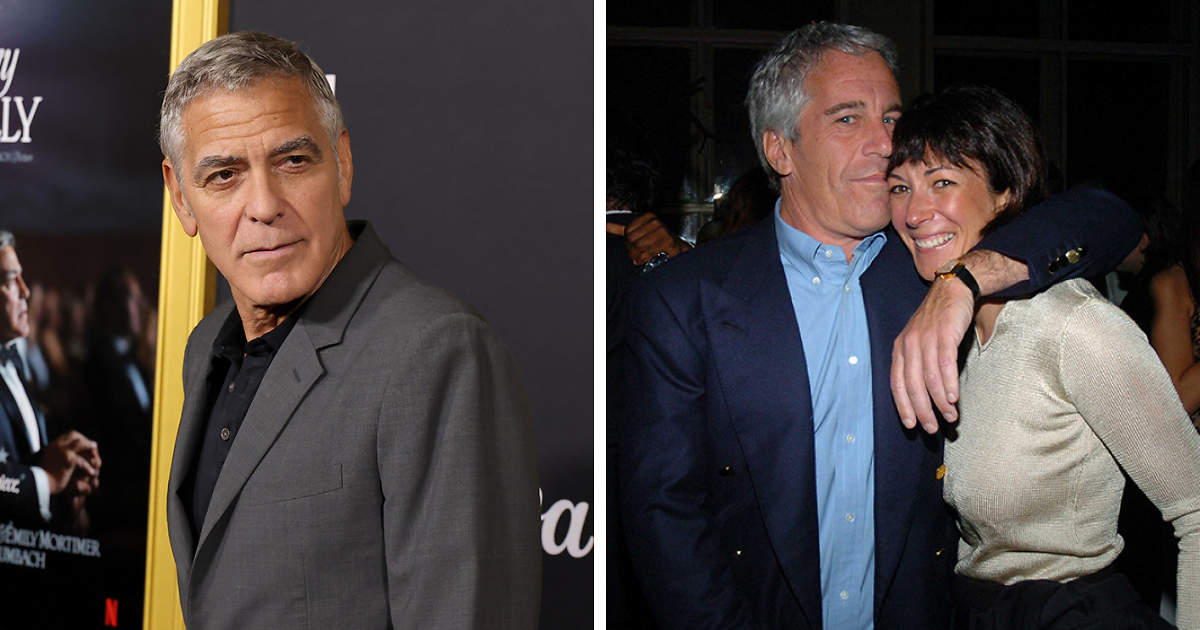
Editorial note: This article discusses public reporting about an unverified memoir allegation and a reported denial from George Clooney’s side. It does not present the allegation as fact, nor does it suggest wrongdoing by Clooney.
In the crowded, noisy, occasionally bonkers intersection of Hollywood, true crime, and social media outrage, few phrases move faster than “celebrity name appears in Epstein memoir.” Add George Clooney to that sentence, and the internet basically drops its coffee, grabs a pitchfork, and opens twelve browser tabs before breakfast.
The latest controversy centers on Nobody’s Girl: A Memoir of Surviving Abuse and Fighting for Justice, the posthumously published memoir by Virginia Roberts Giuffre, one of the most prominent survivors connected to the Jeffrey Epstein and Ghislaine Maxwell cases. In the book, Giuffre recounts that Maxwell allegedly bragged about a sexual encounter involving Clooney at a social event. Importantly, Giuffre herself reportedly acknowledged uncertainty about whether the boast was true.
That distinction matters. A lot. The claim is not presented here as verified fact. It is a reported account of something Maxwell allegedly said, filtered through memoir, memory, trauma, media headlines, and now the world’s most caffeinated comment sections. Clooney’s side has reportedly rejected the allegation, with a Hollywood associate describing it as a “grotesque fabrication” and saying the actor had never met Maxwell.
So what actually happened, what did Clooney’s camp say, and why has this story become such a flashpoint? Let’s walk through the facts, the context, and the media lesson hiding under the celebrity thunderstorm.
What Is The Allegation In Virginia Giuffre’s Memoir?
The allegation at the center of the story is not that Giuffre personally claimed to witness George Clooney doing anything improper. Rather, public reporting says Giuffre wrote that Ghislaine Maxwell once bragged about a sexual encounter with Clooney. According to those reports, Giuffre framed the story as part of Maxwell’s alleged pattern of boasting about her proximity to wealthy, powerful, and famous people.
That is a crucial detail for readers and publishers. The memoir reportedly describes Maxwell as someone who enjoyed presenting herself as connected to elite circles. In that context, the Clooney anecdote appears as an alleged boast, not as courtroom evidence, a verified event, or an accusation backed by documented proof.
Giuffre’s reported caveat that the truth of the alleged boast may never be known makes the story more complicated than the viral headline version. Online, nuance tends to travel in coach while outrage flies first class. But in a case involving real survivors, deceased figures, living people, and serious criminal history, nuance is not optional. It is the seatbelt.
How George Clooney’s Side Reportedly Responded
According to entertainment reporting, Clooney’s representatives declined to comment officially, but a Hollywood associate close to the actor strongly denied the story. The source said Clooney was furious, horrified that his name had been pulled into the Epstein-Maxwell universe, and insisted that he had never met Ghislaine Maxwell.
The denial has been described in particularly sharp language: a “grotesque fabrication.” That phrase is doing a lot of work. It does not merely say the story is inaccurate; it communicates disgust, disbelief, and a desire to separate Clooney’s name from a scandal that has destroyed reputations, exposed horrific abuse, and remained a global news magnet for years.
For Clooney, the stakes are obvious. He is not just an actor with a long Hollywood résumé; he is also a public figure associated with humanitarian causes, political commentary, and a marriage to international human rights lawyer Amal Clooney. A random celebrity rumor is one thing. A claim brushing against the Epstein case is another. It is the difference between stepping in a puddle and stepping in wet cement.
Why The Epstein Context Makes Every Name Explosive
The Epstein story is not ordinary celebrity gossip. Jeffrey Epstein was accused of running a sex-trafficking operation involving minors and young women. He died in federal custody in 2019 while awaiting trial. Ghislaine Maxwell, his longtime associate, was convicted in 2021 on sex-trafficking-related charges and later sentenced to 20 years in prison.
Because Epstein cultivated relationships with prominent people in politics, business, royalty, academia, and entertainment, any name attached to his orbit tends to ignite public suspicion. But being mentioned in the broad conversation around Epstein is not the same thing as being accused of a crime, being investigated, or being proven to have participated in wrongdoing.
That difference is essential. Some public figures were photographed with Epstein. Some had documented social contact. Some were accused in civil actions or court filings. Others have been mentioned only in rumors, documents, emails, diaries, or secondhand anecdotes. Responsible coverage has to sort those categories carefully. Otherwise, the internet turns into a giant blender, and everyone gets served as the same smoothie.
Virginia Giuffre’s Memoir And Its Larger Purpose
Nobody’s Girl was published after Giuffre’s death and has drawn major attention because it gives readers a first-person account of abuse, manipulation, and survival. The memoir revisits her allegations against Epstein, Maxwell, and Prince Andrew, as well as her long fight to be heard by courts, journalists, and the public.
Giuffre’s story had already played a major role in keeping the Epstein scandal in the spotlight. She alleged that she was trafficked as a teenager and later became one of the most visible advocates for accountability. Her civil lawsuit against Prince Andrew was settled in 2022 without Andrew admitting wrongdoing. He has denied her allegations, but the settlement and ongoing public scrutiny helped keep the royal dimension of the Epstein scandal alive.
The memoir’s impact goes beyond any single name. It is about how powerful people move through systems that often protect them, how vulnerable young people can be targeted, and how survivors are frequently asked to prove the unprovable while the powerful ask for the benefit of every doubt. That is a heavy subject, and it deserves more than a headline written like a carnival barker shouting over a fog machine.
Why Clooney’s Denial Matters
Clooney’s reported denial matters because living people have reputations, families, careers, and legal rights. The fact that a claim appears in a memoir does not automatically make it verified. Memoirs can be powerful, truthful, and deeply important while still containing anecdotes that require careful attribution, especially when they involve third parties.
In this case, the public record being discussed is not a direct accusation that Clooney abused anyone. It is a reported recollection of Maxwell allegedly boasting about him. That is why careful wording is necessary. “Maxwell allegedly bragged” is not the same as “Clooney did.” Readers may feel impatient with that distinction, but journalism lives or dies on distinctions.
It is also worth noting that sensational celebrity names can overshadow the central issue: Epstein and Maxwell’s abuse of young women and girls. The more attention shifts to “which famous man was mentioned,” the easier it becomes to forget the survivors at the center of the case. That does not mean public figures should be exempt from scrutiny. It means scrutiny should be accurate, fair, and evidence-based.
How Social Media Turned A Caveat Into A Firestorm
On social platforms, the story quickly became a loyalty test. Some users defended Clooney immediately. Others assumed the worst. A third group treated the whole thing like another entry in the never-ending “Epstein list” guessing game, where speculation often outruns evidence by several zip codes.
This is how modern scandal works. A headline drops. Screenshots appear. Context evaporates. Someone posts “Not him too,” someone else posts “I knew it,” and before long, a secondhand allegation becomes a digital identity war. People are not always responding to the actual reporting; they are responding to what the story symbolizes to them.
For some readers, the Epstein case represents elite impunity. For others, it represents the danger of rumor-driven justice. For many survivors and advocates, it represents a painful reminder of how long it can take for abuse to be believed. The Clooney-related claim landed right in the middle of all those emotions, which is why it spread so fast.
The Difference Between Believing Survivors And Verifying Claims
One of the hardest conversations around stories like this is how to support survivors while still treating specific claims with care. Believing survivors does not mean every secondhand anecdote must be treated as proven. It means taking accounts seriously, investigating them responsibly, avoiding reflexive dismissal, and recognizing the barriers survivors face when speaking about abuse.
At the same time, responsible reporting requires verification. Especially when a living person is named in a salacious story that may be based on a third party’s alleged bragging, editors have to slow down. That is not betrayal. That is basic fairness.
The better approach is not “believe everything instantly” or “dismiss everything instantly.” It is: listen carefully, identify what is firsthand and what is secondhand, separate documented facts from allegations, include denials, and avoid turning trauma into clickbait confetti.
What This Means For George Clooney’s Public Image
So far, the Clooney-related controversy appears to be mostly a media and social media event rather than a legal one. There has been no public evidence presented showing that Clooney had involvement with Epstein’s crimes, and the reported response from his side strongly denies any connection to Maxwell.
Still, celebrity reputations are vulnerable in the age of search engines. Once a name is attached to a scandal in a headline, it can linger online like glitter after a children’s birthday party: impossible to fully clean up and somehow still appearing six months later in places no one expects.
That is why the wording of this story matters for SEO as well as ethics. Search engines reward clarity, but readers deserve context. An article that simply repeats “George Clooney Epstein allegation” without explaining that the claim is unverified and denied would be misleading. A better headline may attract fewer rage-clicks, but it also reduces the risk of publishing a reputational landmine disguised as entertainment news.
Why The Story Still Resonates
The reason this story continues to attract attention is not just Clooney’s fame. It is the unresolved public hunger around the Epstein case. Many people believe the full truth has not been released. Many survivors and advocates want deeper accountability. Many readers suspect that powerful people escaped scrutiny while less powerful people paid the price.
That atmosphere creates fertile ground for every new name, anecdote, or document fragment to become a major headline. Sometimes that attention helps uncover truth. Sometimes it produces unfair suspicion. Often, it does both at once, which is deeply inconvenient for anyone trying to write responsibly on the internet without needing a helmet.
The Clooney episode is a reminder that not every explosive detail has the same evidentiary weight. Some details are documented. Some are alleged. Some are denied. Some are hearsay. And some may be meaningful not because they prove a specific event, but because they show how Maxwell allegedly used celebrity proximity as a form of power, status, and intimidation.
What Readers Should Take Away
The biggest takeaway is simple: the memoir allegation involving George Clooney remains unverified and has been strongly denied by his side. The responsible way to discuss it is not to erase Giuffre’s larger testimony, nor to casually smear Clooney. It is to hold both truths in place: Giuffre’s memoir is an important survivor account, and this particular Clooney-related anecdote has not been established as fact.
That may not satisfy the internet’s appetite for instant villains and instant vindication. But careful reading is not a weakness. In a scandal as serious as Epstein’s, accuracy is a form of respect: respect for survivors, respect for due process, and respect for readers who deserve more than rumor dressed up in a tuxedo.
Experience-Based Reflections: What This Controversy Teaches About Reading Celebrity Scandals
Anyone who has followed major celebrity scandals over the past decade knows the pattern. A shocking claim appears, the headline gets sharpened, social media adds gasoline, and suddenly everyone is expected to choose a side before the facts have finished putting on their shoes. The George Clooney and Virginia Giuffre memoir controversy is a perfect example of why readers need a calmer toolkit.
The first useful habit is to identify the source of the claim. Is it firsthand? Is it a direct accusation? Is it a court filing? Is it a reported denial? Is it something one person says another person once said? In this case, the Clooney-related claim is reported as Giuffre recounting that Maxwell allegedly boasted about an encounter. That is not nothing, but it is also not the same as verified evidence. Treating those categories as identical is how misinformation gets a penthouse suite.
The second habit is to look for caveats. Here, Giuffre reportedly acknowledged uncertainty about whether Maxwell’s alleged story was true. That caveat should travel with the headline every time. Unfortunately, caveats are not as flashy as accusations. They do not trend as easily. But they are often where the truth breathes.
The third habit is to check whether the named person has responded. Clooney’s side reportedly denied the claim forcefully and said he had never met Maxwell. A denial does not automatically settle every public question, but it must be included. Leaving it out would turn an article into a rumor amplifier, and the internet already has plenty of those. It does not need another foghorn.
The fourth habit is to keep the central victims in view. The Epstein case is not compelling because famous names appear around it. It is important because young women and girls were exploited, silenced, and failed by powerful systems. When coverage becomes only a guessing game about celebrities, the human cost can disappear behind the spectacle. That is not just bad journalism; it is bad memory.
The fifth habit is to resist the emotional shortcut. People often react to scandal through their existing beliefs. If they dislike a celebrity, they may assume guilt. If they admire one, they may dismiss every report. Neither reaction is reliable. A better reader can say, “I do not know yet,” which is not a boring answer. It is often the most honest one.
For writers, editors, and website owners, the lesson is even sharper. When publishing on a sensitive topic, especially one involving sexual abuse, a deceased survivor, and a living public figure, every verb matters. “Alleged,” “reported,” “denied,” and “unverified” are not filler words. They are guardrails. Without them, a piece can slide from analysis into defamation-adjacent mud wrestling.
For readers, the experience is a reminder to slow down before sharing. Ask what is proven, what is claimed, what is denied, and what remains unknown. That small pause can prevent a lot of harm. It may not be as thrilling as joining the outrage parade, but it is far more useful. And in a story connected to Epstein, Maxwell, Giuffre, and the long shadow of institutional failure, usefulness beats noise every time.
Conclusion
George Clooney’s reported response to the Virginia Giuffre memoir allegation is forceful: his side rejects the story as false and says he had no connection to Ghislaine Maxwell. The allegation itself, as publicly reported, is not a direct proven claim of wrongdoing by Clooney but a memoir recollection of Maxwell allegedly bragging about a sexual encounter a story Giuffre reportedly said could not be verified.
The broader issue is bigger than one celebrity name. Nobody’s Girl has renewed public attention on Epstein, Maxwell, survivor testimony, and the failures that allowed abuse to continue for years. But responsible coverage must separate survivor advocacy from rumor acceleration. Clooney deserves accurate framing. Giuffre’s story deserves seriousness. Readers deserve the truth with its seatbelt fastened.