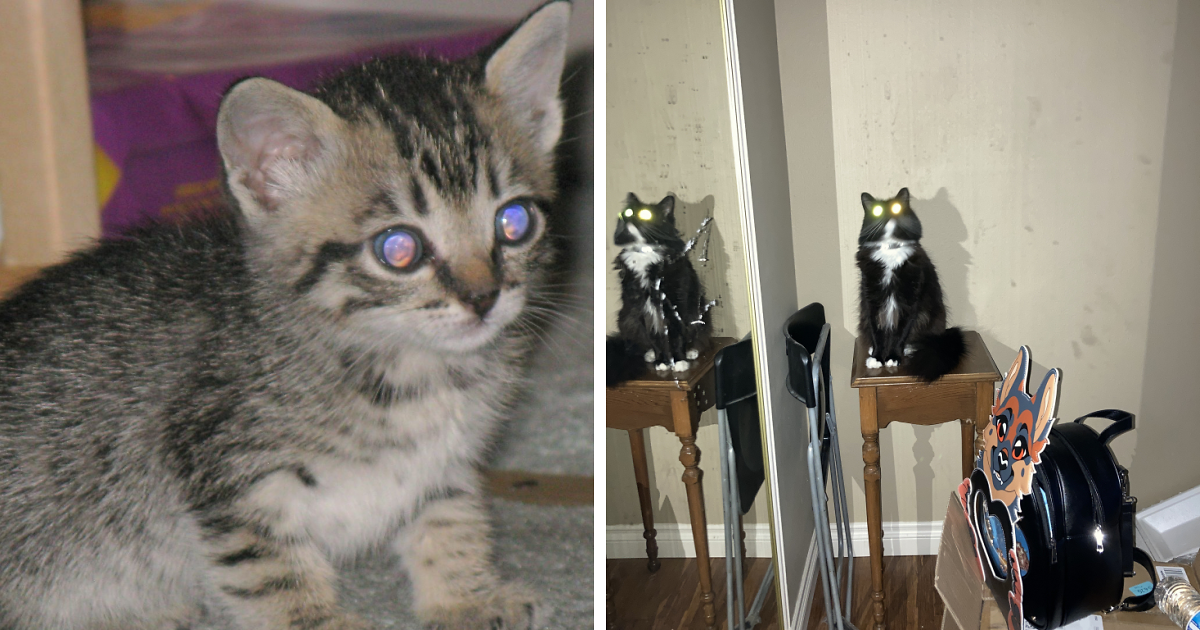
Every pet owner knows the truth: your dog is a sweetheart, your cat is a tiny aristocrat, and both of them are only one badly timed photo away from looking like they crawled out of a cursed forest with unfinished business. One second, your golden retriever is an angel in a sunbeam. The next, he is a blurry hallway phantom with glowing eyes and a mouth stretched open like he just learned ancient secrets. Your tabby? Normally a soft little loaf. In one low-light snapshot, though, she becomes a Victorian attic goblin with opinions.
And honestly, that is exactly why the internet loves these photos. The charm of the “pets look like demons or cryptids” genre is that it turns everyday animals into accidental legends. These pictures are funny because they are familiar. They capture a split second when normal pet behavior collides with weird lighting, odd timing, intense body language, and camera quirks. The result is comedy gold with a faint whiff of folklore.
If the phrase “Hey Pandas, share pictures of your pets when they look like demons or cryptids” sounds like catnip for the internet, that is because it taps into two things people never get tired of: animals and absurdity. We love our pets when they are cute, but we absolutely adore them when they look like they might guard a haunted bridge.
Why the Internet Cannot Resist a Good Cryptid Pet Photo
The best thing about this kind of pet content is that it feels gloriously democratic. You do not need a fancy camera, a perfect backdrop, or a photogenic purebred with movie-star cheekbones. You just need a pet and one poorly timed moment. Maybe the dog shook off bathwater mid-shot. Maybe the cat yawned while staring straight into the lens. Maybe your rabbit was caught at an angle that made its ears look like some woodland antenna system picking up transmissions from another dimension.
That is what makes these images so shareable. They are not polished, posed, or precious. They are chaotic, accidental, and weirdly relatable. Pet owners recognize the scene instantly: the midnight stare from the hallway, the face your cat makes before launching off the couch, the way a dog can somehow look both deeply loving and completely unhinged in the same frame.
There is also a storytelling element. A regular pet photo says, “Here is my animal.” A cryptid pet photo says, “I may have adopted an enchanted beast, and frankly I am too emotionally attached to do anything about it.” That little twist gives the image personality. Suddenly the pet is not just sleeping, yawning, or running. It is lurking, summoning, or patrolling the perimeter of a realm only it understands.
Why Your Pet Suddenly Looks Like a Basement Cryptid
Glowing Eyes Are Real Science, Not a Tiny Possession
Let us start with the classic horror-movie ingredient: glowing eyes. When cats and many dogs look like they have LED bulbs installed behind their retinas, that is not supernatural. It is biology. Many pets have a reflective layer in the eye called the tapetum lucidum, which helps them see better in low light. When a flash, flashlight, or other strong light source hits their eyes, that layer can bounce the light back and create that eerie shine.
That is why the sweetest pet in your house can suddenly look like a woodland omen in nighttime photos. Depending on the animal, angle, and lighting, the glow may look green, blue, yellow, orange, or even red. So yes, the photo may scream “demon,” but the explanation is much more practical: your pet has better night-vision equipment than you do, and your camera caught the evidence.
Motion Blur Turns Zoomies Into Folklore
If eyeshine creates the supernatural vibe, motion blur brings the full cryptid experience home. Pets move fast, often without warning, and cameras do not always keep up. A wagging tail becomes a smoky ribbon. A pounce turns into a floating smear of fur. A dog sprinting through the hallway becomes a long-limbed myth with twenty knees and no respect for the laws of physics.
This is especially true in low light, where cameras use slower shutter speeds to gather more brightness. If your pet moves during that moment, the image records the movement as blur. In plain English, your camera is basically saying, “I tried,” while your pet is already on the couch pretending nothing happened.
Motion blur is one reason cryptid pet photos often feel more dramatic than still images. Blur adds speed, chaos, and ambiguity. The brain fills in the gaps, and suddenly your pug looks less like a household companion and more like a cursed messenger racing between dimensions.
Wide-Angle Lenses Can Make a Nose Look Like a Prophecy
Phone cameras and wide-angle lenses are wonderful for everyday life, but get too close to your pet and things become visually ridiculous. Features nearest the lens can look oversized, while the rest of the body appears smaller or stretched. That adorable snout? Now enormous. Those front paws? Suddenly giant. Your cat’s head may look normal while the body vanishes into a tiny bean-shaped blur behind it.
This is how a perfectly ordinary dog becomes a “swamp beast with noble intentions” in one shot. Perspective distortion exaggerates facial features and body proportions, especially at close range. It is not lying, exactly. It is just being extremely rude.
Timing Is Everything, Especially When Your Pet Is Mid-Yawn, Mid-Shake, or Mid-Pounce
Some of the funniest demon-pet images happen because the camera catches a micro-expression humans do not usually notice. A yawn can make a dog look like a werewolf auditioning for regional theater. A cat caught during the flehmen responsethat open-mouthed “what ancient smell is this?” expressioncan resemble a tiny professor of darkness judging your life choices. A full-body shake can transform fluffy ears and cheeks into a blur of airborne nonsense.
Cats and dogs also make intense faces during normal play. A cat about to pounce may widen its eyes, lower its body, and fixate like a miniature jungle hunter. A dog in an excited or stressed moment may show whale eye, pull its ears back, pant, yawn, or hold its face in a way that looks dramatic in a still image. Freeze that split second, and normal behavior suddenly reads like folklore.
Monster Face or Mood Signal? Read the Room Before You Post
Funny photos are great. Understanding what your pet is actually communicating is even better. Sometimes a bizarre face is just a bizarre face. Other times, the image catches a real emotional signal.
Dogs: Drama Can Mean Play, Surprise, or Stress
Dogs are expressive in ways humans often misread. A dramatic yawn does not always mean tiredness. Whale eye, tucked ears, lip licking, panting, and a stiff posture can suggest discomfort or stress, especially when several signs appear together. On the other hand, loose body language, a wiggly posture, and soft eyes usually mean the dog is relaxed or playful.
So if your dog looks like a haunted taxidermy exhibit in one photo, check the context. Was he sprinting after a toy? Probably hilarious. Was he cornered by a ring light, a costume, and your determination to “get just one more shot”? Less funny. The best demon-dog photos are accidental, not manufactured at the pet’s expense.
Cats: The Halloween Look Is Sometimes Just the Cat Being a Cat
Cats can look extra theatrical because their body language is subtle until it absolutely is not. Dilated pupils, flattened ears, arched backs, puffed fur, and a tense body can signal fear or defensive aggression. But big eyes and a crouch can also show playfulness, hunting focus, or high excitement. Cats contain multitudes, and several of those multitudes look mildly cursed on camera.
The key is to read the whole cat, not just the face. A playful cat might crouch and wiggle before a pounce. A frightened cat may flatten its ears, puff up, and try to look larger. If your photo captures the famous “Halloween cat” silhouette, enjoy the visual drama, but also ask whether your cat felt startled in that moment. Comedy and compassion can absolutely coexist.
How to Capture Funny Creepy Pet Photos Without Being a Villain
If you want delightfully spooky pet photos, the trick is not to force the effect. Let the weirdness happen naturally.
- Shoot during normal play: Fetch, zoomies, pouncing, and post-bath shake-offs are prime cryptid territory.
- Use burst mode: Pets change expression in a blink. Burst shots give you a better chance of catching the glorious nonsense.
- Try low light carefully: Dimmer scenes can create dramatic eyeshine and blur, but do not flash repeatedly into your pet’s face.
- Get on their level: Eye-level photos feel more immersive, and sometimes more hilariously intense.
- Do not stress the animal out: No forcing costumes, cornering, teasing, or startling your pet for a reaction shot.
- Respect body language: If your pet looks overwhelmed, put the camera down and choose dignity over content.
In other words, your pet should never have to work overtime to become internet folklore. Trust the process. They will do something bizarre on their own within minutes, maybe seconds.
The Best Kinds of “Cryptid Pet” Photos
Not all cursed animal images are created equal. The strongest ones usually fall into a few glorious categories.
The Hallway Apparition
This is the pet seen from far away in dim light, often with glowing eyes and a suspiciously still posture. It suggests haunting, surveillance, and the possibility that your pet knows where you keep the snacks.
The Mid-Zoomie Blur Beast
Four legs become eight. Fur becomes weather. The pet is technically still your pet, but only in the same way a tornado is technically air.
The Open-Mouth Goblin
Yawns, sneezes, barking frames, meows, and flehmen faces live here. Teeth are visible. Tongues are doing improv. It is a classic.
The Distorted Close-Up
Shot too close on a phone, this image usually features one enormous nose, one tiny body, and an expression that says, “I have crossed mountains to deliver a warning.”
The Ancient Familiar Pose
Some pets simply know how to sit in ways that feel supernatural. A cat on the windowsill at 3 a.m. A black dog staring into the yard. A rabbit in total stillness with ears raised like satellite dishes. No blur required. Just vibes.
Why These Photos Work So Well Emotionally
There is something strangely affectionate about calling your pet a demon, goblin, gargoyle, or cryptid. It sounds insulting, but it is usually the opposite. This kind of humor is rooted in familiarity. You know the real animal is sweet, silly, needy, and probably asleep with one paw in the air right now. The spooky nickname is just a playful way of celebrating how many personalities pets seem to have.
That contrast is what makes these images land. Pets can go from angelic to deranged in less than a second, and somehow both versions feel true. They are cute, yes. But they are also weird little creatures with intense instincts, surprising expressions, and a talent for appearing in doorways like they have questions about your soul.
In a very internet-age way, these photos also let people share affection without being too sentimental. Posting a picture captioned “my son, the bog creature” is easier for some people than writing a heartfelt essay about how much they love their dog. But make no mistake: the love is there. It is just wearing a funnier outfit.
Shared Experiences: When Our Pets Turn Into Folklore
One reason this topic connects with so many people is that almost every pet owner has lived through at least one accidental horror-comedy moment. You are not trying to make art. You are just trying to take a nice photo. Maybe the pet is sleeping in a sun patch, and you think, “This is it. This is the frame I will keep forever.” Then the shutter clicks one-tenth of a second too late, the dog jerks awake, the cat rotates its head in a way that should probably require an exorcist, and suddenly you have documented a creature that looks banned from several villages.
There is also the nighttime experience, which feels nearly universal. You get up for water, glance toward the hallway, and see two floating lights staring at you from the dark. For one dramatic second, your brain leaves logic behind. Then the lights blink, a tail thumps, and you realize the “entity” is just your pet waiting to see whether this midnight trip includes snacks. That tiny jolt of fear is part of the fun. It turns ordinary domestic life into a low-budget supernatural series starring a very spoiled animal.
Many people also know the chaos of the “I swear they did not look like that in real life” photo. Friends visit, you proudly open your camera roll, and there it is: your beloved pet rendered as a goblin diplomat, sewer wolf, or feathered omen. You feel compelled to explain. “He is actually very friendly.” “She is usually beautiful.” “That is just bad lighting.” But the truth is, the bad photo often becomes more treasured than the perfect one because it captures something real: the unpredictability of living with animals.
Then there are the stories behind the images. The dog who always sneezes during family photos. The cat who hears the camera app open and immediately becomes either a sculpture or a possessed blur. The rabbit who looks serene in person but appears deeply judgmental in every photo ever taken. These repeated quirks become part of household lore. Families do not just own pets; they collect legends about them. Over time, one weird image turns into a running joke, then a nickname, then a permanent part of the pet’s identity.
That is why communities built around funny pet photos feel so warm. People are not only sharing images. They are sharing recognition. Everyone else understands the exact moment a sweet animal becomes an accidental creature of myth. They know what it is like to laugh until crying over a picture of their own pet looking like a swamp oracle. They know the affection behind the ridiculous caption. And they know that the funniest thing of all is this: by the next day, that same terrifying beast will probably be curled up in a blanket, snoring like a tiny angel and pretending none of it happened.
Conclusion
“Hey Pandas, share pictures of your pets when they look like demons or cryptids” is such a strong idea because it celebrates the full range of pet weirdness. It reminds us that the animals we love are not polished little mascots. They are lively, expressive, unpredictable creatures who can look majestic in one frame and absolutely unhinged in the next.
And really, that is the magic. The glowing eyes, the blur, the wild timing, the dramatic body language, the accidental monster anglesthey all reveal something delightful about life with pets. You do not just get companionship. You also get comedy, jump scares, chaos, and the occasional photographic evidence that your home may be protected by a furry cryptid with a favorite treat.
So yes, share the spooky pet pics. Share the blur beasts, the hallway specters, the goblin yawns, and the tiny gargoyles on the windowsill. Just remember: the best ones happen naturally, the funniest ones come with a story, and the real star of the show is not the fake horror. It is the very real affection behind the lens.