Blackberries are the drama queens of the berry world. One minute they look plump, glossy, and ready for a yogurt parfait; the next minute they have collapsed into a fuzzy science project in the back of the refrigerator. If you have ever bought a beautiful carton of blackberries and discovered mold two days later, you are not alone. These berries are delicate, moisture-sensitive, and very good at making you feel personally betrayed.
The good news: learning how to clean blackberries with vinegar for longer storage can help reduce spoilage, slow mold growth, and make your berries easier to enjoy throughout the week. The trick is not just “dump vinegar on berries and hope for the best.” The real method is gentle, diluted, well-rinsed, and followed by serious drying. Moisture is the enemy. Vinegar is the assistant manager. Your refrigerator is the stage.
This guide explains the best vinegar-to-water ratio, how long to soak blackberries, how to dry them without crushing them, and how to store them so they stay fresher longer. It also covers when you should skip the vinegar bath and simply rinse right before eating. Because yes, even berry hacks need boundaries.
Why Blackberries Spoil So Quickly
Blackberries are soft, hollow-centered berries with thin skins and lots of tiny drupelets. That structure makes them juicy and delicious, but it also makes them vulnerable to bruising, leaking, and mold. Unlike apples or citrus fruits, blackberries do not have a tough outer peel protecting them. Once a berry is bruised, moisture escapes and microorganisms have a cozy place to move in.
Another issue is water. Blackberries often come in plastic clamshell containers that allow some airflow, but condensation can still build up inside. When berries sit in a damp environment, mold spreads faster. One moldy berry can quickly affect the rest of the container, which is why sorting is not optional. It is blackberry triage.
Most berry growers recommend storing blackberries unwashed and dry if you plan to eat them very soon. That advice is excellent for short-term freshness. However, if you know your berries tend to mold before you finish them, a diluted vinegar rinse can be a useful storage step, provided you dry them completely afterward.
Does Vinegar Really Help Blackberries Last Longer?
Vinegar is acidic, and that acidity can help reduce some mold spores and surface microbes that contribute to spoilage. A diluted vinegar bath is not a magic force field, and it does not make old berries young again. Think of it as giving your berries a cleaner starting point before refrigeration.
Official food-safety guidance generally recommends rinsing fresh produce under running water before eating and avoiding soap, bleach, detergents, or commercial produce washes. Vinegar is not required to make berries safe to eat. For food safety, plain running water is still the standard recommendation before serving. For storage, however, many home cooks and test kitchens use a mild vinegar solution to help blackberries resist mold a little longer.
The key phrase is “mild vinegar solution.” Too much vinegar can leave an unpleasant taste, and too much soaking can soften delicate berries. Blackberries are not potatoes. They do not want a spa day that lasts half an hour.
The Best Vinegar Ratio for Cleaning Blackberries
For blackberries, the most practical ratio is:
3 cups cool water + 1 cup distilled white vinegar
This creates a 3:1 water-to-vinegar solution. Distilled white vinegar is the best choice because it has a clean flavor, is inexpensive, and does not stain or perfume the fruit. Apple cider vinegar can work in a pinch, but it has a stronger aroma. Skip balsamic vinegar, red wine vinegar, or any flavored vinegar unless you want your berries to taste like salad dressing with identity issues.
If you are nervous about vinegar flavor, use a gentler mix:
4 cups cool water + 1 cup distilled white vinegar
This 4:1 ratio is still helpful, especially if your blackberries are very ripe or delicate. After the vinegar bath, always rinse the berries gently with cool water and dry them thoroughly.
Supplies You Need
You do not need fancy equipment. A few basic kitchen tools will do the job:
- Fresh blackberries
- Distilled white vinegar
- Cool water
- A large bowl
- A colander or fine-mesh strainer
- Paper towels or a clean lint-free kitchen towel
- A shallow storage container
- A loose-fitting lid or breathable cover
A salad spinner can also help, but use it carefully. Blackberries bruise more easily than blueberries or grapes. If your salad spinner has a gentle spin, line it with paper towels and spin slowly. If it sounds like a carnival ride, stop immediately. The berries did not sign a waiver.
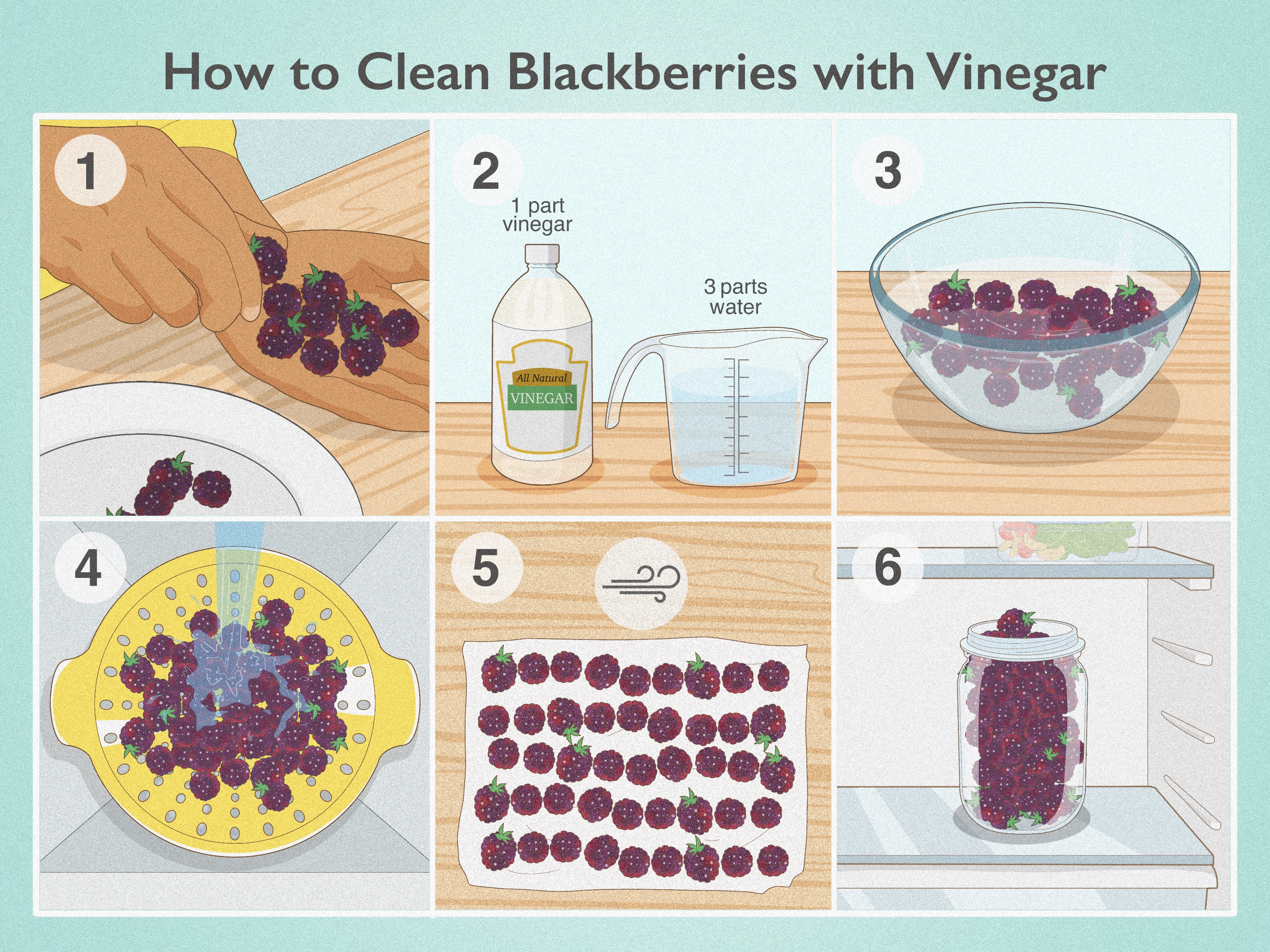
How to Clean Blackberries with Vinegar Step by Step
Step 1: Sort the Blackberries First
Before washing, spread the blackberries on a clean towel or tray. Remove any berries that are moldy, leaking, mushy, badly bruised, or dull and shriveled. Also remove leaves, stems, and tiny bits of plant debris.
This step matters because one damaged berry can speed up spoilage in the entire batch. If a berry is only slightly soft but not moldy, set it aside and eat it soon or use it in a smoothie, sauce, oatmeal, or baked dessert. Do not store questionable berries with perfect ones.
Step 2: Mix the Vinegar Bath
In a large bowl, combine 3 cups of cool water with 1 cup of distilled white vinegar. Use enough liquid so the blackberries can float or move gently without being packed tightly together. Crowding berries during washing can crush them.
Use cool water rather than hot water. Some berry-washing methods use warm or hot water for certain fruits, but blackberries are fragile and can soften quickly. Cool water is safer for texture.
Step 3: Add the Blackberries Gently
Place the blackberries into the vinegar solution. Do not dump them from high above the bowl. Treat them like tiny edible pillows. Use your hand or a spoon to gently move the berries through the water so the solution touches all sides.
Avoid scrubbing blackberries. Their bumpy surface can trap dust and tiny debris, but scrubbing damages the fruit. Gentle movement is enough.
Step 4: Soak for 5 Minutes
Let the berries soak for about 5 minutes. If they are firm and very fresh, you can go up to 10 minutes. If they are ripe, soft, or already juicy, keep it closer to 3 to 5 minutes.
Longer is not always better. An extended soak may make blackberries watery or fragile. The goal is to freshen and reduce surface spoilage factors, not marinate them into blackberry vinegar soup.
Step 5: Rinse with Cool Water
Drain the blackberries in a colander. Then rinse them gently under cool running water. Use a low, soft stream so the berries do not get battered. This rinse helps remove vinegar flavor and any loosened debris.
If you can smell vinegar strongly after rinsing, rinse a little longer. Clean blackberries should taste like blackberries, not like they have been hanging out with pickles.
Step 6: Dry Completely
This is the most important step for longer storage. Spread the rinsed blackberries in a single layer on paper towels or a clean towel. Gently blot the tops with another towel. Let them air-dry for 20 to 30 minutes if needed.
The berries should be dry to the touch before they go into the refrigerator. If they are still damp, moisture will collect in the container and encourage mold. A vinegar wash followed by wet storage is like brushing your teeth and then eating frosting. The effort is technically there, but the result is questionable.
How to Store Blackberries After a Vinegar Wash
Once the berries are dry, line a shallow container with a paper towel. Arrange the blackberries in a single layer if possible. If you need a second layer, place another paper towel between layers to absorb moisture and reduce pressure.
Do not pack blackberries into an airtight container with no airflow. Berries need a dry, breathable environment. A container with a loose-fitting lid, slightly vented lid, or breathable cover works well. The original clamshell can also work if it is clean and lined with a fresh paper towel.
Store the container in the refrigerator, ideally in a cold area with good airflow. Avoid placing blackberries near the back wall where they may freeze, and do not put heavy items on top of them. Blackberries are not load-bearing fruit.
How Long Do Vinegar-Washed Blackberries Last?
Fresh blackberries are best eaten quickly, often within 1 to 3 days of purchase. With careful sorting, a brief vinegar bath, thorough drying, and breathable storage, you may be able to keep them fresh for several extra days. Some batches may last close to a week, but results depend on how fresh the berries were when you bought them.
If the berries were already soft, damp, or close to spoiling, vinegar will not rescue them for long. The best storage results start at the store. Choose blackberries that are deep purple-black, plump, dry, and free of visible mold. Avoid containers with juice pooling at the bottom, crushed berries, or condensation inside.
When You Should Not Use a Vinegar Bath
A vinegar wash is helpful in many situations, but it is not always necessary. Skip the vinegar bath if you plan to eat the blackberries the same day. In that case, a gentle rinse under cool running water right before eating is enough.
You should also skip soaking if the berries are extremely soft or breaking apart. For fragile berries, place them in a colander and rinse lightly just before serving. Soaking damaged berries can make them mushier.
Never use soap, dish detergent, bleach, or household cleaners on blackberries. Produce is porous, and cleaning chemicals can be absorbed or leave unsafe residues. Also avoid commercial produce washes unless you have a specific reason to use them; plain water is generally recommended for produce cleaning before eating.
Common Mistakes That Make Blackberries Mold Faster
Storing Them Wet
This is the biggest mistake. Wet berries spoil faster. Drying is not a bonus step; it is the whole plot twist.
Leaving Moldy Berries in the Container
Always remove moldy or leaking berries immediately. Mold spreads quickly in a damp berry container.
Using Too Much Vinegar
A stronger vinegar solution is not better. It can affect flavor and texture. Stick with a 3:1 or 4:1 water-to-vinegar ratio.
Soaking Too Long
Blackberries are delicate. A short soak is enough. Long soaking can lead to waterlogged fruit.
Sealing Them Airtight
A completely sealed container can trap moisture. Use breathable storage with paper towels to absorb excess humidity.
Can You Use Vinegar-Washed Blackberries for Freezing?
Yes. In fact, cleaning blackberries before freezing can be convenient if you dry them well. After the vinegar bath, rinse and dry the berries completely. Then spread them on a parchment-lined baking sheet in a single layer and freeze until solid. Once frozen, transfer them to a freezer-safe bag or container.
This prevents the berries from freezing into one giant blackberry iceberg. Frozen blackberries are excellent for smoothies, muffins, crisps, sauces, pancakes, and quick jams. They may soften after thawing, so they are better for cooking or blending than for fresh snacking.
Best Ways to Use Blackberries Before They Spoil
Even with perfect storage, blackberries are not meant to live in your fridge forever. Use them while they are at their best. Add fresh blackberries to oatmeal, Greek yogurt, chia pudding, cereal, green salads, fruit salads, sparkling water, lemonade, or cottage cheese. They also pair beautifully with lemon, mint, vanilla, honey, almonds, peaches, and dark chocolate.
If your blackberries are getting soft but are not moldy, cook them. Soft berries are wonderful in compote, syrup, cobbler, jam, or a quick stovetop sauce for pancakes and waffles. Slightly tired berries may not win a beauty contest, but they can still become dessert. Honestly, many of us can relate.
Frequently Asked Questions
Will vinegar make blackberries taste sour?
Not if you dilute it properly and rinse the berries afterward. Use distilled white vinegar mixed with water, soak briefly, rinse gently, and dry well. If the berries taste like vinegar, the solution was too strong, the soak was too long, or the rinse was too light.
Can I use apple cider vinegar instead of white vinegar?
Yes, but white vinegar is usually better because it has a cleaner, more neutral flavor. Apple cider vinegar has a fruitier smell and may leave a slight taste if not rinsed well.
Should I wash blackberries as soon as I get home?
If you plan to eat them within a day, store them dry and rinse right before eating. If you want longer storage and your berries are firm and fresh, a quick vinegar bath followed by thorough drying can help.
Can I clean blackberries with baking soda?
Baking soda is sometimes used for firmer produce, but blackberries are delicate and can be damaged by soaking and handling. For blackberries, a gentle water rinse or diluted vinegar bath is usually more practical.
Is vinegar washing a replacement for food safety?
No. Vinegar washing is a storage strategy, not a guarantee. Always discard moldy berries, rinse produce before eating, keep hands and surfaces clean, and refrigerate berries promptly.
Personal Experience: What Actually Works in a Real Kitchen
In my experience, the vinegar method works best when I treat it less like a hack and more like a careful routine. The first time I tried washing blackberries with vinegar, I made the classic beginner mistake: I washed them, gave them a quick shake in the colander, and put them straight into a container. The next day, the bottom paper towel looked like it had survived a tiny blackberry rainstorm. The berries were not ruined, but they were softer than I wanted. Lesson learned: drying is everything.
Now I sort the berries before washing. This sounds fussy until you find one hidden moldy berry trying to sabotage the entire group project. I spread the blackberries on a tray, remove anything crushed or suspicious, and keep the best berries for storage. The softer ones get used right away in oatmeal or a smoothie. This simple sorting step alone makes a noticeable difference.
For the vinegar bath, I prefer the 4:1 ratio when the blackberries are very ripe and the 3:1 ratio when they are firm. I soak them for about 5 minutes, then rinse gently with cool water. I do not stir aggressively. I just move them around with my fingers like I am handling tiny, edible glass ornaments. Blackberries bruise easily, and once they start leaking juice, storage life drops fast.
The drying setup matters. I line a baking sheet with two layers of paper towels, spread the berries out, and give them space. If they are piled together, moisture hides between them. I blot them gently, then let them sit while I unload groceries or clean the kitchen. After 20 minutes, I check them. If the paper towel is damp, I replace it. This feels a little extra, but it saves money because I actually finish the berries before they turn fuzzy.
For storage, shallow containers beat deep containers every time. A deep bowl creates pressure on the bottom berries, and crushed bottom berries become the beginning of the end. I use a wide container lined with a dry paper towel and cover it loosely. If the container has a lid, I leave it slightly vented. If I reuse the original clamshell, I add a fresh paper towel inside and make sure the berries are not packed too tightly.
The biggest practical tip is to check the container once a day. If the paper towel gets damp, replace it. If one berry looks soft or moldy, remove it immediately. This takes about ten seconds and can extend the life of the whole batch. Blackberries do not need constant attention, but they do appreciate a responsible roommate.
When the method works well, I can usually keep firm, fresh blackberries in good shape for several extra days. They stay nicest for snacking during the first few days, then become better for cooking as they soften. By day five or six, if any are left, I usually turn them into a quick sauce with lemon juice and a little honey. That way, even berries that are past their glamorous phase still get a delicious ending.
Conclusion
Cleaning blackberries with vinegar for longer storage is simple, but the details matter. Use a mild vinegar solution, soak briefly, rinse gently, dry completely, and store the berries in a shallow, breathable container lined with paper towels. Vinegar can help slow mold, but dryness and careful handling are just as important. For the best results, start with firm, dry, fresh-looking blackberries and remove any damaged fruit before storage.
If you remember only one thing, remember this: blackberries hate moisture. Give them a quick vinegar bath if you want extra storage time, but do not put them away wet. A dry berry is a happier berry, and a happier berry is less likely to become a fuzzy refrigerator villain.