Strawberries are charming little overachievers. They make your garden look cute, your breakfast feel fancy, and your neighbors suddenly very interested in “stopping by.” But strawberry plants also have a dramatic side. One rainy week, and those glossy red berries can go from picture-perfect to fuzzy, leathery, spotted, wilted, or downright weird.
If your strawberry patch is looking suspicious, don’t panic and don’t immediately blame the moon, your soil, or that one sprinkler head with a bad attitude. Most strawberry diseases leave clues. Once you know what to look for, you can tell the difference between a minor leaf issue and a full-on fruit disaster. Even better, you can treat many problems early and prevent the same mess next season.
This guide breaks down the most common strawberry diseases, how to identify them, what treatments actually help, and which preventive habits give you the best odds of harvesting healthy berries. Think of it as your field guide to strawberry detective work, minus the trench coat.
Why Strawberry Diseases Show Up in the First Place
Most strawberry diseases do not appear out of nowhere. They usually need a few conditions working in their favor: wet leaves, crowded plants, poor airflow, infected transplants, old plant debris, stressed plants, or fruit resting directly on damp soil. Give disease organisms moisture and a little time, and they will move in like they pay rent.
Strawberries are especially vulnerable because the fruit sits low, the foliage can become dense fast, and the plants are often watered from above. Add warm, humid weather or long periods of leaf wetness, and fungal and bacterial problems get very comfortable.
That is why the best disease treatment is rarely just one spray bottle or one homemade fix. Real control usually comes from a combination of sanitation, watering changes, spacing, mulch, resistant varieties, and, when needed, a fungicide or bactericide labeled for strawberries.
How to Inspect Strawberry Plants Like a Pro
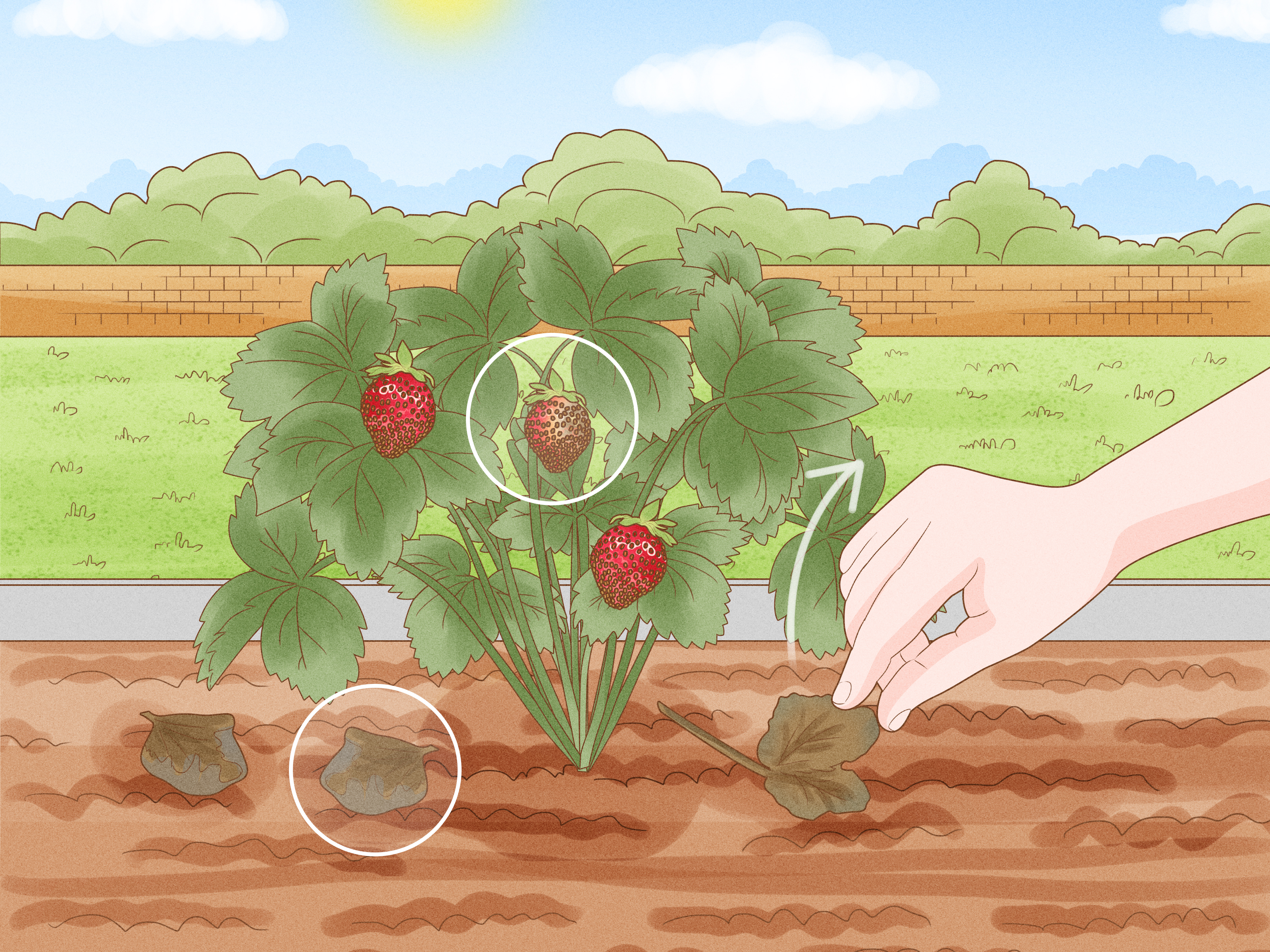
Before you treat anything, inspect the patch carefully. Start with the fruit, then the blossoms, then the leaves, and finally the crown and roots if a plant is collapsing. Look at both the top and underside of leaves. Some diseases are much easier to spot underneath, and strawberries are sneaky like that.
Pay close attention to these clues:
- Fruit texture: Is the berry mushy, dry, leathery, or firm with sunken spots?
- Color pattern: Are the spots dark and sunken, gray and fuzzy, or brown and oddly angular?
- Leaf shape: Are the leaves curling upward, scorching at the edges, or dotted with white-centered lesions?
- Timing: Did symptoms appear after a stretch of rain, heavy overhead irrigation, or cool wet weather?
- Plant pattern: Is one plant affected, or is the issue spreading across a row?
Take photos as you inspect. It sounds simple, but comparing pictures over a few days helps you see whether the problem is spreading fast, staying cosmetic, or killing the plant from the ground up.
Common Strawberry Diseases and How to Identify Them
1. Anthracnose
Anthracnose is one of the biggest strawberry troublemakers because it can affect fruit, flowers, petioles, runners, and crowns. On fruit, it usually shows up as firm, sunken spots that range from tan to dark brown. During wet or humid weather, those lesions may ooze a salmon-orange or pinkish spore mass. That colorful slime is a major clue. Unfortunately, it is not the cheerful kind of orange you want in a berry patch.
On crowns, anthracnose can cause plants to wilt, stunt, or suddenly collapse. If you cut into the crown, you may see rusty orange to reddish-brown discoloration inside. Flowers can also turn brown and fail before fruit ever develops.
How to treat it: Remove and discard infected fruit and badly infected plants right away. Do not compost heavily diseased material if your compost pile does not heat properly. Stop overhead irrigation if possible, because splashing water spreads spores. Improve spacing and air movement. If anthracnose is a recurring problem, use a fungicide labeled for strawberries and anthracnose, following the product label exactly. For many gardeners, prevention matters more than rescue, because anthracnose can move fast once the weather turns warm and wet.
2. Gray Mold (Botrytis Fruit Rot)
If a berry looks like it was dusted with gray dryer lint, you are probably dealing with gray mold, also called Botrytis fruit rot. This disease often begins in blossoms and moves into developing fruit. It is especially common when berries touch the soil, dead petals, or infected plant debris. Cool, wet conditions are perfect for it.
Early fruit symptoms may look like soft light-brown areas. Then the classic sign appears: fuzzy gray mold on the rotting berry. Sometimes fruit seems fine one day and turns into a sad gray science experiment the next.
How to treat it: Pick and remove infected berries and spent blossoms often. This is not a disease where laziness pays off. Use clean straw or another mulch to keep fruit off the soil. Water early in the day so plants dry quickly, and avoid overhead irrigation when possible. Thin crowded growth and keep rows from getting jungle-dense. Fungicides can help, especially around bloom when infections often start, but sanitation and dryness are the real MVPs.
3. Powdery Mildew
Powdery mildew does not always make a dramatic entrance, which is why gardeners miss it. One of the first symptoms is leaf edges curling upward. Flip the leaf over, and you may see white powdery growth on the underside. Leaves may also develop purplish or reddish blotches. Fruit can be affected too, sometimes looking seedy, dull, or lightly coated.
This disease often becomes worse in dense plantings, high tunnels, or patches with poor airflow. Unlike some other strawberry diseases, it does not need soaking wet leaves to thrive. Humidity alone can be enough to encourage it.
How to treat it: Improve air circulation first. Thin plants, reduce crowding, and avoid overfeeding with nitrogen if plants are getting lush and leafy. Remove badly infected leaves if the outbreak is light. Apply a labeled fungicide at the first sign of disease, since powdery mildew is easier to manage early than late. Some growers use sulfur or other labeled products, but always check the label for strawberries and for temperature cautions.
4. Common Leaf Spot
Common leaf spot is one of the easiest strawberry diseases to identify once you know the pattern. Look for small round purple spots on leaves that later develop tan, gray, or white centers with distinct reddish-purple borders. It can also affect petioles, runners, berry caps, and occasionally fruit.
The white-centered lesion is the key detail here. If you remember only one thing, remember this: leaf spot often looks like a tiny target with a pale center.
How to treat it: If the problem is mild, you may not need much beyond cleanup. Remove infected dead leaves, avoid overhead watering, and do not handle plants when wet. If the disease is severe or keeps returning, use a labeled fungicide and consider switching to resistant varieties the next time you plant. Also, give the patch more sunlight and spacing. Leaf spot loves a damp, crowded neighborhood.
5. Leaf Scorch
Leaf scorch is the cousin that always gets mistaken for leaf spot. Early on, it causes dark purple spots too, but the centers do not turn white. Instead, the lesions stay dark, sometimes looking like tiny drops of tar. In heavier infections, the leaf tissue turns reddish or purplish, then brown and dry at the edges, creating that classic scorched look.
Petioles can develop elongated sunken lesions, and severe infections can weaken the plant enough to reduce vigor and increase stress.
How to treat it: Treatment is similar to leaf spot: remove infected debris, improve airflow, keep foliage dry, and use resistant varieties when available. Fungicides may slow severe outbreaks, but cultural control is still the foundation.
6. Angular Leaf Spot
Angular leaf spot is the big bacterial exception in a disease lineup dominated by fungi. It starts as water-soaked lesions on the underside of leaves. As those lesions enlarge, they become angular because the veins box them in. In very wet conditions, they may ooze a yellowish bacterial film that later dries into a whitish residue. When you hold an infected leaf up to bright light, the lesions often look translucent. That is a classic diagnostic clue.
Later, the top of the leaf may show reddish-brown irregular spots. The disease can also infect berry caps and flower parts, making fruit look ugly even when the berry itself is still edible. That cosmetic damage matters if you want market-quality fruit or just like your berries to look less haunted.
How to treat it: There is no magic cure once angular leaf spot is well established. Focus on limiting spread. Use certified disease-free plants, avoid overhead irrigation, avoid working in the patch while plants are wet, and remove badly infected material. Copper products labeled for strawberries may provide suppression, but repeated use can injure plants, so labels matter a lot here.
7. Leather Rot
Leather rot shows up most often in wet weather, especially where fruit touches damp soil or sits in soggy conditions. Infected green berries may stay firm but turn brown in patches. Ripe fruit may develop a brownish-purple cast, a leathery texture, and an unpleasant bitter taste and odor. In humid conditions, white fungal-like growth may appear on the fruit surface.
This disease is especially annoying because slightly infected berries may not look disastrous right away, but they can ruin flavor. One bad berry in a batch of jam is enough to make everyone very quiet at the breakfast table.
How to treat it: Improve drainage immediately. Remove infected fruit, mulch heavily enough to keep fruit from contacting the soil, and correct standing-water problems. Avoid overwatering and harvest frequently. If leather rot is a recurring issue in wet years, use products specifically labeled for strawberries and the disease involved. Regular fungicides for leaf spots may not be the right match here.
8. Verticillium Wilt
Verticillium wilt is a soilborne disease, which means the trouble starts below ground even though the symptoms show up above it. The outer, older leaves often droop first, then dry at the margins and between the veins. New growth may be stunted, and the whole plant can look flattened, weak, and generally over it. Symptoms often become more obvious as fruit develops and the plant’s water demand rises.
Unlike fruit rots, this is not a disease you spray away after symptoms appear. Once a plant is infected, recovery is unlikely.
How to treat it: Remove severely affected plants. Do not replant strawberries into the same infested area right away. Rotate to non-host crops for several years if possible, and avoid sites where susceptible crops such as tomatoes, potatoes, peppers, eggplant, raspberries, or prior strawberries have grown recently. Start new beds with clean plants in well-drained soil. Resistant or tolerant varieties are worth considering if verticillium has been a problem in your area.
How to Tell Similar Strawberry Diseases Apart
Some diseases are easy to confuse, so here is the cheat sheet version:
- Leaf spot vs. leaf scorch: Leaf spot has a pale center. Leaf scorch does not.
- Anthracnose vs. gray mold: Anthracnose makes firm, sunken lesions, often with salmon-colored ooze. Gray mold makes soft rot with fuzzy gray growth.
- Angular leaf spot vs. fungal leaf spots: Angular leaf spot starts water-soaked, follows leaf veins, and looks translucent when backlit.
- Leather rot vs. simple fruit breakdown: Leather rot often leaves berries firm or leathery at first and can create bitter-tasting fruit in wet conditions.
- Wilt disease vs. temporary drought stress: Verticillium wilt tends to persist and worsen even when soil moisture improves.
The Best Treatment Strategy Is Usually a System, Not a Single Product
If you remember one practical rule from this article, make it this: treat the patch, not just the symptom. Diseased berries are rarely just about the berry. They are usually about the environment around the berry.
A good strawberry disease management system includes:
- Buying certified disease-free plants from reputable nurseries
- Planting in full sun with enough spacing for airflow
- Using straw or another clean mulch to keep fruit off the soil
- Preferring drip irrigation or soaker hoses over overhead watering
- Removing dead leaves, infected fruit, and old blossoms promptly
- Avoiding work in the patch when plants are wet
- Renovating or thinning dense plantings after harvest if your growing system calls for it
- Using labeled fungicides or bactericides only when needed and always as directed
Also, do not assume more fertilizer equals healthier plants. Excess nitrogen can create lush, soft growth that dries slowly and encourages disease. Strawberry plants should be fed well, not spoiled rotten.
When It Makes Sense to Replant Instead of Keep Fighting
Sometimes the smartest move is not another treatment. It is a fresh start. If a planting has repeated crown disease, persistent wilt, chronic fruit rot, or years of heavy leaf disease despite cleanup and improved watering, consider replacing the bed in a new location.
Use clean plants. Rotate away from old strawberry ground if possible. Do not use runners from a diseased patch to start the next one. That shortcut can bring your problems right into the new bed wearing a fake mustache.
Real-World Experiences Gardeners Commonly Have With Strawberry Diseases
One of the most common experiences gardeners describe is how quickly strawberry diseases seem to appear. The patch looks fantastic in early bloom. The leaves are green, the flowers are open, and optimism is high. Then a rainy stretch rolls through, and suddenly berries begin collapsing faster than weekend diet plans. A gardener heads outside expecting to pick a bowl of fruit and instead finds gray fuzz, brown caps, or odd spots that definitely were not there three days earlier.
Another familiar experience is confusing one disease for another. A lot of people assume every leaf spot means the same thing, but the details matter. Gardeners often notice purple spots and immediately worry the patch is doomed, when in reality the problem may be a manageable leaf disease that mostly calls for cleanup and better airflow. On the flip side, some people shrug off early symptoms because “it’s only a few spots,” only to discover that the issue was anthracnose or angular leaf spot spreading quietly through flowers, petioles, or berry caps.
Many home growers also learn the hard way that overhead watering is convenient for humans and delightful for pathogens. It feels efficient at first. You turn on the sprinkler, everything gets wet, and it seems like gardening has been handled. Then the foliage stays damp too long, fruit gets splashed with soil, and diseases begin moving through the bed like they received a VIP pass. After switching to drip irrigation or watering at the base of the plants, many gardeners notice a surprisingly large difference in both plant health and fruit quality.
Mulch is another lesson people tend to believe only after seeing the results themselves. Fresh straw can seem optional when the patch is small. Then the first wet spell hits, berries touch the soil, and leather rot or gray mold enters the chat. Gardeners who add mulch often report that fruit stays cleaner, rot pressure drops, and harvesting becomes far less frustrating. It is not glamorous, but straw does a lot of quiet hero work.
There is also the emotional experience of trying to save every plant. Most gardeners want to rescue rather than remove, which is understandable. But strawberry disease management often gets easier when you stop negotiating with obviously infected plants. Pulling a collapsing wilted plant or tossing a handful of rotten berries can feel wasteful in the moment, yet it often protects the rest of the patch. Experienced growers get more comfortable making those tough calls early.
Perhaps the biggest lesson is that disease control is cumulative. Rarely does one action solve everything. Instead, success usually comes from stacking small good decisions: clean plants, sunny site, mulch, airflow, careful watering, regular picking, fast cleanup, and timely treatment when needed. Gardeners who stick with strawberries usually discover that the goal is not perfection. The goal is staying ahead of problems before the patch becomes a fungal reality show.
Conclusion
Learning how to identify and treat strawberry diseases is really about learning patterns. Sunken spots with salmon-colored ooze point toward anthracnose. Gray fuzz suggests Botrytis. Curled leaves with white growth underneath hint at powdery mildew. White-centered leaf lesions usually mean leaf spot, while dark lesions without pale centers lean toward leaf scorch. Angular translucent lesions point to the bacterial troublemaker, and leathery bitter fruit after wet weather raises suspicion for leather rot. Wilted, stunted plants that do not bounce back may be facing a soil problem such as verticillium wilt.
The sooner you notice those patterns, the better your odds of saving the harvest. Keep the patch clean, dry, sunny, and well spaced, and you will solve more disease problems than any miracle product ever could. Strawberries may be a little dramatic, but with good observation and smart prevention, they are still absolutely worth growing.