Note: This article is written in original American English style while preserving the title’s spelling. It synthesizes real craft practices, kindness-rock community ideas, acrylic painting techniques, sealing advice, and responsible placement guidance from reputable U.S.-focused craft, outdoor ethics, and community sources.
There is a special kind of magic in picking up an ordinary stone and turning it into a tiny heart-shaped message. A stone does not ask for attention. It does not arrive with glitter, a ribbon, or a dramatic entrance. It simply sits there, humble and quiet, probably wondering why everyone keeps stepping over it. Then someone comes along with acrylic paint, a small brush, and a cheerful idea: “You, my little gray potato, are about to become art.”
That is the sweet charm behind I Paint Colourful Hearts On Stones. It is a simple craft, but it carries more feeling than many expensive decorations. Painted heart stones can become pocket-sized gifts, garden accents, kindness rocks, table décor, memorial keepsakes, classroom activities, or small surprises leftresponsibly and with permissionfor someone else to find. They are affordable, personal, and wonderfully imperfect. In fact, the imperfections are half the personality. A wobbly heart can look more honest than a perfect one. A lumpy stone can feel like it has a story. A brushstroke that misbehaves may become “texture,” which is the artist’s favorite word for “Oops, but make it stylish.”
Painting colorful hearts on stones is also a mindful activity. It slows the hands and quiets the mind. You choose a stone, clean it, prepare the surface, paint a background, add a heart, decorate it, seal it, and suddenly you have created something cheerful from almost nothing. In a world that often rewards speed, this tiny craft says, “Let’s sit down for a minute. Also, please pass the pink paint.”
Why Painted Heart Stones Are So Popular
Painted stones have become popular because they blend creativity, kindness, and simplicity. You do not need an art degree, a studio, or a mysterious French beret to begin. You need a clean stone, craft paint, a brush or paint pen, and a little patience. The heart shape is especially loved because it is instantly recognizable. It can mean love, friendship, hope, gratitude, encouragement, remembrance, or “I made this because the world needed one more cute thing today.”
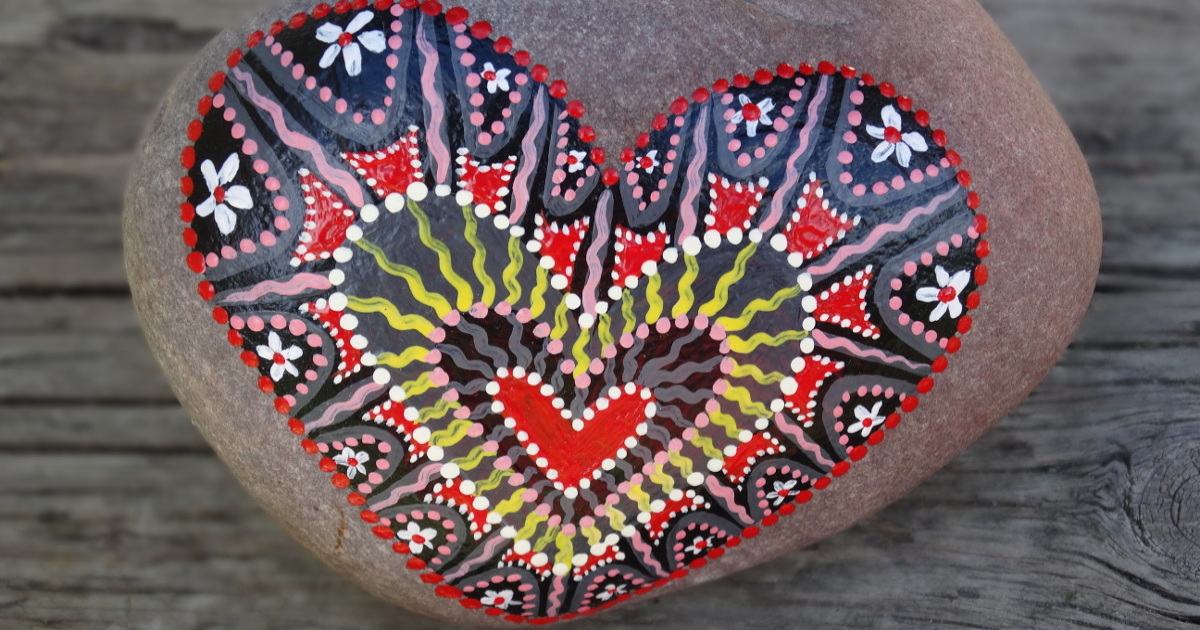
Heart stones are also versatile. A red heart on a white stone feels classic and romantic. A rainbow heart feels joyful and inclusive. A pastel heart looks soft and calming. A dotted mandala heart turns the stone into a tiny treasure. A black stone with metallic hearts feels modern and dramatic, like it belongs in a boutique where everything costs more than expected.
The trend connects closely with kindness rock projects, where people paint stones with positive images or words and place them in approved community spots. The idea is beautifully simple: a stranger finds a small piece of handmade encouragement and smiles. However, responsible placement matters. Painted rocks should not be left in national parks, protected natural areas, hiking trails, private businesses, or public spaces without permission. Kindness is still kindness when it follows the rules. In fact, it is kinder when it does.
Choosing the Right Stones
The best stones for painting hearts are smooth, flat, and easy to hold. River rocks, beach-style craft stones, and landscaping stones often work well. The smoother the surface, the easier it is to paint clean lines. Rough stones can still be used, but they create a more rustic look and may require extra coats of paint.
Before collecting stones outdoors, check local rules. Many parks, beaches, preserves, and natural areas do not allow visitors to remove rocks, shells, plants, or other natural materials. Buying craft stones from a garden center or craft store is often the easiest and most responsible choice. It also prevents the awkward moment of realizing your “free art supplies” were technically part of a protected ecosystem. Nobody wants their craft hobby to come with a ranger conversation.
What Makes a Good Heart-Painting Stone?
Look for stones that are about the size of your palm or slightly smaller. Tiny stones are adorable, but painting a neat heart on them can feel like performing surgery with a paintbrush. Larger stones provide more room for details, lettering, dots, flowers, and layered designs. A stone with a natural oval shape is ideal because the heart can sit neatly in the center.
Color also matters. Light gray, cream, and tan stones make bright colors pop. Dark stones look beautiful with white, gold, silver, neon, or pastel paint. If the stone is too speckled, you can add a base coat first. Think of the base coat as the stone’s primer, foundation, and tiny spa treatment all in one.
Supplies You Need to Paint Colourful Hearts On Stones
You do not need a craft room large enough to be featured on a home makeover show. A small table and a few basic supplies will do.
Basic Supplies
- Smooth stones or craft rocks
- Acrylic paint or outdoor acrylic paint
- Small paintbrushes in different sizes
- Paint pens for outlines, dots, and lettering
- A pencil or chalk pencil for sketching
- A cup of water and paper towels
- Acrylic sealer or outdoor-safe clear sealant
- Newspaper, cardboard, or a craft mat to protect the table
Acrylic paint is popular for rock painting because it dries quickly, comes in many colors, and sticks well to prepared surfaces. Paint pens are helpful for beginners because they offer more control than a brush, especially when drawing outlines, small hearts, dots, or short words like “love,” “hope,” “smile,” or “breathe.”
Optional Supplies for Extra Style
- Dotting tools or the end of a paintbrush
- Stencils for consistent heart shapes
- Metallic acrylic paint
- Glitter paint, used lightly
- Toothpicks for tiny details
- White gel pens for highlights
- Matte, satin, or gloss sealer depending on the finish you like
If you are painting with children, choose non-toxic craft paints and supervise sealing products carefully. Spray sealers should be used in a well-ventilated area and according to label directions. The art should be joyful, not a science experiment with fumes.
How to Paint Colourful Hearts On Stones Step by Step
Step 1: Wash and Dry the Stones
Dust, dirt, and oils can keep paint from sticking properly. Wash each stone with mild soap and water, then scrub gently with an old toothbrush if needed. Rinse well and let the stones dry completely. Completely means completely. If the stone is still damp, the paint may slide around like it has somewhere better to be.
Step 2: Add a Base Coat
A base coat creates a smooth background and helps colors appear brighter. White is great for bold hearts, while black creates a dramatic effect. Pastel backgrounds make the stone feel soft and sweet. Apply one thin coat, let it dry, and add a second coat if needed. Thin layers usually look cleaner than one thick, gloopy layer.
Step 3: Sketch the Heart
Use a pencil, chalk pencil, or very light paint pen to sketch the heart. A simple trick is to draw two small circles side by side, then bring the lines down into a point. You can also use a stencil if symmetry is important to you. But remember, handmade art is allowed to look handmade. The stone will not file a complaint.
Step 4: Paint the Heart
Fill in the heart with acrylic paint. Start from the outline and move inward, or paint the center first and shape the edges afterward. For extra color, try stripes, ombré blending, rainbow bands, polka dots, floral patterns, checkerboards, or tiny stars. Let each layer dry before adding the next detail. Patience is not glamorous, but it does prevent accidental mud-colored disasters.
Step 5: Add Details and Words
Once the heart is dry, add outlines, highlights, shadows, dots, or small messages. A white highlight along one side of the heart can make it look shiny. Black outlines make the design pop. Tiny dots around the heart create a mandala effect. Short words work best because stones have limited space. “You matter” fits nicely. “Please remember to drink water and believe in your emotional resilience” may require a boulder.
Step 6: Let the Paint Cure
Dry paint and cured paint are not always the same thing. A stone may feel dry to the touch within minutes, but it is wise to let the paint sit longer before sealing, often overnight. This helps prevent smearing and cloudiness under the sealer.
Step 7: Seal the Painted Stone
Sealing protects the design from scratches, moisture, and fading. Use an acrylic spray sealer, brush-on sealer, or outdoor-safe clear coat. Several light coats are usually better than one heavy coat. Heavy sealer can drip, pool, or create a sticky finish. Let the stone dry fully between coats and follow the product instructions. A glossy finish makes colors look bright and shiny, while matte sealer gives a softer handmade look.
Color Ideas for Heart Stones
The best part of painting hearts on stones is choosing colors. Color changes the mood of the whole piece. A red heart feels bold and timeless. Pink feels sweet and playful. Yellow feels sunny and optimistic. Blue feels peaceful. Purple feels creative and a little magical. Green feels natural and fresh. A rainbow heart says, “Why choose one color when the entire paint box is sitting right there?”
Popular Heart Stone Designs
- Rainbow heart stones: Paint the heart in bands of red, orange, yellow, green, blue, and purple.
- Mandala heart stones: Use dots around the heart to create a calming, patterned design.
- Floral heart stones: Fill the heart with tiny flowers, leaves, and vines.
- Galaxy heart stones: Paint a dark background, then add stars, dots, and a glowing heart.
- Message heart stones: Add words such as “love,” “hope,” “kindness,” or “keep going.”
- Minimalist heart stones: Paint one clean heart on a natural stone and let simplicity do the talking.
For beginners, a solid heart with dots around it is a perfect first design. It looks polished, but it is forgiving. If one dot is bigger than the others, congratulations: you have created artistic rhythm.
Where to Use Painted Heart Stones
Painted heart stones make lovely decorations and gifts. Place them in a plant pot, line them along a garden path, use them as paperweights, add them to a windowsill, or give them to friends and family. They are also thoughtful for teachers, neighbors, coworkers, and anyone who enjoys small handmade surprises.
If you want to share them publicly, choose responsible places. Ask permission before placing stones at schools, libraries, community centers, hospitals, businesses, churches, or parks. Never place painted stones where they could damage lawn equipment, create a tripping hazard, interfere with wildlife, or be mistaken for litter. Avoid protected natural areas, hiking trails, beaches with collection restrictions, national parks, and any place that asks visitors to leave nature untouched.
A safe alternative is to create a kindness rock basket, a community rock garden with approval, or a take-one-leave-one display at a local event. That way, the joy stays organized, visible, and welcome. Even kindness appreciates good logistics.
Common Mistakes to Avoid
The most common mistake is painting on dirty or damp stones. Paint needs a clean, dry surface. Another mistake is rushing layers. If the background is not dry, the heart may smear. If the heart is not dry, the outline may drag color across the design. Rock painting teaches many life lessons, and one of them is that wet paint has no respect for your schedule.
Another issue is using too much sealer at once. Thick sealant can drip and create uneven shine. Light coats work better. Also, avoid using washable paint for stones that will be handled or displayed outside. Washable paint is great for temporary kid crafts, but rain treats it like a personal invitation.
Finally, do not overcomplicate every stone. Some of the most beautiful heart stones are simple. A single blue heart on a cream stone can be just as meaningful as a detailed rainbow mandala with twelve layers and emotional backstory.
Why This Craft Feels So Meaningful
Painting colorful hearts on stones is meaningful because it transforms something overlooked into something cherished. The stone already existed. The heart gives it a message. That transformation is powerful in a quiet way. It reminds us that beauty does not always need a large canvas. Sometimes it fits in your palm.
The process is also accessible. People of many ages and skill levels can enjoy it. Children can paint big, joyful hearts. Adults can experiment with shading, patterns, and fine details. Families can paint together. Classrooms can use heart stones for art lessons, kindness projects, or social-emotional learning activities. Seniors can enjoy it as a relaxing craft that encourages creativity without requiring expensive materials.
There is also emotional value in giving a heart stone to someone. It is small enough to keep on a desk, shelf, or bedside table. Unlike a card that may eventually be tucked away, a painted stone has weight. It feels permanent. It says, “Someone took time to make this.” That time is part of the gift.
My Experience Painting Colourful Hearts On Stones
The first time I painted a heart on a stone, I expected it to be easy. After all, it was just a heart. I had drawn hearts in notebook margins, on birthday cards, and once on a foggy window like a person in a movie who was clearly avoiding chores. But stones are not paper. Stones have bumps, curves, tiny holes, strange edges, and personalities. Mine had the personality of a stubborn potato.
I washed the stone, dried it, and painted a white base coat. Immediately, it looked better, like it had put on a fresh shirt. Then I chose a bright red for the heart. I tried to make both sides even, but one side became rounder than the other. For a moment, I considered repainting the whole thing. Then I looked closer and realized the uneven heart felt warmer than a perfect one. It looked handmade, not manufactured. It looked like a heart that had lived a little.
After that, I became more relaxed. I painted pink hearts, blue hearts, yellow hearts, and rainbow hearts. I added dots around some of them. I outlined others in black or white. One stone became a tiny garden with a heart in the middle. Another became a night sky with a purple heart surrounded by small stars. I learned that mistakes can be covered with a new base coat, dots can hide wobbly lines, and metallic paint has a suspicious amount of confidence.
The most satisfying part was sealing the stones. Before sealing, they looked nice. After sealing, the colors deepened and the surface felt finished. The glossy stones looked like candy, although I strongly recommend not biting your artwork. The matte stones looked soft and modern. I started placing them in plant pots around the house. A red heart stone went near a basil plant. A blue one sat beside a candle. A small pink one ended up on my desk, where it seemed to silently judge my snack choices.
Giving them away felt even better. A handmade heart stone is not expensive, but it feels personal. I gave one to a friend who was having a stressful week. I gave another to someone who loves gardening. I made a few for seasonal decorations, using warm colors for fall and icy blues for winter. Around Valentine’s Day, heart stones made charming little gifts. During ordinary weeks, they were even better because unexpected kindness always lands softly.
I also learned to think more carefully about where painted stones belong. At first, it is tempting to imagine leaving them everywhere, like tiny ambassadors of joy. But public spaces have rules, and natural places deserve respect. Now I prefer controlled sharing: gift baskets, approved community displays, garden swaps, school craft tables, and personal gifts. That way, the stones bring happiness without creating cleanup work or environmental problems.
Over time, painting hearts on stones became more than a craft. It became a small ritual. Choose a stone. Clean it. Paint slowly. Let it dry. Add color. Add care. Seal it. Share it or keep it. The process is simple, but it has a calming rhythm. It reminds me that creativity does not need to be loud to matter. Sometimes creativity is a quiet table, a cup of water, a few brushes, and a line of stones waiting to become something brighter.
And honestly, there is something delightful about turning a plain rock into a colorful heart. It feels like giving the world a tiny upgrade. Not a dramatic upgrade with fireworks and a soundtrack, but a gentle one. A small handmade heart says, “Here is a little color. Here is a little kindness. Here is proof that even a stone can soften.”
Conclusion
I Paint Colourful Hearts On Stones is more than a charming craft title. It is an invitation to slow down, create something personal, and share beauty in a thoughtful way. With smooth stones, acrylic paint, simple heart designs, and proper sealing, anyone can make colorful heart stones that brighten homes, gardens, desks, classrooms, and approved community spaces.
The best heart stones are not necessarily the most perfect. They are the ones made with care. A crooked heart can still be full of love. A tiny stone can still carry a big message. And a simple craft can become a meaningful habit, especially when it is shared responsibly. So gather your stones, choose your colors, and let your imagination have a little fun. The rocks have been waiting long enough.