Note: This is an original, fully rewritten article based on real animal-welfare, veterinary, and laboratory-animal rehoming information, written for web publication without inserted source links.
A Tiny Door Opened, And A Whole World Rushed In
The first thing you notice is not the whiskers. It is not the pink paws, the soft ears, or the delicate way a mouse balances on a blade of grass like a nervous ballerina auditioning for a nature documentary. The first thing you notice is the expression: alert, confused, stunned, curious, and somehow deeply familiar. These ex-lab rats and mice are not posing like trained models. They are meeting the outdoors for the first time, and their faces seem to say, “Wait… this comes with sky?”
Photographing rescued laboratory rats and mice outside is not just a cute animal story, although let us be honest, the cuteness is doing Olympic-level heavy lifting. It is also a story about second chances, the emotional lives of small animals, and the quiet work of rescuers who believe that a life can become more than its beginning. These animals were once used in laboratory environments, where every sound, smell, and movement was controlled. Then, suddenly, they were introduced to sunlight, grass, air, and the strange theatrical drama of leaves.
For a photographer, that moment is powerful because nothing has to be staged. A rat sniffing the breeze does not need a fog machine. A mouse peeking from a flowerpot does not need a director shouting, “Give me wonder!” The wonder is already there. Their expressions say it all because their bodies are doing what rescued animals often do when safety finally arrives: they hesitate, investigate, and then slowly remember that being alive can include pleasure.
Who Were These Little Models?
The animals in this kind of photo project are former laboratory rats and mice rescued after their use in research or testing had ended. In some cases, healthy animals can be transferred to shelters, sanctuaries, rescue groups, or experienced adopters rather than being euthanized. This depends on local law, institutional policies, veterinary approval, temperament, health status, and whether the animal can live safely outside the lab environment.
Many people hear “lab rat” and imagine a vague cartoon creature in a maze, wearing tiny spectacles and working on a PhD in cheese. The reality is more complicated. Rats and mice are widely used in research because they are small, breed quickly, and share biological traits that scientists study to understand disease, genetics, behavior, medicine, and toxicology. But outside the scientific context, they are also sentient, social animals with preferences, fears, friendships, and personalities that become obvious the moment you watch them interact with the world.
Rescue organizations that take in former lab animals do difficult work. They assess health, provide veterinary care, introduce enrichment, help animals adjust, and look for homes that understand the needs of rodents. A rat is not a decorative desk ornament with whiskers. A mouse is not a starter pet to be forgotten beside the laundry basket. These are small animals with big needs: proper housing, safe bedding, companionship, nutrition, gentle handling, and access to knowledgeable exotic-animal veterinary care.
Why The First Outdoor Moment Feels So Emotional
There is something almost cinematic about the first time an animal meets a natural environment. For ex-lab rats and mice, the outdoors is not just a backdrop. It is a complete sensory explosion. Grass has texture. Soil has smell. Wind moves. Flowers loom like colorful alien planets. Sunlight changes minute by minute. A leaf can fall from above with the dramatic timing of a villain entering a soap opera.
For animals accustomed to cages and controlled rooms, the outside world can be overwhelming. That is why responsible introductions must be carefully supervised. Domestic rats and mice should not simply be released outdoors. They are vulnerable to predators, temperature changes, parasites, disease, and escape. In a safe photo setting, the goal is not to “set them free” into the wild. The goal is to let them experience fresh air, natural textures, and gentle stimulation while protected by humans who understand their needs.
The camera captures this tension beautifully. A rat may freeze with one paw lifted, as if debating whether grass is furniture, food, or a conspiracy. A mouse may stretch its nose toward a flower and then retreat like the flower just said something rude. Another may press close to a companion, proving what rodent lovers already know: courage is easier when your friend is next to you.
Rats And Mice Are More Expressive Than People Think
One reason these photos resonate is that the animals look expressive. For years, many people assumed that rodents were simple, interchangeable, or emotionally blank. Modern animal-behavior research has challenged that lazy idea. Studies have shown that rodents communicate through body posture, scent, touch, ultrasonic vocalizations, and subtle facial changes. They can show signs of fear, interest, stress, playfulness, and social bonding.
Research into mouse facial expressions has even found that mice display distinct facial patterns linked to emotional states such as pleasure, discomfort, fear, and pain. In other words, when viewers look at a rescued mouse and feel that its face is communicating something, they may not be imagining everything. The human brain loves to overinterpret animal faces, yes, but the animals are not blank slates. Their bodies and faces carry information.
Rats are especially famous among rodent enthusiasts for being social and intelligent. They groom one another, sleep in piles, learn routines, solve problems, and form bonds with cage mates and humans. Some studies have suggested that rats can show helping behavior toward trapped companions. Anyone who has lived with pet rats will add another scientific observation: they can also steal snacks with the confidence of a tiny criminal mastermind.
The Beauty Of Photographing The Misunderstood
Photographing ex-lab rats and mice is different from photographing puppies, kittens, or horses. Those animals arrive with public-relations departments already built into human culture. Puppies have been winning hearts since the invention of the word “awww.” Kittens can sneeze and receive global applause. Rats and mice have a harder job. They carry centuries of stigma: pests, disease, dirt, fear, and horror-movie soundtracks.
That is why these portraits matter. A good photo can interrupt prejudice faster than a lecture. When a rescued rat sits in the sun, eyes half closed, paws tucked under its chest, the viewer is invited to see an individual instead of a stereotype. When a mouse stands among petals, the scale shift is magical. The flower becomes a forest. The animal becomes an explorer. Suddenly the “lab mouse” is not an object in a study; it is a tiny person-shaped question: What kind of life does this creature deserve now?
The best animal photography does not force emotion. It makes room for recognition. These photos say: look again. Look past the tail. Look past the old myths. Look at the ears, the posture, the cautious curiosity. Look at the way a rat leans into light. Look at the way a mouse pauses before moving forward. There is a whole biography in that pause.
Life After The Lab: What Rehoming Really Requires
Rehoming laboratory animals is not as simple as opening a door and shouting, “Congratulations, everyone, retirement party!” Good programs require structure. A veterinarian or qualified animal-care professional must determine whether an animal is healthy enough for adoption or sanctuary placement. Animals may need screening for communicable disease, assessment of temperament, and careful review of whether any previous procedure makes rehoming inappropriate.
For rats and mice, social grouping is also important. Rats generally do best with compatible companions, and many mice also need species-appropriate social arrangements. Housing has to be escape-proof, well ventilated, spacious, and enriched with tunnels, hides, chew items, nesting materials, and opportunities to explore. Their teeth grow continuously, their lungs can be sensitive, and their tiny bodies do not tolerate neglect disguised as “low-maintenance pet care.”
Adopters must understand that former lab animals may need patience. Some may be bold immediately, marching into a new home like they pay rent. Others may hide, startle easily, or take weeks to trust a hand. Progress can look small: accepting a treat, sniffing a sleeve, stepping into a carrier without panic, sleeping in the open instead of tucked away. In rescue work, these small victories are not small. They are fireworks, just quieter and with more bedding.
Why Outdoor Photos Should Be Safe, Not Reckless
Because the title mentions “going outdoors,” it is worth being very clear: domestic rats and mice should not be abandoned outside. A former lab rat is not equipped to become a wild woodland philosopher. Domestic rodents may lack survival skills, and they face immediate danger from cats, birds of prey, weather, traffic, toxins, and starvation. Responsible outdoor photography uses secure spaces, close supervision, short sessions, appropriate temperatures, and careful handling.
A safe setup might include a contained garden area, a protected enclosure, familiar companions, and a handler just outside the frame. The animals should never be forced into frightening poses. If a rat wants to retreat into a hide, the session should pause. If a mouse seems stressed, the camera does not get to vote. Animal welfare comes before the shot, even if the shot would have looked excellent on social media with a caption like “tiny explorer discovers basil.”
This is where ethical photography becomes part of rescue advocacy. The goal is not to create a viral moment at the animal’s expense. The goal is to show viewers the animals’ individuality while respecting their comfort. A beautiful portrait should leave the subject better off, not merely the photographer better followed.
The Expressions That Say It All
Curiosity
Curiosity often appears first through the nose. Rats and mice investigate the world through smell, and an outdoor setting is basically a library written in scent. A rescued rat may lift its head and twitch its whiskers, sampling the air like a wine critic judging a very grassy merlot. That tiny movement can tell a whole story: the world is new, and the animal is brave enough to read it.
Caution
Caution is equally visible. A mouse may crouch low, ears angled, ready to dart back to shelter. This does not ruin the photo; it makes it honest. First freedom is not always a leap. Sometimes it is a careful lean. Sometimes healing begins with one paw on unfamiliar ground and three paws still voting against the plan.
Comfort
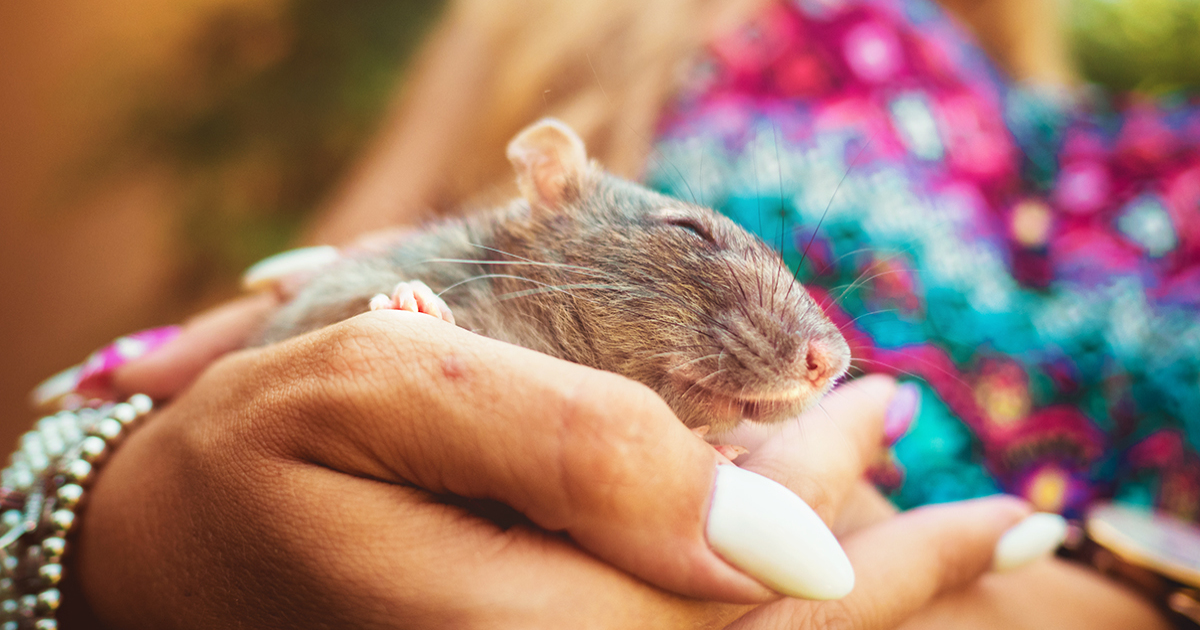
Then comes the softest expression: comfort. The body loosens. The eyes narrow. The animal begins to groom, nibble, or settle. In rodents, grooming can indicate normal behavior and relaxation when seen in the right context. A rat washing its face in the sun is not trying to be adorable, which is unfair, because it absolutely is.
Companionship
Some of the most moving images show animals close together. Rats and mice are often deeply social, and companionship can help reduce fear in new environments. Two rats pressed side by side under a leaf are not just “cute.” They are demonstrating that safety is sometimes a shared activity.
Why People Fall In Love With These Photos
Viewers respond strongly to rescued-lab-animal photography because it compresses a huge emotional arc into one frame. We do not need to know every detail of the animals’ past to understand the contrast: controlled lab space versus open air, anonymity versus portrait, utility versus individuality. The photo becomes a tiny redemption story with whiskers.
There is also an element of surprise. Many people do not expect rats and mice to look gentle, funny, or soulful. The images challenge that expectation. A rat can look thoughtful. A mouse can look astonished. A rescued animal can look like it has just discovered that the universe contains dandelions, and frankly, the universe should have led with that information.
Good rescue photography also helps adoption. People are more likely to care about animals they can emotionally recognize. A clear, warm portrait can transform “available rat” into “Marshmallow, professional blanket inspector, seeks forever home.” It gives the animal a face, and a face is often where compassion begins.
The Bigger Conversation: Science, Welfare, And Second Chances
Conversations about laboratory animals can become heated quickly. Some people focus on the role animal research has played in medicine. Others focus on the suffering and death of animals used in experiments. Many people live somewhere in the uneasy middle, wanting scientific progress while also wanting stronger welfare standards, alternatives to animal testing, and rehoming whenever possible.
What these photos offer is not a full policy solution. A rat in a flowerpot cannot rewrite legislation, although based on intelligence levels, give her a weekend and a snack budget. What the images can do is make the issue personal. They remind us that behind categories like “rodents,” “research animals,” or “surplus animals,” there are individuals capable of experiencing fear, comfort, curiosity, and social connection.
Rehoming is not possible for every laboratory animal. Some studies require endpoints that make adoption impossible. Some animals may have health conditions, genetic modifications, or behavioral needs that prevent safe placement. But when healthy animals can be retired, the question becomes less “Why bother?” and more “Why not try?” Rescue groups, veterinarians, researchers, and adopters can work together to make that transition responsible.
How To Support Ex-Lab Rats And Mice
If these photos make you want to help, start by learning before adopting. Rats and mice are wonderful animals, but they are not casual impulse pets. They need proper cages, safe bedding, species-appropriate diets, enrichment, companionship, and veterinary care. Rats especially benefit from daily interaction and mental stimulation. A bored rat is not just sad; it may become an interior decorator with destructive opinions.
You can support rescue organizations by donating supplies, sponsoring animals, volunteering, sharing adoptable profiles, or helping with transport and foster care. If you are connected to a university or research institution, you can ask whether it has an adoption or retirement policy for eligible animals. Public interest matters. When people show that former lab animals are valued, institutions have more reason to create humane pathways after research ends.
Even if you never adopt a rat or mouse, you can change the way you talk about them. Language matters. Calling animals “gross” or “disposable” reinforces the idea that some lives are less worthy of care. You do not have to invite a rat to your birthday party. You can simply recognize that the rat would probably enjoy the cake and deserves kindness anyway.
My Experience Behind The Lens
Photographing ex-lab rats and mice outdoors requires patience, humility, and the emotional resilience to accept that your subject may prefer the underside of a flowerpot to your carefully planned composition. You can prepare the softest natural light, choose the prettiest patch of clover, and imagine a perfect portrait. Then the mouse decides that the best artistic direction is “only my left ear shall be visible.” This is not failure. This is collaboration with a creature the size of a cookie.
The most important lesson is to move slowly. Small animals notice everything: the shadow of a hand, the click of a camera, the shift of a knee in the grass. A rushed photographer creates fear. A calm photographer creates space. I learned to let the animals set the rhythm. Sometimes that meant waiting ten minutes for one curious nose to appear. Sometimes it meant ending the session after two minutes because the animal had clearly had enough. The photograph is never more important than trust.
Another lesson is that expressions are not always dramatic. People expect a rescued animal’s first outdoor moment to look like a movie scene, complete with swelling music and a sunset behaving very professionally. But real wonder can be tiny. It can be a whisker twitch. It can be a rat closing her eyes in warm air. It can be a mouse stepping from fabric onto grass, then stepping back, then trying again. These gestures are small only if you are measuring with the wrong ruler.
I also learned that companionship changes everything. When two bonded rats explored together, their confidence seemed to grow. One would sniff forward, the other would follow, and suddenly the terrifying jungle of lawn became a shared expedition. They climbed over each other, groomed, paused, and pressed shoulder to shoulder. In those moments, the camera was not capturing “cute rodents.” It was capturing friendship in a very small format.
The funniest moments came from the animals’ complete lack of concern for human expectations. A rat offered a photogenic flower may ignore it and investigate the camera strap. A mouse placed near a charming rustic basket may decide the basket is beneath serious artistic consideration and walk directly toward a plain cardboard edge. Their honesty is refreshing. Animals do not care about your mood board. They care about safety, smell, snacks, and whether that leaf just moved suspiciously.
The emotional moments arrived quietly. There is a particular softness in seeing a former lab animal rest in the sun. Not perform. Not explore. Just rest. For animals whose earlier lives were defined by human purpose, rest can feel almost radical. A rescued rat washing her face outdoors looks ordinary at first. Then you remember that ordinary is the miracle. She gets to be ordinary now. She gets to be a rat, not a data point, not a tool, not a number. Just a living creature with sunlight on her back and grass under her feet.
That is why these images matter to me. They do not ask viewers to understand every scientific, ethical, or legal debate in one sitting. They simply ask viewers to look. To notice. To consider that a small animal’s first experience of the outdoors can hold fear, curiosity, and joy all at once. The expressions say it all because the story is written in their bodies: the world was once small, and now it is bigger.
Conclusion: A Small Face, A Big Reminder
Photographs of ex-lab rats and mice going outdoors for the first time are more than adorable animal portraits. They are reminders that compassion often begins when we stop seeing animals as categories and start seeing them as individuals. A rat in the sunlight, a mouse in the grass, a pair of companions huddled under a leafthese images invite us to rethink what second chances can look like.
Not every rescued animal will become an internet star, and not every lab animal can be rehomed. But every successful retirement matters. Every safe adoption, every sanctuary placement, every careful act of advocacy helps expand the idea that small lives are still lives. And if one tiny mouse can make a human pause, smile, and think more deeply about kindness, then that mouse has done something extraordinary. Not bad for someone who weighs less than a sandwich topping.