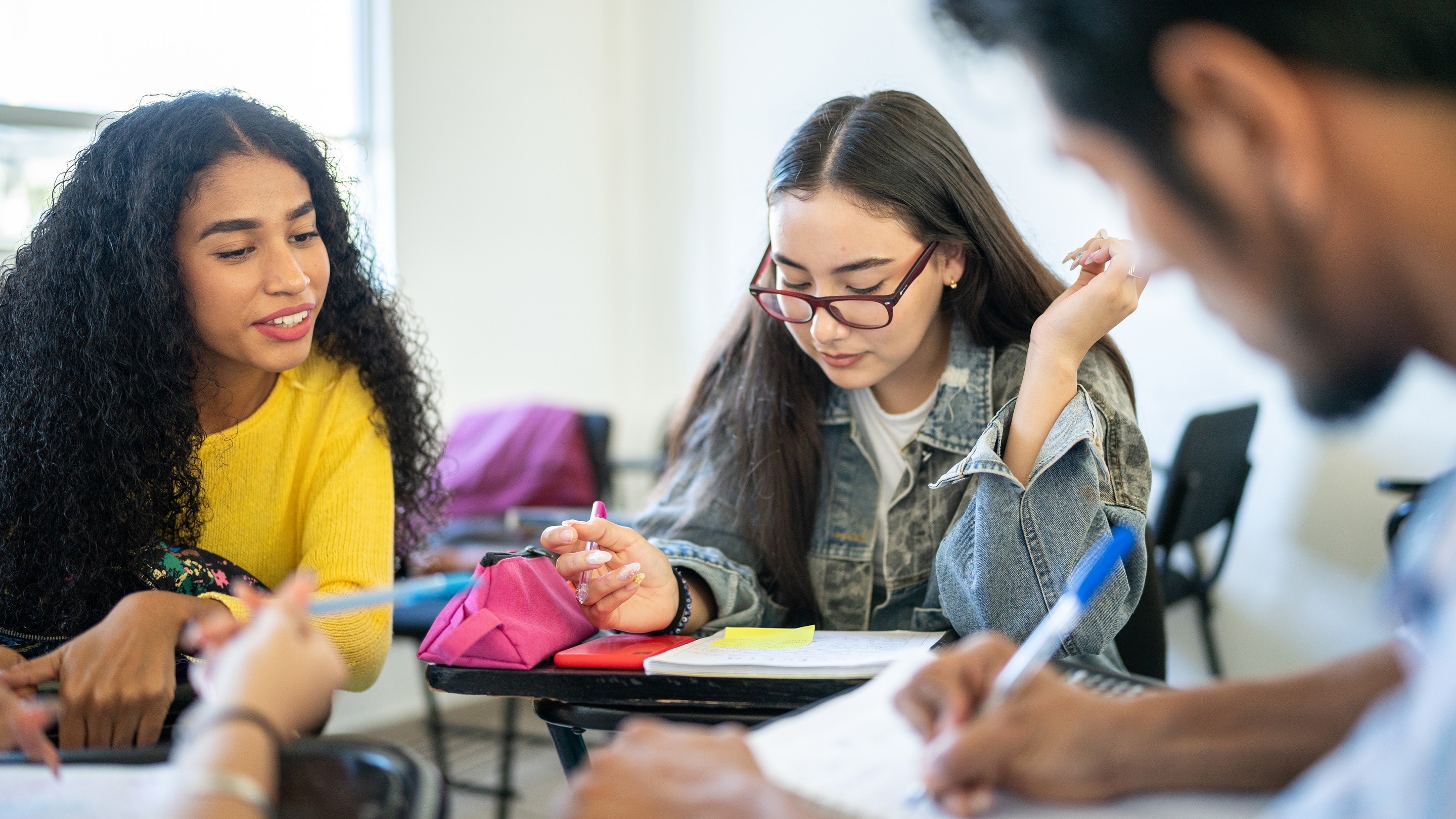
Multilingual students bring something special to school: more than one language, more than one cultural lens, and often more than one way to solve a problem. That is not a classroom complication. It is a classroom superpower. The challenge for schools is not deciding whether multilingual students are capable. They are. The real question is whether instruction helps them build the right skills at the right time, in ways that honor what they already know.
That is where smart skill building comes in. For multilingual students, success is not just about “learning English faster.” It is about developing academic language, reading stamina, writing confidence, discussion skills, study habits, and the kind of flexible thinking that helps students move between languages, subjects, and settings. In other words, it is less about fixing a “gap” and more about building a bridge. Preferably one that does not wobble like a science fair project held together with hope and tape.
Why Skill Building Matters for Multilingual Students
Multilingual students are often asked to do two demanding things at once: learn grade-level content and learn the language of instruction well enough to show what they know. That is a big assignment. A student may understand a math concept, for example, but still struggle to explain the reasoning in academic English. Another student may have powerful ideas during class discussion but need support organizing those ideas into an essay. When educators understand that language development and content learning happen together, instruction gets better fast.
Effective skill building for multilingual students focuses on access, not limitation. It gives learners the tools to participate in challenging tasks instead of steering them toward easier ones. It teaches the language of science, history, literature, and math explicitly. It builds routines that make reading, speaking, listening, and writing more predictable. Most importantly, it treats home languages, family knowledge, and prior experiences as assets instead of background noise.
The Core Skills Multilingual Students Need Most
1. Academic Language
Conversational language and academic language are not the same thing. A student may chat comfortably with friends and still need support with phrases like in contrast, the evidence suggests, or the author implies. Skill building should include direct instruction in vocabulary, sentence patterns, transition words, and the language functions students need to explain, compare, argue, summarize, and reflect.
This does not mean handing students a giant word list and hoping for magic. Academic language grows best when vocabulary is taught in context, revisited often, and tied to meaningful tasks. Students need to hear new language, read it, use it in speaking, and try it in writing. Repetition matters. So does purpose.
2. Reading Comprehension
Reading instruction for multilingual students works best when it combines language support with real comprehension work. Students benefit from previewing key vocabulary, activating background knowledge, using visuals, and discussing the text before and after reading. They also need practice with the kinds of thinking strong readers use: asking questions, identifying main ideas, making inferences, and tracking how ideas connect.
Texts should be challenging enough to promote growth but supported enough to prevent shutdown. That balance is everything. If reading feels impossible, students disengage. If it feels too easy, they do not build muscle. Great instruction lives in the middle, where rigor meets support.
3. Writing for Real Purposes
Writing can be especially intimidating for multilingual students because it asks them to generate ideas, organize them, and manage grammar and vocabulary all at once. Strong skill building breaks writing into teachable moves. Students can practice planning, drafting, revising, and editing with models, sentence frames, graphic organizers, and mentor texts. These supports are not crutches. They are training wheels. And yes, even Tour de France riders started somewhere.
Writing instruction should also be tied to authentic purposes. Students write better when they are explaining a science result, responding to a novel, making a claim in social studies, or telling a meaningful story. When writing becomes part of real learning, students see it as communication instead of punishment wearing a pencil.
4. Speaking and Listening
Multilingual students need frequent, structured chances to talk. Oral language builds confidence, strengthens vocabulary, and helps students rehearse ideas before writing them down. But “turn and talk” alone is not enough. Students do best when teachers provide clear prompts, discussion roles, sentence starters, and time to think.
Listening skills matter just as much. Students need practice following academic discussions, identifying key ideas, asking clarifying questions, and responding respectfully. In classrooms where discussion is routine and well scaffolded, multilingual students are more likely to participate instead of quietly disappearing into the furniture.
5. Executive Function and Learning Habits
Not all skill building is linguistic. Multilingual students also benefit from explicit support with planning, note-taking, task management, goal setting, and self-monitoring. A student might understand a lesson but still need help tracking assignments, using feedback, or preparing for a test. These “school navigation” skills often determine whether academic growth shows up consistently.
What Effective Skill Building Looks Like in Practice
Use Asset-Based Teaching
Start with what students can do. That mindset changes everything. When teachers recognize multilingualism as a strength, classroom interactions become more respectful and more effective. Students are more willing to take risks when they do not feel defined by what they are still learning.
Asset-based teaching also means making room for students’ full identities. Home language use, cultural references, prior schooling, family stories, and community knowledge can all become part of instruction. Students learn better when they see themselves in the classroom instead of feeling like visitors in it.
Teach Language and Content Together
Multilingual students should not have to wait until their English is “perfect” before tackling serious academic work. They need access now. That means combining content objectives with language objectives. In a science class, students might learn the water cycle while practicing how to describe sequence and cause. In history, they might analyze a source while learning how to cite evidence and compare perspectives.
When teachers plan for both content and language, students get a clearer path to success. They know what they are learning and how they are expected to communicate that learning.
Scaffold Without Lowering Expectations
There is a major difference between support and simplification. Effective teachers keep the intellectual demand of a lesson high while making it more accessible through visuals, models, bilingual resources, chunked directions, sentence frames, guided notes, and peer collaboration. The goal is not to remove challenge. The goal is to remove unnecessary barriers.
One useful rule of thumb is simple: make the task visible, not vague. Show students what a good response sounds like. Model how to start. Give examples. Let them practice. Then gradually release responsibility so they can do more independently over time.
Build Vocabulary on Purpose
Vocabulary instruction should go beyond definitions. Students need to understand word relationships, multiple meanings, word parts, and how vocabulary changes across subjects. The word table, for example, means one thing at lunch and something very different in a math book. English is generous like that.
Teachers can strengthen vocabulary learning by pre-teaching essential terms, revisiting them in new contexts, encouraging student-friendly explanations, and helping students notice cognates or language connections when relevant. Repeated exposure matters more than one heroic lesson.
Make Feedback Specific and Usable
Multilingual students grow faster when feedback is clear, focused, and immediate. Instead of circling every grammar issue like an editor on too much coffee, teachers can prioritize a few next steps. For example: strengthen your evidence, use two transition phrases, or revise verb tense in this paragraph. Small, targeted feedback is more actionable than overwhelming correction.
Peer feedback can help too, especially when students are taught how to respond thoughtfully. Structured checklists, models, and teacher guidance make feedback less random and more useful.
The Role of Families and Communities
Skill building does not begin and end at the classroom door. Multilingual families are powerful partners in student growth, even when they are not fluent in English. In fact, especially then. Families build literacy through conversation, storytelling, routines, encouragement, and home language development. Those experiences matter.
Schools support multilingual students better when they communicate clearly with families, provide translation or interpretation when needed, and create respectful two-way partnerships. Family engagement should not look like schools talking at parents. It should look like schools listening, sharing tools, and inviting families into the learning process.
Students benefit when their languages and cultures are visible in school spaces. Bilingual books, multilingual signage, community events, and culturally responsive assignments send a simple but powerful message: your background belongs here.
Supporting Newcomers and Recently Arrived Students
Some multilingual students are newcomers who are adjusting not only to a new language, but also to a new school system, new expectations, and sometimes a new country entirely. These students often need strong orientation, welcoming routines, and predictable classroom structures. Belonging is not a bonus feature. It is an academic support.
Newcomers thrive when schools help them understand schedules, expectations, grading, technology tools, and where to get help. Peer buddies, visual schedules, multilingual resources, and relationship-centered teaching go a long way. Students are more likely to engage in language practice when they feel safe, seen, and respected.
Common Mistakes to Avoid
One common mistake is assuming silence means lack of understanding. Sometimes silence means a student is processing, translating internally, or choosing words carefully. Another mistake is overcorrecting language in ways that discourage participation. Students need correction, yes, but they also need momentum. If every sentence becomes a grammar emergency, communication stops.
Schools also miss opportunities when they separate multilingual students from rigorous learning too often. Support services matter, but so does access to grade-level content, strong peers, rich discussion, and ambitious expectations. Skill building works best when students are challenged with care, not protected from growth.
How Schools Can Build Stronger Systems
For multilingual students to thrive, skill building cannot rely on one heroic teacher doing everything alone. Schools need shared practices. That includes professional development on scaffolding and academic language, coordination between content teachers and language specialists, consistent family communication, and assessment systems that look at student growth in thoughtful ways.
Schools should also celebrate multilingualism publicly. Biliteracy recognition, multilingual projects, student showcases, and pathway planning all tell students that their language development has long-term value. When students see multilingualism linked to opportunity, pride grows right alongside skill.
Experiences from Real Multilingual Learning Spaces
Across many classrooms in the United States, one pattern shows up again and again: multilingual students grow fastest when they are invited to participate before they feel “perfect.” In one common classroom scene, a student may hesitate during a discussion on a novel, whisper an idea to a partner, then use a sentence frame to share that same idea with the class. The answer may not be polished, but it is thoughtful, and that moment matters. It tells the student, “Your thinking counts right now.” Over time, those moments stack up. The student who once offered a six-word comment begins leading a discussion group, asking questions, and writing more confidently.
Teachers often notice the same thing during writing instruction. A multilingual student might begin the year staring at a blank page as if it personally caused all known stress. But when the teacher provides a model paragraph, highlights useful transition phrases, and lets the student brainstorm in a home language first, the page starts filling up. Not instantly. Not magically. But steadily. That is what real progress usually looks like: not fireworks, more like a series of lightbulbs turning on one by one.
Family engagement adds another layer to these experiences. Schools that make room for multilingual families often discover strengths they had been overlooking. A parent who feels uncertain in English may still be a powerful literacy coach in Spanish, Vietnamese, Arabic, or another home language. Families tell stories, discuss ideas, review assignments, and encourage persistence. When schools honor those contributions instead of measuring everything through English alone, students benefit academically and emotionally.
Newcomer experiences also reveal how important belonging is. Students who arrive midyear often remember small acts with surprising clarity: a classmate who walked them to lunch, a teacher who labeled materials with pictures, a bilingual staff member who explained the schedule, or a classroom library with books that reflected their world. Those details may seem ordinary to adults, but to a student entering an unfamiliar system, they can make school feel possible.
Another frequent experience is the confidence boost students gain when their multilingualism is treated as expertise. A student who helps classmates understand a concept in another language, explains a cultural reference, or notices a word connection between languages is no longer just “catching up.” That student is contributing. This shift from deficit to contribution changes motivation. Students begin to see language learning not as a private struggle, but as part of their identity and strength.
These experiences point to one clear lesson: skill building for multilingual students is most effective when it combines rigor, respect, and relationships. Students do not need watered-down work. They need meaningful instruction, clear scaffolds, patient feedback, and adults who believe their voices are worth hearing. When those conditions are in place, multilingual students do far more than keep up. They often become some of the most adaptable, insightful, and resilient learners in the room.
Conclusion
Skill building for multilingual students is not a side project. It is central to good teaching. The strongest classrooms do not ask students to leave their languages and identities at the door. They use those strengths as fuel for reading, writing, speaking, thinking, and belonging. When schools build academic language intentionally, scaffold with purpose, partner with families, and celebrate biliteracy, multilingual students are more than supported. They are positioned to excel.
And that is the real goal. Not survival. Not silent compliance. Not “good enough.” Real growth. Real opportunity. Real participation. Because when multilingual students are given the right tools, they do not just learn the language of school. They learn how to own it.