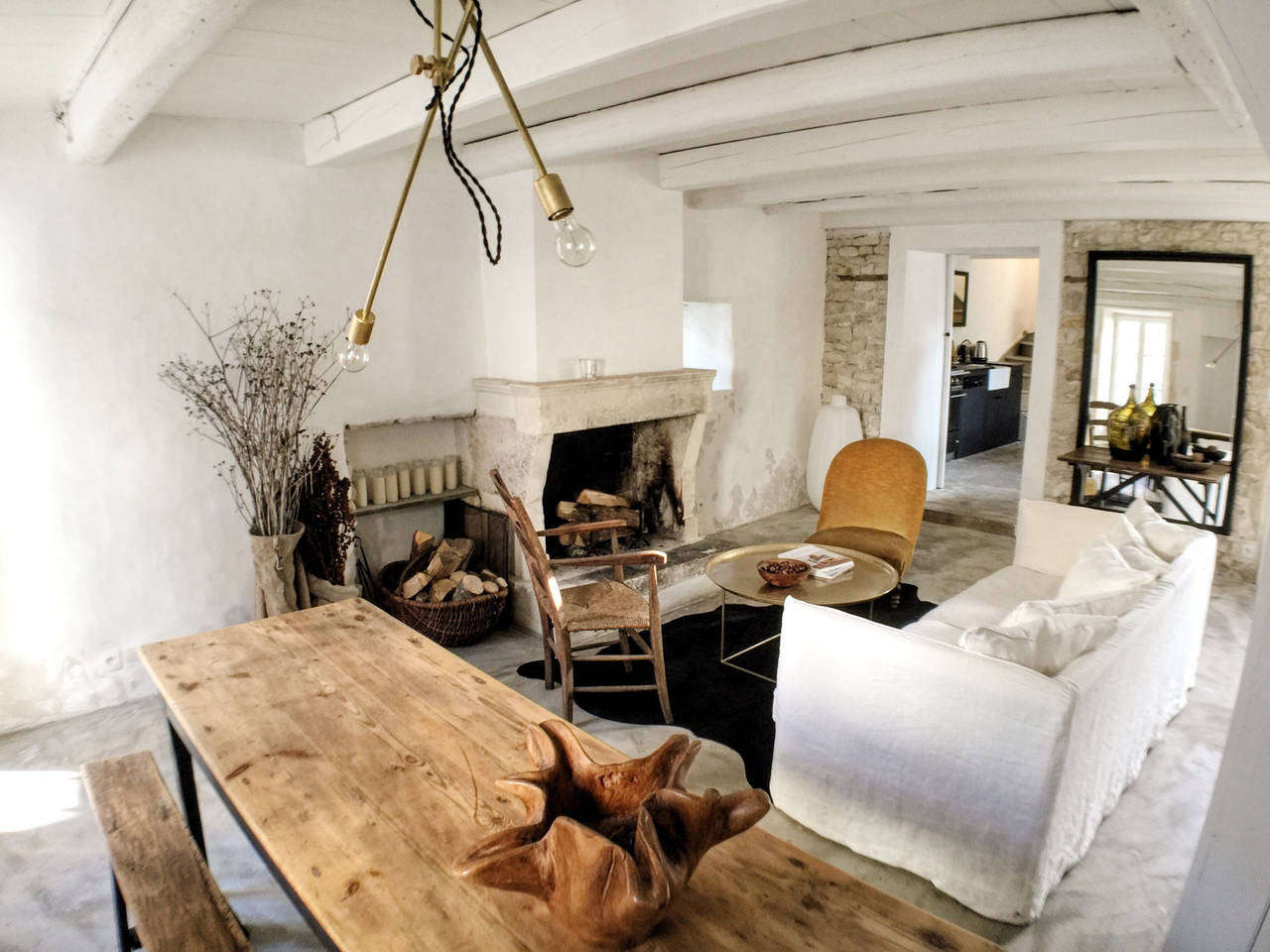
Some rooms announce that a decorator has arrived. Others quietly suggest that several generations of stylish people have been leaving excellent furniture behind. The living room at La Maison du Figuier belongs firmly in the second category.
Located in Saint-Clément-des-Baleines on France’s Île de Ré, this relaxed vacation home combines whitewashed architecture, an ancient fireplace, sculptural modern furniture, rustic wood, warm brass, and just enough imperfection to make everything feel genuine. Nothing matches too obediently. Nothing appears to have been ordered as a complete “French farmhouse collection” during a late-night shopping spree.
The result is a bright, soulful French living room that feels sophisticated without becoming precious. Here is how to recreate the La Maison du Figuier living room look in an American home, whether you have a centuries-old stone house or a suburban living room constructed sometime after the invention of drywall.
Why the La Maison du Figuier Living Room Works
The room’s appeal comes from contrast. Rough architectural surfaces meet streamlined furniture. A substantial old fireplace sits beside a delicate brass light fixture. A relaxed white sofa shares space with mismatched chairs, including warm wood and saffron-colored upholstery. A black rug grounds the pale room, while small metallic and earthy accents prevent the white palette from drifting into dental-office territory.
This is not heavily themed French country decor. There are no decorative roosters conducting a hostile takeover of the mantel. Instead, the room borrows the most useful elements of French country style: natural materials, antiques, weathered finishes, graceful shapes, practical furniture, and an appreciation for objects that improve with age.
A Room Designed Around the Fireplace
The ancient fireplace is the natural center of the space, so the seating is gathered around it rather than pushed against every available wall. This creates an intimate conversation area and makes the room feel purposeful.
To copy the arrangement, begin with the strongest architectural feature in your living room. It may be a fireplace, a large window, a bookcase, or a substantial work of art. Position the sofa so it relates directly to that feature, then bring chairs inward to complete the group. Leave enough space for comfortable movement, but avoid creating a giant empty zone between seats. Guests should be able to speak without requesting a microphone.
Step 1: Create a Soft White Architectural Background
White walls are essential to the La Maison du Figuier aesthetic, but the goal is not a harsh, blue-white box. The room’s aged surfaces, stone fireplace, pale floors, and wood details give the white depth and variation.
Remodelista originally suggested Benjamin Moore Super White as a comparable bright white. In another home, however, the best choice will depend on natural light, flooring, window direction, and existing finishes. A sun-filled south-facing room may tolerate a cleaner white, while a cooler north-facing space often benefits from a subtle warm undertone.
Test large paint samples on several walls and observe them in the morning, afternoon, and evening. White paint is famously dramatic for something that insists it has no color. One sample can look fresh at breakfast, gray by lunch, and vaguely lavender under an LED bulb at night.
Preserve Texture Instead of Chasing Perfection
If your walls have plaster, brick, stone, uneven masonry, or visible age, allow some of that character to remain. The French farmhouse living room look depends on surfaces that feel tactile rather than factory-finished.
In a newer home, you can introduce subtle texture through limewash-style paint, a restrained plaster finish, white-painted brick, natural oak trim, or handmade ceramic accessories. Avoid distressing every new object with sandpaper. Authentic character develops through materials and use; artificial “oldness” can quickly resemble furniture that lost an argument with a belt sander.
Step 2: Anchor the Room With a Relaxed White Sofa
The white linen sofa is the visual reset button in this living room. Its loose, casual silhouette softens the old architecture and makes the room feel welcoming rather than formal. The original inspiration resembles the Ghost sofa designed by Paola Navone for Gervasoni, known for its generous shape and removable cover.
You do not need the exact designer model to achieve the effect. Look for a deep sofa with simple arms, a low or moderately low back, feather-blend cushions, and a washable slipcover in white, ivory, oatmeal, or pale flax. Linen and linen-blend fabrics are especially suitable because their wrinkles look intentional. Polyester pretending to be perfectly pressed linen tends to miss the point.
Make a White Sofa Compatible With Real Life
A removable, machine-washable cover is the most practical option for families, pets, rental properties, or anyone who occasionally drinks coffee while horizontal. Performance fabric can also work, provided it has a soft, matte texture rather than a shiny synthetic finish.
Choose washable pillow covers and keep a fabric-care kit nearby. A white sofa does require maintenance, but it also offers flexibility: pillows, throws, wood tones, and accent chairs can change without forcing you to replace the largest object in the room.
Step 3: Mix Chairs Instead of Buying a Matching Set
The seating at La Maison du Figuier appears collected rather than coordinated. A rustic wooden armchair contributes age and texture, while a rounded saffron chair supplies warmth and a more contemporary silhouette. Remodelista identified the Hans Wegner CH37 armchair and the GUBI Beetle chair as references for recreating this combination.
The important lesson is not to purchase those exact chairs. It is to mix periods, shapes, and materials while maintaining a limited palette. Pair a vintage ladder-back or rush-seat chair with a modern upholstered accent chair. Combine dark wood with natural oak. Place a sculptural seat beside something humble and handmade.
For cohesion, repeat one quality between pieces. Two chairs might share warm brown tones, curved backs, visible craftsmanship, or similar seat heights. This creates harmony without producing the dreaded furniture-showroom effect, in which every item appears to have arrived on the same truck wearing the same outfit.
Use Saffron as a Controlled Accent
The muted yellow-orange chair adds life to the neutral room. Similar colors include ocher, tobacco, camel, mustard, cognac, and burnt honey. Use one of these tones on a chair, pillow, ceramic vessel, or throw.
Keep the accent slightly earthy rather than neon-bright. The objective is sun-warmed color that complements wood and brass, not a chair that can be seen from an aircraft.
Step 4: Ground the Pale Room With Black
A dark rug beneath the seating creates a strong visual base. In the original room, a black cowhide-style rug contrasts with the white sofa and pale floor while echoing the black frame of the oversized mirror.
For a similar effect, consider a responsibly sourced hide, a flat-weave wool rug, a washable low-pile rug, or a subtly irregular black-and-charcoal design. An organic shape will make the arrangement feel less rigid, but a rectangular rug works well if it is large enough to connect the seating.
At minimum, the front legs of the sofa and chairs should rest on the rug. A tiny rug floating beneath the coffee table makes the furniture look as though it is cautiously gathering around a bath mat.
Repeat Black in Small Doses
Use black two or three more times around the room: a mirror frame, fireplace tools, chair legs, a slim picture frame, or a metal lamp. Repetition makes the dark rug feel intentional and gives definition to an otherwise airy palette.
Step 5: Add a Low Brass or Bronze Coffee Table
The round metallic table at the center of the La Maison du Figuier living room behaves almost like jewelry. Its warm surface reflects light, introduces a refined material, and contrasts with the rough fireplace and natural wood.
Remodelista referenced the e15 Habibi tray table, but the broader idea is easy to adapt. Search for a low round table in aged brass, bronze, antiqued gold, or patinated metal. A removable tray top is useful, though not essential.
A round table is particularly effective in a mixed seating arrangement because it softens the angles of sofas, chairs, and rugs. It also reduces sharp corners in a compact circulation path, which is useful for both graceful movement and preserving shins.
Step 6: Introduce Rustic Wood With Restraint
A substantial reclaimed-wood table adds history and weight to the space. The inspiration room includes a long, rugged surface that works as both furniture and sculpture, with knots, cracks, and irregular grain contributing visual texture.
Use one large rustic piece rather than filling the room with distressed wood. A farmhouse table, console, bench, stool, or antique chest is enough. Pair it with cleaner furniture so that the room remains modern and breathable.
Multiple wood tones are welcome. Pale oak, dark-stained vintage wood, and weathered reclaimed boards can coexist when they are separated by neutral upholstery and repeated thoughtfully. Matching every wood finish is unnecessary and can flatten the room’s collected character.
Step 7: Choose Sculptural, Unfussy Lighting
The branching brass chandelier provides one of the room’s clearest contemporary notes. Its exposed bulbs and adjustable arms feel industrial, but the warm metal prevents it from becoming cold.
Look for a linear or branching fixture in natural brass, blackened brass, or dark bronze. Choose warm-white bulbs and consider clear glass only when glare will not be a problem. A dimmer is strongly recommended because a relaxing French living room should glow, not conduct an interrogation.
Layer the Evening Light
Do not rely entirely on the ceiling fixture. Add a compact table lamp, a wall sconce, or candlelight near the fireplace. Several small light sources create depth and make rough surfaces, linen, wood grain, and brass appear richer after sunset.
Step 8: Use an Oversized Black-Framed Mirror
A large leaning mirror expands the visual space and reflects architectural details. Its black frame creates a crisp boundary against the white walls and coordinates with the dark rug.
Choose a simple floor mirror rather than an excessively ornate reproduction. Leaning it casually can create the right relaxed effect, but it must be securely anchored, especially in homes with children or pets. French nonchalance is charming; falling glass is less so.
Position the mirror where it reflects a window, fireplace, garden view, or attractive piece of furniture. Avoid angles that provide every seated guest with an unexpected full-length portrait during dinner.
Step 9: Style With Useful, Imperfect Accessories
The room’s accessories are sparse but memorable: pillar candles, a textured white vessel, an olive-green organizer, dried branches, books, and fireplace supplies. These objects add life without hiding the architecture.
Build a Simple Accessory Formula
- One oversized vessel made from ceramic, paper pulp, plaster, or stone
- A loose arrangement of dried branches or garden clippings
- A group of unscented pillar candles in varied heights
- A shallow bowl for matches, keys, or small everyday objects
- Two or three books that people might actually open
- A basket or fabric bin for firewood, throws, or magazines
Leave visible breathing room around each group. The La Maison du Figuier living room feels calm because it is edited, not because it lacks personality. Every surface does not require a decorative committee meeting.
A Practical Shopping Plan for Recreating the Look
Begin with the room’s largest visual decisions and work toward the accessories. This order prevents you from buying seventeen charming candleholders before realizing that the sofa does not fit through the door.
- Paint and architecture: Select a tested white or warm off-white and preserve existing texture.
- Main seating: Choose a deep slipcovered sofa in linen or washable performance fabric.
- Contrasting chairs: Add one vintage wood chair and one upholstered chair in saffron, camel, or tobacco.
- Dark foundation: Use a black or charcoal rug large enough to connect the arrangement.
- Metallic center: Find a low round brass or bronze coffee table.
- Rustic element: Introduce one reclaimed-wood table, console, bench, or chest.
- Lighting and reflection: Install a sculptural brass fixture and add a large black-framed mirror.
- Finishing pieces: Layer candles, branches, books, baskets, and handmade vessels.
Spend more on upholstery, lighting safety, and durable furniture construction. Save money by sourcing vintage chairs, baskets, mirrors, vessels, and tables from estate sales, architectural salvage stores, flea markets, and local online marketplaces.
Common Mistakes That Can Spoil the French Living Room Look
Buying everything new: A room inspired by La Maison du Figuier needs variation in age. Even one genuinely old chair or table can supply more character than a dozen artificially distressed accessories.
Using only beige: Neutral does not mean colorless. Black, saffron, olive, brass, brown wood, and charcoal provide essential contrast.
Overdecorating the fireplace: Let the hearth remain visually strong. A modest row of candles, a simple vessel, or nothing at all may be more effective than an elaborate mantel display.
Ignoring comfort: Elegant furniture must still support actual sitting. Test seat depth, cushion firmness, arm height, and traffic flow before committing.
Creating a literal theme: French style emerges from proportion, materials, age, and restraint. It does not require an Eiffel Tower sculpture, a “Bonjour” pillow, or a baguette displayed under museum lighting.
Living With the Look: The La Maison du Figuier Experience at Home
Recreating this living room is not simply an exercise in assembling similar furniture. The most valuable lesson is experiential: the room encourages slower, more sociable living.
Imagine entering the space on a cool morning. Daylight catches the uneven white walls and makes the brass table glow softly. The linen sofa is not arranged like a showroom display; one cushion has shifted, a throw is folded imperfectly, and a book remains where someone left it. The fireplace carries visual weight even when no fire is burning. Nothing demands attention, yet every material rewards a closer look.
This atmosphere can be recreated through daily habits. Keep the coffee table mostly clear so it can hold drinks, books, or a shared plate of food. Place chairs at conversational angles instead of aiming everything toward a television. Store matches and firewood attractively but accessibly. Use the room rather than protecting it from use.
In the evening, turn off the brightest overhead lighting. Switch on one or two warm lamps and light a small group of candles in secure holders. The white walls will reflect the lower light, while the black rug and furniture frames create depth. Brass, wood, and linen become warmer and more tactile. Even a recently built room can begin to feel settled.
The mixed seating also changes how people occupy the space. Someone will choose the deep white sofa and stretch out. Another person will prefer the upright wooden armchair near the fire. The upholstered accent chair becomes the place for reading, conversation, or quietly guarding the last pastry. Different seats support different moods, making the living room feel adaptable rather than staged.
Seasonal changes should remain simple. In spring, place budding branches in a rough white vessel. During summer, remove heavy throws and let the white upholstery and pale walls reflect the long daylight. In fall, add an ocher wool blanket or a small olive-green cushion. In winter, bring in firewood, beeswax-colored candles, and a darker textile. The foundation remains stable while a few natural elements mark the passing year.
The same philosophy applies to collecting. Do not attempt to finish the room in one weekend. Begin with the sofa and rug, then wait for the right chair, mirror, or wood table to appear. A living room becomes convincing when its objects carry different stories: a new sofa chosen for comfort, a vintage chair found during a road trip, a ceramic vessel made by a local artist, and a brass table discovered after several months of searching.
Small imperfections should be allowed to remain. Linen will crease. Brass may develop a patina. Wood will acquire another mark. These changes are not design emergencies; they are evidence that the room is participating in family life. The La Maison du Figuier look succeeds because it treats age as an asset rather than a defect.
Ultimately, the experience is one of relaxed refinement. The room feels considered, but it does not feel supervised. It can host morning coffee, an afternoon nap, a lively conversation, or a quiet evening by the fire without requiring a furniture rearrangement or a warning not to touch anything.
That may be the most French quality of all: beauty is present, but it is expected to coexist with food, friends, books, muddy shoes, shifting sunlight, and ordinary life.
Conclusion
The La Maison du Figuier living room offers a persuasive alternative to overdesigned interiors. Its white architectural shell creates light and calm, while aged wood, black accents, brass, linen, and mismatched seating contribute warmth and personality.
To steal this look successfully, focus on the relationships between objects rather than exact product matches. Combine rustic and refined materials, organize seating around a meaningful focal point, introduce one earthy accent color, and resist the urge to fill every empty surface. The final room should feel collected slowly, used daily, and comfortable enough that nobody worries about disturbing the styling.
Note: Product availability, finishes, and specifications may change. Secure leaning mirrors properly, use candles with appropriate fire precautions, and consult qualified professionals before modifying a working fireplace or electrical fixture.