Note: This article is based on a synthesis of current survey reporting, youth media research, child development guidance, bullying data, public health advisories, and Memphis demographic context from reputable U.S.-based sources including Solitaired, Pew Research Center, the U.S. Surgeon General/HHS, the American Academy of Pediatrics, the American Psychological Association, CDC, NCES, StopBullying.gov, Common Sense Media, the U.S. Census Bureau, and University of Memphis research.
Memphis has many famous claims to fame: blues, barbecue, Beale Street, Elvis, FedEx, and enough musical swagger to make a guitar tune itself out of respect. But according to a 2024 survey by Solitaired, the city also picked up a much less frame-worthy title: home to America’s rudest kids. Ouch. That is not exactly something you print on a tourism brochure between “best ribs” and “birthplace of rock ‘n’ roll.”
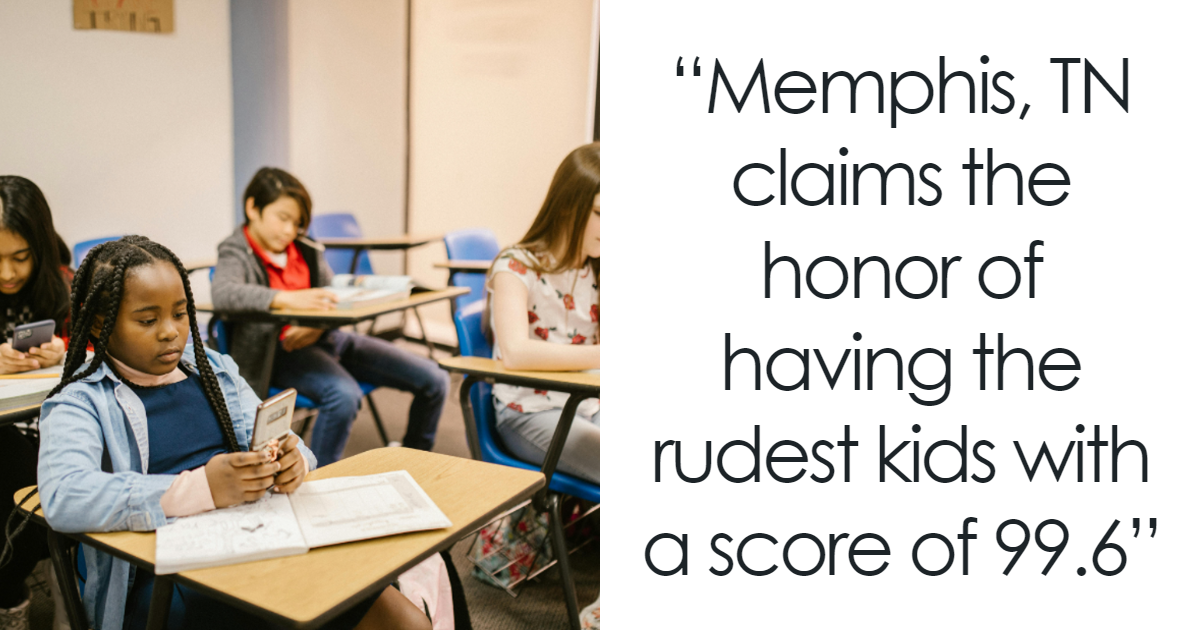
The survey ranked U.S. cities by how often residents reported rude behaviors among children and teens. Memphis landed at the top with a rudeness score of 99.6 out of 100, ahead of Philadelphia and Baltimore. The behaviors most often mentioned were not shocking to anyone who has spent five minutes in a mall food court: kids glued to phones, cursing in public, blasting videos or music, ignoring basic courtesy, and acting like “please” and “thank you” are subscription-only features.
Before anyone starts side-eyeing every Memphis teenager at a bus stop, let’s be clear: this does not mean every child in Memphis is rude. Surveys measure perception, not destiny. A city ranking is not a scientific stamp on a child’s character. Still, the findings raise an interesting question: why do so many adults feel that kids’ manners are slipping, and why did Memphis stand out so sharply?
What The Survey Actually Says
The Solitaired survey asked Americans in major cities about rude behaviors they had witnessed from children. In the 2024 results, Memphis ranked first, Philadelphia second, and Baltimore third. The survey also reported that nearly three in four Americans blame social media for kids being ruder, while 72% believe children are ruder now than in the past.
The top complaints were familiar: children absorbed in phones, swearing, playing loud videos in public, failing to say polite phrases, and showing little awareness of people around them. In other words, the problem is less “kids are plotting the collapse of civilization” and more “kids are behaving like tiny adults who discovered unlimited Wi-Fi before they discovered indoor voices.”
The most important takeaway is that this is a perception survey. It captures what adults notice and remember. And adults tend to remember the loudest kid in the restaurant, not the twelve quiet ones eating fries and minding their business. One child watching a video at full volume can become the unofficial ambassador for an entire generation. Fair? Not really. Memorable? Absolutely.
Why Memphis May Have Ranked So High
1. Public Spaces Make Bad Manners Easier To Notice
Rudeness becomes more visible in busy places. Memphis is a city of schools, neighborhoods, tourist corridors, restaurants, public transit stops, shopping centers, parks, and community events. When more people share space, small behaviors feel bigger. A teen cursing loudly on a sidewalk may not be more rude than a teen doing the same thing in a smaller town, but more people witness it.
This matters because “rude kids” is often a public-space complaint. Adults are less likely to complain about a child being moody at home. They complain when that mood arrives at Target wearing earbuds, chewing gum, and blocking the aisle like a human traffic cone.
2. Phone Culture Has Changed Childhood Manners
The survey’s most common complaintkids absorbed in phonesfits a national pattern. Pew Research Center has found that most U.S. teens use social media and smartphones, with many reporting that they are online almost constantly. Common Sense Media has also documented high levels of entertainment screen use among tweens and teens.
Phones do not automatically make children rude. A phone can help a kid learn guitar, text a parent, practice Spanish, or watch a science video about why cats are secretly liquid. But phones also compete with face-to-face attention. When a child is scrolling, gaming, or filming a video in public, the people nearby can start to feel invisible. That is where manners begin to wobble.
Old-school politeness requires noticing other people. Digital life often rewards ignoring the room. A kid may not intend to be rude when they walk through a doorway without looking up or play a video out loud in a waiting room. They may simply be living inside a screen bubble. Unfortunately, everyone outside the bubble still has ears.
3. Social Media Rewards Big Reactions
The U.S. Surgeon General has warned that social media can affect youth mental health and that platforms can expose children to risky patterns of comparison, attention-seeking, and emotional overload. The American Psychological Association has similarly advised that social media is not automatically good or bad, but children need guidance, limits, and adult involvement.
Online, the loudest reaction often wins. Snark gets likes. Shock gets shares. Drama gets attention. Kids who spend hours watching exaggerated online behavior may begin to copy some of it offline. That does not mean TikTok personally walked into Memphis and stole everyone’s manners. But it does mean children are growing up in a social environment where being bold, rude, sarcastic, or outrageous can look profitable.
When that energy enters real life, it can sound like backtalk, public swearing, loud videos, teasing, or a general “main character” attitude. The problem is not that kids are uniquely terrible. The problem is that many children are practicing social behavior in digital spaces before they have mastered the real-world basics of empathy, timing, volume, and not making strangers listen to their favorite meme audio.
4. Stress Can Show Up As Attitude
Memphis also faces real social and economic pressure. U.S. Census data and local research have consistently shown that poverty rates in Memphis are higher than national averages, with child poverty a serious concern. Economic stress does not cause rudeness in a simple one-to-one way, and it would be unfair to suggest that low-income children have worse manners. Many families facing hardship raise deeply respectful, resilient kids.
However, stress affects behavior. Children dealing with instability, crowded homes, tired caregivers, neighborhood safety concerns, food insecurity, or school disruption may have fewer emotional resources for patience and politeness. When a child is overwhelmed, “excuse me” may not be the first tool they reach for. Sometimes the tool is sarcasm. Sometimes it is silence. Sometimes it is blasting music because headphones vanished into the mysterious laundry dimension.
This is why the Memphis ranking should not become a punchline at the city’s expense. It should be a conversation starter. If adults notice more rude behavior, the useful question is not “What is wrong with kids?” It is “What support, structure, and modeling are kids missing?”
The Behaviors Adults Find Most Annoying
Phone Zombies
The phrase is funny because it is painfully accurate. A phone zombie is the child walking through public space without eye contact, awareness, or any sign that gravity and other humans still exist. This behavior frustrates adults because it feels dismissive. It says, without words, “The glowing rectangle is more important than you.”
Cursing In Public
Swearing has become more common in music, streaming content, gaming chats, and social media clips. Many kids hear adult language constantly, then repeat it without understanding context. A curse word among friends may feel casual to them, but in a grocery store line next to a grandmother buying peaches, it lands differently.
Loud Music And Videos
This may be the great etiquette crisis of modern America. Few things unite strangers faster than a child playing a video at full volume in a quiet room. Nobody came to the dentist for surround-sound slime tutorials. Headphones exist. Society begs children to discover them.
Forgetting “Please” And “Thank You”
Basic courtesy still matters because it signals respect. Children do not need to speak like tiny diplomats, but simple phrases help smooth daily life. When kids skip them, adults often interpret it as entitlement, even when the real issue may be habit, distraction, shyness, or lack of consistent reminders.
Are Kids Really Ruder Now?
Every generation thinks the next generation is getting worse. Ancient adults probably complained that young people were carving disrespectful symbols into clay tablets. So yes, some of today’s panic is tradition wearing new shoes.
Still, today’s children are growing up under conditions previous generations did not face. They carry pocket-sized entertainment machines. They experience social comparison at high speed. They learn jokes, slang, arguments, and attitudes from strangers online. They also lived through pandemic-era disruptions that affected school routines, social development, family stress, and mental health.
CDC youth data has shown concerns around bullying, school safety, and adolescent mental health. NCES and StopBullying.gov have also reported that a notable share of students experience bullying at school. These broader trends do not equal “rudeness,” but they do point to a more complicated social environment for kids. When young people are anxious, disconnected, overstimulated, or under-supervised, manners can become collateral damage.
Why Parents Get Blamed First
When a child acts rude in public, adults often look around for the parent like a courtroom judge searching for the defendant. Sometimes that blame is fair. Children need boundaries, correction, and examples. If adults laugh when a child insults a server, ignore constant interruptions, or treat public spaces like private living rooms, kids learn fast.
But parenting today is also harder than it looks from across the restaurant. Many caregivers are juggling work, bills, school communication apps, transportation issues, safety worries, and the emotional gymnastics of raising kids in a culture that changes faster than a teenager’s mood when asked to unload the dishwasher.
The better approach is not parent-shaming. It is parent-supporting. Kids need adults who model respect, set device rules, teach emotional regulation, and correct rude behavior without turning every mistake into a family courtroom drama.
What Memphis Can Teach The Rest Of America
Memphis may have topped the survey, but the issues are national. Cities everywhere are wrestling with digital distraction, public incivility, youth stress, and weakened community norms. Memphis is simply the city that wore the crown in this particular survey, whether it wanted the crown or would prefer to return it with a receipt.
The city also has strengths that matter: strong cultural identity, deep community networks, faith communities, youth programs, sports culture, arts education, and a history of resilience. Those are not small things. Manners are not taught only at the dinner table. They are taught in classrooms, churches, basketball gyms, libraries, barbershops, music programs, neighborhood events, and every place where adults show kids how to treat people.
If Memphis wants to shake the “rudest kids” label, the answer is not scolding children harder. The answer is rebuilding habits of attention: look up, speak kindly, lower the volume, notice the person beside you, apologize when you mess up, and understand that public space belongs to everyone.
Practical Ways To Raise More Courteous Kids
Create Phone-Free Moments
Families do not need to declare war on technology. They can start with simple rules: no phones at dinner, no loud videos in public, no scrolling during conversations, and no devices in bedrooms overnight when possible. The goal is not perfection. The goal is teaching kids that people deserve attention.
Practice Public Manners Before Public Outings
Children do better when expectations are clear. Before entering a restaurant, store, bus, or waiting room, adults can quickly review the basics: indoor voice, stay nearby, say please and thank you, ask before touching things, and use headphones. It sounds simple because it is. Simple does not mean automatic.
Correct Calmly And Quickly
A child who behaves rudely needs correction, but humiliation rarely teaches grace. A calm, immediate reminder works better: “Lower your voice,” “Say thank you,” or “Pause the video until we get home.” Long lectures in public usually make everyone miserable, including the innocent bystander just trying to buy cereal.
Model The Behavior You Want
Children notice how adults treat cashiers, servers, teachers, drivers, relatives, and strangers. If adults snap, interrupt, scroll through conversations, or blast speakerphone calls in public, kids learn that courtesy is optional. The most powerful manners lesson is still watching grown-ups behave like grown-ups.
Personal Experiences And Everyday Observations
Spend enough time in public places and you start to see why the survey hit a nerve. You might be waiting in line at a fast-casual restaurant when a group of teens walks in, laughing loudly, half-talking to each other and half-talking to their phones. One of them plays a video out loud. Another drops a wrapper and does not pick it up. Someone behind the counter asks for an order, and the answer comes without eye contact. Is it the end of civilization? No. Is it annoying enough to make an adult mentally draft a 600-word Facebook post? Absolutely.
But the more interesting moments happen when someone intervenes well. A parent says, “Try that again with respect,” and the child repeats the request politely. A coach tells players to thank the bus driver, and they do. A teacher greets students at the door every morning until they learn to greet back. A grandmother gives one look across the table, and suddenly posture improves, language becomes cleaner, and the phone disappears like it owes money.
These little experiences show that manners are not dead. They are undertrained. Many children are not trying to be rude; they are moving too fast, copying what they see, testing limits, or missing cues. A teen who seems disrespectful may be anxious. A child who forgets “thank you” may simply not hear it enough. A kid blasting a video may not realize that public sound is shared space. Of course, some kids are genuinely being little chaos goblins. Let us not pretend otherwise. But even chaos goblins can learn.
In Memphis, the label of “rudest kids” may sting because the city has such a strong tradition of soul, hospitality, music, and community pride. Nobody wants their hometown reduced to a survey score. Yet the ranking can be useful if it pushes families, schools, and neighborhoods to talk honestly about behavior without turning kids into villains. The best response is not defensiveness. It is action.
Imagine a Memphis where adults make courtesy visible again: students thanking cafeteria workers, teens using headphones on buses, kids holding doors at community centers, parents putting away their own phones during conversations, and schools treating social skills as seriously as test scores. That version of Memphis is not fantasy. It is built through repetition. Manners are muscle memory. Use them often enough, and they become natural.
The truth is that every city has rude kids, polite kids, distracted kids, hilarious kids, overwhelmed kids, and kids who can somehow turn a simple trip to the store into a live-action stress test. Memphis just happened to top this survey. What matters now is whether adults use the ranking as a cheap joke or as a reminder that children learn public life from the public around them.
Conclusion
So, does Memphis really have America’s rudest kids? According to the 2024 Solitaired survey, yes, at least by reported behaviors and resident perceptions. But the bigger story is not about shaming one city. It is about how childhood has changed in a phone-heavy, stress-heavy, attention-hungry culture.
Kids are not born knowing how to behave in public. They learn from adults, screens, peers, schools, neighborhoods, and consequences. If children are louder, more distracted, or less courteous than adults expect, the solution is not just complaint. It is coaching. Memphis may have taken the lead in the survey, but every city has work to do. And the first lesson is beautifully simple: look up, lower the volume, say thank you, and remember that the world is not your personal group chat.