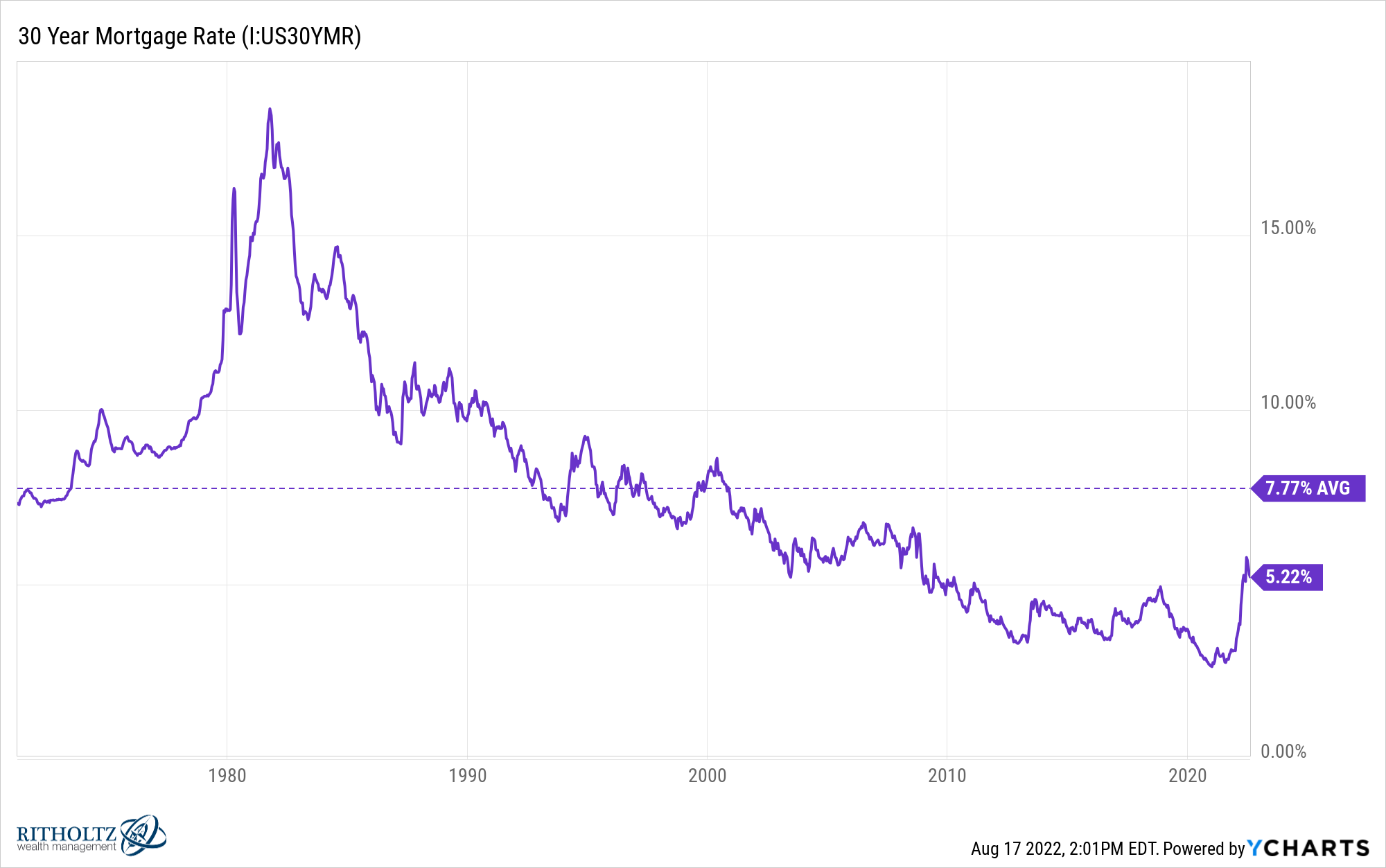
There is a special kind of modern homeowner math that can make a spreadsheet sweat: “Should I give up my 3% mortgage rate to buy a new house at today’s rate?” It sounds like a simple question until you realize it is really asking about money, lifestyle, family needs, career changes, future rates, home equity, transaction costs, taxes, and whether your current kitchen has personally offended you for the last seven years.
For many U.S. homeowners, a low mortgage rate feels like a golden handcuff. It is valuable, comfortable, and slightly annoying when life changes. Maybe your family has outgrown the house. Maybe you need a home office that is not also a laundry room. Maybe the school district, commute, stairs, neighborhood, or weather no longer fits. The question is not simply whether a new house costs more. The better question is whether the benefits of moving are worth the full financial trade-off.
This guide breaks down the real cost and benefit of giving up a low mortgage rate for a new house, with practical examples and a clear decision framework.
Why Low Mortgage Rates Feel So Hard to Leave
Millions of homeowners refinanced or purchased homes when mortgage rates were historically low. A 30-year fixed mortgage in the 2% to 3% range is not just a nice memory; it is a financial asset. You cannot sell it separately, frame it, or bring it to dinner parties, but it reduces your monthly payment every single month.
When current mortgage rates sit around the mid-6% range, the gap between an old loan and a new loan becomes painful. This is the mortgage rate lock-in effect: homeowners stay put because moving would mean replacing a cheap loan with a more expensive one. The result is a housing market where many people want to move, but fewer are willing to list their homes.
The Simple Math: What Happens to Your Payment?
Let’s use a simple example. Suppose you currently owe $300,000 on a 30-year mortgage at 3%. Your principal and interest payment is roughly $1,265 per month. If you borrowed the same $300,000 at 6.5%, the payment would be about $1,896 per month. That is an increase of more than $630 per month without buying one extra square foot.
Now imagine you are moving up. Instead of borrowing $300,000, you need a $450,000 mortgage at 6.5%. Your principal and interest payment would be around $2,844 per month. Compared with the old $1,265 payment, that is roughly $1,579 more each month. Over one year, that is nearly $19,000 in additional payment pressure. Over five years, it is close to $95,000 before considering taxes, insurance, maintenance, and moving costs.
The Cost Side of Giving Up a Low Mortgage Rate
1. A Higher Monthly Mortgage Payment
The most obvious cost is the new monthly payment. Higher rates reduce affordability because more of each payment goes toward interest instead of principal. Even if your income has grown, the new payment may feel surprisingly heavy once property taxes, homeowners insurance, HOA dues, utilities, and repairs join the party like uninvited cousins.
2. Selling Costs
Selling a home is not free. Common costs may include agent commissions, repairs, staging, photography, transfer taxes, seller concessions, and moving expenses. Depending on your market and agreement with agents, selling costs can take a meaningful bite out of your equity.
3. Buying Costs
Buying the next home also comes with closing costs. These may include lender fees, appraisal fees, title insurance, prepaid taxes, prepaid insurance, escrow deposits, and other settlement charges. Many buyers should expect closing costs to land somewhere around a few percent of the loan amount, though the exact number depends on the state, lender, loan type, and property.
4. Higher Property Taxes and Insurance
If the new home is more expensive, property taxes may rise. Homeowners insurance may also cost more, especially in areas exposed to storms, wildfires, flooding, or rapidly rising replacement costs. A bigger house can also mean higher utility bills. That dreamy extra bedroom may come with a utility bill that says, “Congratulations, I live here too.”
5. Opportunity Cost
Money used for a larger down payment, closing costs, or higher monthly payments cannot be used elsewhere. It might otherwise go toward retirement savings, college savings, emergency reserves, business investment, travel, or paying down other debt. A move that looks affordable on paper can still reduce flexibility.
6. The Risk of Buying More House Than You Need
Some homeowners justify moving by saying, “We will grow into it.” That can be true. It can also be expensive optimism wearing granite countertops. A larger home means more rooms to furnish, more roof to replace, more lawn to maintain, and more things that can make mysterious noises at 2 a.m.
The Benefit Side of Moving Anyway
1. Better Fit for Your Life
A mortgage rate is important, but it is not the only thing that matters. A home is where life happens. If your current house no longer fits your family, health, job, school needs, or daily routines, staying only for the low rate may create a hidden lifestyle cost.
A better layout, shorter commute, safer neighborhood, stronger school district, or accessible one-level design may be worth paying more. Money is a tool. Sometimes the point of the tool is to improve your life, not simply to win a contest called “Lowest Interest Rate in the Neighborhood.”
2. More Space or Better Space
There is a difference between more square footage and better square footage. A well-designed smaller home may function better than a larger awkward one. If moving gives you a practical home office, a real guest room, a safer yard, or enough bedrooms for your family, the benefit can be substantial.
3. Career and Income Opportunities
Moving may unlock higher income, better job stability, or business opportunities. If a relocation increases household income enough to offset the higher mortgage payment, the math changes. A higher rate may be acceptable if the new location improves long-term earning power.
4. Lower Maintenance or Newer Construction
An older home with a low mortgage rate can still be expensive if the roof, HVAC system, plumbing, windows, and driveway are all quietly forming a rebellion. A newer home may have a higher payment but lower near-term maintenance. That does not make the new house automatically cheaper, but it should be part of the comparison.
5. The Ability to Use Built-Up Equity
Many homeowners have significant equity because home prices rose sharply after 2020. Selling may allow you to make a larger down payment, reduce the new loan size, eliminate private mortgage insurance, or buy a home that better suits your long-term goals.
A Practical Break-Even Framework
Before giving up a low mortgage rate, compare the “stay” scenario against the “move” scenario. The goal is not to predict the future perfectly. The goal is to avoid making a six-figure decision based on vibes and a very attractive kitchen island.
Step 1: Calculate Your Current All-In Monthly Cost
Add your current principal and interest, property taxes, homeowners insurance, HOA dues, utilities, and average maintenance. This is your true monthly cost of staying.
Step 2: Calculate the New All-In Monthly Cost
Estimate the new mortgage payment, taxes, insurance, HOA dues, utilities, commuting costs, and maintenance. Do not forget that a bigger house often creates bigger “small” costs.
Step 3: Estimate One-Time Costs
Include selling costs, buying closing costs, moving expenses, repairs, temporary housing, furniture, appliances, and cash reserves after closing. A move can feel affordable until the new home needs blinds, a lawn mower, a washer, a dining table, and suddenly your credit card is breathing heavily.
Step 4: Put a Value on the Benefits
Some benefits are financial, such as a shorter commute, better job access, or lower maintenance. Others are personal, such as less stress, better schools, more privacy, or aging-friendly design. Write them down. A benefit that is not easy to price may still be real.
Step 5: Decide Your Time Horizon
If you expect to move again in two years, transaction costs matter a lot. If the next home could work for 10 to 15 years, the higher payment may be easier to justify because you spread the cost over a longer period and gain years of lifestyle benefit.
When Giving Up a Low Mortgage Rate May Make Sense
Moving can make sense when the current home creates daily friction that money cannot easily fix. Examples include a growing family, a medical need for fewer stairs, a major job relocation, a divorce, marriage, a better school situation, or a safety concern. In these cases, waiting for perfect rates may not be realistic.
It may also make sense if your income has risen, your debt is low, you have strong emergency savings, and the new payment still fits comfortably within your budget. A higher rate is not automatically dangerous. It becomes dangerous when it leaves no room for surprises.
When Staying Put May Be the Smarter Choice
Staying may be wise if the move is mostly emotional, the new payment would stretch your budget, or your current home can be improved for less money. Renovations are not always cheap, but adding storage, finishing a basement, converting a room, or improving outdoor space may solve the real problem without sacrificing a low mortgage rate.
Staying also makes sense if you would need to drain emergency savings to buy the new house. A beautiful home with no cash cushion can quickly become stressful. The furnace never checks your bank balance before breaking.
Should You Rent Out the Old Home Instead?
Some homeowners consider keeping the low-rate house as a rental and buying another home. This can work, but it is not passive magic. You need to qualify for the new loan, handle landlord responsibilities, budget for vacancies and repairs, understand local rental rules, and prepare for tax complexity.
If the old home has a very low payment and strong rental demand, it could become a valuable long-term asset. But if the rent barely covers costs or the property needs major repairs, keeping it may add risk instead of wealth.
What About Refinancing Later?
Many buyers tell themselves, “I will buy now and refinance when rates drop.” That may happen, but it is not guaranteed. Refinancing also comes with costs, and rates may not fall enough to make it worthwhile. A safer rule is this: buy only if you can afford the payment you are signing up for today. Treat future refinancing as a bonus, not the foundation of the plan.
Tax Considerations When Selling
If you sell your primary residence for a gain, you may qualify to exclude up to $250,000 of capital gain from income if you file as single, or up to $500,000 if married filing jointly, assuming you meet the ownership and use rules. However, tax rules can get complicated if the home was rented, used for business, sold after a previous exclusion, or sold for a very large gain. A tax professional can help you avoid surprises.
A Realistic Example
Imagine a couple bought a home in 2020 with a $300,000 mortgage at 3%. Their payment is comfortable, but they now have two children and both work partly from home. The house has three bedrooms, no office, a tiny yard, and a commute that has become unpleasant.
They find a larger home closer to work and school. The new mortgage would be $450,000 at 6.5%. The payment increase is roughly $1,579 per month before taxes and insurance differences. That sounds painful, because it is. But the move saves commuting time, gives each parent workable office space, improves school access, and may reduce stress every weekday.
The right decision depends on their income stability, savings, long-term plans, and how much the current house limits their life. If the new payment still allows retirement savings, emergency savings, and normal living, moving may be reasonable. If the new payment forces them to stop saving and pray that nothing breaks, the low mortgage rate may be worth protecting.
Experiences and Lessons From Homeowners Facing the Low-Rate Dilemma
One common experience among homeowners is the feeling of being both lucky and stuck. They know their low mortgage rate is valuable, but they also know their home is not frozen in time. Babies arrive. Teenagers need space. Parents age. Jobs move. Knees start filing complaints about stairs. A house that once felt perfect can slowly become a bad fit, even while the mortgage remains excellent.
Many homeowners start by comparing monthly payments and immediately feel discouraged. That is understandable. The difference between a 3% loan and a 6.5% loan can be shocking. But people who make thoughtful decisions usually go one level deeper. They ask, “What problem are we trying to solve?” If the problem is cosmetic boredom, staying and renovating may be smarter. If the problem is a serious mismatch between the home and daily life, moving deserves a fair analysis.
Another lesson is that people often underestimate the cost of staying. A low payment is powerful, but it does not erase maintenance, commute time, stress, or missed opportunities. For example, a family may save $1,000 per month by staying, but spend two extra hours per day commuting, struggle with no private workspace, and delay a career move. The low rate is still valuable, but it is not the whole story.
At the same time, homeowners also underestimate the emotional pressure of a higher payment. A new house can feel exciting during the tour and terrifying after the first full utility bill. The best movers are not the people who ignore the higher payment; they are the people who stress-test it. They ask what happens if income drops, insurance rises, property taxes increase, or the new roof needs attention sooner than expected.
A useful experience-based rule is to live with the new payment before you move. If your future housing cost would be $1,500 more per month, automatically transfer that amount into savings for three to six months. If it feels manageable, you gain confidence and build cash. If it feels awful, the experiment saved you from learning the lesson with a moving truck in the driveway.
Homeowners who successfully give up low rates often have a strong reason, not just a mild preference. They move for family, health, work, schools, safety, or a home they can stay in for many years. They also keep enough cash after closing. The ones who regret moving often stretch too far for a house that is nicer but not meaningfully better for their lives.
The real experience is this: the low mortgage rate deserves respect, not worship. It is a financial advantage, but it should not be the only vote in the room. A home should support your life. If it does, keeping the low rate may be brilliant. If it does not, paying more may still be the right moveprovided the numbers are honest, the budget has breathing room, and the new house solves problems that truly matter.
Conclusion
Giving up a low mortgage rate for a new house is one of the biggest financial trade-offs many homeowners face. The cost is real: higher monthly payments, closing costs, moving expenses, taxes, insurance, and lost flexibility. But the benefits can also be real: more space, better location, improved lifestyle, stronger career options, safer design, and a home that fits the next chapter of life.
The smartest decision is not always “never move” or “buy the dream house.” It is to calculate the full cost, define the real benefit, stress-test the payment, and make sure the move improves your life enough to justify the price. A low mortgage rate is wonderful. But it is not a commandment carved into stone above your garage.