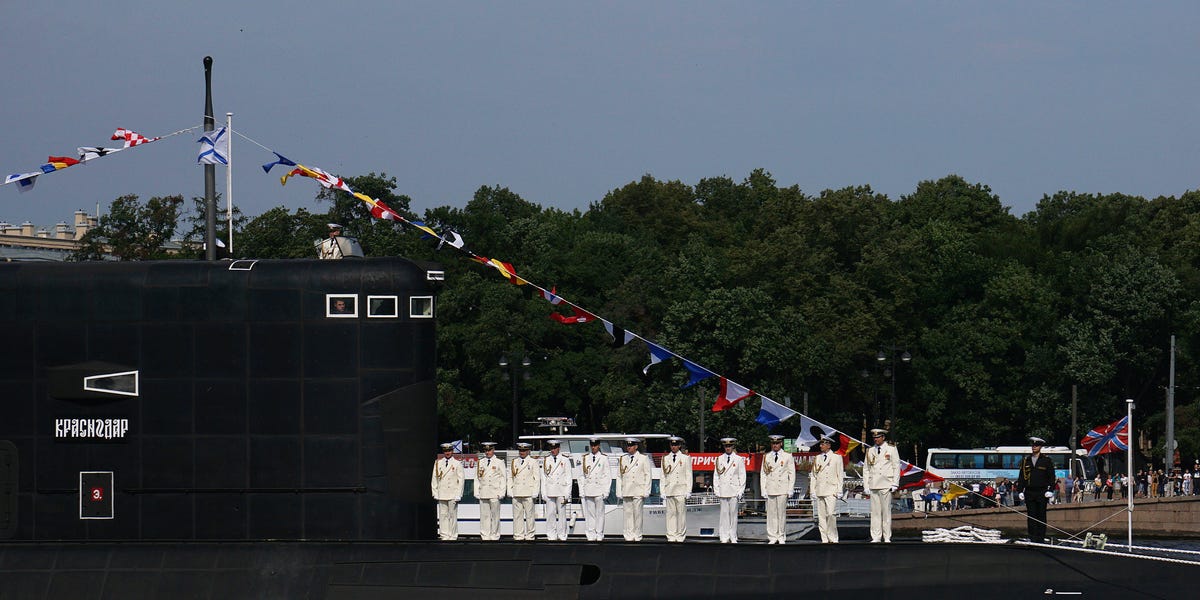
Note: This article is written as a public, non-operational overview based on open-source information from reputable U.S.-accessible sources. It avoids tactical guidance, classified details, and “which side would win” speculation.
Introduction: The Quietest Rivalry on Earth
Few military technologies inspire as much curiosity as submarines. They are part engineering miracle, part strategic chess piece, and part “please do not ask what happens beneath the waves” mystery box. When people search for U.S. vs. Russian subs, they usually want one simple answer: who has the better submarines? The honest answer is less dramatic, but more interesting. America and Russia build submarines for different priorities, different budgets, different oceans, and different theories of deterrence.
The newest American submarines, especially the Virginia-class attack submarine and the upcoming Columbia-class ballistic missile submarine, reflect a U.S. Navy focused on stealth, endurance, modular upgrades, industrial scale, and long-term undersea dominance. Russia’s newest boats, especially the Yasen-M class and Borei-A class, reflect Moscow’s emphasis on strategic deterrence, Arctic operations, and high-impact missile capability. In other words, this is not a simple drag race. It is more like comparing two luxury SUVs that can both cross a desert, except one is carrying a national-security doctrine in the trunk.
This article breaks down how America and Russia’s newest submarines stack up in mission, design philosophy, modernization, production, strategic value, and long-term challengeswithout drifting into sensitive operational details.
Understanding the Main Types of Modern Submarines
Attack Submarines: The Underwater Multi-Tool
Attack submarines, known as SSNs when nuclear-powered, are built for a wide range of missions. They can track other submarines, monitor surface ships, support intelligence missions, escort naval forces, and carry conventional strike weapons. The U.S. Navy’s Virginia-class is the main American example. Russia’s Yasen-M is often discussed as its closest modern counterpart, although the Russian boat is usually described as a nuclear-powered cruise missile submarine with strong attack-submarine features.
In plain English, attack submarines are the Navy’s underwater Swiss Army knives. They are expected to do many jobs quietly, repeatedly, and far from home. If surface ships are the visible part of naval power, attack submarines are the part that makes admirals sleep with one eye open.
Ballistic Missile Submarines: The Strategic Deterrent
Ballistic missile submarines, or SSBNs, have a very different job. They are designed to remain hidden and provide a survivable nuclear deterrent. The United States is moving from the Ohio-class to the Columbia-class submarine, while Russia relies increasingly on the Borei and Borei-A classes. These submarines are not built for flashy headlines. Their job is to exist quietly enough that potential adversaries must assume they are always out there.
That is the essence of sea-based deterrence: uncertainty. A country does not need its SSBNs to look scary in a parade. It needs them to be extremely difficult to find.
America’s Newest Submarines: Virginia and Columbia
Virginia-Class: Flexible, Modern, and Constantly Updated
The Virginia-class submarine is the backbone of the modern U.S. attack submarine fleet. It was designed after the Cold War to replace aging Los Angeles-class submarines while offering better stealth, sensors, modular construction, and mission flexibility. The class has evolved through multiple blocks, with each block adding improvements rather than starting from scratch.
One of the biggest public changes is the Virginia Payload Module, introduced in newer Block V boats. This added hull section increases payload capacity and gives the submarine more room for future systems. That matters because modern submarines are not just torpedo platforms. They are intelligence platforms, strike platforms, special operations platforms, and technology testbeds. Basically, the Virginia-class is less “one-trick underwater pony” and more “very expensive, very quiet multitasking machine.”
The U.S. approach is evolutionary. Instead of replacing the class every decade, the Navy keeps upgrading it. Open architecture systems and modular construction make it easier to insert new technologies over time. This is important because a submarine built today may serve for decades. In technology terms, that is like buying a phone today and expecting it to still feel modern when your future children are asking why people once used passwords.
Columbia-Class: America’s Future Strategic Backbone
The Columbia-class ballistic missile submarine is the U.S. Navy’s next-generation SSBN and one of America’s most important defense programs. It is intended to replace the Ohio-class and preserve the sea-based leg of the U.S. nuclear triad deep into the future. While the Virginia-class is about flexibility, the Columbia-class is about endurance, survivability, and strategic stability.
The Columbia program is also a massive industrial challenge. Building nuclear-powered submarines is not like assembling cars, or even aircraft. The supply chain is specialized, the workforce takes years to train, and there are only a limited number of U.S. shipyards capable of doing the work. Public oversight reports have repeatedly noted schedule and industrial-base concerns. In simple terms: America knows how to build elite submarines, but building enough of them on time is the hard part.
That production issue is not a minor footnote. It shapes the entire U.S. undersea strategy. The Navy must build Columbia-class SSBNs while also producing Virginia-class attack submarines, maintaining older boats, supporting AUKUS commitments, and managing shipyard bottlenecks. The technology is impressive, but the factory floor is where strategy meets realityand reality often brings a clipboard and a delay notice.
Russia’s Newest Submarines: Yasen-M and Borei-A
Yasen-M: Russia’s High-End Undersea Striker
Russia’s Yasen-M class is widely regarded as one of its most advanced nuclear-powered submarine designs. It is associated with long-range conventional strike, anti-ship missions, anti-submarine roles, and deterrence signaling. The class is smaller and more refined than the original Yasen design, and public reporting has emphasized its role as a replacement for several older Soviet-era nuclear attack and cruise missile submarines.
The Yasen-M reflects a Russian naval pattern: when surface fleet modernization becomes difficult, submarines remain a priority. Russia has deep historical experience in submarine design, especially in the Arctic and North Atlantic context. Even when its broader shipbuilding sector faces pressure, its nuclear submarine programs receive serious attention.
The Yasen-M is often discussed because of its missile compatibility and its relevance to Russian power projection. However, it is best understood not as a single “wonder weapon,” but as part of a broader Russian strategy that uses submarines to compensate for limitations elsewhere. If the Russian surface fleet is the loud neighbor with car trouble, the submarine fleet is the quiet one who somehow always has a backup generator.
Borei-A: Russia’s Strategic Deterrence Platform
The Borei-A class is Russia’s modern ballistic missile submarine line and is intended to replace older Soviet-era SSBNs. These submarines are central to Russia’s sea-based nuclear deterrent. They are tied to the Bulava submarine-launched ballistic missile program, which Russian state media and international reporting have described as a major component of Moscow’s nuclear modernization.
Like the American Columbia-class, the Borei-A is not designed to win popularity contests on defense blogs. Its value comes from survivability, patrol endurance, and deterrent credibility. For Russia, the Arctic is especially important because it offers geographic depth, established bases, and operating areas close to the country’s northern defense infrastructure.
Russia’s strategic submarine modernization shows that, despite sanctions, budget strain, and the costs of war, Moscow continues to prioritize nuclear deterrence. That does not mean every Russian program is healthy or efficient. It does mean that submarines sit close to the top of Russia’s defense priorities.
Design Philosophy: Two Different Roads Under the Same Ocean
The U.S. Model: Networked, Modular, and Industrial
American submarine design emphasizes modularity, quieting, sensor integration, and long service life. The U.S. Navy tends to build classes that can evolve through blocks and upgrades. The Virginia-class is a perfect example. It began as a post-Cold War attack submarine and has grown into a broader undersea platform with expanded payload options and new mission possibilities.
The U.S. also benefits from a huge defense technology ecosystem. Shipyards, software developers, sensor companies, weapons manufacturers, research labs, and universities all feed into submarine modernization. That ecosystem is powerful, but it is also complicated. More suppliers mean more capability, but also more chances for delays, cost growth, and “the part is on backorder” momentsexcept the part may be something only three people in Connecticut know how to produce.
The Russian Model: Deterrence, Arctic Defense, and Missile Reach
Russian submarine design is shaped by geography and strategy. Russia has long viewed submarines as essential to protecting its nuclear deterrent, threatening adversary naval forces, and operating from defended bastions near the Arctic. Its newest submarines reflect that tradition. Borei-A supports strategic deterrence, while Yasen-M supports a mix of conventional strike and naval pressure.
Russia does not need to match the United States submarine for submarine in every category to create strategic pressure. A smaller number of capable boats can still force NATO navies to invest heavily in tracking, surveillance, and undersea defense. In that sense, submarines are not only platforms; they are budget magnets. One quiet boat can make several loud committees very nervous.
Technology and Stealth: What Can Be Said Publicly
The most important features of modern submarines are also the least publicly knowable. Acoustic signature, sensor performance, communications systems, and real-world detection ranges are among the most sensitive topics in naval warfare. Public discussions can describe broad design goals, but they cannot reliably answer the question everyone secretly wants answered: “Which one is quieter?”
For the United States, public sources emphasize nuclear endurance, advanced sensors, modular construction, payload flexibility, and continuous upgrades. For Russia, public sources emphasize new-generation nuclear submarines, strategic missile platforms, Arctic relevance, and improved cruise missile capability. Both countries care deeply about stealth. Neither country is likely to publish the juicy details, because that would be like a magician live-streaming the trapdoor.
A responsible comparison should therefore avoid pretending to know classified performance data. Analysts can discuss visible design trends, procurement patterns, public missions, and strategic context. Anything more specific quickly enters the realm of guesswork, fan fiction, or someone trying too hard at a defense forum.
Production and Fleet Readiness: The Hidden Competition
America’s Challenge: Building Enough Boats
The U.S. submarine force has world-class technology, but its biggest public challenge is production capacity. The Navy has procured many Virginia-class submarines, but public reports have noted that actual production rates have lagged behind desired goals. At the same time, the Columbia-class program demands enormous shipyard attention.
This creates a strategic tension. The United States wants more attack submarines, needs new ballistic missile submarines, and must maintain existing boats. It also has alliance commitments, including AUKUS, that place additional pressure on the submarine industrial base. The result is a race not just against Russia or China, but against welders, suppliers, dry docks, budgets, and time.
Russia’s Challenge: Sustaining Quality and Modernization
Russia’s challenge is different. Its nuclear submarine programs remain a priority, but the country faces economic pressure, sanctions, technology access issues, and the burden of maintaining older Soviet-era platforms. Moscow has continued to launch and commission modern submarines, but sustaining a modern fleet over decades requires far more than launching hulls. It requires maintenance, training, spare parts, crew readiness, and reliable command systems.
In other words, the true submarine race is not only about the newest boat in the water. It is about how many boats are deployable, how often they can patrol, how well crews are trained, and how consistently shipyards can keep them ready. The ocean does not care about press releases. It cares whether the submarine can leave port and do its job.
Strategic Value: Why Submarines Still Matter
Submarines remain central to national defense because they are hard to track, difficult to deter directly, and capable of shaping an adversary’s planning. A surface ship can show the flag. A submarine can change the calculation without being seen at all.
For the United States, submarines support global presence, alliance reassurance, undersea surveillance, and nuclear deterrence. The Virginia-class helps the U.S. Navy operate across contested regions, while the Columbia-class is designed to preserve strategic deterrence for decades. The American advantage is not only in individual platforms but also in training, alliances, sensors, logistics, and global naval infrastructure.
For Russia, submarines are a way to protect strategic nuclear forces, challenge NATO in the North Atlantic and Arctic, and project power despite limits in other naval areas. The Borei-A and Yasen-M classes help Russia maintain credibility as a major nuclear and maritime power. Even a smaller Russian submarine force can have outsized strategic effects because tracking submarines is expensive, difficult, and never guaranteed.
So, Who Has the Edge?
A responsible answer depends on what “edge” means. If the question is industrial ecosystem, global reach, alliance integration, and long-term upgrade capacity, the United States appears stronger. The U.S. Navy operates within a large network of bases, partners, sensors, and defense industries. Its submarines are part of a broader global system.
If the question is whether Russia’s newest submarines are serious, capable platforms that demand attention, the answer is yes. Yasen-M and Borei-A are not museum pieces with fresh paint. They represent real modernization in one of the areas Russia still treats as strategically vital.
The better framing is not “America wins” or “Russia wins.” Modern submarine competition is about deterrence, uncertainty, and risk. The side with the most impressive brochure does not automatically control the ocean. Readiness, crew quality, maintenance, logistics, doctrine, and intelligence all matter. Submarines are not sports cars. You do not settle the argument with a lap time.
500-Word Experience Section: What It Feels Like to Study the U.S. vs. Russian Submarine Debate
Spending time with the topic of U.S. vs. Russian subs is a little like trying to review two restaurants where both chefs refuse to show you the kitchen, the recipes, or even the menu prices. You can see the building. You can talk to former customers. You can read public reports. But the most important ingredients are hidden by design. That is what makes submarine analysis fascinating and frustrating at the same time.
The first experience many readers have is surprise. People often imagine submarine competition as a simple technology contest: faster, deeper, quieter, stronger. But the deeper you go, the more you realize that submarines are part of entire national systems. A Virginia-class submarine is not just a hull with a reactor. It represents shipyards in Connecticut and Virginia, congressional budgets, software upgrades, trained crews, maintenance yards, suppliers, and decades of naval doctrine. A Yasen-M is not just a Russian attack submarine. It represents Arctic geography, Russian strategic culture, missile modernization, Sevmash shipbuilding, and Moscow’s need to preserve high-end military leverage even when other programs struggle.
Another experience is learning humility. Online debates love certainty. Someone will always claim that one submarine is “definitely quieter” or “obviously superior,” usually with the confidence of a man who once watched a 14-minute video and now considers himself the Poseidon of comment sections. In reality, the most meaningful data is classified. Public analysts must work with ship launches, procurement documents, satellite imagery, official statements, and cautious expert interpretation. That does not make analysis useless. It makes careful language essential.
There is also a strange emotional contrast in studying these machines. On one hand, submarines are engineering marvels. They operate in crushing environments, remain submerged for long periods, and require extraordinary teamwork. On the other hand, strategic submarines exist because nations prepare for worst-case scenarios. The technology is impressive, but the purpose is sobering. The best outcome for an SSBN is often that it never has to prove its power.
For writers, students, and defense-curious readers, the most useful habit is to compare roles rather than chase dramatic rankings. Ask what each submarine is designed to do. Ask how it fits into national strategy. Ask whether the country can build, maintain, crew, and modernize it. Ask what public evidence supports the claim. That approach turns a noisy “who would win?” debate into a smarter discussion about deterrence, industry, geography, and military planning.
The biggest takeaway is simple: submarines are not just weapons; they are long-term national commitments. A country can announce a new design in a speech, but it takes years of engineering, training, money, and maintenance to make that design matter. The U.S. and Russia both understand this. That is why their newest submarines are not merely machines under the ocean. They are messages written in steel, silence, and strategy.
Conclusion: The Real Submarine Race Is Quiet, Costly, and Long-Term
The newest American and Russian submarines show two powerful but different approaches to undersea competition. The United States emphasizes flexible attack submarines, strategic replacement programs, modular upgrades, and global integration. Russia emphasizes strategic deterrence, Arctic relevance, and high-impact modernization in a smaller but still serious submarine force.
The Virginia-class and Columbia-class demonstrate America’s technological depth and long-term planning, but also expose the pressure on U.S. shipbuilding capacity. The Yasen-M and Borei-A show that Russia continues to treat submarines as a core military priority, even amid broader economic and geopolitical strain.
In the end, the U.S. vs. Russian submarine question is not best answered with a scoreboard. It is answered by looking at missions, readiness, industrial strength, geography, and deterrence. The real competition is not loud. It does not trend on social media every morning. It moves slowly, silently, and expensively beneath the waves.