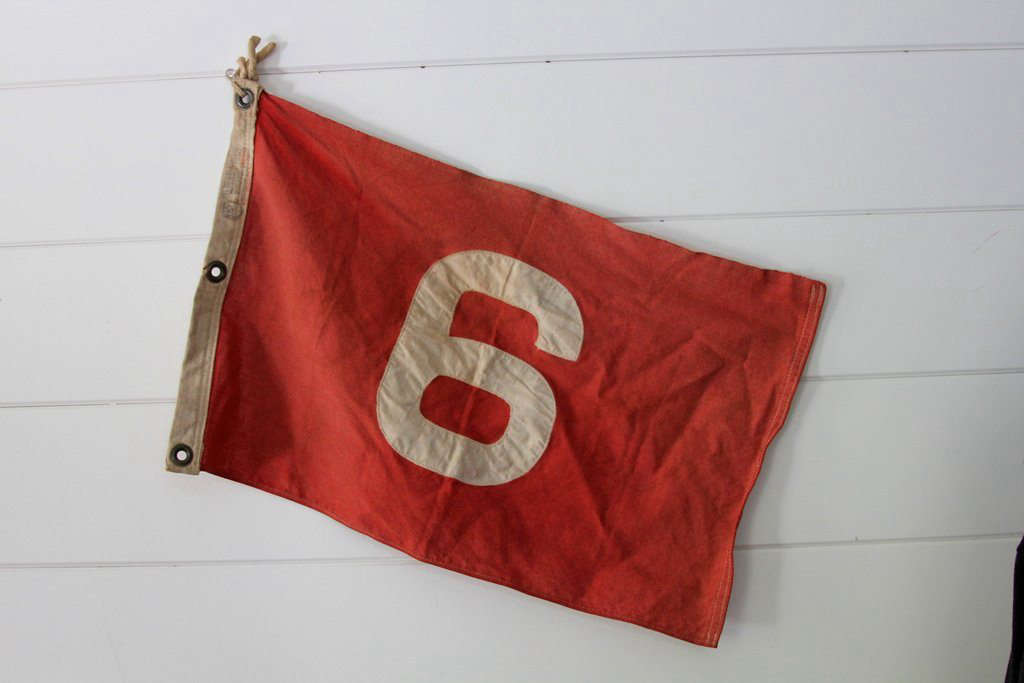
Note: “Vintage Red Number 6 Flag” is best understood as a collecting and decorating description rather than one universally standardized object. Its exact date, origin, and purpose should always be confirmed through the specific flag’s construction, markings, and provenance.
A vintage red number 6 flag is the kind of object that can transform a blank wall faster than a gallon of paint and far more politely. It may be a nautical numeral pennant, a military-related identifier, a boat flag, a racing-inspired textile, or a decorative vintage piece with enough character to make a room feel as though it has seen a harbor, a workshop, and at least one dramatic weather report.
At first glance, a red flag marked with a bold 6 seems simple. That simplicity is exactly what makes it memorable. The number is graphic, direct, and slightly mysterious. Red brings energy, while the weathered fabric, stitched edges, or old grommets can add a layer of history that a brand-new print cannot imitate. A vintage number flag does not need a long slogan or a complicated crest. It shows up, says “six,” and somehow becomes the most interesting thing in the room.
Still, collectors and decorators should avoid making quick assumptions. Not every number 6 flag comes from the same tradition. Some may relate to maritime signaling. Others may reference a military corps, vessel number, sporting team, maker’s size, or decorative series. The joy of owning one is not only displaying it but also learning what its details may reveal.
What Is a Vintage Red Number 6 Flag?
The phrase usually refers to an older red or red-and-white textile featuring the numeral 6. Depending on the example, it may be square, rectangular, triangular, swallow-tailed, or shaped like a long pennant. It may have a canvas hoist, rope, metal grommets, stitched panels, painted lettering, sewn appliqué, or a printed numeral.
In the world of maritime communication, number pennants were designed to carry information visually across distance. Before modern electronic communication became standard, vessels relied on flags and pennants to share numbers, instructions, calls, and coded messages. The high-contrast colors and large shapes were meant to be noticed quickly, even when wind, water, and questionable visibility were doing their best to make life difficult.
A vintage red number 6 flag may also connect to military history. For example, historical flags associated with the 6th Army Corps show how a large numeral could identify an organization rather than represent a signal code. That distinction matters because a flag with a 6 may be historically meaningful in several very different ways.
Why the Number 6 Looks So Good in Vintage Decor
Numbers are visual powerhouses. A large 6 has a curved form that feels more playful than a 1, more balanced than a 7, and slightly more energetic than a 0. On a red background, it becomes instantly visible. The combination can feel nautical, industrial, patriotic, athletic, or midcentury-modern depending on the flag’s fabric and typography.
Red also has a special advantage in interiors. A faded brick red can make a neutral room feel warmer, while a brighter red can create a sharp focal point among navy, cream, charcoal, wood, or weathered metal. The result is not necessarily loud. In the right setting, it feels purposeful, like an old tool that still knows exactly what job it was made to do.
Not Every “6” Means the Same Thing
This is the most important rule when shopping for or researching a vintage number flag: do not assume that the numeral automatically identifies a specific signal system. A number 6 can represent several things.
- A numeral pennant used in a maritime or military signaling system.
- A unit, corps, brigade, team, vessel, or racing number.
- A manufacturer’s size designation rather than the number shown on the flag.
- A decorative reproduction inspired by old maritime textiles.
- A souvenir, club pennant, industrial marker, or event flag.
That is why good research begins with the object itself. Look for labels, stenciled information, stamped canvas headers, handwritten notes, old hardware, family documentation, auction records, or original photographs. A seller’s title can be useful, but it should not be treated like a sworn statement from a lighthouse keeper.
A Brief History of Number Pennants
Number pennants have a long relationship with naval communication. Flag systems allowed ships to exchange information during daylight, using combinations of colors, shapes, letters, and numerals. A single number pennant could represent a numeral, while a group of flags could create larger codes or instructions.
These systems were practical, not decorative. Flags had to be visible at sea, so bold color blocking and distinct silhouettes were essential. Triangular pennants, square flags, and swallow-tailed designs all helped sailors distinguish one signal from another. Over time, signal systems changed, and colors or shapes could vary by country, branch of service, period, and intended use.
That history explains why vintage number flags remain so attractive today. They were designed for clarity. Their visual language is stripped down to essentials: color, shape, and symbol. Modern interiors often crave exactly that kind of clean graphic impact, especially after years of decorative trends that involved too many words printed on too many pillows.
Signal Flag, Pennant, Burgee, or Guidon?
These terms are often used interchangeably, but they are not identical. A signal flag is part of a communication system. A numeral pennant is generally a tapered flag used to convey a number. A burgee is typically a yacht-club or boating flag, often triangular or swallow-tailed. A guidon is a small military flag commonly associated with units or cavalry traditions.
A vintage red number 6 flag may resemble more than one of these categories, especially after decades of repairs, reuse, collecting, and creative display. Shape can offer clues, but the hoist, hardware, fabric, labels, and provenance usually tell a more reliable story.
How to Identify an Authentic Vintage Number 6 Flag
Authenticity is not about one magical detail. It is about whether multiple details agree with each other. The fabric should make sense for the likely era. The hardware should fit the intended use. The stitching, wear, lettering, and repairs should tell a believable story together.
Study the Fabric and Stitching
Older flags may be made from cotton, wool bunting, linen, or other natural textiles, while later utility flags often use synthetic materials such as nylon. Look closely at the weave, thread, hems, and edge finishing. Is the 6 sewn on as a separate appliqué? Is it painted directly onto the fabric? Is it screen-printed? Does the lettering appear original to the flag or added later?
Appliquéd numbers are especially interesting because they show construction details. Check whether the stitching is consistent on both sides. A number that appears much newer than the field may indicate a repair, replacement, alteration, or decorative update. That does not automatically make the flag undesirable, but it should affect how it is described and valued.
Examine the Hoist and Hardware
The hoist is the edge that attached to a pole, halyard, or line. It is often the most informative part of a vintage flag. Look for canvas headers, rope loops, brass grommets, metal snaps, clips, toggles, reinforced stitching, maker stamps, and handwritten inventory marks.
Hardware can reveal whether the flag was built to fly, hang, signal, or decorate. A reinforced canvas hoist with heavy-duty grommets suggests practical outdoor use. A simple sewn sleeve may suggest a display flag. A clean modern hanging loop with no sign of wear may point to a decorative reproduction. As always, one clue is never enough. Flags are little detectives, but they require more than one witness.
Look for Honest Wear
Real age usually creates uneven wear. You may see fading on the most exposed sections, stress around grommets, softening at fold lines, fraying along the fly edge, and minor staining near the hoist. These are not always flaws. In many cases, they are part of the object’s visual appeal.
Be cautious with overly uniform “distressing.” Perfectly balanced fading, identical scuffs, or suspiciously theatrical fraying can indicate modern aging. Real wear tends to be irregular because real life is irregular. Wind does not coordinate its damage for better social-media photos.
Condition: Patina Is Not the Same as Damage
A faded red field can be beautiful. Soft fabric can feel historic. But fragile textiles need thoughtful handling. A flag can look charming while still being too weak to hang from a single edge or too brittle to fold repeatedly. Good collecting means knowing when to enjoy patina and when to call for preservation help.
Watch for powdery fibers, brittle fabric, loose appliqué, active mold, cracked paint, old adhesive, staples, tape residue, or deep creases. Avoid trying to “fix” these problems with household glue, bleach, steam, or a hot iron. Those quick solutions can turn a small issue into a permanent disaster with the confidence of a bad home-renovation show.
When to Consult a Textile Conservator
Consider professional advice when a flag has serious tears, powdery or shattered fabric, mold, unusual staining, military provenance, or substantial historical value. A textile conservator can evaluate fiber condition, recommend safe mounting, and help determine whether cleaning or repair is appropriate.
Professional conservation is especially valuable for rare military flags, early maritime signals, silk textiles, or pieces with documented ownership history. The goal is not to make the flag look brand-new. The goal is to stabilize it so the original material and its story can survive.
How to Preserve a Vintage Red Number 6 Flag
Vintage textiles dislike strong sunlight, unstable humidity, heat vents, damp basements, smoke, grease, and casual handling. In other words, they prefer a calmer lifestyle than most of us manage.
Keep the flag away from direct sunlight. Red dyes are especially vulnerable to fading, and once color disappears, it does not return because you asked nicely. Avoid hanging an original flag in a bright window, above a fireplace, near a kitchen, or in a humid bathroom.
Safe Display Options
A deep shadow box can be an excellent way to display a vintage number flag. Choose acid-free backing, UV-filtering glazing, and gentle support that does not stretch the fabric. Avoid glue, tape, or permanent adhesive. A conservation-minded mounting method should support the textile without forcing it into a flat, unnatural position.
For larger flags, broad support is important. A fragile flag should not hang from two tiny points like a laundry line. Consider angled display, a fabric-covered support board, or a professional textile mount. The less strain placed on the fibers, the better.
Storage Between Displays
Store a vintage flag in a clean, dry, stable environment. If possible, keep it flat with minimal folds. Use acid-free tissue to cushion unavoidable folds and prevent sharp creases. Large flags in stable condition may sometimes be rolled around an archival tube with an inert interleaving layer.
Do not store an antique flag in a plastic bag, attic, garage, damp basement, or cardboard box from a grocery store. Those locations are fine for holiday decorations and mystery extension cords, but historic textiles deserve better.
Decorating With a Vintage Red Number 6 Flag
A vintage red number 6 flag can work with many styles because it functions as both art and artifact. The key is to let it be the main character rather than surrounding it with every anchor, oar, compass, and seashell available for purchase.
In a Study or Home Office
Hang the flag above a wood desk or beside dark metal shelving. Pair it with a simple task lamp, a few old books, and one useful brass object. The red number becomes a visual spark without making the room feel like a themed restaurant.
In a Coastal Home
Use a red number flag with white walls, navy textiles, natural wood, and vintage boat photographs. The flag adds authentic nautical energy while keeping the room from drifting into souvenir-shop territory. One good number flag beats twelve decorative anchors every time.
In a Kid’s Room or Creative Studio
A durable reproduction is often the best choice for high-traffic spaces. The bold number can support counting games, racing themes, schoolhouse decor, or imaginative storytelling. Keep truly fragile originals out of reach of sticky fingers, rogue markers, and superhero-cape experiments.
Buying a Vintage Red Number 6 Flag
Before buying, ask for clear front-and-back photos, measurements, close-ups of the stitching, the hoist, hardware, labels, and any damage. Request a description of the fabric and ask whether the number is appliquéd, painted, or printed. Good sellers should welcome these questions.
- What does the 6 represent?
- Is the flag an original, reproduction, souvenir, or unknown-age textile?
- Are there labels, stamps, handwritten notes, or original hardware?
- Has the flag been repaired, cleaned, mounted, or altered?
- Is there any known provenance or documented ownership history?
- Does the price reflect rarity, condition, verified history, or simply attractive styling?
A documented military or maritime flag may hold stronger collector value than an anonymous decorative pennant. However, a modest midcentury flag with great color and honest wear can still be the perfect purchase for a home. Buy the story you can verify, the condition you can preserve, and the design you will enjoy seeing every day.
Experiences With a Vintage Red Number 6 Flag
The first experience of living with a vintage red number 6 flag is usually visual. You hang it up, step back, and realize that a modest piece of cloth has quietly reorganized the room. Suddenly, the wall has a point of view. The desk beneath it looks more intentional. Even the chair seems as though it has been promoted to first mate, despite continuing to squeak when you sit down.
Then comes the slower experience of noticing details. In morning light, the red may look faded and warm, almost like brick or old barn paint. By evening, the same flag can become darker and more dramatic. You begin to notice uneven stitching, a worn corner near a grommet, a softened crease, or a tiny repair made decades ago. Those details become part of the experience because they remind you that the flag had a life before it became wall decor.
A vintage number flag also changes how people enter a room. Visitors usually ask the same question: “What does the six mean?” The honest answer may be, “I am still researching it.” That is not a disappointing answer. It is an invitation. A good vintage object does not always come with a neat biography. Sometimes it comes with clues, possibilities, and a few unanswered questions that make the piece more interesting rather than less.
For collectors, ownership becomes a small ritual of stewardship. You lower the blinds during bright afternoons. You dust the frame instead of brushing the fabric. You stop moving the flag every time you rearrange the room. You learn that preservation is quiet work. Nobody throws a parade because you used acid-free tissue, but the flag gets to survive another decade, which is a much better outcome than a parade anyway.
There is also a wonderful contradiction in the object. A number flag was likely designed for visibility and communication, but in a home it communicates something less literal. It suggests an appreciation for design, workmanship, history, travel, boats, teams, industry, or useful objects that outlived their original purpose. A simple 6 can hint at a crew, a unit, a sequence, a boat slip, a race car, or a memory from someone else’s life.
That flexibility makes a vintage red number 6 flag easy to enjoy. It can work in a polished apartment, a lake cabin, a workshop, a coastal cottage, or a room full of thrift-store finds that somehow became a personal style. It does not demand perfect surroundings. It only asks for respectful handling, some protection from sunlight, and enough wall space to let its red color do what it was always meant to do: get noticed.
Conclusion
A vintage red number 6 flag is a compact piece of visual history. It may be a signal pennant, a military-related identifier, a vessel marker, a sporting textile, or a decorative artifact inspired by working flags. Its appeal comes from the balance between function and beauty: it was designed to communicate quickly, but today it rewards slow looking.
Whether you find a documented nautical numeral pennant, a flag connected to a 6th Army Corps tradition, a vintage burgee, or a well-made decorative piece, treat it honestly. Verify what you can, preserve the textile carefully, and let its bold red graphic presence bring character to your home.