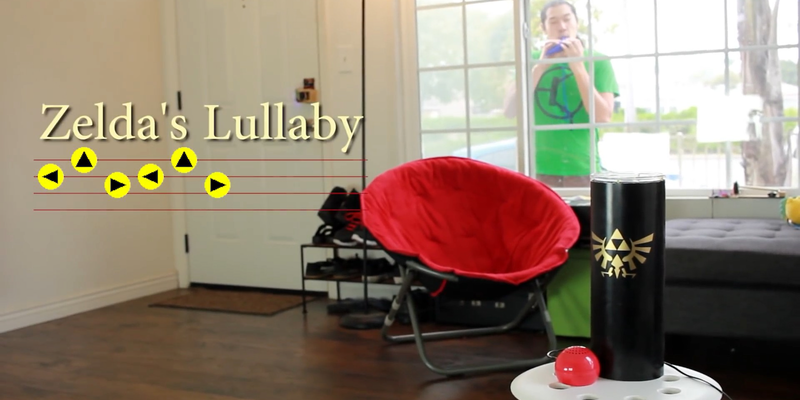
Most smart homes respond to phone apps, motion sensors, schedules, or a politely shouted command. Zelda And The Ocarina Of Things takes a more heroic approach: play a melody from The Legend of Zelda, and ordinary household objects spring into action.
The delightfully impractical project combines an ocarina, a microphone, a Raspberry Pi, and several Wi-Fi-connected devices. Instead of saying, “Turn up the heat,” the user plays a familiar tune. Instead of tapping a button to find a missing phone, another melody sends it ringing. It is home automation for anyone who has ever suspected that modern life needs more ceramic flutes and fewer touchscreens.
Behind the joke, however, is a surprisingly thoughtful demonstration of musical recognition, edge computing, Internet of Things architecture, interface design, and smart-home security. It also illustrates why The Legend of Zelda: Ocarina of Time remains such a rich source of inspiration for makers decades after its original Nintendo 64 release.
What Is Zelda And The Ocarina Of Things?
Zelda And The Ocarina Of Things is the name given to a fan-built home-automation system reported by Hackaday in 2017. The project used a microphone and Raspberry Pi hidden inside a tube-shaped controller. When the system recognized specific ocarina melodies, it sent commands to ESP8266-powered devices placed around the home.
The connected gadgets could perform several tasks, including controlling a heater, watering plants, finding a phone, operating a door mechanism, and physically pressing a spare car-remote button with a servo. In other words, it translated short musical phrases into real-world actions. That is both a legitimate IoT demonstration and an excellent way to make the neighbors wonder whether Hyrule has opened a local branch office.
The Pun Behind the Name
The title combines Ocarina of Time with the Internet of Things, commonly abbreviated as IoT. The Internet of Things describes networks of physical objects equipped with sensors, software, processing hardware, and connectivity so they can exchange data or respond to commands. Smart locks, thermostats, lighting systems, cameras, and connected appliances are familiar examples.
In this project, the Raspberry Pi acts as the central interpreter, while the ESP8266 boards serve as inexpensive networked controllers attached to individual “things.” Espressif describes the ESP8266 as a compact, cost-effective Wi-Fi microcontroller designed for connected and embedded applications.
Why Zelda Music Makes a Brilliant Control System
The concept works because music in Ocarina of Time is not merely decoration. It is an interface.
Nintendo released the original Nintendo 64 game in November 1998. Throughout the adventure, Link learns compact melodies that trigger specific effects. Songs change the time of day, summon a horse, reveal secrets, transport the hero, open passages, influence weather, and advance the story. The player does not select these effects from a conventional menu. The player performs them.
A Melody Already Feels Like a Command
Each important tune has a distinct purpose and emotional identity. “Zelda’s Lullaby” represents royal authority and access. “Epona’s Song” calls a trusted horse. “Saria’s Song” creates a connection with a friend. “The Song of Time” interacts with ancient mechanisms and temporal puzzles.
Mapping these melodies to household functions feels intuitive because the game has already taught players to interpret music as executable language. A fan does not hear a random series of notes. The fan hears an instruction with history, mood, and meaning attached to it.
That is a powerful interface-design lesson. Commands become easier to remember when they form meaningful associations. A plain button labeled “Plant Pump 2” is functional but forgettable. A tune associated with forests and friendship activating a watering system is memorable, thematic, and considerably more charming.
Ocarina of Time Made Audio Interactive
Nintendo’s developers treated music as a responsive part of the game world. Composer Koji Kondo and the sound team designed transitions that changed smoothly when danger appeared and disappeared, rather than abruptly replacing one track with another. Nintendo later emphasized that preserving this interactivity was essential when adapting the game for the Nintendo 3DS.
The famous ocarina mechanic extends that philosophy. Sound does not simply accompany player behavior; it becomes behavior. The smart-home project carries the same idea out of the television and into the living room.
How the Musical Smart Home Works
Although the finished demonstration looks like wizardry, its architecture can be divided into four understandable stages: audio capture, note detection, melody matching, and device control.
1. A Microphone Captures the Ocarina
The user blows into an ocarina near a microphone. The microphone converts changes in air pressure into an electrical audio signal, which is passed to the Raspberry Pi for processing.
A real ocarina is a vessel flute, meaning its sound comes from air resonating inside an enclosed chamber rather than traveling through a long open tube. Ocarinas have existed in many forms and cultures, long before Nintendo painted one blue and made an entire generation desperately want to own it. Smithsonian collections and recordings document ocarina-like instruments in pre-Columbian musical traditions, including double-chamber and multi-orifice examples.
2. Software Estimates the Notes
The Raspberry Pi analyzes the incoming waveform and estimates its dominant pitch. The detected frequency can then be translated into a musical note.
This stage is not as simple as asking whether the sound is “high” or “low.” Real performances contain breath noise, unstable attacks, changing volume, harmonics, room echoes, and slight tuning errors. A player may begin a note a little sharp before settling into the correct pitch. The recognition software must ignore irrelevant fluctuations without becoming so forgiving that the family microwave accidentally plays the Song of Storms.
3. Detected Notes Become a Melody
The program stores notes in sequence and compares them with predefined patterns. If the sequence matches an authorized song within an acceptable timing and pitch tolerance, the software generates an event.
A basic system might compare exact note names. A more flexible design can compare intervals between notes, allowing the user to begin on a different pitch while preserving the melody’s shape. Rhythm can also be considered, although overly strict timing makes the system frustrating for beginners. A good recognizer needs enough discipline to reject random noise and enough patience to tolerate a human being who has not practiced since Tuesday.
4. Wi-Fi Devices Perform the Action
After recognizing a song, the Raspberry Pi sends a local network message to the appropriate ESP8266 controller. That controller activates a relay, motor, servo, buzzer, pump, or another output.
This hub-and-node arrangement is common in DIY home automation. The Pi handles the heavier processing and overall logic, while inexpensive microcontrollers remain close to the devices they control. Raspberry Pi projects commonly combine microphones, speech or sound recognition, Python software, and connected hardware to create custom assistants without depending entirely on a commercial smart-speaker ecosystem.
What Could the Ocarina Control?
Finding a Lost Phone
This may be the most practical command in the entire system. Recognizing a melody could make the user’s phone ring, even when it has slipped between couch cushions and entered another dimension.
Unlike unlocking a front door, finding a phone is a low-risk action. A false positive would be annoying but harmless, making it an excellent first feature for anyone recreating the project.
Watering Plants
A connected board can activate a small water pump for a controlled period. The command should include a maximum runtime so one enthusiastic encore does not transform the windowsill into Lake Hylia.
A more advanced version could combine the melody with a soil-moisture sensor. The song would request watering, but the system would approve the command only when the soil was actually dry.
Controlling Heat
The original demonstration included heater control. In a careful implementation, the song should request a predefined temperature or temporary boost rather than directly switching high-current heating equipment without safeguards.
Thermostatic limits, automatic shutoffs, hardware-rated relays, and manual overrides are essential. A whimsical interface does not cancel the laws of electricity, unfortunately.
Pressing a Car Remote
Instead of electronically modifying a vehicle, the project used a servo to press a button on a spare remote. This mechanical approach is a classic maker shortcut: rather than reverse-engineering a protected system, build a tiny robotic finger and let it push the existing control.
It is visually funny and technically clever, though it should not be treated as a secure production solution.
Operating a Door
Unlocking a door with “Zelda’s Lullaby” is the project’s most theatrical feature. It is also the feature that immediately raises the largest security questions.
The Security Problem: A Song Is Not a Secret
A recognizable melody may be a convenient command, but it is not strong authentication. Anyone who hears the tune, watches the demonstration, or records the audio can potentially reproduce it. The risk is especially obvious when the authorized melody comes from one of the most famous video games ever made.
A recorded command may also enable a replay attack. The attacker does not need musical talent, pointy ears, or the Triforce of Courage. A phone speaker might be enough.
CISA recommends reviewing smart-device security settings, changing default credentials, applying updates, and considering the security consequences of connected products. OWASP similarly warns that weak authentication can allow a system to accept an unauthorized user as legitimate and that replay-prone designs can expose connected services to impersonation.
How to Make a Safer Version
A responsible build should treat the melody as an interface trigger, not as the sole key protecting a home or vehicle. Safer options include requiring a second factor, limiting sensitive commands to trusted devices, keeping messages on an isolated local network, encrypting communication, logging activation attempts, and disabling remote access unless it is genuinely needed.
A door command could play the Zelda tune and then require confirmation from a phone, wearable device, keypad, or proximity token. The melody would preserve the fun while the second factor provides meaningful authentication.
Fail-safe behavior matters as well. If the Raspberry Pi crashes, Wi-Fi drops, or a microcontroller becomes unavailable, the heater should turn off safely, the plant pump should stop, and the door should remain operable through an ordinary physical method.
Federal smart-device initiatives have increasingly emphasized transparent security information, software-support periods, updates, and differences in risk between categories such as thermostats, lights, cameras, and smart locks. A playful prototype does not need to become a commercial product, but borrowing those principles makes it far less likely to become a cautionary tale.
What This Project Gets Right
It Turns Automation Into an Experience
Most smart-home controls are designed to disappear. That can be convenient, but it can also make interactions feel bland. The Ocarina of Things deliberately adds ceremony. You do not merely activate a pump; you perform a tiny ritual and receive a physical response.
That delay and participation would be unacceptable for every task, yet it can make occasional actions more satisfying. People enjoy pulling a dramatic lever, turning a well-made dial, or hearing a mechanical switch click. Efficiency is not the only form of good design.
It Uses Memorable Command Mapping
The songs function like musical shortcuts. Because each tune is distinctive, the user can remember multiple commands without reading a menu. The approach resembles sound logos, keyboard shortcuts, and gesture controls, but it carries stronger emotional associations.
It Encourages Modular Experimentation
The network can grow one device at a time. A beginner might start with an LED, then add a phone finder, plant pump, fan, or model drawbridge. Each new endpoint teaches practical skills involving power, network communication, actuators, sensors, and software debugging.
It Connects Digital Culture With Physical Making
Ocarina of Time helped establish conventions for three-dimensional adventure games, including lock-on targeting, guided camera behavior, environmental puzzles, and an explorable world that felt larger than its technical limits. Contemporary reviews praised its combination of classic Zelda structure with a convincing 3D environment, while later retrospectives continued to highlight its influential controls, atmosphere, and level design.
The Ocarina of Things extends that legacy in an unexpected direction. A game mechanic becomes inspiration for a physical interface, which then teaches electronics and programming. The player becomes a builder.
Challenges Anyone Recreating It Should Expect
Ambient Noise
Televisions, conversations, fans, street noise, and reverberation can confuse pitch detection. A close microphone, directional pickup pattern, sensible input gain, and short listening window can improve accuracy.
Different Playing Styles
Two people may perform the same tune with different breath pressure, timing, articulation, and tuning. The recognizer needs calibration data from the intended users rather than a single perfect recording.
False Positives
The system should require a complete sequence, a confidence threshold, and perhaps an activation gesture before accepting commands. A cooldown period can prevent the same performance from triggering several times.
Unclear Feedback
Users need immediate confirmation. A light, chime, display, or spoken response can indicate whether the system is listening, processing, accepting, or rejecting the melody. Otherwise, the user will repeat the song increasingly loudly while the Raspberry Pi sits there judging everyone.
Latency
The command should feel responsive after the final note. Processing locally on the Raspberry Pi can reduce dependence on cloud services and keep audio inside the home. Local processing also allows the system to continue functioning when the internet connection fails.
A Builder’s Experience With an Ocarina-Controlled Home
The following experience is a realistic composite based on the project’s documented design and common DIY development challenges, not a claim that this exact system was personally tested.
The First Successful Command Feels Like Magic
The initial version should control something harmless and obvious, such as an LED. At first, the microphone records too much breath noise. The pitch graph jumps around, and the software confidently identifies notes that no musician has ever played on purpose.
After adjusting the microphone position and ignoring the unstable beginning of each note, recognizable patterns emerge. Three notes appear in the correct order. The program sends a network message. Across the room, an LED turns on.
Technically, it is only audio analysis followed by a Wi-Fi request and a GPIO change. Emotionally, it feels as though a wall has obeyed a spell. That moment explains the project’s appeal better than any component list.
Calibration Quickly Becomes the Real Boss Battle
The next stage is less cinematic. Playing softly produces missed notes. Playing too forcefully pushes the pitch sharp. A ceiling fan creates low-frequency noise. Someone closes a cabinet, and the detector briefly believes it has heard an enthusiastic B-flat.
The practical solution is not to chase perfect recognition. It is to narrow the problem. The system listens only after an activation button or opening note. It rejects sounds outside the ocarina’s expected range. Notes must remain stable for a minimum duration, and tiny gaps are tolerated between them.
Once those rules are added, accuracy improves dramatically. The lesson is familiar to makers: a clever algorithm helps, but carefully defined operating conditions often help more.
The Best Features Are Not Necessarily the Most Dramatic
Unlocking a door earns the most attention, but a phone finder is more useful during daily life. A melody that makes a misplaced phone ring provides immediate value with little physical risk.
A plant-watering command is also satisfying, especially when paired with a moisture sensor and a limited pump cycle. The system can respond with a cheerful confirmation tone when watering begins or a different sound when the soil is already damp. Suddenly, the plant has acquired both a network address and an attitude.
People Change How They Play When the Music Matters
During ordinary practice, a slightly messy note may be acceptable. When a tune controls hardware, the player naturally becomes more deliberate. Notes become cleaner, pauses become more consistent, and the performer watches for feedback after the final phrase.
This creates an unusual loop between musical practice and engineering. Better playing improves recognition, while better recognition encourages more playing. A person who bought an ocarina as a game collectible may end up learning breath control because the living-room lamp refuses to negotiate.
The Project Teaches Restraint
Once the first few commands work, it is tempting to connect everything. That is when good design requires restraint. Lights and sound effects are safe experiments. Pumps need time limits. Heaters need independent thermal protection. Doors and vehicles require real authentication.
The most important experience is realizing that a successful prototype is not automatically a secure or reliable product. The melody interface can remain playful while critical actions receive additional checks. That balance preserves the wonder without asking Zelda’s Lullaby to perform the full-time duties of a professionally engineered access-control system.
Why Zelda And The Ocarina Of Things Still Matters
The project is memorable because it demonstrates that an interface can be useful, meaningful, and absurd at the same time. It converts a beloved game mechanic into a functioning smart-home controller, connects software with physical objects, and makes embedded computing visible in a way that ordinary automation rarely does.
It also captures the spirit of maker culture. The goal is not merely to purchase a finished device. The goal is to ask, “Could this work?” and then assemble microphones, microcontrollers, servos, pumps, scripts, and questionable quantities of hot glue until the answer becomes yes.
Zelda And The Ocarina Of Things may not replace a secure smart-home platform, and playing a flute every time you need the heater could become inconvenient before breakfast. Yet as a demonstration of musical recognition, Raspberry Pi home automation, ESP8266 networking, and playful interaction design, it is difficult not to admire.
Sometimes the best technology does not make life frictionless. Sometimes it gives you a reason to play six notes, smile, and watch a plant get watered.