Food dehydrators are the quiet little overachievers of the kitchen. They do not sparkle like espresso machines or roar like blenders, but give them a tray of apple slices, herbs, tomatoes, or marinated beef, and they turn ordinary ingredients into shelf-stable snacks with serious personality. The best food dehydrators for 2023 make it easier to prepare homemade jerky, fruit leather, dried herbs, vegetable chips, camping meals, dog treats, and pantry staples without needing a culinary degree or a suspiciously large homestead.
This food dehydrator review focuses on real-world usefulness: drying performance, tray capacity, airflow design, temperature control, cleanup, counter space, and value. A good dehydrator should dry evenly, hold a steady temperature, and make you feel clever for rescuing overripe bananas before they become fruit bowl drama. Whether you want a compact beginner model or a large-capacity machine for garden harvests, these ten options cover the most practical choices for American kitchens.
How We Chose the Best Food Dehydrators
To build this list, we compared popular models that consistently appear in expert-tested kitchen guides, customer-favorite roundups, and manufacturer specifications. The strongest performers generally share a few important traits: adjustable temperature control, steady airflow, enough tray space for the intended user, removable trays for cleaning, and a design that does not require constant babysitting.
Horizontal airflow models, which usually have a rear fan, tend to dry more evenly across trays because warm air moves from back to front. Vertical airflow models, often stackable and more affordable, can still work well for fruits, herbs, and simple snacks, but they may need tray rotation for the most consistent results. For jerky, look for machines that reach at least 160°F or follow safe preheating or post-heating guidance, since food safety matters more than chewy swagger.
Quick Comparison: Best Food Dehydrators for 2023
| Rank | Food Dehydrator | Best For | Key Strength |
|---|---|---|---|
| 1 | COSORI Premium Stainless Steel Food Dehydrator | Best overall | Strong balance of performance, controls, and design |
| 2 | Excalibur 9-Tray Food Dehydrator with Timer | Large batches | Big drying area and reliable horizontal airflow |
| 3 | NESCO FD-75A Snackmaster Pro | Best value | Expandable trays and approachable price |
| 4 | Magic Mill 7-Tray Food Dehydrator | Beginners who want stainless trays | Easy controls and even drying |
| 5 | Tribest Sedona Express | High-end users | Premium controls and wide temperature range |
| 6 | Presto 06300 Dehydro | First-time users | Simple, compact, and budget-friendly |
| 7 | Hamilton Beach 32100A Digital Food Dehydrator | Digital controls on a budget | Timer, auto shutoff, and five trays |
| 8 | Brod & Taylor Sahara Folding Dehydrator | Small-space storage | Folds down despite large capacity |
| 9 | NESCO FD-1040 Gardenmaster Digital Pro | Garden harvests | Powerful 1000-watt drying system |
| 10 | Elite Gourmet EFD319 Food Dehydrator | Tight budgets | Affordable five-tray setup |
1. COSORI Premium Stainless Steel Food Dehydrator – Best Overall
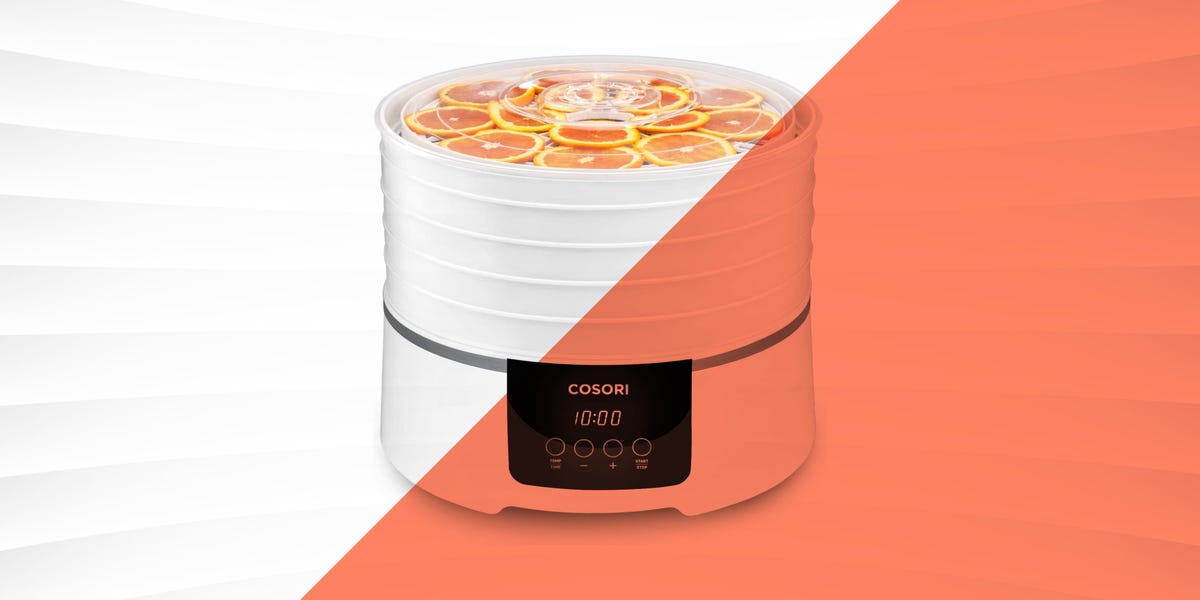
The COSORI Premium Stainless Steel Food Dehydrator is the best overall pick for most home cooks because it checks the boxes people actually care about: six stainless steel trays, digital temperature control, a useful timer, horizontal airflow, and a clean design that looks more like a kitchen appliance than a science project.
Its temperature range of 95°F to 165°F makes it flexible enough for herbs, fruit, vegetables, fruit leather, and jerky. The rear fan helps distribute heat evenly, which means fewer “crispy on one side, suspiciously damp on the other” results. The stainless trays are sturdier than many plastic alternatives and easier to clean after sticky foods like mango, pineapple, or marinated meat.
Who should buy it?
Choose the COSORI if you want a reliable food dehydrator for regular use without jumping into premium pricing. It is especially good for families, snack preppers, and anyone who wants digital controls without a steep learning curve.
2. Excalibur 9-Tray Food Dehydrator with Timer – Best for Large Batches
Excalibur has long been one of the biggest names in home dehydration, and the 9-tray model with a timer is built for people who dry food in serious quantities. With nine large trays and roughly 15 square feet of drying space, it can handle garden tomatoes, apple rings, herbs, jerky, and bulk meal-prep ingredients without begging for mercy.
The adjustable thermostat typically ranges from 105°F to 165°F, and the horizontal airflow system is designed to dry food evenly across the cabinet. It is not the smallest machine on the counter, so apartment kitchens should measure first and dream second. But for big-batch users, gardeners, hunters, and preservation fans, the capacity is the point.
Who should buy it?
Buy the Excalibur if you regularly dehydrate large harvests or want a durable machine that can work for long sessions. It is overkill for one banana and a handful of mint leaves, but wonderful when your garden suddenly behaves like it is trying to feed a small village.
3. NESCO FD-75A Snackmaster Pro – Best Value Food Dehydrator
The NESCO FD-75A Snackmaster Pro is a classic stackable food dehydrator for people who want strong drying power without a premium price. It usually includes five trays and can expand with additional trays, making it flexible for beginners who may grow into larger batches over time.
With 600 watts of drying power and an adjustable temperature range around 95°F to 160°F, the FD-75A is useful for fruits, herbs, vegetables, and jerky. Its vertical airflow design is not as refined as a rear-fan cabinet model, but it performs well for the price. Some users may rotate trays during longer drying sessions for more even results.
Who should buy it?
This is a smart choice for value shoppers, occasional jerky makers, and anyone who wants an expandable dehydrator without spending a weekend reading appliance manuals.
4. Magic Mill 7-Tray Food Dehydrator – Best User-Friendly Cabinet Model
The Magic Mill 7-Tray Food Dehydrator is a strong choice for users who want the benefits of a cabinet-style machine with stainless steel trays and straightforward digital controls. It typically offers a broad temperature range, a timer, rear-mounted airflow, and enough capacity for family snacks or weekly prep.
Its seven-tray design gives more room than many compact six-tray models without feeling as enormous as a commercial unit. The clear door is helpful because checking progress is part of the fun. Dehydrating food can turn even calm adults into people who stare through appliance windows like they are watching the season finale of a cooking show.
Who should buy it?
The Magic Mill is ideal for beginners who want a capable machine from day one. It is also a good pick for users who prefer stainless trays and simple digital settings.
5. Tribest Sedona Express – Best High-End Food Dehydrator
The Tribest Sedona Express is the premium pick for people who dehydrate often and want advanced control. It offers 11 trays, a wide temperature range of about 77°F to 167°F, digital controls, and a sleek vertical cabinet design that feels more refined than most dehydrators.
The lower temperature options are useful for delicate foods, while the higher end supports jerky preparation when used with proper food-safety practices. It is expensive, but the build, controls, and design make sense for serious users who dry food weekly or want a machine that does more than the basics.
Who should buy it?
Choose the Sedona Express if dehydrating is part of your lifestyle, not a one-time “I bought too many strawberries” situation. It is best for dedicated home preservers, raw-food enthusiasts, and premium appliance buyers.
6. Presto 06300 Dehydro – Best for First-Time Users
The Presto 06300 Dehydro is simple, compact, and refreshingly unintimidating. It usually includes four trays and can expand up to eight trays with additional accessories. The top-mounted fan and heating element provide steady airflow, and the trays nest for easier storage.
This model does not have the same digital controls or precision as more expensive dehydrators, but that is part of the appeal. It is a practical entry point for someone who wants to try dried apples, banana chips, herbs, or basic snacks before investing in a larger machine.
Who should buy it?
Buy the Presto if you are new to food dehydration, short on storage space, or shopping for a low-cost machine for occasional use.
7. Hamilton Beach 32100A Digital Food Dehydrator – Best Budget Digital Model
The Hamilton Beach 32100A offers five stackable trays, digital temperature control, a timer up to 48 hours, and automatic shutoff. Its temperature range of about 100°F to 160°F works well for many common foods, including fruits, vegetables, herbs, and jerky when proper safety steps are followed.
This model is a nice middle ground between bare-bones stackable dehydrators and higher-priced cabinet machines. The digital timer is especially useful because dehydration takes hours, and nobody wants to wake up at 3 a.m. to rescue pear slices.
Who should buy it?
Choose Hamilton Beach if you want digital convenience at a reasonable price and do not need a large stainless steel cabinet model.
8. Brod & Taylor Sahara Folding Dehydrator – Best for Storage
The Brod & Taylor Sahara Folding Dehydrator solves one of the biggest problems with dehydrators: where to put the thing when you are not using it. This model offers a large drying area but folds down for storage, making it unusually practical for small kitchens, RVs, and households that already have appliances playing countertop musical chairs.
It includes stainless steel shelves and advanced timer-temperature programming. The Sahara is not cheap, but its folding design gives it a unique advantage over bulky cabinet dehydrators. If storage is your biggest concern, this model deserves serious attention.
Who should buy it?
Buy the Sahara if you want large capacity but cannot dedicate permanent counter or cabinet space to a dehydrator.
9. NESCO FD-1040 Gardenmaster Digital Pro – Best for Gardeners
The NESCO FD-1040 Gardenmaster Digital Pro is built for high-volume drying. With 1000 watts of power, digital time and temperature control, and expandable tray capacity, it is a strong option for gardeners who need to preserve tomatoes, herbs, zucchini chips, peppers, and seasonal fruit.
Its adjustable temperature range of around 90°F to 160°F gives it flexibility, while the stackable design allows users to expand capacity when harvest season gets dramatic. If your basil plant has become a basil bush with ambition, the Gardenmaster is ready.
Who should buy it?
This model is best for gardeners, bulk snack makers, and families who want a powerful dehydrator that can grow with their needs.
10. Elite Gourmet EFD319 Food Dehydrator – Best Cheap Food Dehydrator
The Elite Gourmet EFD319 is one of the most approachable food dehydrators for shoppers on a tight budget. It typically includes five BPA-free trays, adjustable temperature control from about 95°F to 158°F, and a compact footprint.
It is not as powerful or precise as premium models, but it is perfectly reasonable for small batches of fruit, herbs, vegetables, and simple snacks. For many beginners, that is enough. Not everyone needs a dehydrator that looks ready to open a boutique jerky company.
Who should buy it?
Choose Elite Gourmet if you want the lowest-cost way to experiment with food dehydration at home.
What to Look for in the Best Food Dehydrator
Airflow Design
Horizontal airflow usually delivers more even drying because warm air moves across each tray. Vertical airflow is often cheaper and more compact, but it may require tray rotation for best results.
Temperature Range
A good dehydrator should offer adjustable temperature settings. Herbs often need lower heat, fruits and vegetables usually dry well at moderate temperatures, and jerky requires careful food-safety handling. For general use, a range from roughly 95°F to 160°F or higher is helpful.
Tray Capacity
Small households may be happy with four to six trays. Gardeners, meal preppers, and jerky fans should consider larger cabinet models or expandable stackable units. Remember that food shrinks as it dries, but it still needs space at the beginning.
Cleaning
Sticky fruit leather, tomato slices, and marinades can make trays messy. Removable trays, mesh screens, drip trays, and dishwasher-safe components make cleanup less annoying. This matters because the best dehydrator is the one you will actually use again.
Timer and Auto Shutoff
Dehydration is slow by design. A timer and auto shutoff help prevent over-drying and make overnight or workday drying sessions easier to manage.
Food Dehydrator Safety Tips
Drying food removes moisture, which helps slow spoilage, but it does not magically erase every food-safety concern. Slice food evenly so pieces dry at the same rate. Avoid overlapping slices because trapped moisture can lead to uneven results. Store dried foods in airtight containers after they have cooled completely.
For jerky, follow trusted safety guidance. Beef should reach 160°F, while poultry should reach 165°F. Some methods recommend heating meat before drying or heating finished jerky afterward. A dehydrator is a useful tool, but safe food handling is still the boss.
Best Uses for a Food Dehydrator
A food dehydrator is useful for more than apple chips. You can make dried strawberries for oatmeal, tomato flakes for soups, mushroom slices for ramen, orange wheels for drinks, zucchini chips, backpacking meals, herb blends, fruit leather, pet treats, and homemade jerky. It is also a great way to reduce food waste. Those slightly tired peaches? Dehydrate them. Too much parsley? Dry it. Bananas turning spotty? Congratulations, you own dessert ingredients.
Experience Notes: What Using a Food Dehydrator Actually Feels Like
The first lesson of owning a food dehydrator is that everything takes longer than you think. This is not a microwave with trays. Dehydration is slow, steady moisture removal, and patience is part of the recipe. Apple slices may take several hours. Mango can take longer. Tomatoes may make you question time itself. But the reward is a pantry full of snacks that taste more concentrated, less processed, and oddly satisfying.
One practical tip is to slice ingredients as evenly as possible. A mandoline slicer helps, but a sharp knife and a calm attitude work too. Uneven slices create uneven results: thin pieces become crispy while thick pieces stay bendy. That may be fine for casual snacking, but for storage, consistency matters. If one strawberry slice is dry and another still feels damp, the damp one is basically volunteering to ruin the jar.
Another experience-based lesson is that fruit gets sticky. Very sticky. Pineapple, banana, mango, and peaches can cling to trays like they signed a long-term lease. Mesh liners or fruit leather sheets are worth having, especially if you make purees or small pieces. Lightly spacing food also helps airflow. It is tempting to pack every tray edge to edge, but crowding slows drying and can lead to uneven texture.
Noise is also worth considering. Most dehydrators produce a fan hum for hours, so placement matters. A quiet cabinet model can live in a kitchen corner without much drama. A louder stackable model may be better in a laundry room, pantry, or other ventilated area where it will not soundtrack your entire evening. If you are sensitive to appliance noise, do not ignore this detail.
Expect a learning curve with doneness. Dried fruit should usually feel pliable but not wet. Herbs should crumble. Vegetable chips should feel dry and crisp depending on the cut. Jerky should bend and crack without snapping in half like a twig. Let food cool before judging final texture because warm pieces often feel softer than they will after cooling.
Storage is the final skill. Use airtight jars, vacuum-sealed bags, or freezer-safe containers. Label everything with the date, because mystery dried food is less charming three months later. For longer storage, keep dried foods in a cool, dark place. If condensation appears inside a container, the food was not dry enough and should be used quickly or dried further.
The best part of a food dehydrator is the control. You decide the ingredients, sweetness, salt level, spice blend, and texture. Homemade dried apples can taste like fall. Chili-lime mango can disappear faster than you planned. Tomato powder can rescue bland soups. Once you learn the rhythm, a dehydrator becomes less like a gadget and more like a quiet preservation habit.
Final Verdict: Which Food Dehydrator Should You Buy?
For most people, the COSORI Premium Stainless Steel Food Dehydrator is the best overall choice because it combines capacity, stainless trays, digital controls, and even horizontal airflow. The Excalibur 9-Tray is better for large batches, while the NESCO FD-75A Snackmaster Pro offers excellent value for beginners and casual users. If money is no object, the Tribest Sedona Express provides premium control. If space is the problem, the Brod & Taylor Sahara Folding Dehydrator is the cleverest storage solution.
The right food dehydrator depends on how often you plan to use it. For occasional dried fruit, a small budget model is enough. For weekly jerky, garden harvests, or backpacking meals, invest in stronger airflow, more trays, and better controls. Either way, a dehydrator can turn extra produce into snacks, reduce waste, and make your kitchen feel a little more self-sufficient. Plus, it gives you an excellent reason to say, “I made these banana chips myself,” which is a small but delicious flex.