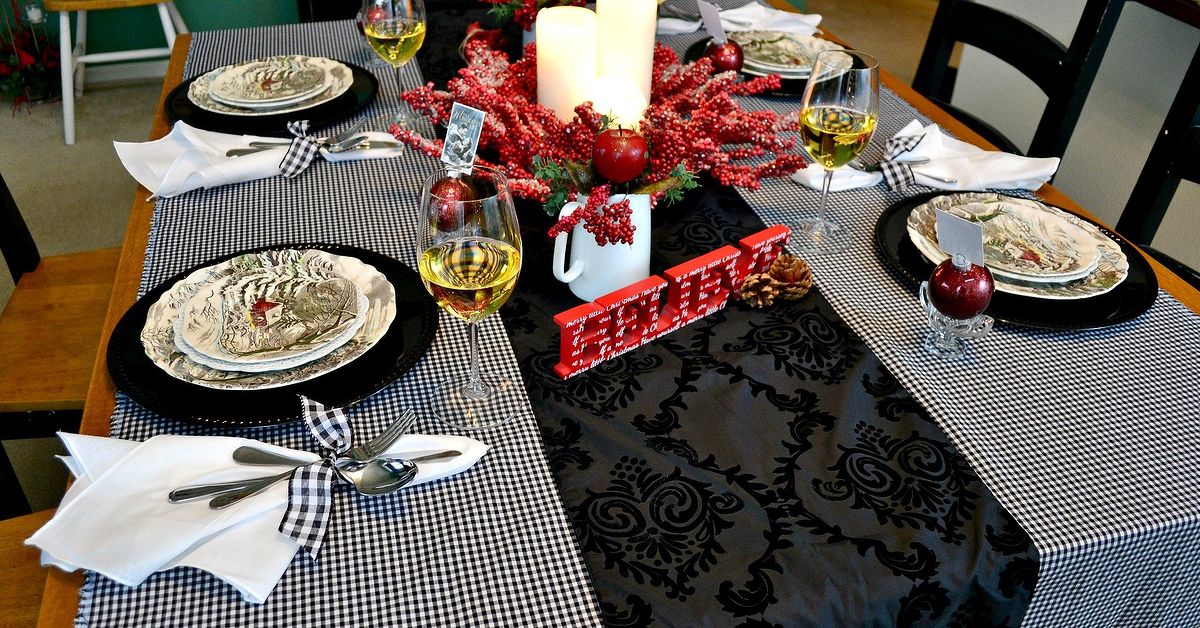
Christmas Eve has a special kind of energy. The kitchen smells like something buttery, the tree lights are doing most of the emotional heavy lifting, and at least one family member is asking when dinner will be ready whihaos, but it can turn the dining room into a calm, welcoming place where everyone knows exactly where to sit.
The good news is that a memorable holiday table does not require designer dishes, imported linens, or a centerpiece large enough to qualify for its own ZIP code. Everyday white plates, simple greenery, warm candlelight, and handmade place cards can create an elegant Christmas table setting without exhausting the decorating budget.
This Christmas Eve tablescape with DIY place cards combines traditional holiday colors, natural textures, personalized details, and practical hosting choices. The finished table feels festive rather than fussyperfect for a relaxed #HomeforChristmas celebration with family and friends.
Start With a Simple Christmas Tablescape Story
Before purchasing decorations, decide what you want the table to feel like. A clear visual direction prevents the classic holiday-decorating problem known as “I bought twelve cute things, and none of them appear to have met before.”
For a timeless Christmas Eve table, use three main elements:
- Evergreen tones from pine, cedar, rosemary, eucalyptus, or faux garland
- Warm neutrals from natural linen, kraft paper, wood, or cream-colored dishes
- Small metallic accents in gold, brass, silver, or copper
Traditional red can be added through berries, ribbon, napkins, glassware, or a few ornaments. Keeping red as an accent instead of covering every available surface allows the table to feel festive without resembling Santa’s break room.
A useful design formula is to choose one dominant color, one supporting neutral, and one accent. For example, combine forest green with ivory and touches of gold. Another attractive option is burgundy, warm wood, and brushed brass. Blue-and-white dishes can also work beautifully when paired with greenery and silver details.
Gather Materials You May Already Own
Building a beautiful holiday tablescape becomes easier when you shop your home before shopping at a store. Pull out serving boards, cake stands, glass jars, ribbon remnants, plain dinnerware, old ornaments, cloth napkins, and candlesticks. Objects do not need to belong to the same collection. Repeating colors or materials will make mismatched pieces feel intentional.
Basic Tablescape Supplies
- A tablecloth, runner, or clean bare tabletop
- Dinner plates and optional salad or dessert plates
- Cloth napkins or high-quality paper napkins
- Flatware and glassware
- Fresh or artificial greenery
- Low candleholders or battery-operated candles
- Small ornaments, pinecones, dried orange slices, or ribbon
- Card stock, gift tags, or recycled kraft paper
- A fine-tip marker, scissors, and a hole punch
- Twine, narrow velvet ribbon, or metallic cord
Plain white plates are especially useful because they act like a quiet background for more decorative napkins, chargers, place cards, and food. If your dishes are mixed, alternate them evenly around the table instead of placing all of one style at one end. Suddenly, the mismatch looks curated. Holiday magic is often just strategic repetition.
Make Easy Evergreen DIY Place Cards
Place cards are small, but they provide an outsized decorating benefit. They add height, texture, and personality to every setting while quietly preventing a seating free-for-all. They are especially helpful when guests include children, grandparents, couples, newcomers, or relatives who should not be seated together unless the evening needs an unexpected debate segment.
What You Need
For simple evergreen place cards, gather heavyweight cream or kraft card stock, scissors, a ruler, a hole punch, a dark marker, narrow ribbon or twine, and small sprigs of rosemary, cedar, pine, or faux greenery.
Step 1: Cut the Cards
Cut the card stock into rectangles measuring approximately 3 by 2 inches. Fold each rectangle in half for a tent-style card, or leave it flat if it will be tied to a napkin. Gift tags can also be used when time is short.
For a polished shape, trim the upper corners at an angle. A decorative paper punch can create a scalloped edge, star, tree, or snowflake, but clean straight cuts work just as well.
Step 2: Write Each Guest’s Name
Write names before attaching ribbon or greenery. Use a fine-tip black marker, metallic pen, or white paint pen on dark paper. You do not need professional calligraphy. Slow, slightly oversized handwriting often looks more personal than a perfectly printed font.
Lightly writing each name in pencil first can reduce spelling mistakes. This is particularly useful when a guest has a name containing more vowels than your confidence can comfortably support.
Step 3: Add Greenery
Punch a hole near one edge of the tag. Thread ribbon or twine through the hole, add a small greenery sprig, and tie a simple knot or bow. Rosemary is a convenient choice because it has a pine-like appearance, a pleasant fragrance, and a scale that works well at individual place settings.
Keep the sprigs small so they do not cover the names or shed excessively onto the plates. When using fresh greenery from outdoors, inspect it carefully, shake away loose debris, and avoid placing unknown plants directly against food.
Step 4: Position the Place Cards
Place the finished tags on folded napkins, lean them against water glasses, or set them above each dinner plate. They can also be tied around a miniature ornament that guests take home at the end of the evening.
Make one card for every guest for a consistent look. The host can use a card too if the cards are part of the decorative arrangement. After all, there is no law stating that the person who cleaned the house and cooked dinner must be the only one without a tiny ribbon.
Try Alternative DIY Christmas Place Card Ideas
The evergreen tag is classic, but the same tablescape can support several inexpensive variations.
Pinecone Place Card Holders
Choose pinecones with stable bases and gently slide a small name card between the upper scales. If necessary, attach the pinecone to a small wooden disk with hot glue. A light brushing of white craft paint can suggest snow, while metallic paint on the tips adds sparkle.
Cinnamon Stick Bundles
Tie two cinnamon sticks together with velvet ribbon and slip a name tag beneath the bow. The bundles introduce warm color and fragrance, although they should remain decorative rather than touching moist food.
Mini Ornament Place Cards
Write each guest’s name on a gift tag and attach it to a small ornament. Choose shatter-resistant ornaments when children are attending. At the end of dinner, guests can take them home as favors.
Recycled Holiday Card Tags
Cut blank sections, decorative borders, or small illustrations from old Christmas cards. Mount the pieces on plain card stock and add handwritten names. This approach gives sentimental paper a second life and makes every place card slightly different.
Layer the Christmas Eve Place Settings
A well-dressed place setting should look special without making guests wonder which fork requires legal authorization. Begin with only the items needed for the planned menu.
Center the dinner plate at each chair. Place the fork to the left and the knife to the right with its blade facing the plate. Put the spoon to the right of the knife when soup or another spoon-served course is included. Position the water glass above the knife, with additional glasses arranged nearby.
Add a salad or appetizer plate on top of the dinner plate when appropriate. Place a folded napkin between the plates, on top of the stack, or to the left of the fork. The DIY place card can become the final layer.
Chargers are optional. Woven placemats, wooden boards, folded dish towels, or a simple table runner can provide the same visual definition. If the table is narrow, skip bulky layers so guests have room to eat without negotiating a border dispute with the centerpiece.
Create a Low, Natural Christmas Centerpiece
The best Christmas dinner centerpiece supports conversation instead of blocking it. Guests should be able to see one another without leaning sideways around a towering arrangement like they are attempting a festive bank heist.
Lay a narrow garland or a loose row of clipped greenery down the center of the table. Tuck in pinecones, dried orange slices, small ornaments, unshelled nuts, or clusters of artificial berries. Repeat the materials used in the place cards so the entire table feels connected.
Small bud vases are another practical option. Fill them with short stems of roses, carnations, winter greenery, or grocery-store flowers. Several low arrangements are easier to reposition than one large centerpiece when serving platters arrive.
Use cake stands or wooden boards sparingly to create gentle height changes. Keep taller objects toward the ends of the table or move them to a sideboard before dinner begins.
Add Warm Christmas Lighting Safely
Candlelight adds warmth, softens the room, and makes even a slightly overcooked side dish look mysterious and intentional. However, an open flame must be treated as an open flamenot as an adorable accessory that has signed a promise to behave.
Place burning candles in stable holders and keep them at least 12 inches from greenery, ribbon, paper place cards, napkins, and other combustible materials. Never leave lit candles unattended. On a crowded table, battery-operated flameless candles are the safer and often more practical choice.
Mixing small LED votives with warm string lights can create a convincing glow. Hide the battery packs beneath greenery while keeping wires away from plates and serving areas. Avoid flashing lights at the dinner table unless the theme is “Christmas Eve at a tiny airport runway.”
Families with small children or curious pets should avoid real holly berries, mistletoe, breakable ornaments, loose batteries, and decorations that could become choking hazards. Faux berries provide the same color with less worry.
Use the Seating Plan to Make Dinner More Enjoyable
A seating plan is not only decorative. It can help conversations flow and make guests feel considered. Seat newcomers near friendly, talkative people. Give older guests comfortable chairs with easy access. Place young children near adults who can assist them, but perhaps not directly beside the tablecloth corner they will immediately attempt to test for structural weakness.
Avoid isolating anyone at the end of a long table. When possible, alternate quieter and more outgoing guests. Couples do not always need to sit side by side, particularly when they already spent the afternoon assembling a toy with instructions translated into seven languages and no recognizable verbs.
Place cards also eliminate the awkward pause when everyone stands behind a chair saying, “Oh, I can sit anywhere,” while clearly hoping to sit somewhere very specific.
Keep the Christmas Tablescape Affordable
Holiday style does not depend on buying an entirely new table. Natural materials, recycled paper, existing dishes, and a few repeated details can produce a cohesive result for very little money.
Use evergreen clippings left from trimming the tree, provided they are clean and safely positioned away from flames. Collect pinecones from the yard, make dried orange slices in advance, and reuse ribbon from gift packaging. Clean food jars can become votive holders or miniature vases.
Instead of purchasing eight matching napkins, combine two coordinating sets. Tie them all with the same ribbon to unify the look. Dollar-store ornaments can become place card favors, while kraft paper can serve as a runner that children decorate with stars, trees, or holiday messages.
Focus spending on items that can be reused throughout the year, such as neutral linens, simple glassware, basic candlesticks, and plain dishes. Trend-focused decorations are more economical when limited to small accents.
A Stress-Reducing Christmas Eve Setup Schedule
Two or Three Days Before
Confirm the guest list, decide the seating arrangement, wash linens, inspect glassware, and make the place cards. Arrange the full place setting once to confirm that everything fits.
The Day Before
Set the table with dishes, flatware, glasses, and nonperishable decorations. Prepare serving utensils and label them for specific dishes when the menu is complicated. Keep fresh greenery and flowers in water until closer to dinner.
Christmas Eve Morning
Add greenery, flowers, place cards, and candles. Check sightlines from every chair and confirm that serving platters have a clear destination.
Thirty Minutes Before Dinner
Turn on flameless candles, fill water glasses, dim harsh overhead lights, start a holiday playlist, and remove any centerpiece elements that interfere with serving. Then stop adjusting the napkins. They are fine. They have been fine for the past forty minutes.
Experience Notes: What a Christmas Eve Tablescape Is Really Like
A holiday table often looks effortless in photographs because the photograph does not show the stack of rejected ribbon, the missing scissors, or the person holding a rosemary sprig and asking whether it is decoration or dinner. In practice, the most successful Christmas Eve tablescapes are usually the ones that accept a little imperfection.
During a typical trial setup, the first surprise is how quickly a centerpiece can consume usable space. A garland that looked modest on the kitchen counter may suddenly behave like an invasive forest once plates, glasses, serving bowls, and elbows arrive. The practical solution is to photograph the first arrangement, remove about one-third of it, and check the table again. The simpler version nearly always looks better during dinner.
The second lesson concerns place cards. Guests notice handmade details, even when the cards are extremely simple. A kraft tag, handwritten name, and two-inch rosemary sprig may take only a few minutes to assemble, yet it communicates that each person was expected and welcomed. Children often become fascinated by finding their names, while adults quietly move their cards into better lighting for a photograph.
Handwriting does not need to be flawless. In fact, slightly uneven lettering reinforces the homemade quality. The real challenge is remembering every guest. Creating one or two blank spare cards prevents panic when a last-minute visitor appears or when a beautifully lettered “Katherine” reveals that she has always spelled it “Kathryn.”
A third practical discovery is that fragrance should remain subtle. Fresh rosemary and pine can smell wonderful, but combining them with scented candles, cinnamon bundles, floral arrangements, and a strongly fragrant meal may produce an atmosphere best described as a holiday gift shop inside a soup pot. Unscented candles allow food and natural greenery to provide enough aroma.
Lighting also changes the table more than expensive accessories do. When bright ceiling lights are lowered and warm lamps or flameless candles are turned on, ordinary white plates suddenly appear elegant. Metallic ribbon catches the glow, glassware sparkles, and minor inconsistencies disappear. Soft lighting is the diplomatic negotiator of home decorating.
One of the most useful hosting habits is completing a seated test. Sit in every chair before guests arrive. Check whether anyone faces a tall vase, a candle flame, a wobbly ornament, or the least flattering side of a centerpiece. Make sure each guest has enough room to pull out a chair and reach a water glass without entering another person’s airspace.
The table will change once dinner begins. Napkins unfold, place cards move, serving spoons migrate, and someone will place a casserole dish directly on the carefully arranged centerpiece. That is not a decorating failure. It means the table is being used for its real purpose.
By the end of Christmas Eve dinner, the most memorable details are rarely the precise position of the forks or the symmetry of the candles. Guests remember seeing their names, sharing food, laughing at familiar stories, and sitting together in a room that felt warm and intentional. A successful tablescape does not compete with those moments. It quietly frames them.
Conclusion
A beautiful Christmas Eve tablescape with DIY place cards begins with a simple plan rather than an oversized decorating budget. Layer familiar dishes with natural greenery, warm linens, restrained metallic accents, and personalized name tags. Keep the centerpiece low, choose lighting carefully, and leave enough space for the meal that brought everyone to the table.
The handmade place cards provide the finishing touch. They guide seating, repeat the decorative theme, and give every guest a personal welcome. Whether you use rosemary tags, pinecones, cinnamon bundles, recycled cards, or miniature ornaments, the best design is one that feels connected to your home and the people gathered inside it.
Ultimately, a Christmas table does not need to be perfect. It needs to be comfortable, safe, personal, and ready for conversation. Add the food, turn on the music, light the flameless candles, and enjoy being #HomeforChristmas.
Note: This article synthesizes established table-setting, holiday decorating, DIY, budgeting, and seasonal safety guidance from reputable U.S. home, lifestyle, culinary, financial education, poison prevention, and federal fire-safety resources. Natural materials should be inspected before use, and open flames should always be kept away from paper, greenery, textiles, children, and pets.