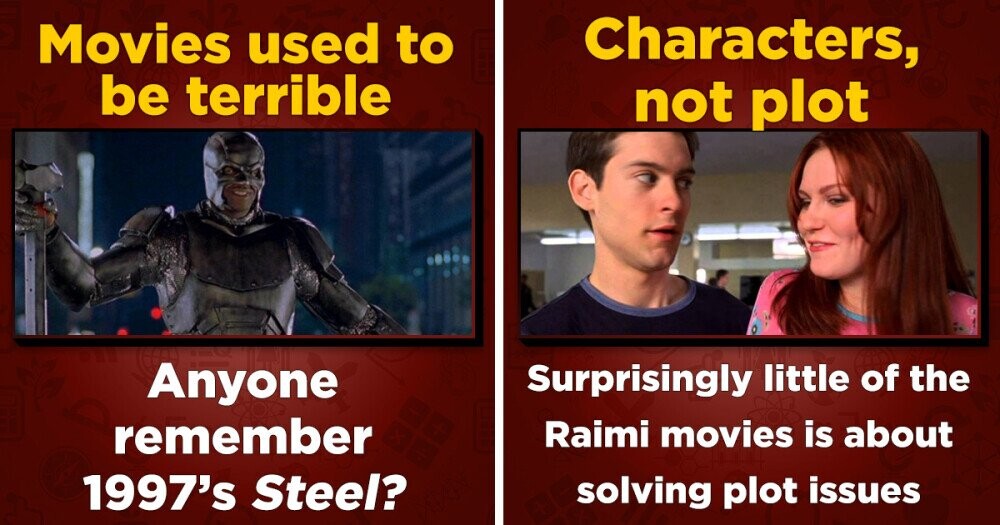
Before cinematic universes needed flowcharts, before post-credit scenes became homework, and before every superhero had to threaten at least three timelines before lunch, Sam Raimi’s Spider-Man swung into theaters in 2002 and changed the rules. It did not merely introduce Tobey Maguire’s Peter Parker to a new generation. It helped prove that a comic book movie could be emotional, funny, weird, romantic, technically ambitious, and wildly profitable without apologizing for being based on a comic book.
Today, superhero movies are so common that a studio can announce six of them before breakfast and nobody spills their coffee. But in the early 2000s, the genre was still climbing out of the rubble left by uneven late-1990s comic book adaptations. X-Men had opened the door in 2000, but Raimi’s Spider-Man kicked it off the hinges, did a backflip through the frame, and somehow landed with a sincere lesson about responsibility. The result was not just a hit. It was a cultural reset.
The Superhero Movie Before Raimi’s Web
To understand why Spider-Man mattered, it helps to remember what superhero cinema looked like before 2002. Richard Donner’s Superman had given the genre mythic lift in 1978, and Tim Burton’s Batman had brought gothic cool in 1989. Yet by the end of the 1990s, Hollywood’s relationship with capes was shaky. Studios knew comic book characters had name recognition, but they were not always convinced audiences would accept the full emotional and visual language of the source material.
That is what made Raimi’s approach so important. He did not treat Spider-Man like a guilty pleasure that needed to be toned down into embarrassment. He leaned into the color, melodrama, heightened emotion, and physical comedy of Marvel Comics. The movie had a genetically altered spider, a cackling Green Goblin, rooftop confessions, upside-down kissing in the rain, and a hero who learned morality through grief. On paper, it sounds like a lot. In Raimi’s hands, it became popcorn opera with a beating heart.
A Record-Breaking Opening That Rewired Hollywood
Released in the United States on May 3, 2002, Spider-Man became a box-office earthquake. It opened with more than $114 million domestically, becoming the first movie to cross $100 million in a single opening weekend. That number mattered far beyond bragging rights. It told Hollywood that a superhero film could behave like the biggest event of the year, not a niche attraction for comic shop regulars and kids wearing pajama capes.
The film eventually earned more than $800 million worldwide, a staggering achievement for its time. Its success shifted how studios thought about intellectual property, summer release windows, franchise planning, merchandise, sequels, and fan anticipation. Suddenly, comic book heroes were not secondary options. They were premium theatrical engines. The superhero movie had moved from “risky adaptation” to “studio tentpole,” and every executive in Los Angeles heard the thwip.
Sam Raimi Made the Comic Book Frame Feel Cinematic
Raimi was not an obvious studio-safe choice. Before Spider-Man, he was best known for kinetic horror, slapstick violence, wild camera moves, and cult classics like The Evil Dead. That background turned out to be exactly what Spider-Man needed. Raimi understood motion. He understood exaggerated emotion. Most importantly, he understood that comic books are not embarrassed by intensity.
The camera in Spider-Man swoops, dives, rushes, spins, and occasionally behaves like it had one too many espressos. When Peter Parker discovers his abilities, Raimi does not present it as a quiet upgrade. He turns it into a physical comedy routine, a coming-of-age fantasy, and a superhero origin all at once. Peter wakes up transformed, stumbles through his new strength, shoots webbing by accident, and learns to move through the world differently. The movie lets the audience feel the goofy thrill of power before it introduces the cost.
The Raimi Tone: Earnest, Campy, and Proud of It
Modern superhero movies often protect themselves with irony. Raimi’s Spider-Man did not. It could be funny, but it was not afraid to be sincere. Uncle Ben’s moral lesson is delivered straight. Mary Jane’s dreams matter. Peter’s guilt is not treated as melodramatic excess; it is the engine of the story. Even Willem Dafoe’s Green Goblin, with his metallic mask and booming villain speeches, feels part of a deliberate comic-book universe rather than an accidental overreach.
This emotional sincerity is one reason the film has aged better than some flashier blockbusters. The visual effects show their era in places, but the emotional architecture still works. Peter wants love, money, belonging, respect, and a life that does not feel like one long unpaid internship in suffering. That is painfully relatable. Spider powers are fantasy. Trying to pay rent while your personal life collapses? Unfortunately, very realistic.
Tobey Maguire Redefined the Superhero Lead
Tobey Maguire’s Peter Parker was not built like an action figure who had wandered away from a protein powder commercial. He was awkward, soft-spoken, anxious, and frequently overwhelmed. That choice changed the superhero template. Maguire made Peter feel like a real Queens kid whose life had been invaded by myth. He was not playing a cool guy pretending to be uncool. He was playing someone whose decency was stronger than his confidence.
That mattered because Spider-Man has always been one of Marvel’s most human heroes. He is not a billionaire, a prince, a god, or a government super-soldier. He is a young man who has homework, heartbreak, money problems, and an alarming number of enemies with themed costumes. Maguire’s performance made the superhero genre more emotionally accessible. Viewers did not just want to be Spider-Man because swinging looked fun. They rooted for Peter because he seemed like someone who could be sitting behind them in biology class.
The Movie Made Superhero Romance Matter
One of the smartest things Raimi did was treat romance as central, not decorative. Kirsten Dunst’s Mary Jane Watson is not simply a prize at the end of the level. She is a person trying to escape an unhappy home, build a future, and be seen for more than her appearance. The famous upside-down kiss became iconic because it combined superhero spectacle with old-fashioned movie romance. It is strange, stylish, and absolutely not recommended as a practical dating technique during a rainstorm.
The Peter-Mary Jane relationship gave the film emotional stakes that were not limited to explosions. Peter’s secret identity is not just a plot device; it is a barrier to intimacy. Every rescue makes him more heroic and more isolated. That tension became a key part of later superhero storytelling, where the hero’s personal life is not a side quest but the place where the cost of heroism becomes visible.
Willem Dafoe’s Green Goblin Set a Villain Standard
Willem Dafoe’s Norman Osborn is one of the great superhero villain performances because he understands the assignment and then turns it in with extra credit. His Green Goblin is theatrical, frightening, funny, and deeply unwell. The mirror scene, where Norman argues with his darker self, remains a masterclass in comic book villainy played with absolute commitment.
The Goblin also works because he mirrors Peter. Both characters are transformed by science. Both gain power. One accepts responsibility, while the other chooses domination. That contrast gives the film a clear moral spine. The villain is not merely a boss battle in armor; he is a warning about what power becomes when it loses empathy.
Special Effects That Let Spider-Man Finally Swing
For decades, Spider-Man was difficult to adapt convincingly because his signature movement is so extreme. He does not just fly. He swings, flips, crawls, falls, twists, and redirects his body through impossible urban space. Earlier technology could not fully capture that fantasy on a blockbuster scale. Raimi’s film arrived at the right moment, when digital effects had advanced enough to make Spider-Man’s movement feel cinematic.
The web-swinging scenes were a revelation in 2002. They gave audiences the feeling of rushing through Manhattan at impossible speed, rising between skyscrapers and diving toward traffic. Even when the CGI now looks less seamless than modern effects, the intention remains thrilling. Raimi understood that Spider-Man’s movement had to feel emotional, not merely technical. Swinging is freedom. It is Peter escaping the ground, the bullies, the bills, the grief, and the limits of ordinary life.
The Origin Story Became the Blueprint
After Spider-Man, the superhero origin story became a dominant Hollywood structure. The ordinary life, the transformative accident, the first messy use of powers, the personal tragedy, the costume, the villain mirror, the final acceptance of responsibility: these beats became familiar because Raimi’s film executed them so cleanly. Many later superhero movies followed the model, sometimes well and sometimes like a photocopy of a photocopy that had been left in the sun.
What separates Spider-Man from weaker imitators is that the origin is not just mechanics. Peter does not become a hero because the plot says it is time to launch a franchise. He becomes a hero because he fails morally, suffers the consequence, and chooses to live differently. That is why the story still resonates. The spider bite gives Peter power. Uncle Ben’s death gives the movie meaning.
It Helped Build the Road to the MCU
There is no Marvel Cinematic Universe without the early 2000s proving that Marvel characters could carry enormous theatrical audiences. Raimi’s Spider-Man, along with X-Men and later Spider-Man 2, helped establish the commercial logic that made future superhero expansion possible. The MCU would later perfect shared-universe architecture, but Raimi’s film proved something simpler and just as important: audiences would show up in massive numbers for a superhero story if the character, tone, and spectacle connected.
The influence is visible everywhere. The balance of humor and pain. The hero torn between private happiness and public duty. The villain as emotional reflection. The city as a character. The final swing as a promise of more adventures. Even when later Spider-Man films took different approaches, from Andrew Garfield’s restless romantic energy to Tom Holland’s MCU-connected youth, they all existed in conversation with Raimi’s template.
Why It Still Feels Different
Raimi’s Spider-Man still stands apart because it feels handmade in a way many modern blockbusters do not. It has studio scale, but also a director’s personality. It is sentimental, spooky, silly, and sincere, sometimes within the same five minutes. It has newspaper offices full of shouting, school hallways full of longing, and action scenes that remember the hero is a person before he is a logo.
It also understands New York as more than a backdrop. The city is crowded, noisy, impatient, and alive. When ordinary New Yorkers help Spider-Man, the moment may be sentimental, but it captures something essential about the character. Spider-Man belongs to the people. He is not above the city. He is part of it, swinging over its traffic while still worrying about rent like everyone else.
The Cultural Aftershock
The film’s impact extended beyond ticket sales. It changed merchandise aisles, Halloween costumes, video games, animated tie-ins, sequel expectations, and the way studios marketed superhero properties. Spider-Man became unavoidable in the best possible way. The red-and-blue suit was everywhere, from lunchboxes to bedroom posters to kids jumping off couches despite their parents specifically saying, “Please stop doing that.”
It also created a generational memory. For many viewers, Raimi’s Spider-Man was the first superhero movie that felt personal. It was not only about saving civilians from danger. It was about growing up, making mistakes, losing someone, and realizing that doing the right thing can be lonely. That emotional imprint is why Tobey Maguire’s return years later carried such nostalgic power. People were not just cheering for an actor. They were cheering for the version of themselves who first believed a superhero movie could make them feel that much.
Experiences Related to How Sam Raimi’s ‘Spider-Man’ Changed Everything
Anyone who grew up around the release of Spider-Man probably remembers that the movie did not feel like normal entertainment. It felt like a public event. You did not simply watch it; you absorbed it through trailers, posters, playground conversations, magazine covers, fast-food promotions, toy shelves, and friends trying to shoot imaginary webs from their wrists with complete seriousness. For a while, every kid believed there was a scientifically respectable chance that a spider bite could improve their life. Parents, doctors, and basic biology strongly disagreed.
The experience of seeing the movie in a theater was especially powerful because it offered something that home viewing could not fully reproduce: shared lift-off. When Spider-Man first swung through the city with real speed and confidence, audiences reacted physically. You could feel people leaning forward. The movement made viewers understand the fantasy in their stomachs, not just their eyes. That is part of why the film changed everything. It translated a comic book sensation into a theatrical sensation.
For longtime comic readers, the movie felt like validation. Spider-Man was no longer a character outsiders associated mainly with cartoons, toys, or colorful paperbacks. He was the center of a major Hollywood blockbuster, and the film did not sand away the qualities that made him beloved. Peter was still awkward. J. Jonah Jameson was still hilariously loud. The costume still looked like Spider-Man. The moral lesson was still intact. Raimi made fans feel that the source material had been respected, even when details were updated for a new era.
For casual viewers, the movie served as an invitation. You did not need to know decades of Marvel history to understand Peter Parker. The story was clean, emotional, and universal. A lonely teenager gets power, makes a selfish choice, loses someone he loves, and spends the rest of the film trying to become worthy of the gift he has been given. That is not just a superhero premise. That is a coming-of-age story wearing a mask.
The movie also changed how people talked about superhero films afterward. Suddenly, expectations were higher. Audiences wanted better casting, stronger villains, more emotional stakes, and action scenes that felt connected to character. It was no longer enough to put a recognizable logo on a poster and hope nostalgia would do the heavy lifting. Raimi’s Spider-Man proved that the genre could deliver spectacle and heart in the same package, like a summer blockbuster with a diary hidden inside.
Even the film’s imperfections became part of its charm. Some dialogue is big enough to need its own zip code. Some effects have aged. Some moments are so earnest that modern irony might need a glass of water. Yet those qualities are also why the movie remains beloved. It believes in itself. It believes in Peter. It believes that responsibility is not a slogan but a burden someone chooses to carry. In an era when many blockbusters are polished until every fingerprint disappears, Raimi’s fingerprints are still all over the frame.
That is the real legacy of Spider-Man. It changed box-office math, franchise strategy, visual effects expectations, and superhero storytelling, but it also changed the emotional contract between audiences and comic book movies. It said these stories could be huge without being hollow. They could be bright without being childish. They could be funny without mocking themselves. Most of all, they could make a guy in red-and-blue tights feel like one of the most human characters in modern cinema.
Conclusion: The Web That Still Holds
Sam Raimi’s Spider-Man changed everything because it arrived at the perfect intersection of character, technology, timing, and sincerity. It proved that superhero films could dominate the box office while still telling a deeply personal story. It helped transform comic book adaptations into Hollywood’s most powerful blockbuster category, but its greatest achievement is simpler: it made audiences care about Peter Parker before asking them to cheer for Spider-Man.
More than two decades later, the film still swings because it understands the heart of the character. Power is exciting, but responsibility is the story. Spectacle gets people into seats, but emotion keeps them there. Raimi gave the superhero genre a blueprint, a jolt of confidence, and a reminder that even the biggest cinematic web begins with one very human thread.
Note: This article is based on synthesized, verifiable film-history, box-office, studio, awards, and entertainment-industry information from reputable U.S. sources, rewritten in original language for web publication.