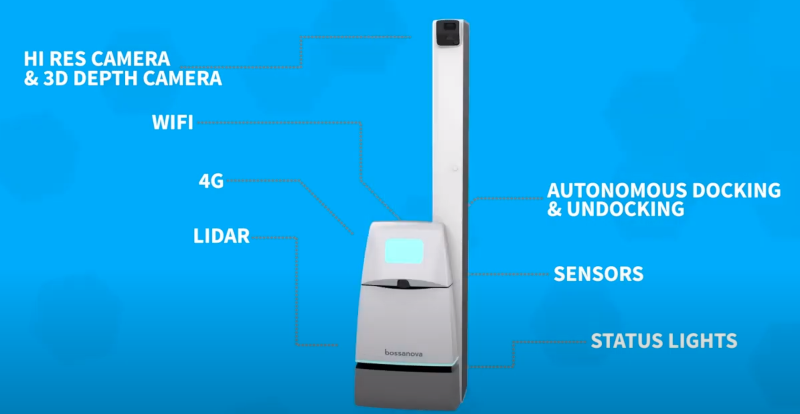
For a while, Walmart’s store aisles looked like they had borrowed a character from a low-budget science fiction movie: a tall, camera-loaded robot rolling past cereal boxes, paper towels, and suspiciously misplaced jars of peanut butter. Its mission was simple in theory and wildly complicated in practice: scan shelves, spot missing products, flag incorrect prices, and tell human associates what needed attention.
Then Walmart changed its mind.
In November 2020, the retail giant ended its relationship with Bossa Nova Robotics, the company behind the shelf-scanning machines used in roughly 500 Walmart stores. The decision surprised many observers because Walmart had spent years presenting these stock-checking robots as part of the future of retail. At one point, the company planned to expand the technology to about 1,000 stores. Instead, the robots were quietly shown the exitwithout a severance package, a farewell cake, or even a tiny robotic cardboard box for their desk items.
But Walmart giving up on stock-checking robots was not really a story about “robots losing to humans.” It was a story about retail reality. Grocery aisles are messy. Customers move things. Employees already walk the floor. Online pickup workers constantly inspect shelves. And a robot that can identify a problem still needs a human to solve it. That last detail turned out to matter a lot.
The Big Idea Behind Walmart’s Stock-Checking Robots
The promise of Walmart’s shelf-scanning robots sounded fantastic. Instead of asking employees to manually check aisle after aisle, a robot could glide through the store using cameras, sensors, computer vision, and navigation technology. It could detect out-of-stock items, low inventory, misplaced products, and pricing errors. The system could then alert associates so they could restock shelves faster.
For a company as large as Walmart, even a small improvement in inventory accuracy can be worth a fortune. A missing product is not just an empty spot on a shelf. It is a missed sale, a frustrated shopper, and sometimes a customer who decides to buy from a competitor. In retail language, “out of stock” is just a polite way of saying, “We almost made money, but then we didn’t.”
Walmart began testing Bossa Nova robots in 2017, with early deployments in dozens of stores. The robots were designed to handle repeatable, predictable tasksthe kind of work that humans can do, but usually do not enjoy doing every hour of every day. By 2019, Walmart was talking enthusiastically about automated assistants that could help associates spend less time on routine tasks and more time helping customers.
What the Robots Actually Did in Stores
The Bossa Nova robots were not stocking shelves, lifting boxes, or arguing with customers over whether a coupon expired yesterday. Their job was observation. They moved through store aisles and scanned shelves using cameras and sensors. Some reports described the robots as roughly six feet tall, making them hard to miss unless you shop with your eyes closed, which is not recommended near a pyramid of canned beans.
The robots gathered visual data and used computer vision to identify shelf conditions. If the cereal section had a gap where a popular brand should have been, the system could flag it. If an item appeared to be in the wrong location, the robot could report that too. It could also help identify potential price-label issues and planogram problems, meaning products were not arranged according to the store’s intended layout.
In theory, this gave Walmart faster and more consistent visibility into what was happening on the sales floor. A human associate might check an aisle once or twice during a shift. A robot could perform repeated scans with machine-like patience. It would not get bored, distracted, or tempted to spend seven minutes deciding which snack belongs in the “healthy-ish” category.
Why Walmart Pulled the Plug
So why did Walmart give up on stock-checking robots? The answer is not that the technology was useless. It is that Walmart decided the benefits were not strong enough compared with other ways to manage inventory.
Employees Were Already in the Aisles
One major reason was the rise of online grocery pickup and delivery. As Walmart’s e-commerce operations expanded, more employees were already walking the aisles to pick items for online orders. Those associates could notice empty shelves, missing items, and product issues while doing work that directly served customers.
In other words, the store itself had changed. Walmart no longer needed a separate robot patrol in the same way because human associates were already scanning the environment with the most advanced technology ever invented: eyeballs, attached to people who could also grab a box from the backroom.
The Robot Could Find Problems, But People Still Fixed Them
The robots could identify that a shelf needed attention. They could not unload a pallet, open a case, rotate inventory, straighten a display, or answer a shopper asking where the almond flour is hiding this week. After every digital alert, a human still had to do the physical work.
That is the tricky part of automation in retail. A robot that detects a problem is valuable only if the store can act on the information quickly. If alerts pile up faster than associates can respond, the system becomes another dashboard in a company already drowning in dashboards.
Customer Reaction Also Mattered
Retail is not a laboratory. It is a public space filled with children, shopping carts, distracted adults, spilled soda, seasonal displays, and people who stop suddenly in the middle of an aisle like they have just received a message from the universe. Robots must operate in that chaos.
Reports at the time suggested Walmart also considered how shoppers reacted to the machines. Some customers were curious. Some were uncomfortable. Some probably wondered whether the robot was judging their snack choices. Even if a robot performs well, it can still change the mood of a store. Walmart’s brand depends on convenience and familiarity, not making the paper towel aisle feel like a tech demo.
This Was Not the End of Walmart Automation
It would be a mistake to read this decision as Walmart rejecting automation. Walmart did not give up on technology. It gave up on one specific kind of in-aisle robot for one specific job.
After ending the Bossa Nova program, Walmart continued investing heavily in supply chain automation, AI-powered tools, fulfillment technology, augmented reality systems, and robotics for distribution and pickup operations. The company has worked with Symbotic to automate regional distribution centers. It acquired Alert Innovation to expand market fulfillment center capabilities. It has also used tools such as VizPick, which helps associates identify products in the backroom that need to move to the sales floor.
That distinction matters. Walmart’s lesson was not “robots are bad.” The lesson was closer to “robots must be placed where they create obvious value.” A warehouse or fulfillment center is more structured than a store aisle. Products move in more predictable ways. Robots can operate in controlled zones. The economics often make more sense.
Why Store Aisles Are So Difficult for Robots
A Walmart Supercenter is a brutal test environment for automation. The floor layout changes. Displays move. Customers block paths. Products are touched, dropped, misplaced, hidden behind other products, and occasionally abandoned in places that make no emotional or culinary sense. Frozen pizza in the shampoo aisle? Somewhere, a retail associate has seen it.
For a shelf-scanning robot, that chaos creates several challenges. It must navigate safely around people. It must capture images from useful angles. It must correctly identify thousands of products with similar packaging. It must understand shelf depth, labels, gaps, and display variations. It must do all of this without annoying shoppers or slowing employees down.
That is why retail automation is harder than it looks. A robot can perform beautifully in a demo video and still struggle to deliver enough value across thousands of busy stores. The real world does not care about your pitch deck.
The Human Advantage Walmart Could Not Ignore
Humans are not perfect inventory systems. They forget things. They miscount. They get tired. But they are flexible in ways robots still struggle to match.
An associate can notice that a product is missing, check the backroom, help a customer, move an obstacle, correct a display, and make a judgment call based on context. A robot can collect data, but it cannot understand the full situation the way a trained employee can. It also cannot build trust with shoppers, solve awkward problems, or make a quick decision when the store is busy.
That does not mean humans always beat machines. It means the best retail systems often combine people and technology. Walmart’s later strategy shows this clearly. Instead of replacing associates with aisle-scanning robots, Walmart has focused more on giving associates better digital tools and automating areas where machines can deliver clearer gains.
What Bossa Nova Represented for Retail Technology
Bossa Nova Robotics was not some random gadget company selling a toy with wheels. It represented a serious attempt to bring computer vision and autonomous navigation into brick-and-mortar retail. The company’s technology reflected a real problem: stores need better inventory visibility.
Retailers lose sales when shelves are empty. They waste labor when associates search manually for problems. They disappoint customers when online systems say an item is available but the shelf tells a different story. Bossa Nova’s robots were built to address those pain points with automation.
Even though Walmart ended the program, the broader idea did not disappear. Retailers still want real-time shelf intelligence. The methods are changing. Instead of relying only on roaming robots, companies are exploring fixed cameras, electronic shelf labels, RFID, AI forecasting, associate apps, and smarter backroom systems. The dream is still alive. It simply changed outfits.
Lessons for Retailers: Automation Needs a Job, Not a Spotlight
The Walmart robot story is useful because it cuts through the hype. Companies often launch automation projects with big promises: faster operations, lower costs, better accuracy, happier workers, delighted customers, and possibly world peace if the PowerPoint has enough gradient backgrounds.
But every automation project must answer a basic question: does this technology solve the problem better than the alternatives?
For Walmart’s stock-checking robots, the answer eventually became noor at least not enough. Store associates, improved apps, online order-picking workflows, and other inventory tools gave Walmart a more practical path. The robots were impressive, but impressive is not the same as indispensable.
What the Decision Says About the Future of Retail Jobs
Some people celebrated Walmart’s decision as a win for human workers. Others saw it as a temporary pause in a much larger automation trend. The second view is probably more accurate.
Retail jobs are still changing. Cashiers, stockers, pickers, warehouse workers, delivery teams, and store managers are all affected by new technology. Automation may remove some repetitive tasks, but it can also create pressure for employees to work faster, manage more systems, and adapt to new tools.
The Walmart case shows that automation does not move in a straight line. A company may cancel one robot program while expanding another. It may remove machines from aisles while adding more robotics to fulfillment centers. It may decide that humans are better for one task and software is better for another. The future of retail is not simply “robots replace workers.” It is more complicated, more uneven, and, frankly, much less tidy than a robot brochure would like.
Why Walmart’s Choice Was Probably Practical, Not Emotional
Walmart is not known for making sentimental technology decisions. The company operates at massive scale and cares deeply about efficiency. If the shelf-scanning robots had delivered overwhelming value, Walmart likely would have kept them and expanded the program.
The decision suggests Walmart compared the robot program with other options and found better returns elsewhere. That is the cold math of retail. A robot may be clever, but if a simpler process works just as well, the robot becomes expensive aisle décor.
There is a funny irony here. The robots were designed to make Walmart smarter about what was on its shelves. In the end, Walmart used that same practical mindset to evaluate the robots themselves. Were they available? Yes. Were they useful? Somewhat. Were they worth expanding? Apparently not.
Experience-Based Reflections: What This Story Feels Like From the Store Floor
Anyone who has spent time inside a big-box store knows inventory management is not as neat as software makes it sound. On a spreadsheet, products live in tidy rows. In a real store, products go on adventures. A customer picks up a bottle of laundry detergent, walks three aisles, changes their mind, and leaves it next to the tortilla chips. A child relocates a toy dinosaur into the cereal section. A seasonal display steals space from an everyday product. Suddenly, the “system” says one thing and the shelf says another.
This is where the Walmart stock-checking robot story becomes easy to understand. A robot can spot some problems, but the store floor is full of small human mysteries. Why is the price tag missing? Why is the item in the wrong bay? Is the product truly out of stock, or is it sitting on a cart waiting to be worked? Did the delivery arrive late? Is the backroom label wrong? Did someone stack the wrong case in front of the right one? A machine can report symptoms, but an experienced associate often understands the disease.
From a customer perspective, shelf-scanning robots also create mixed feelings. Some shoppers love seeing new technology. They take photos, ask questions, and enjoy the novelty. Others just want to buy bananas and leave without being watched by a tall rolling tower with cameras. Even if the robot is not doing anything creepy, perception matters. Retailers must protect comfort as much as efficiency.
There is also the matter of speed. Imagine a robot flags an empty section of pasta. That information is useful only if someone can restock the pasta before customers leave disappointed. If associates are busy picking online orders, helping shoppers, unloading freight, and cleaning spills, another alert may not solve the bottleneck. It may simply announce the bottleneck more professionally.
The best technology in stores is usually the kind that fits naturally into existing work. A handheld app that helps an associate locate backroom inventory can be powerful because it supports action immediately. A backroom system that tells workers which box to pull next can save time. A fulfillment robot in a controlled environment can reduce walking and speed up orders. But a public-facing aisle robot has to do more than collect data. It has to justify its presence in a place filled with unpredictable people.
That is the practical lesson for retailers, startups, and anyone tempted to solve every problem with a robot: automation should reduce friction, not add a new character to the story. Walmart’s stock-checking robots were ambitious, visible, and technically interesting. But the store floor asked a harsher question: “Do you make the work easier right now?” When the answer was not strong enough, Walmart moved on.
Conclusion: The Robots Lost the Aisle, Not the War
Walmart gives up on stock-checking robots is a catchy headline, but the deeper story is more useful than the punchline. The company did not abandon automation. It abandoned a specific approach that no longer made enough sense in its stores.
The Bossa Nova robots showed what was possible with computer vision, autonomous navigation, and retail data collection. They also showed why real-world automation is difficult. A store is not a factory. A shelf is not just a shelf. A missing product can be a data issue, a staffing issue, a delivery issue, a customer behavior issue, or a “someone put the salsa behind the socks” issue.
Walmart’s decision reminds retailers that technology must serve operations, not the other way around. The future of retail will still include robots, AI, automation, smart inventory systems, and plenty of buzzwords wearing little corporate sneakers. But the winners will be the tools that quietly make stores work betternot necessarily the ones that look coolest rolling past the cereal.
Note: This article is based on synthesized information from reputable U.S. reporting, retail analysis, and company materials, including coverage from Reuters, The Wall Street Journal, Associated Press/CBS News, The Verge, Business Insider, Forbes, Retail Dive, Grocery Dive, Wired, Axios, TechCrunch, Walmart Corporate, Walmart Global Tech, Supply Chain Dive, and Symbotic. Source links are intentionally not included per publishing requirements.