Ask a room full of Star Trek fans to name the franchise’s best captain and you may accidentally create a diplomatic crisis. Kirk loyalists will praise improvisation and swagger. Picard supporters will calmly prepare a 47-minute presentation on ethics, diplomacy, and Earl Grey tea. Sisko fans will point toward the Dominion War and quietly ask whether anyone else would like to reconsider. Janeway defenders have an entire Delta Quadrant of evidence.
Then there is Montgomery “Scotty” Scott.
Yes, the engineer.
The man usually associated with warp cores, impossible repair estimates, transporter controls, and the Enterprise making noises that suggest its warranty expired three star systems ago. Scotty is rarely the first name mentioned in the best Star Trek captain debate. Yet examine how he behaves under pressure, how deeply he understands his ship, and how often he protects his crew from terrible decisions, and a mischievous argument begins to take shape.
Maybe Star Trek’s best captain is Scottyor at least maybe he represents one of the franchise’s most underrated models of leadership.
The joke becomes even better when fiction and reality overlap. James Doohan, the actor who made Scotty famous, brought genuine military experience, technical curiosity, resilience, and an extraordinary personal history to the role. Meanwhile, the fictional Montgomery Scott eventually held the rank of captain while continuing to insist that engineering was where he truly belonged.
So, grab a cup of something stronger than synthehol. We have a captaincy case to build.
What Actually Makes a Great Star Trek Captain?
The obvious answer is command. A captain gives orders, makes difficult decisions, and sits in the chair everyone else politely avoids until the captain leaves the bridge.
But Star Trek has always suggested that leadership is bigger than rank. The original series followed Captain James T. Kirk alongside Spock, McCoy, Uhura, Sulu, Chekov, and Chief Engineer Montgomery Scott across 79 episodes, creating an ensemble in which responsibility constantly shifted according to the crisis.
A truly great Starfleet leader needs several qualities: technical understanding, judgment under pressure, loyalty to the crew, the courage to challenge bad orders, and the ability to make decisions when every available option looks terrible.
Scotty checks an uncomfortable number of those boxes.
He may not deliver grand speeches about humanity’s future every Tuesday, but when the ship is losing power, communications are failing, the captain is missing, and somebody on the bridge suggests doing something foolish, Scotty has a remarkable habit of becoming exactly the officer the Enterprise needs.
Scotty Understands the Enterprise Better Than Almost Anyone
There is an old leadership principle hiding beneath all the warp-drive jargon: you cannot effectively command a complicated system if you do not understand how it works.
Scotty understands the Enterprise at a nearly personal level.
To him, the ship is not a collection of interchangeable parts. It is a living responsibility. He knows what it can endure, what it cannot endure, and how far beyond the recommended limits it can be pushed before the engineering department starts composing farewell letters.
This is one reason his command style feels different from Kirk’s. Kirk often asks, “What do we need the ship to do?” Scotty immediately calculates, “What will happen to the ship if we try?”
That tension is essential. Great leadership is not simply having the boldest idea in the room. Sometimes it is being the person who knows the bridge’s brilliant plan will melt three decks and convert the warp core into a very expensive sun.
He Knows When “Impossible” Really Means “Give Me a Minute”
Scotty’s famous engineering pessimism is also more sophisticated than it feels different from Kirk’s. Kirk often asks first appears. He often warns that something cannot be done, then somehow does it anyway. The joke is that he exaggerates repair times. The deeper truth is that he manages risk.
A bad leader promises miracles and blames the crew when reality objects. Scotty does the opposite. He identifies the danger, establishes limits, and then looks for the narrowest path through disaster.
That is not merely good engineering. It is good command.
When Scotty Takes Charge, He Is Surprisingly Hard to Push Around
Scotty is not the Enterprise’s usual commanding officer, but several episodes reveal what happens when responsibility lands on his shoulders.
In A Taste of Armageddon, Scotty is left in command while Kirk and members of the landing party are endangered below. Ambassador Robert Fox attempts to pressure the Enterprise into lowering its defenses. Scotty refuses because doing so would put the ship at unacceptable risk.
This is a fantastic Scotty moment because he does not confuse authority with wisdom. A diplomat may outrank him politically in the situation, but Scotty still understands that his immediate responsibility is the safety of the Enterprise and everyone aboard it.
He does not shout because shouting makes an order more correct. He simply refuses to surrender the ship to a bad decision.
That is a quality shared by many of Star Trek’s best captains: the willingness to recognize that obedience and responsibility are not always the same thing.
Scotty Is Protective Without Becoming Reckless
His loyalty is equally visible whenever the Enterprise itself is threatened. The official franchise has repeatedly emphasized Scotty’s unusually strong emotional connection to the original NCC-1701. In The Next Generation episode Relics, an older Scott makes clear that the original Enterprisenot merely the name or its lses. citeturn411845view1turn231455search1
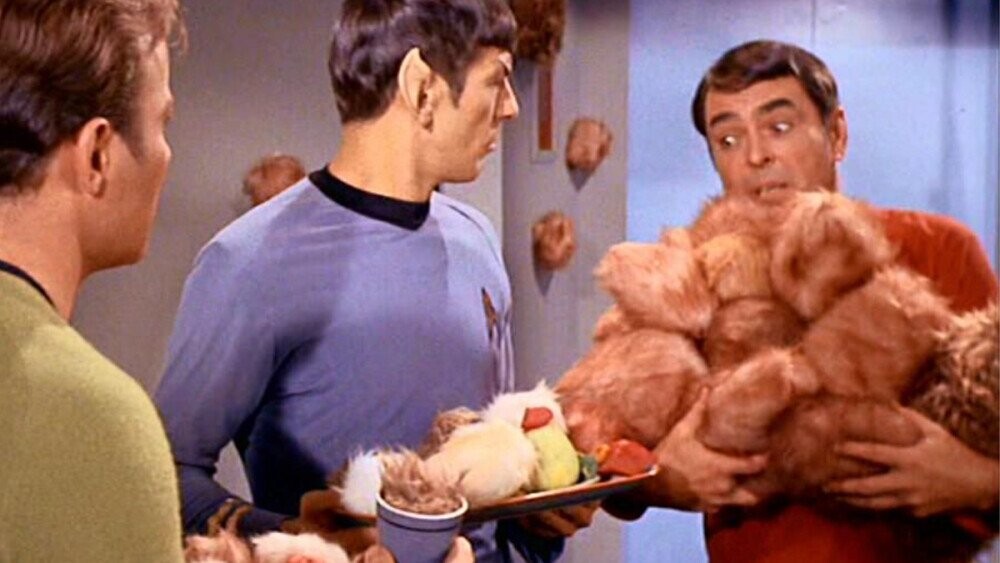
Even the famous bar fight in The Trouble with Tribbles follows that pattern. Scotty tolerates insults aimed at Kirk. Insult the Enterprise, however, and diplomacy suddenly experiences an unscheduled maintenance failure.
Starting a brawl is not recommended Starfleet command procedure. Still, the scene reveals something important: Scotty identifies himself with the ship and the people whose lives depend on it.
To him, command is stewardship.
The Engineer’s Mind May Be Scotty’s Greatest Leadership Advantage
Most fictional commanders are trained to look at a crisis from the top down. Scotty naturally looks from the inside out.
What failed?
What still works?
What resources remain?
What can be bypassed?
How long do we have before everything explodes?
This problem-solving approach is one reason the character remains so appealing decades after his debut. Scotty is not powerful because he has a magical solution to every problem. He is powerful because he understands systems. Even modern discussions of the character regularly rank him among Star Trek’s smartest technical minds, while science and technology publications have continued to use Scotty as a natural entry point into conversations about engineering ansearch1turn362131search7turn362131search17
Imagine a workplace crisis. One manager gives an inspirational speech. Another schedules a committee meeting. Scotty has already opened the access panel, rerouted power, found the actual problem, and informed everyone that the solution will either work beautifully or remove the east wall.
You know which person you want nearby.
James Doohan Brought Real Resilience to Montgomery Scott
The case for Scotty becomes even more interesting when we look at James Doohan.
Before becoming one of science fiction’s most recognizable engineers, Doohan served in the Canadian military during World War II and landed at Juno Beach during the D-Day invasion. He was later wounded by friendly fire, suffering injuries that resulted in the loss of part of a finger on his right hand. Accounts of his military service have been widely documented and fact-checked, although some colorful retellis. citeturn576039search2turn917008search1
That history mattersnot because Scotty and Doohan should be treated as the same person, but because Doohan brought a lived understanding of pressure, teamwork, discipline, and survival to a role that could easily have become a one-note comic stereotype.
Scotty is funny, certainly. His accent became iconic. His complaints about impossible deadlines became part of popular culture. But beneath the humor is a character who remains functional when things go badly wrong.
That quality feels different when you know the actor had experienced genuine danger long before anyone pointed a television camera at him.
From Battlefield Experience to the Final Frontier
Doohan’s postwar career eventually led him to the role that defined his public life. Variety’s obituary remembered him as the actor behind the Enterprise’s famous chief engineer, while later generations continued to encounter Scotty through films, television re. citeturn656776search0turn656776search10
Even after Doohan’s death in 2005, his connection to space became literal. Portions of his ashes participated in memorial spaceflights, inclu9. citeturn576039search12turn576039news36
For an actor famous for helping a fictional starship reach the final frontier, it was an unusually appropriate farewell.
Yes, Scotty Eventually Is a CaptainTechnically
Here is where the title of this argument becomes delightfully complicated.
By the time of Star Trek: The Next Generation‘s Relics, Montgomery Scott holds the rank of captain. The official franchise itself refers to him as Captain Montgomery “Scotty” Scott. Yet Scotty’s identity remains firmly cand. citeturn411845view1turn231455search3
That may be the strongest evidence for the entire argument.
Scotty does not need the captain’s chair to behave like a leader.
He does not need everyone looking at him.
He does not measure success by whether his name appears at the top of the organizational chart.
He wants the ship to work. He wants the crew to survive. He wants the mission to succeed without violating the laws of physics so severely that physics files a formal complaint.
In other words, Scotty demonstrates one of the rarest kinds of leadership: competence without a desperate need for status.
But Is Scotty Really Better Than Kirk, Picard, Sisko, or Janeway?
Probably notat least not if the competition is limited to full-time starship command.
Kirk has superior strategic instincts and excels at unconventional decisions. Picard is a stronger diplomat and philosophical leader. Sisko manages political, military, and personal pressures on an extraordinary scale. Janeway keeps a stranded crew functioning while separated from Federation support by tens of thousands of light-years.
Scotty does not have comparable years of on-screen command responsibility.
But that is not really the fun of the question.
“Scotty is the best captain” works because it forces us to reconsider what leadership looks like inside the Star Trek universe. The franchise’s greatest achievements are almost never the product of one heroic individual. Kirk needs Spock and McCoy. Picard needs Riker, Data, and his senior staff. Sisko depends on a complicated community of officers, civilians, allies, and former enemies.
The captain may give the order, but someone still has to make the ship move.
Scotty represents those leaders who do not always occupy the central chair but quietly determine whether everyone else gets home.
Why Scotty’s Leadership Still Feels Modern
Modern workplaces love the language of leadership. Everyone is a visionary. Every project is transformational. Every meeting apparently needs a mission statement.
Scotty offers a refreshingly practical alternative.
Know your craft.
Protect your people.
Tell the truth about risk.
Challenge dangerous instructions.
Stay calm when the machinery starts smoking.
And when you perform a miracle, try not to make it look too easy, because someone will absolutely expect another one before lunch.
That leadership philosophy is less glamorous than a dramatic speech from the bridge. It may also be more useful.
The Rewatch Experience: Why Scotty Gets Better the More Closely You Watch
There is an interesting experience that comes with revisiting Star Trek: The Original Series after already knowing the famous characters. On an early viewing, attention naturally goes to Kirk, Spock, and McCoy. They are the central dramatic triangle. Kirk makes the decision, Spock analyzes it, and McCoy explains why both of them are emotionally defective.
Scotty can initially seem like the man waiting downstairs for the phone to ring.
Then you watch again.
Suddenly, small moments become more noticeable. Scotty does not merely report damage; he interprets consequences. He does not simply follow orders; he frequently understands what those orders will cost before anyone else does. When another officer suggests an action that could endanger the ship, his objections are rarely about protecting his own comfort. They are about protecting the Enterprise and the crew.
That changes the experience of scenes such as the confrontation with Ambassador Fox in A Taste of Armageddon. On a casual viewing, Scotty is the stubborn engineer refusing to cooperate. On a closer viewing, he is the acting commander recognizing that a politically important passenger is asking him to compromise the safety of hundreds of people.
The scene feels remarkably modern. Many people have experienced some version of that situation at work: an authority figure demands something risky, the technical expert explains why it is a terrible idea, and the authority figure assumes expertise is merely negativity wearing work boots.
Scotty’s response is satisfying because he does not collapse under the pressure. He knows his responsibility.
Rewatching the series also makes his relationship with the Enterprise more emotionally powerful. At first, the running joke is that Scotty loves the ship. Later, especially after watching Relics, the joke becomes something closer to homesickness.
The Enterprise is where Scotty mattered. It is where his knowledge had purpose, where impossible emergencies demanded his full attention, and where a collection of officers became a family. That is why the holodeck recreation of the original bridge carries such weight. He is not simply admiring an old machine. He is revisiting a version of himself.
That experience is one reason Scotty often becomes more appealing as viewers get older.
As children, many of us want to be the captain. The captain gets the chair. The captain gets the speeches. The captain gets to say “engage,” “make it so,” or whatever phrase causes the soundtrack to become heroic.
Later, competence starts looking more impressive.
You begin noticing the people who prevent disasters before anyone applauds. The colleague who knows the old system nobody documented. The technician who can hear a machine and immediately know something is wrong. The experienced worker who says, “We can do that, but here is what it will cost,” while everyone else is still admiring the PowerPoint slide.
Scotty becomes that person.
There is also something deeply enjoyable about watching a character whose confidence comes from useful knowledge. Scotty is not invincible. He worries. He complains. He gets frustrated. He occasionally looks at Kirk as though the captain has personally declared war on engineering.
But give him a concrete problem and the character comes alive.
That is perhaps the most satisfying part of the Scotty experience: his heroism is based on work. He studies systems, understands limits, improvises solutions, and accepts responsibility. The miracle is usually built out of expertise.
After enough episodes, you may catch yourself paying less attention to whether Kirk’s plan is brilliant and more attention to the question that truly determines everyone’s survival:
What does Scotty think?
When the chief engineer says the ship can take it, the audience breathes.
When he says it cannot, the audience knows Kirk is going to ask for more power anyway.
And somehow, against reasonable expectations and several innocent laws of physics, Scotty usually finds a way.
Conclusion: The Best Captain May Be the One Who Never Needed the Chair
So, is Montgomery Scott literally the greatest captain in Star Trek history?
No definitive ranking survives first contact with a group of Trekkies.
But Scotty deserves far more credit as a leader than the familiar image of the frantic engineer shouting about engines can provide. He understands his ship, protects his crew, challenges dangerous decisions, performs under extreme pressure, and consistently places responsibility above personal status.
James Doohan gave the character humor, toughness, warmth, and a credibility enriched by an extraordinary life beyond the television studio. Later portrayals by Simon Pegg and Martin Quinn have kept Montgomery Scott in the franchise’s cultural bloodstream, but the essential idea remains remarkably consistent: when technology fails and the situation looks impossible, Scotty is the person everyone hopes is still aboard.
Kirk may command the Enterprise.
Scotty is one of the reasons there is still an Enterprise to command.
And honestly, that sounds pretty captain-like.
Note: This article is an original synthesis informed by official Star Trek materials and reporting or commentary from established entertainment, science, military-history, and fact-checking publications, including StarTrek.com, Variety, Entertainment Weekly, Popular Science, Wired, Vanity Fair, Space.com, Snopes, Military.com, ScreenRant, and Cracked. The central argument is editorial analysis rather than a claim that Scotty served as the Enterprise’s primary canonical captain. Key biographical and franchise details were cross-checked against search2turn576039search12turn362131search5