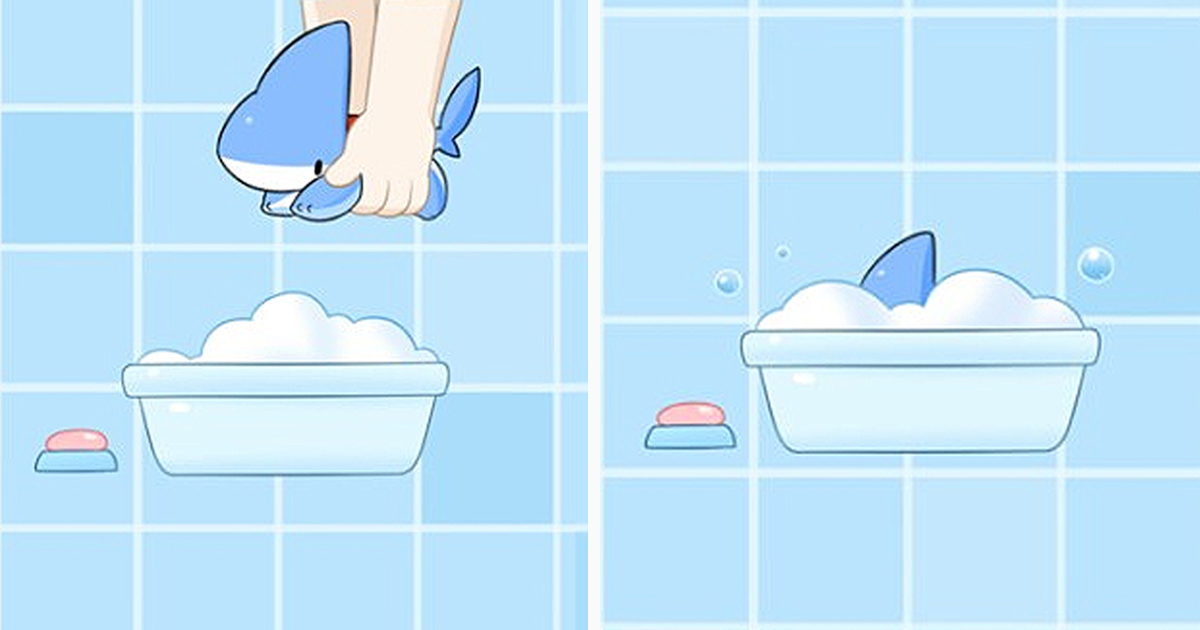
Every now and then, the internet stops arguing for five glorious seconds and agrees on one thing: yes, that tiny fictional creature is absurdly adorable, and yes, we would absolutely protect it with our lives. That is the magic of Shark Puppy, the delightfully weird comic character at the center of a viral 53-comic roundup that has charmed readers with a simple but unbeatable pitch: take the lovable energy of a puppy, bolt it onto the body of a tiny shark, and then let chaos paddle happily across the screen.
The result is the kind of visual joke that works immediately. You do not need a character bible, an origin movie, or a fifteen-part lore thread. One glance tells you everything. This little creature is curious, snack-driven, slightly dramatic, a bit too proud of itself, and probably one bad decision away from falling into a bucket, bathtub, or emotional spiral over a missing treat. In other words, it behaves less like a terrifying ocean predator and more like the sort of pet that would bonk into a wall, pretend it meant to do that, and then ask for dinner.
That is exactly why “Shark Puppy Is The Cutest Thing You’ll See Today (53 Comics)” works so well as a headline and as a concept. It promises instant joy, and the comics deliver. But the appeal goes deeper than “aww, little fins.” Shark Puppy sits at the crossroads of internet humor, webcomic storytelling, cute-animal psychology, and a broader fascination with sharks themselves. Once you look past the squeaky-clean cuteness, you can see why this strange little mashup stuck in people’s heads.
What Is Shark Puppy, Exactly?
At the most basic level, Shark Puppy is an imaginary hybrid creature brought to life through comics and illustrations. It is not a real species. It is not a cryptid with a blurry documentary trailer. It is simply a very good artistic idea. The charm comes from contradiction: sharks are typically framed as sleek, intimidating, mysterious creatures, while puppies are clumsy, trusting, affectionate little chaos goblins. Put those two ideas together, and you get something that feels fresh, funny, and instantly memorable.
That tension is the whole joke. Shark Puppy looks like it should be fierce, but it behaves like a baby. It has fins, but it gives off the emotional frequency of a dog who wants praise for sitting down correctly. It carries the silhouette of a creature from the deep, yet somehow radiates the same domestic innocence as a pet who just discovered snow, bubbles, socks, or the existence of furniture legs. The comics lean into that contradiction with visual gags that make the character feel both ridiculous and weirdly believable inside its own tiny universe.
And while the 53-comic collection made the character especially shareable, the appeal is not limited to one post. Shark Puppy feels like the kind of creation that invites repeat visits because the premise is so elastic. You can put the character almost anywhere, and it still works. At home? Cute. In water? Cute. Chasing food? Extremely cute. Looking offended by the consequences of its own bad decisions? Peak comedy.
Why Shark Puppy Works So Ridiculously Well
It combines “aww” and “uh-oh” in one design
The smartest thing about Shark Puppy is that it never asks you to choose between funny and adorable. It gives you both at once. Sharks already have strong visual branding. Their shape is recognizable in a heartbeat. Puppies, meanwhile, come preloaded with emotional goodwill. When those two signals collide, your brain basically throws a tiny party.
That combination also makes the comics easy to understand at a glance, which is critical in internet culture. Online audiences scroll fast, click fast, and move on even faster. A good webcomic character needs immediate readability. Shark Puppy has that. Even before a joke lands, the design itself has already done half the work.
It taps into the psychology of cuteness
Humans are especially responsive to baby-like features: roundness, smallness, soft proportions, and expressions that trigger protective instincts. Shark Puppy borrows heavily from that emotional playbook. The character is not cute by accident. It is cute with strategy. Big feelings in a small body is one of the oldest tricks in the visual-storytelling book, and it still works because our brains keep falling for it like tourists buying overpriced aquarium plushies.
That is also why these comics feel comforting. Cute content does not merely decorate the internet; it often functions as a pressure valve. People seek out wholesome, low-stakes material because it offers a break from doomscrolling, outrage, and the daily parade of “breaking news” that somehow always seems to involve everyone being tired. Shark Puppy succeeds because it arrives with zero emotional homework. You open the comic, smile, exhale, and continue living.
The format is perfect for webcomics
Webcomics thrive on immediacy. The best ones deliver a premise, a setup, and a payoff with almost no friction. Shark Puppy is built for that environment. The character does not need long dialogue scenes or complicated exposition. A look, a wobble, a snack, a splash, a guilty face, done. Joke complete. Reader delighted.
That kind of pacing is ideal for shareable comic panels, image galleries, and repost culture. Each strip can stand on its own, but together they build a personality. By the time readers have scrolled through a bunch of them, Shark Puppy stops feeling like a one-note gimmick and starts feeling like a tiny comic actor with impeccable instincts for visual comedy.
What Makes the 53 Comics So Addictive?
A large collection like this works because it gives the concept room to breathe. One image can make you smile, but a long sequence lets the character become familiar. Instead of getting one cute gag and leaving, readers get to see Shark Puppy in multiple moods and mini-scenarios. That repetition matters. Comedy loves rhythm, and cute characters benefit from pattern recognition. Once you understand the character’s emotional operating system, every new strip becomes funnier.
In collections like this, the jokes tend to come from everyday moments reimagined through Shark Puppy logic. Bath time is no longer a simple household routine; it becomes a tiny ocean-themed identity crisis. Snack time is not a meal but a full dramatic event. Curiosity turns into slapstick. Innocence turns into mischief. Ordinary objects become stage props in a world where a shark-shaped puppy can somehow be both majestic and deeply, gloriously silly.
That is the hidden strength of the format. The comics are not trying to impress you with complexity. They are trying to make the familiar feel new again. A pet looking confused, proud, sleepy, clingy, or suspicious is already funny. A shark puppy doing the same thing feels like the joke got upgraded by one full emotional level.
Why the Internet Loves Hybrid Creatures
Shark Puppy belongs to a very internet-native tradition: the hybrid creature that should not work but absolutely does. Online culture has always loved mashups because they compress multiple emotional ideas into one image. Part of the fun is the surprise. The other part is that mashups let creators sidestep realism and go straight for vibe.
A hybrid character also invites instant fan participation. Readers want plushies, stickers, fan art, animations, reaction images, and alternate versions. They imagine what the character eats, how it sleeps, what noises it makes, and whether it would commit tiny crimes. This is how internet creatures stop being “content” and become little communal mascots. They are flexible enough for people to project onto, but distinct enough to stay memorable.
That helps explain why Shark Puppy feels bigger than a single gallery. The design encourages attachment. It practically begs for fan art, captions, memes, and imaginative spin-offs. Once people emotionally adopt a character, the internet does the rest.
Sharks Have a Tough Reputation. Shark Puppy Softens the Edges.
Part of Shark Puppy’s appeal comes from taking an animal group with a famously dramatic reputation and filtering it through warmth. Real sharks, of course, are not cartoon babies. They are important ocean predators that play a major role in healthy marine ecosystems. But in pop culture, sharks have often been flattened into symbols of fear, danger, or disaster-movie teeth. Shark Puppy does something clever: it borrows the unmistakable shark look while removing the fear factor entirely.
That matters more than it might seem. Cute fictional reinterpretations can shift emotional tone. They do not replace science, but they can open the door to curiosity. Someone who clicks on a funny shark comic may leave with a softer, less one-dimensional image of sharks in general. That does not mean we should treat real sharks like cuddly pets, because real wildlife is not a plush toy with dental insurance. It does mean playful art can help loosen old stereotypes.
In that sense, Shark Puppy functions like a tiny ambassador. Not for realism, exactly, but for reconsideration. It reminds people that “shark” does not always need to mean “panic.” Sometimes it can mean wonder, humor, and a surprising amount of emotional support from a creature with fins.
The Art Style Does a Lot of Heavy Lifting
Characters like Shark Puppy live or die by execution. The premise may be funny, but the art has to carry the mood. A successful cute comic needs clean shapes, readable body language, expressive timing, and a sense that the character’s emotions are legible even when no one says a word. Shark Puppy benefits from all of that.
The visual language is approachable. Nothing feels overcomplicated. That simplicity is not a lack of craft; it is a sign of control. Cute art often looks effortless because the difficult parts have been smoothed away. Every line has a job. Every pose needs to communicate instantly. Every expression has to be clear enough to read on a tiny phone screen while someone waits for coffee and wonders where their life went wrong.
That stripped-down clarity is also why the comics feel so shareable. The character is flexible enough for motion, reaction, and repetition. You can imagine it as a sticker, a plush, a short animation, or a looping GIF without breaking the core design. That kind of adaptability is internet gold.
Why Readers Keep Coming Back
People return to comics like these for the same reason they return to comfort shows, favorite memes, or photos of animals doing things they definitely should not be doing: the experience is reliable in the best way. Shark Puppy does not promise a shocking twist. It promises delight. In a digital environment where so much content fights for attention through noise, that softness becomes a real advantage.
There is also an emotional honesty to the character. Shark Puppy is cute, yes, but not in a sterile way. It is not posed like a product photo trying to sell you serotonin. It feels alive within the comic world. It gets excited. It gets confused. It gets into trouble. It overestimates itself. It wants things. That combination of innocence and personality turns pure cuteness into affection.
And affection is what makes readers stay. You do not just think, “That was adorable.” You think, “I would like to see what this tiny menace does next.” That is how one charming design turns into a beloved recurring character.
The Experience of Reading Shark Puppy: Why It Feels So Personal
Reading through a long Shark Puppy gallery is a strangely specific pleasure, and that is part of the fun. At first, you click because the title makes a ridiculous promise. “The cutest thing you’ll see today” is the kind of internet claim that usually deserves a raised eyebrow and a backup plan. But then you start scrolling, and the joke sneaks up on you. Not because the comics are trying too hard, but because they understand something important: cuteness lands best when it is paired with personality.
That is why the experience feels less like looking at random illustrations and more like spending time with a tiny fictional pet you somehow already know. Shark Puppy behaves the way a lot of beloved animals do in our minds. It is curious when it should be cautious. It is brave for exactly three seconds. It becomes emotionally invested in snacks at a level that frankly deserves clinical study. It seems to assume the world was built specifically for its entertainment, which, to be fair, is also the central philosophy of most actual puppies.
There is also a cozy rhythm to these comics. You can read one and grin, or read twenty and settle into a mood. That is a rare quality. Some visual humor gets stale once the premise is clear, but Shark Puppy tends to gain momentum because each comic adds another tiny layer to the character. One strip says, “This creature is cute.” Another says, “This creature is chaotic.” Another says, “This creature is somehow both dramatic and baby.” Before long, the character feels weirdly complete.
For many readers, the appeal is probably tied to recognition. Even though Shark Puppy is imaginary, the emotions are real and familiar. Anyone who has lived with a pet, loved a cartoon animal, collected stickers they absolutely did not need, or lost ten minutes to wholesome internet content will understand the pull immediately. The comics recreate the feeling of watching a lovable creature do something pointless and hilarious, then laughing much harder than the moment objectively deserves.
They also create a kind of low-stakes joy that feels increasingly valuable. Not every piece of content needs to change your worldview, optimize your productivity, or explain the collapse of civilization. Sometimes a tiny fictional shark-dog waddling through nonsense is enough. Sometimes that is not “frivolous.” Sometimes that is the exact emotional serving size a day requires.
And maybe that is why Shark Puppy sticks with people. The character is not trying to be edgy, cynical, or overly clever. It is playful without being hollow. Sweet without becoming bland. Funny without begging for approval. In an internet ecosystem crowded with content engineered to provoke, Shark Puppy succeeds by doing something almost rebellious: being sincerely delightful.
So yes, the title may sound exaggerated. But after a few comics, the claim starts to feel less like clickbait and more like a public service announcement. If your day needs a soft reset, a tiny burst of visual joy, or a reminder that imagination is still allowed to be goofy, Shark Puppy makes an excellent case for itself. Fifty-three comics later, you are not just smiling at a weird little creature. You are wondering why the world does not already have a Shark Puppy plush in every home and a Shark Puppy reaction image for every mood. Honestly, that seems like a market inefficiency.
Final Thoughts
Shark Puppy Is The Cutest Thing You’ll See Today (53 Comics) is more than a silly gallery title. It captures everything that makes internet art memorable when it is done right: a crystal-clear concept, lovable visual storytelling, emotional simplicity, and a character strong enough to carry dozens of jokes without losing steam. Shark Puppy works because it takes two familiar ideas, shark and puppy, and fuses them into something that feels instantly iconic.
It is cute, but not empty. Funny, but not disposable. Lighthearted, but smart in the way it uses design, rhythm, and internet-native storytelling. Whether you are here for the art, the humor, the wholesome energy, or just the possibility of seeing a tiny finned gremlin become your new favorite comic creature, Shark Puppy earns the attention. In a world overflowing with content, that is no small feat for a creature that probably cannot even open a door.